San Tomaso in Terramara Church: A Roman Catholic Church in Italy
Site at a Glance
- Popularity
- Medium
- Country
- Italy
- Primary era
- Early Modern
- Eras represented
- Medieval, Early Modern, Modern
- Civilizations
- Austrian Empire, Duchy of Milan, Habsburg, Holy Roman Empire, Spanish
- Site type
- Religious
- Remains
- Church
On this page11 sections
History
San Tomaso in Terramara Church is a Roman Catholic church in Italy, dedicated to Thomas the Apostle, one of the Twelve Apostles in Christian tradition. Construction began in the 11th century, and the church was consecrated during that century. The present building combines early-modern and Neoclassical work.
Medieval origins and the name
The church and its parish appeared in an 11th-century list of parishes in Milan’s Porta Comasina district. The origin of the name Terramara, also rendered Terramala, is uncertain. One explanation connects it with “Terra Amara” or “Terra Mala,” recalling the homeland of people who fled invasions and settled in Milan during the 11th century. The Milanese historian Giulio Giulini proposed instead that the church took its name from an area already called Terra Mala, though he did not know why the area bore that name.
Another proposed explanation links the church to a chapel associated with the Sigerii family, referred to in older records as San Tommaso in Cruce de Sigeriis and in Cruce Sichariorum. The chapel may have stood near a place where condemned people were executed, a possible explanation for the name Terra Mala.
A Milanese legend offers a different account. It says that Giovanni Maria Visconti, Duke of Milan, ordered a priest buried alive in the coffin meant for a dead man after the priest refused to bury him because his widow could not pay. The story places the episode in the church cemetery and associates it with the names Terra Amara and Terra Mala.
Rebuilding and continued use
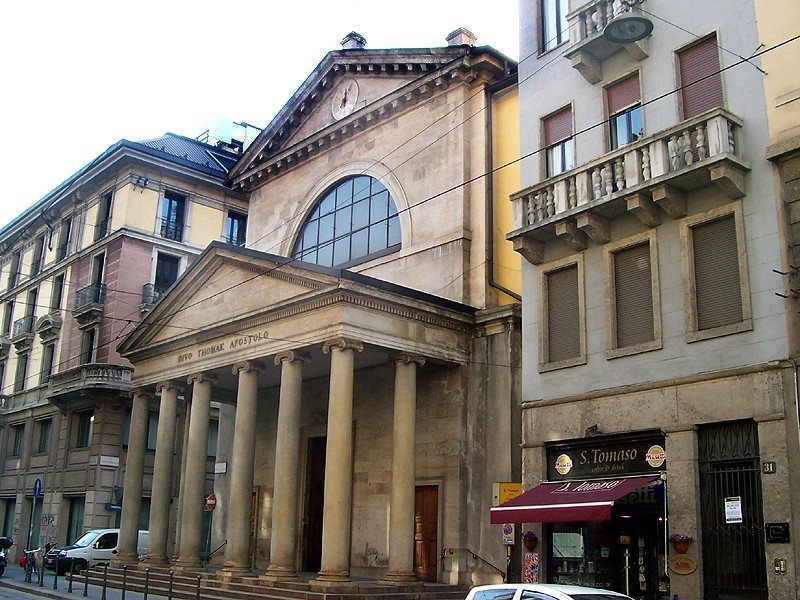
Carlo Borromeo, the cardinal and archbishop of Milan who became a leading figure in Catholic reform, ordered the church rebuilt in 1576. The present structure was completed in 1827, following work on its façade between 1825 and 1827.
After San Nazaro in Pietrasanta was demolished, a statue of the Virgin was transferred to San Tomaso in Terramara in a procession on the night of 15 December 1887. The church follows the Ambrosian rite, Milan’s Catholic liturgical tradition. It is a rectory of the parish of Santa Maria del Carmine in the Archdiocese of Milan, the Catholic district headed by the city’s archbishop, and serves as a chaplaincy for Milan’s Filipino Catholic community.
Remains
Very little of the original church survives. The present building combines early-modern and Neoclassical work, with a lengthwise plan centered on a single nave and a semicircular apse.
Building form
Nave and apse
The nave, the church’s main interior space, extends along the building’s length and ends in a semicircular apse, the rounded end of the church.
Façade
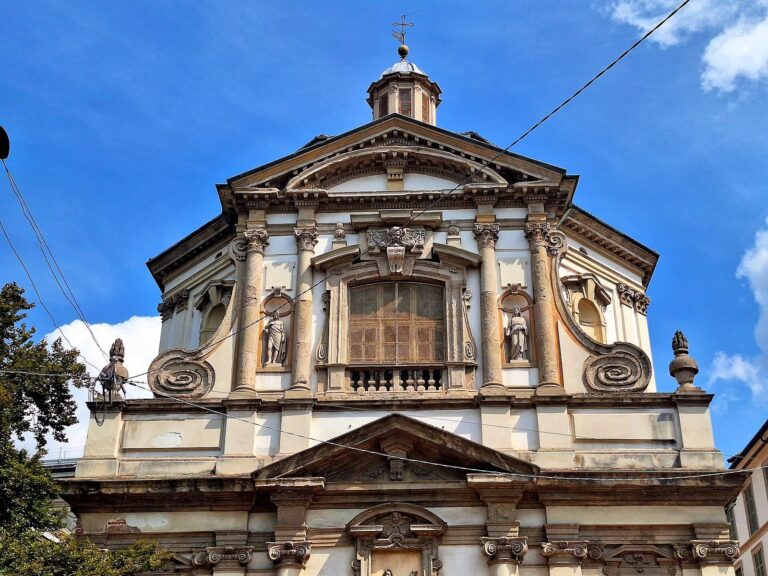
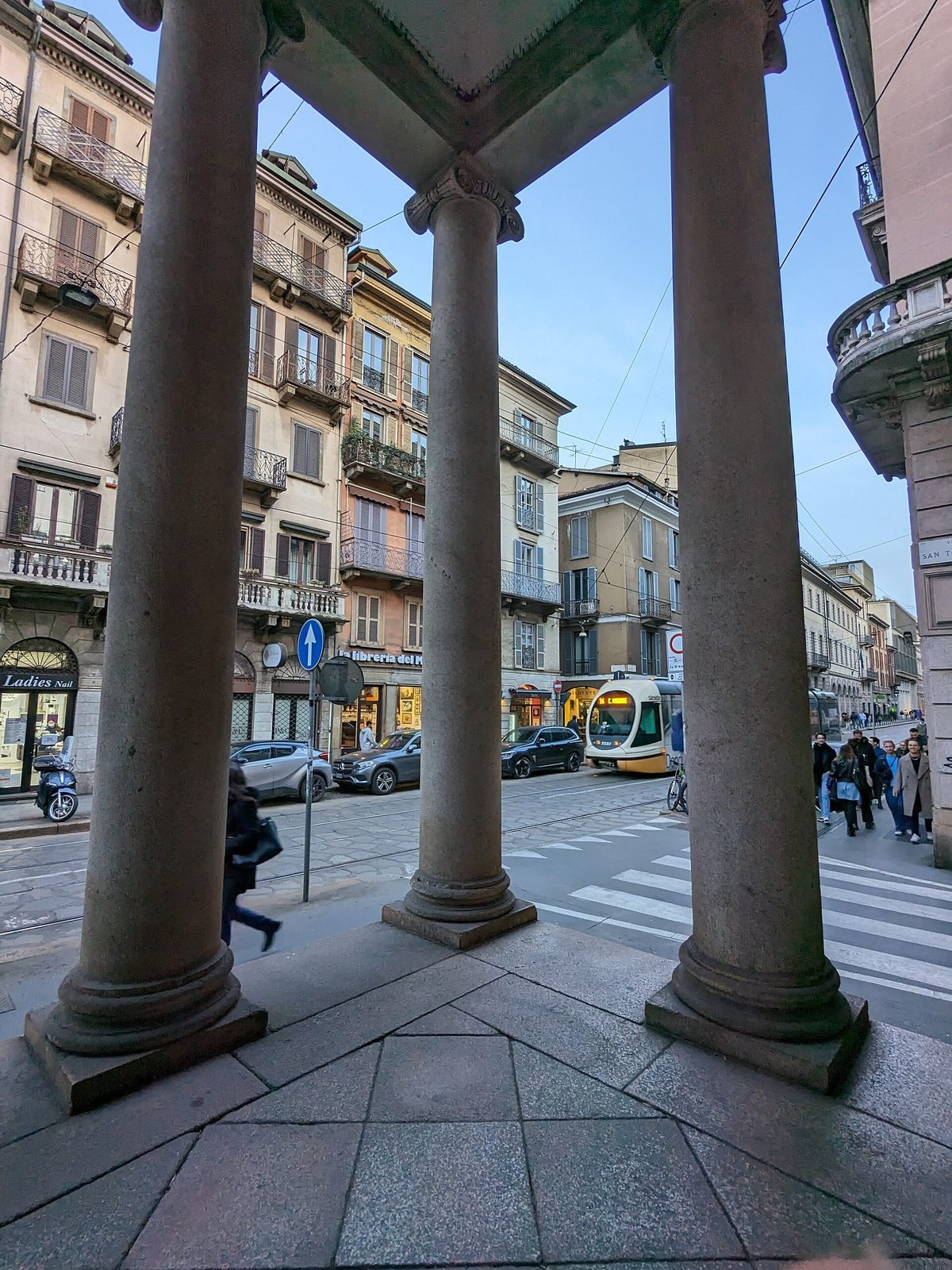
The limestone façade has a portico supported by six Ionic columns, whose capitals have spiral scrolls. Above them, a triangular pediment partly conceals a semicircular window.
Interior furnishings
Apse altar
The apse contains a Neoclassical altar dating to 1779.
Altarpiece
An altarpiece dated 1610 and attributed to Giulio Cesare Procaccini depicts Saint Charles Borromeo’s assumption into heaven. It is also known as The Glory of Saint Charles Borromeo.
Statue of the Virgin
The statue of the Virgin stands in the first chapel on the right. It bears a crown placed by Saint Charles Borromeo.