Church of Elijah the Prophet in Ilyinka: A Monastery Cathedral in Moscow
Site at a Glance
- Popularity
- Medium
- Country
- Russia
- Primary era
- Early Modern
- Eras represented
- Early Modern, Modern
- Civilizations
- Russian
- Site type
- Religious
- Remains
- Church
On this page10 sections
History
The Church of Elijah the Prophet in Ilyinka is a stone Orthodox church in Moscow, Russia, built from 1519 to 1521 as the cathedral of the Ilyinsky Monastery. The monastery stood beside Moscow’s trading square and had been founded no later than the 15th century. The builder came from the common people.
Foundation and monastery years
The church gave its name to Ilyinka Street, while the nearby market became known as the Ilyinsky Crossroads. A side chapel for Saint Clement, an early Christian bishop and martyr, honored the builder’s patron saint.
The church burned in 1547 and suffered damage in a fire in 1626. In between, on May 27, 1606, an uprising in Moscow against False Dmitry I began after an alarm bell rang from the monastery church’s bell tower. False Dmitry I was a claimant to the Russian throne who ruled briefly in 1605 and 1606. The bell sounded on the order of Vasily Shuisky, a Russian nobleman who became tsar in 1606.
Parish church and rebuilding
During the Time of Troubles, a period of political crisis and conflict in Russia in the late 16th and early 17th centuries, the monastery was abolished and the church became a parish church. In 1676, the church and its land passed to the Novgorod archbishop’s house, the archbishop’s residence and administrative establishment. An upper church was added, Elijah’s altar was moved there, and the older lower church was consecrated to the Apostle Timothy.
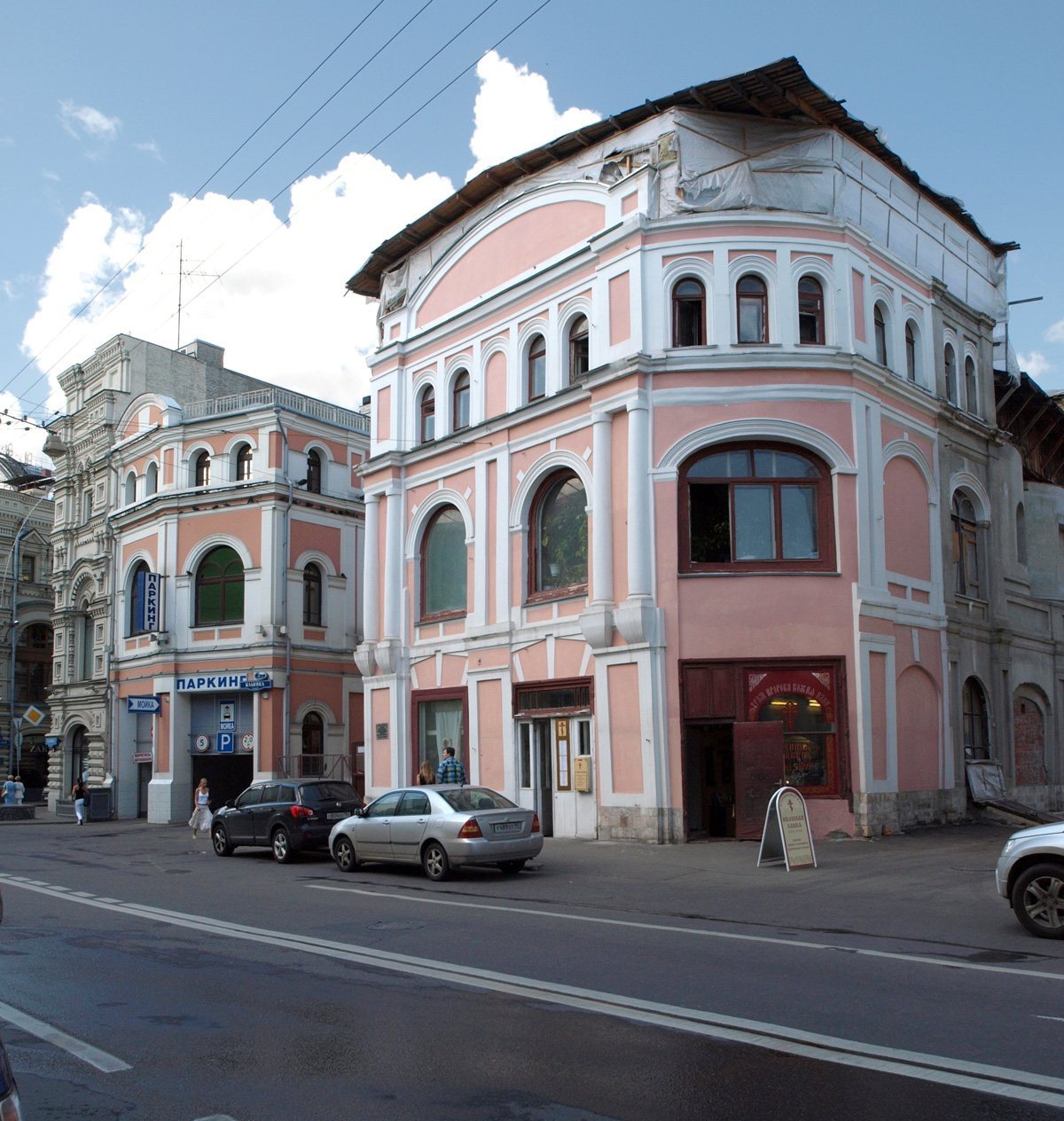
A bell tower was added on the north side in the 1820s. In 1864, substantial rebuilding accompanied the church’s incorporation into the Warm Trading Rows, and the lower church was abolished.
Closure and restoration
The church closed in 1923. Various institutions occupied the building from 1930 to 1980. Worship resumed in 1995, and emergency stabilization and restoration work has taken place since 1998. The church belongs to the Russian Orthodox Church’s Moscow Diocese and Iver Deanery, a grouping of local parishes, and is a federal-level cultural heritage property.
Remains
Building and surviving features
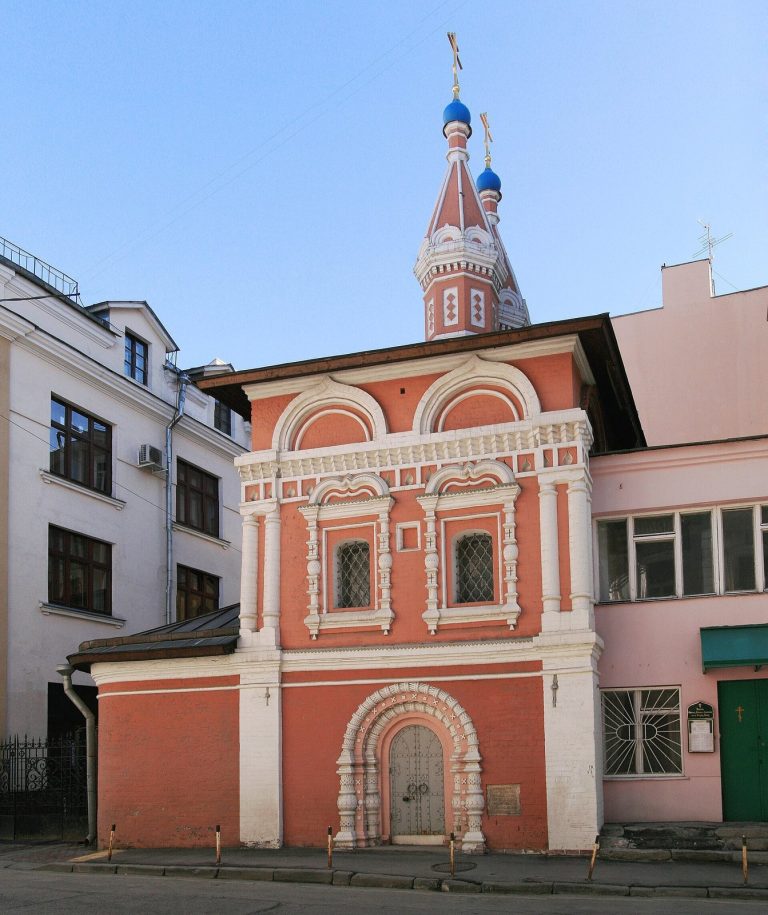
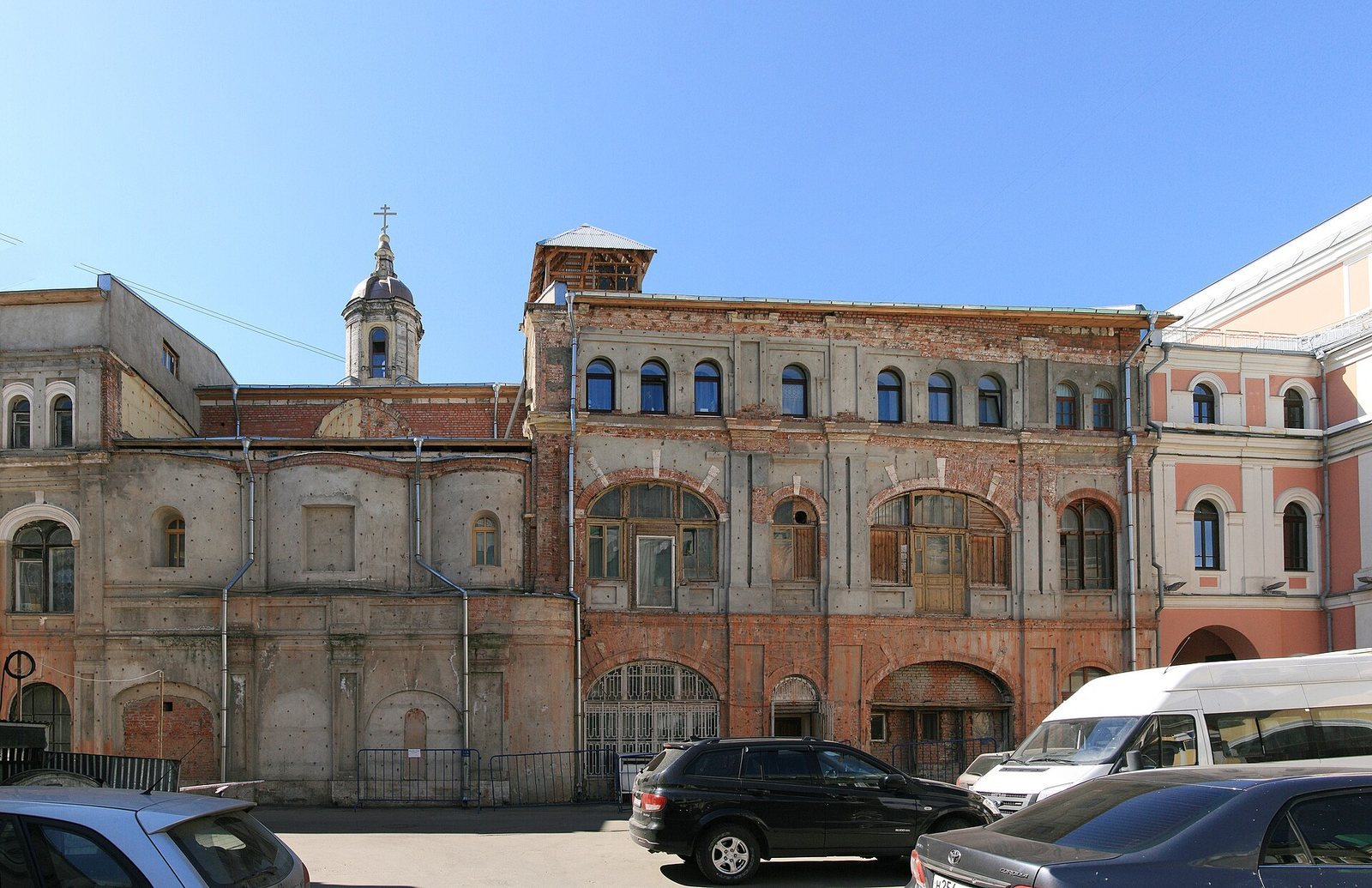
The stone church preserves the volume of its older building, exposed below the present street level. Its historic arrangement included upper and lower churches, alongside a southern apse and a northern bell tower.
Upper and lower churches
The building’s two church levels had distinct dedications. The upper church contained the altar of the Prophet Elijah, while the lower church was dedicated to the Apostle Timothy.
South apse
A chapel dedicated to Clement occupied the south apse. A stairway was later installed in the south apse of the upper church.
Facade and gallery
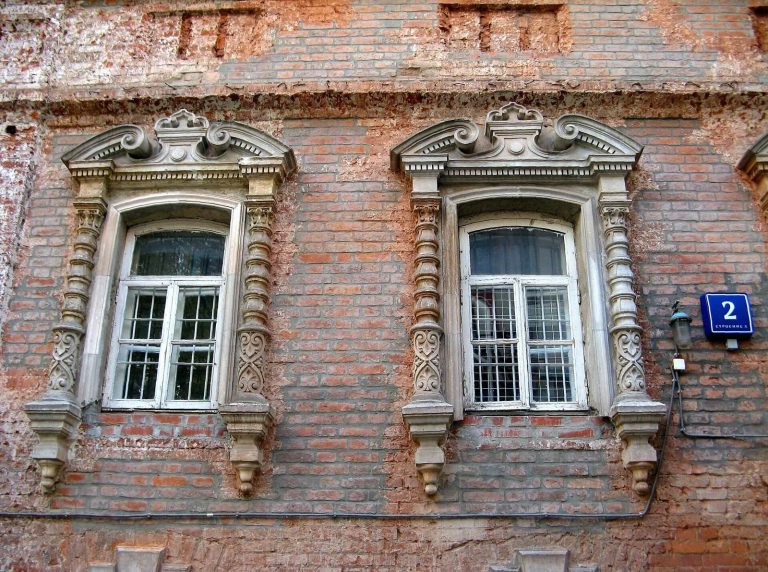
Rebuilding altered the church’s facade, and its gallery was removed.
Northern bell tower
The bell tower on the north side survives without its upper tier, which was dismantled after the church closed.