Christ the King Church in Leśna: A Roman Catholic Auxiliary Church
Site at a Glance
- Popularity
- Very Low
- Country
- Poland
- Primary era
- Early Modern
- Eras represented
- Early Modern, Modern
- Civilizations
- Electorate of Saxony, Holy Roman Empire, Kingdom of Bohemia
- Site type
- Religious
- Remains
- Church
On this page7 sections
History
From predecessor to Baroque rebuilding
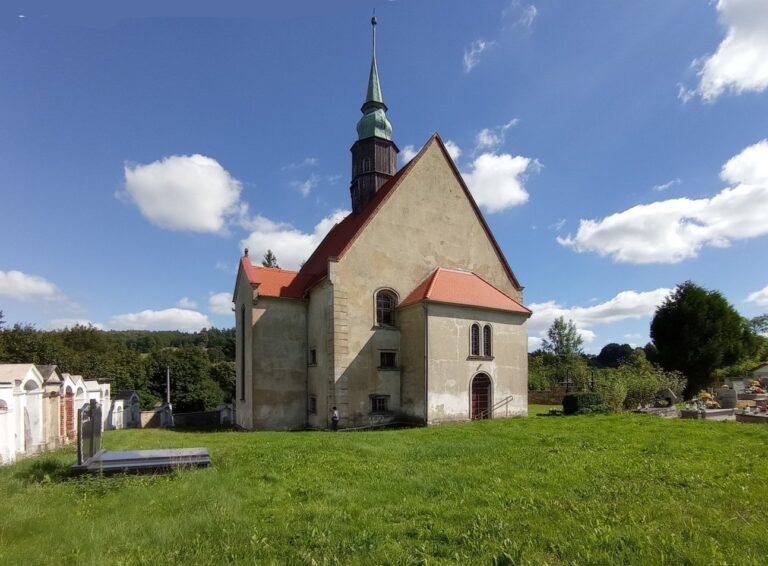
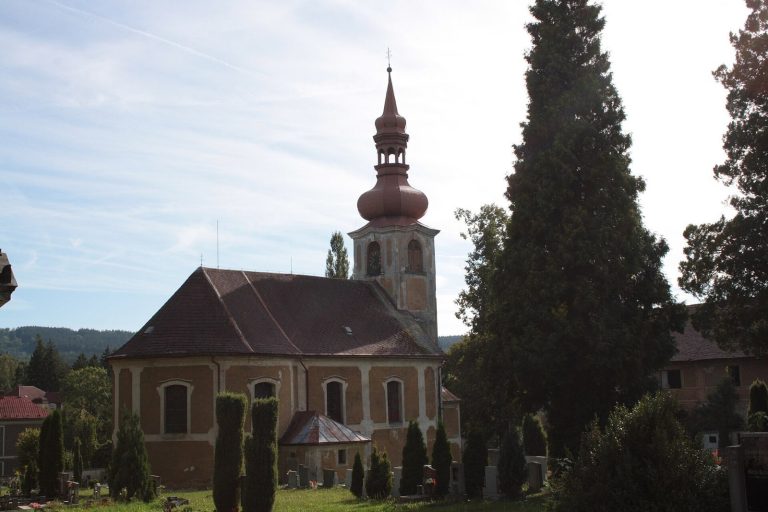
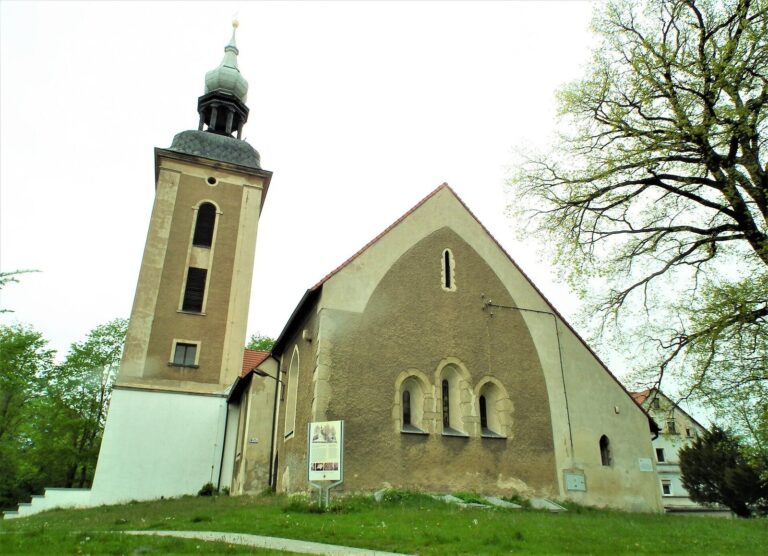
Christ the King Church in Leśna is a Roman Catholic auxiliary church in Poland. A church on the site is mentioned in 1346, while the present building was erected in the late 16th century. It gained a southern nave in 1685. A fire that swept through the town in 1702 burned the church, which was rebuilt between 1702 and 1711.
Later alterations and rebuilding
The church was altered in 1852–1853, and work to reconstruct its tower was completed in 1919. War damage led to another rebuilding in 1961–1962.
Religious use
The church remained Protestant until 1945. It is now a Roman Catholic auxiliary church, a secondary church serving a parish alongside its principal church, and belongs to the Parish of St John the Baptist in Leśna. Dedicated to Christ the King, a Christian title for Jesus, it celebrates the Solemnity of Our Lord Jesus Christ, King of the Universe, a feast in the Christian liturgical calendar.
Remains
Building plan and exterior
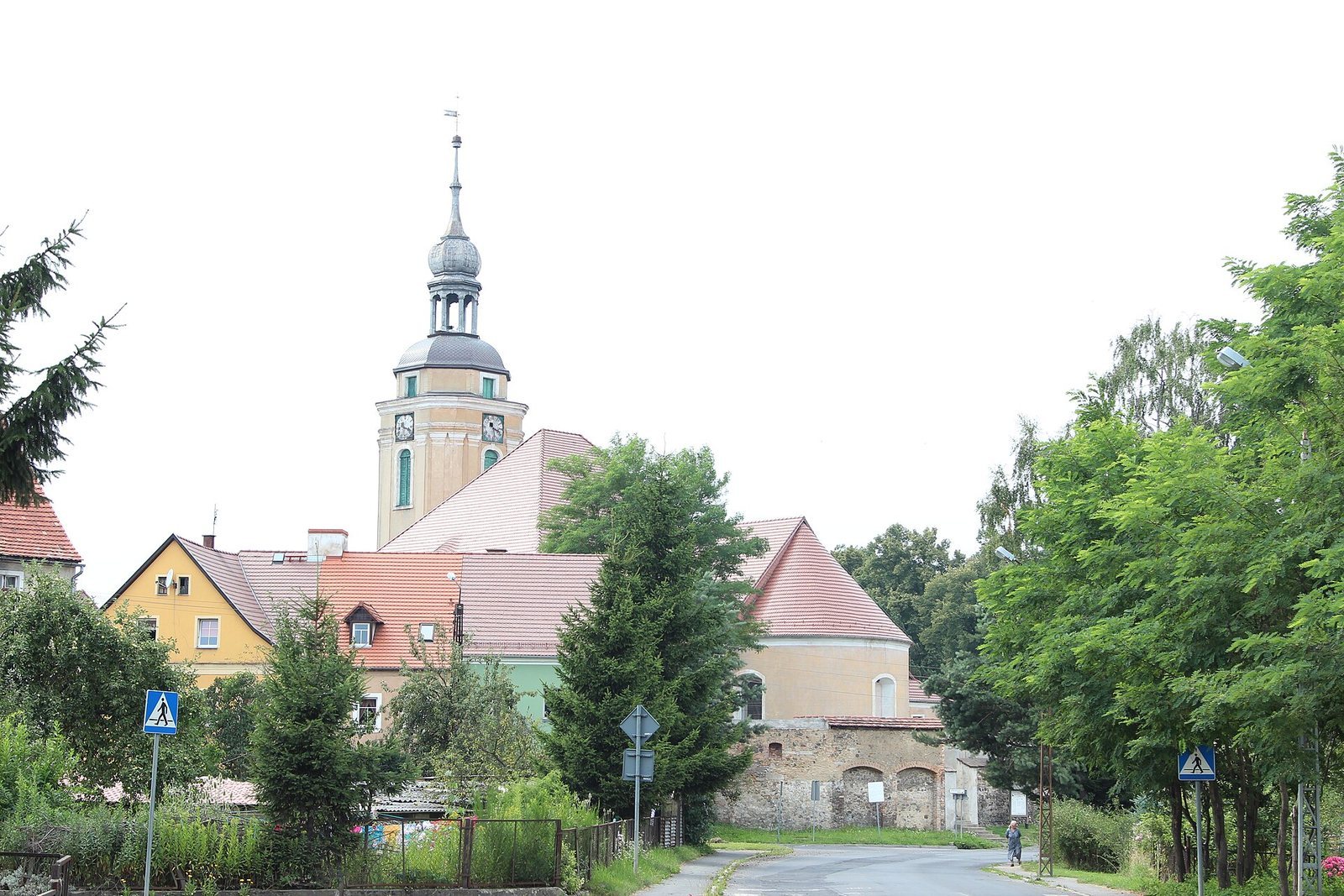
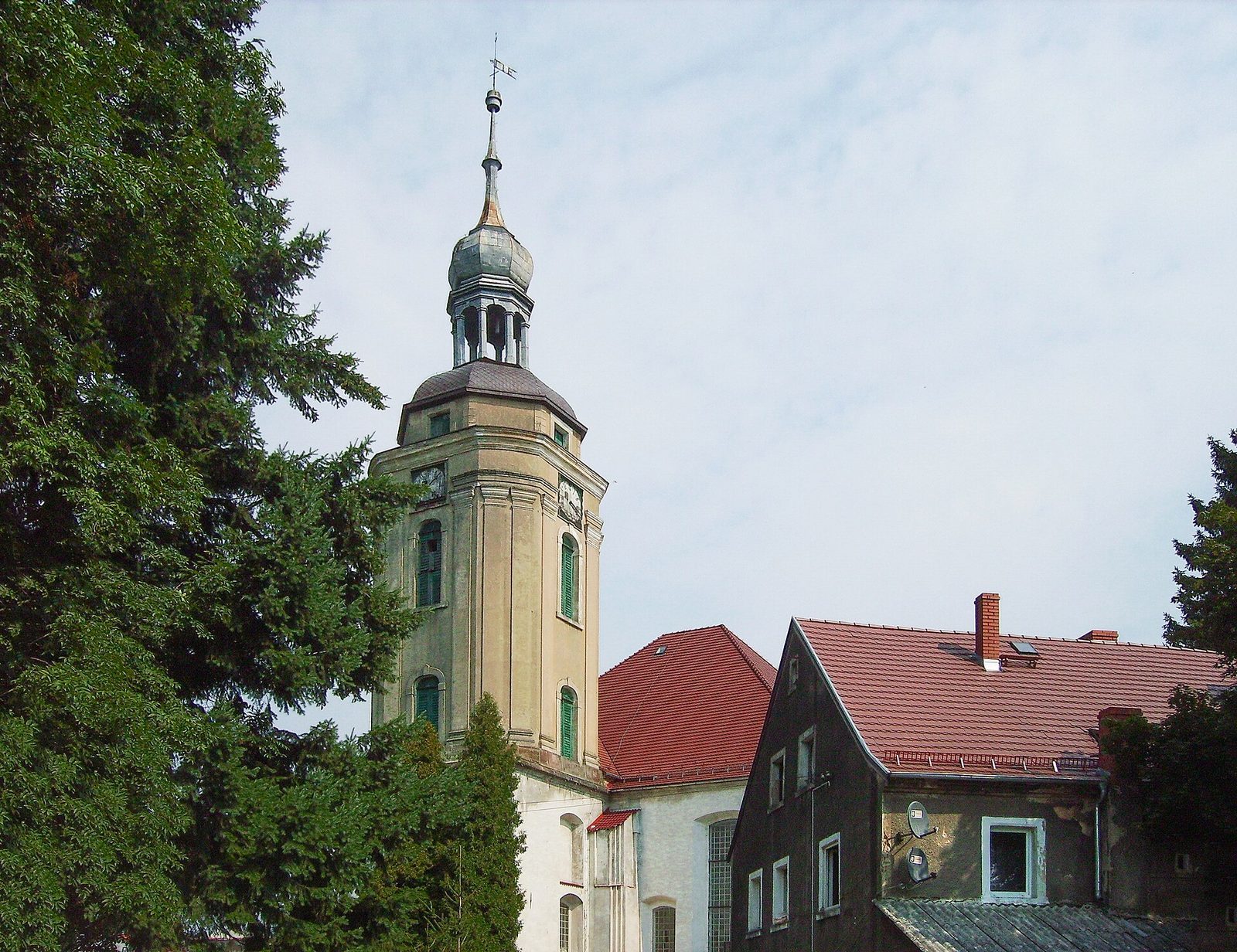
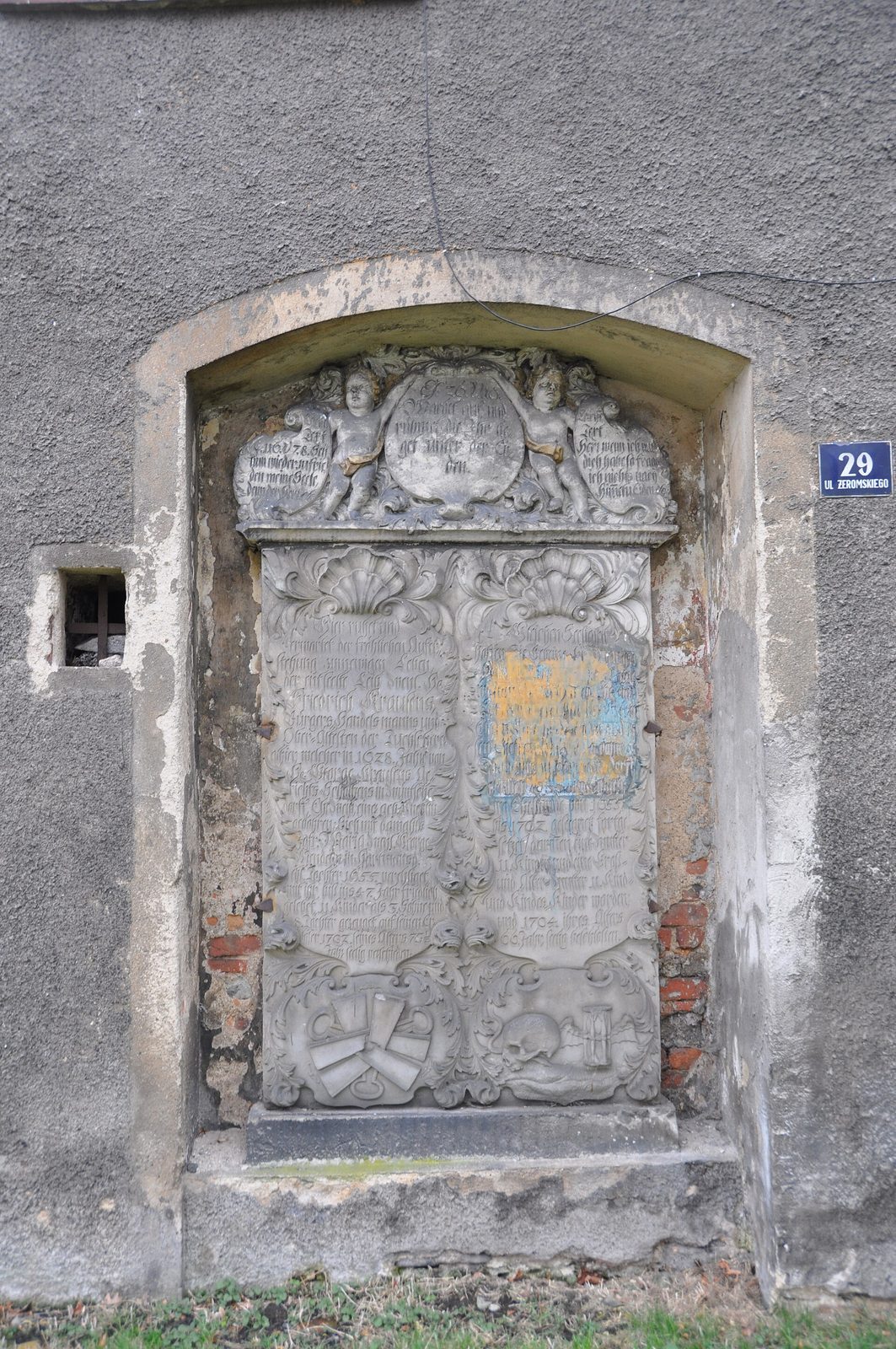
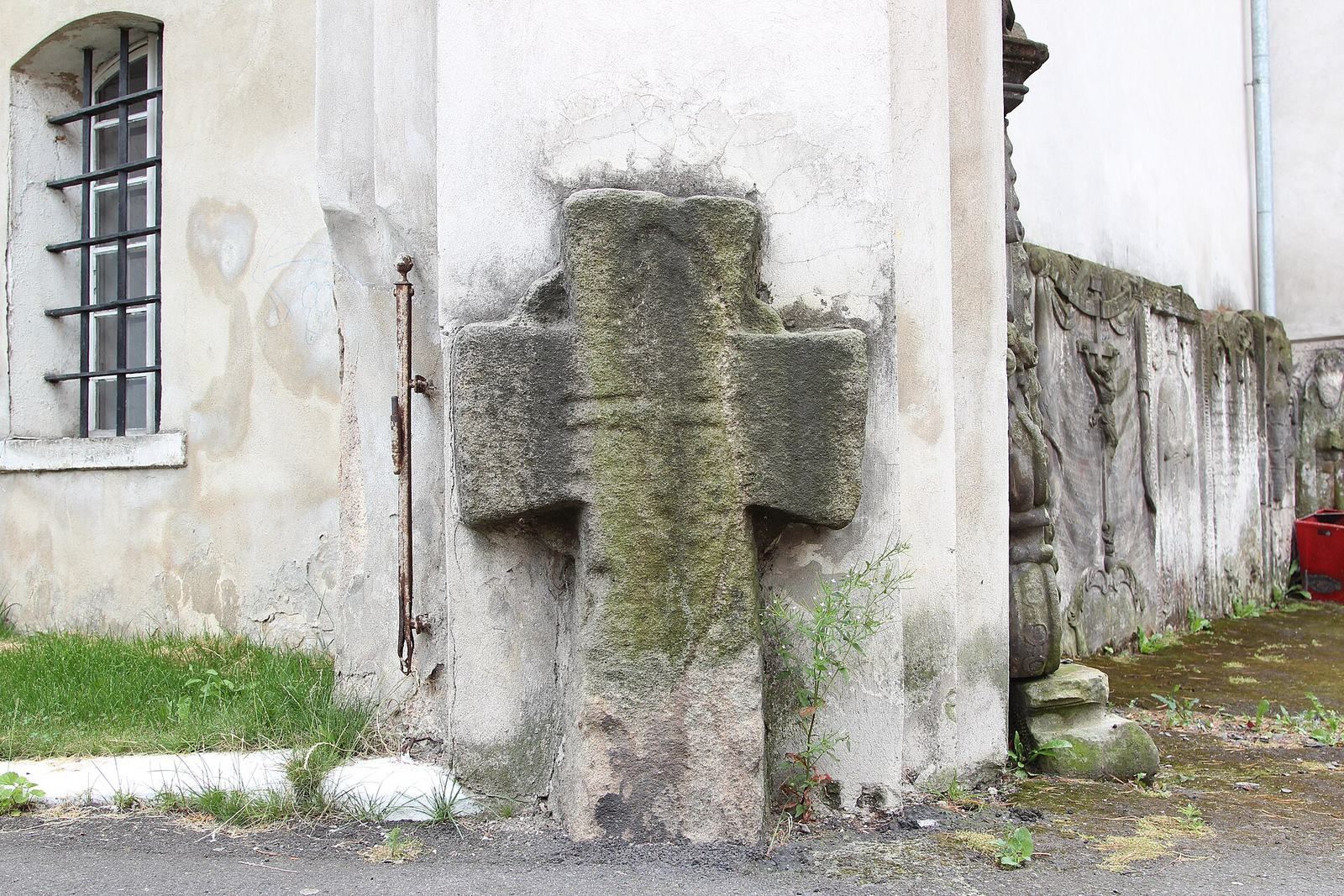
Built of brick masonry and rebuilt in the Baroque style, the church has two naves and a body divided into three structural sections. Buttresses support parts of the building. A rectangular chancel, the area around the altar, continues into a semicircular apse, a projecting rounded end. A square-plan tower stands at the west end. Stone epitaphs and tomb slabs from the 16th to 18th centuries remain on the exterior walls. A stone penitential cross, associated with penance, is set into a wall and accompanied by a halo.
Interior
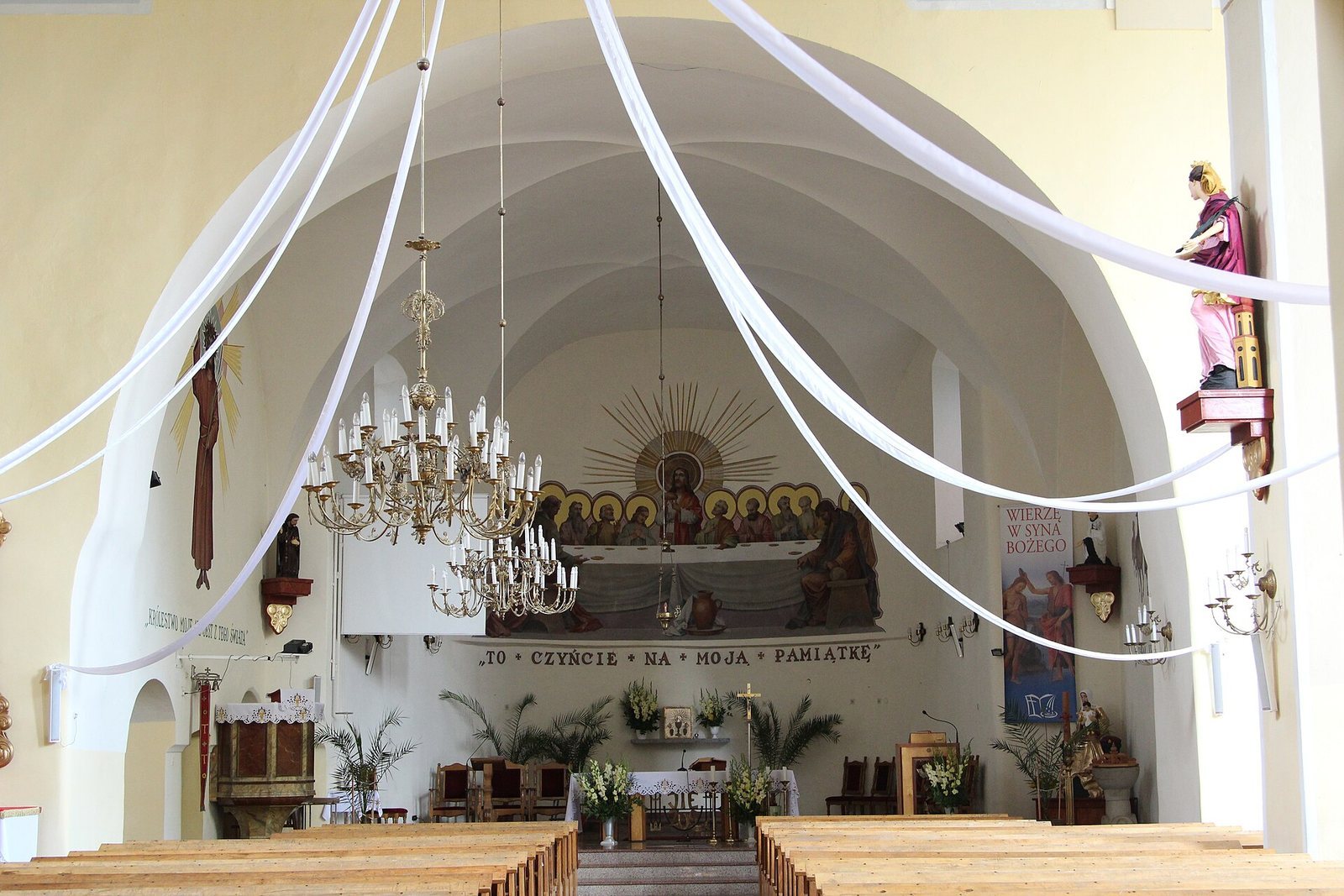
Intersecting barrel-shaped ceilings form cross vaults over the interior; in the naves, square pillars support them. The church contains three altars and a sculpture of John of Nepomuk, a 14th-century Bohemian priest venerated as a martyr in the Catholic Church. Its organ was built in 1970 by the Böhme organ-building workshop of Lubań. It has a Romantic tonal character, associated with Romantic-era music and instrument design, and includes 20 stops, or sets of pipes producing particular tones, two hand-operated keyboards, and a foot-operated keyboard.