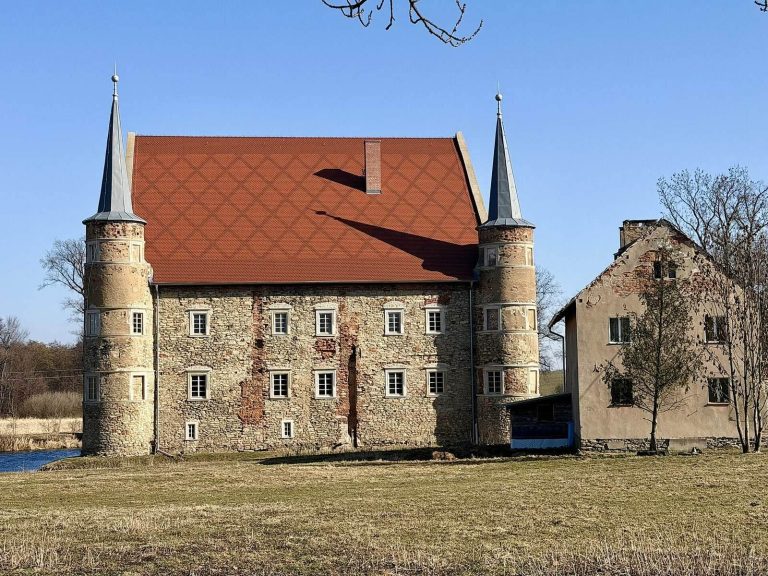
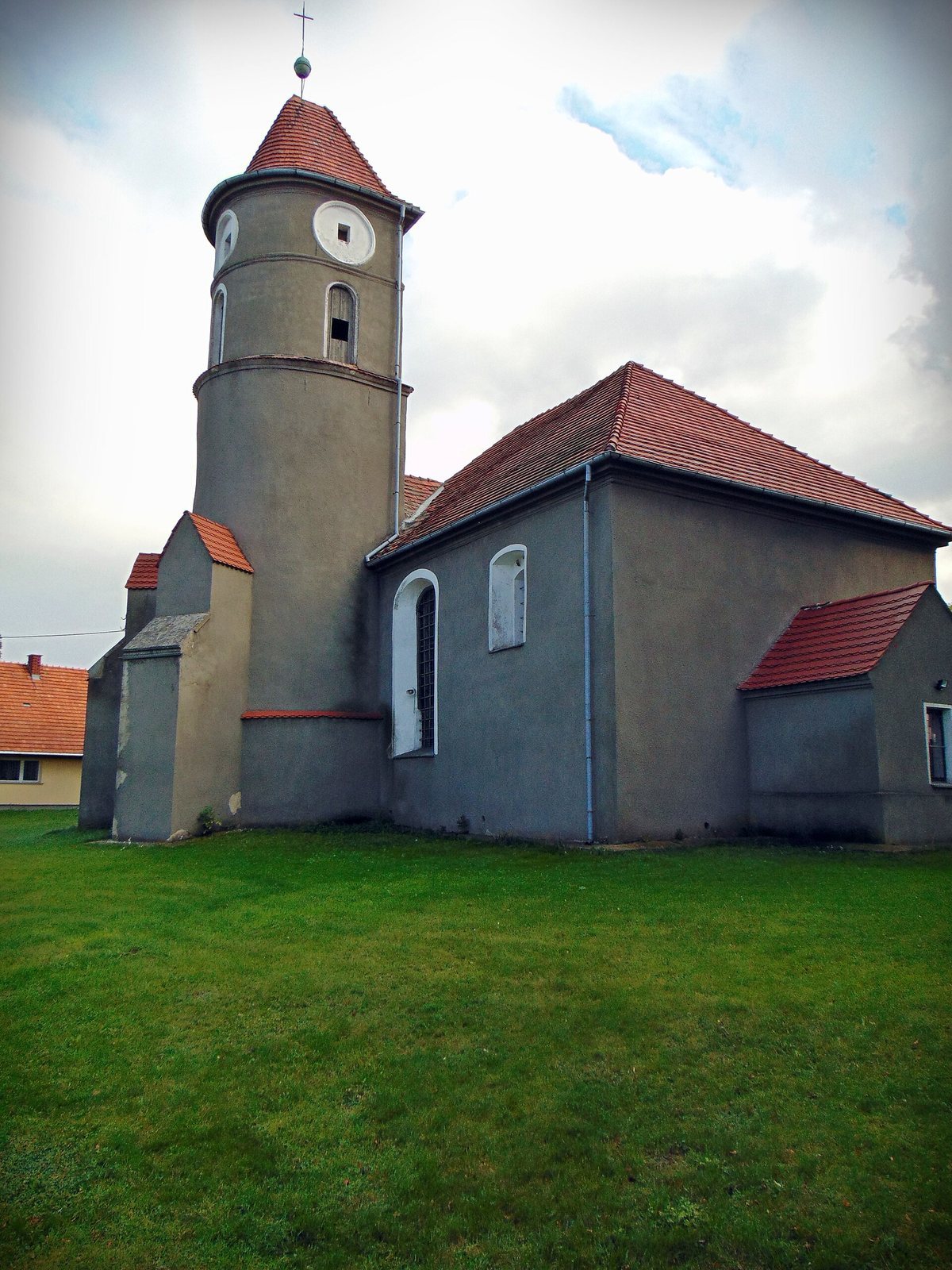
Church of Saints Peter and Paul in Rusko: A Filial Roman Catholic Church
Site at a Glance
- Popularity
- Very Low
- Country
- Poland
- Primary era
- Early Modern
- Eras represented
- Early Modern
- Civilizations
- Holy Roman Empire, Kingdom of Bohemia
- Site type
- Religious
- Remains
- Church
On this page6 sections
History
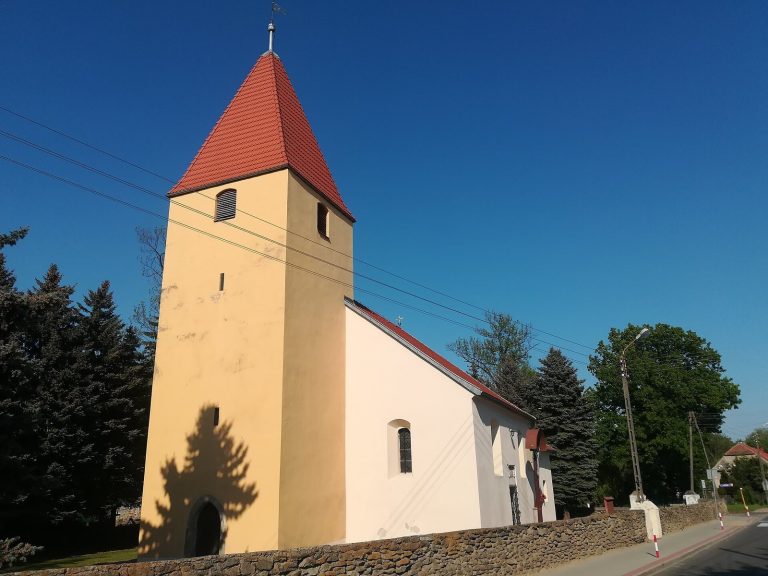
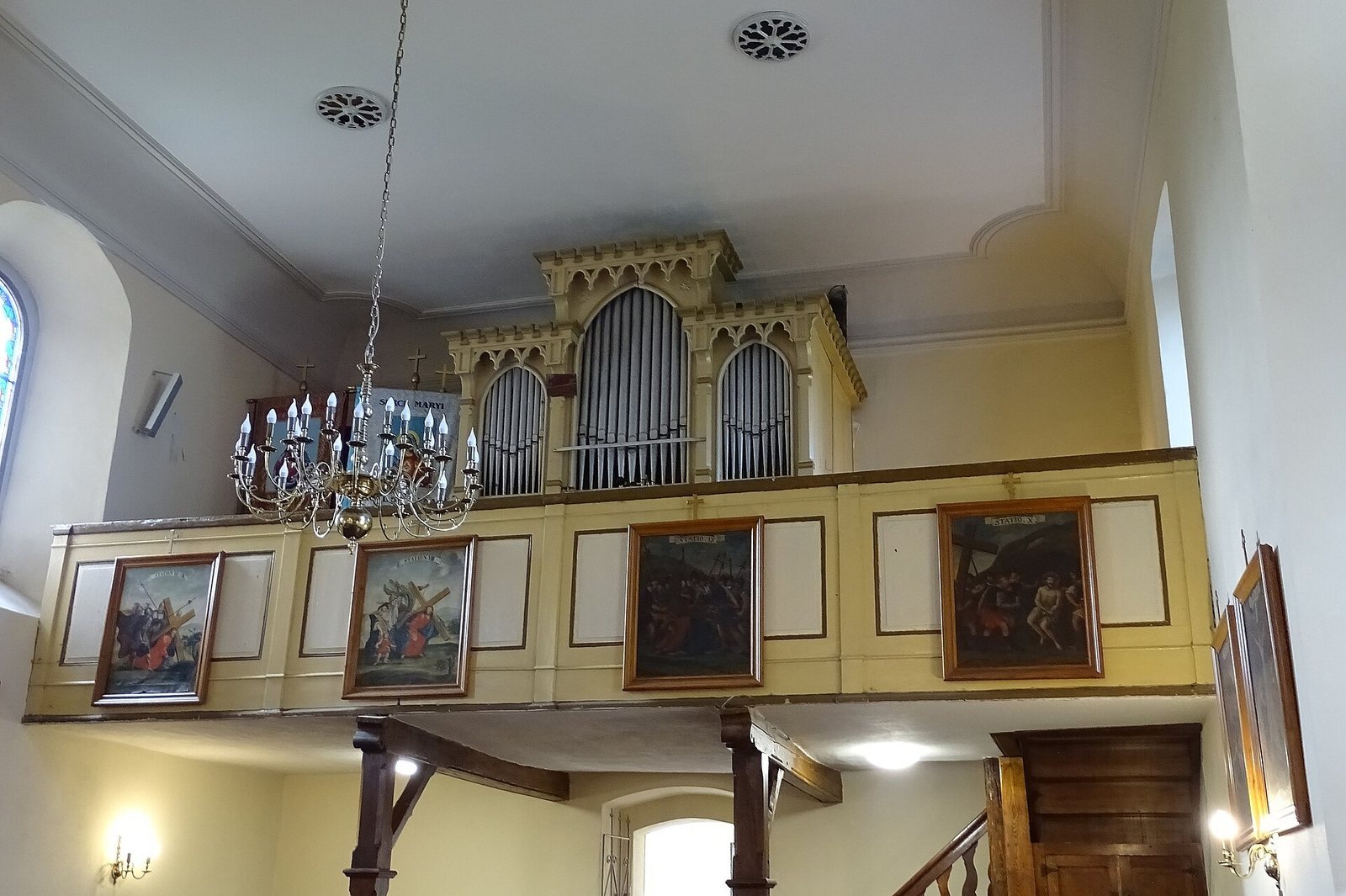
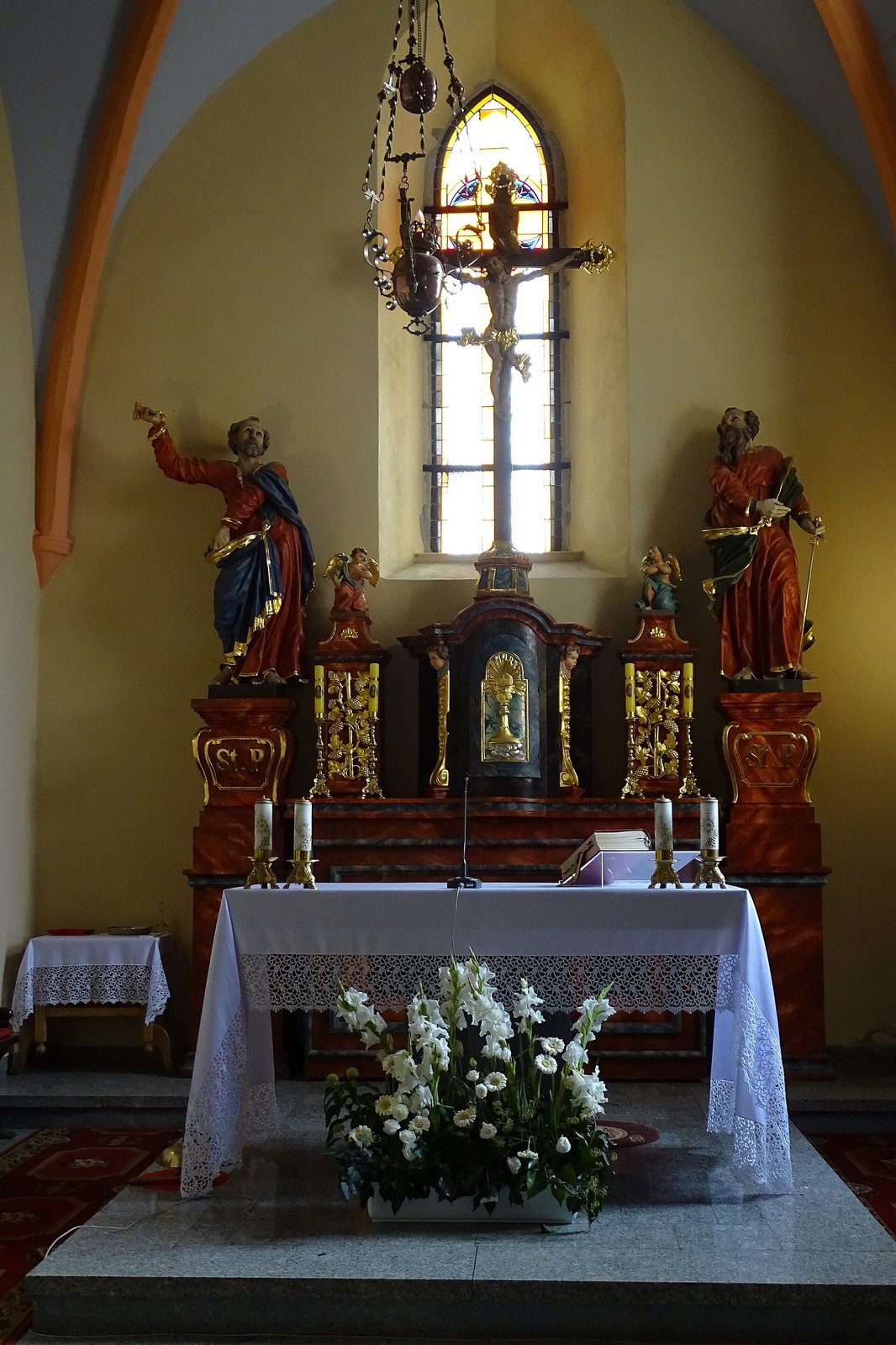
The Church of Saints Peter and Paul in Rusko, Poland, is a Roman Catholic church dedicated to Peter, one of Jesus’s apostles, and Paul, an early Christian missionary. Built around 1500, it was remodeled in the second half of the seventeenth century. The church serves as a filial church, a subordinate church within a larger parish, of the Parish of St John the Baptist in Jaroszów. John the Baptist was a biblical preacher who baptized Jesus.
Remains
The surviving features include a stone cross beside the church cemetery wall, memorial slabs inside the church, and slabs set into the church wall.
Memorial features
Penitential cross
A stone penitential cross, associated with penance or atonement, stands beside the church cemetery wall.
Interior tomb slabs
A figural slab commemorates Ursula von Schafberger (1580–1608), wife of Georg von Schramb of Mąkolice, and bears the Schafberger and Schramb coats of arms. Another slab commemorates Georg von Kalckreuth (1522–1585) of Mikoszów, with the Kalckreuth and Gelhorn arms on his paternal side and the Pannwitz arms on his maternal side. A slab for Magdalena von Schafeberger (1589–1599), daughter of Antoni von Schafeberger, carries two coats of arms, including her paternal Schafeberger arms. The slab for the child Christof von Landsckrona, son of Georg von Landsckrona, bears four coats of arms. Another commemorates Antoni von Schafberger, his wife, and their children. A separate slab depicts a married couple kneeling before the crucified Christ.
Slabs in the church wall
A wall slab commemorates Leonhart Schindl, who died in 1572; its upper and lower sections are separately identified. The wall also contains a slab for Tobias Falckenhain, who died in 1612, and one for an unidentified man. Another bears the von Seidlitz coat of arms and gives 1616 as a year of death.