3 Szczepański Square in Kraków: Former Hospital and Historic Tenement
Site at a Glance
- Popularity
- Very Low
- Country
- Poland
- Primary era
- Modern
- Eras represented
- Medieval, Early Modern, Modern
- Civilizations
- Austria-Hungary, Habsburg, Polish–Lithuanian Commonwealth
- Site type
- Domestic
- Remains
- House
On this page6 sections
History
Hospital foundation
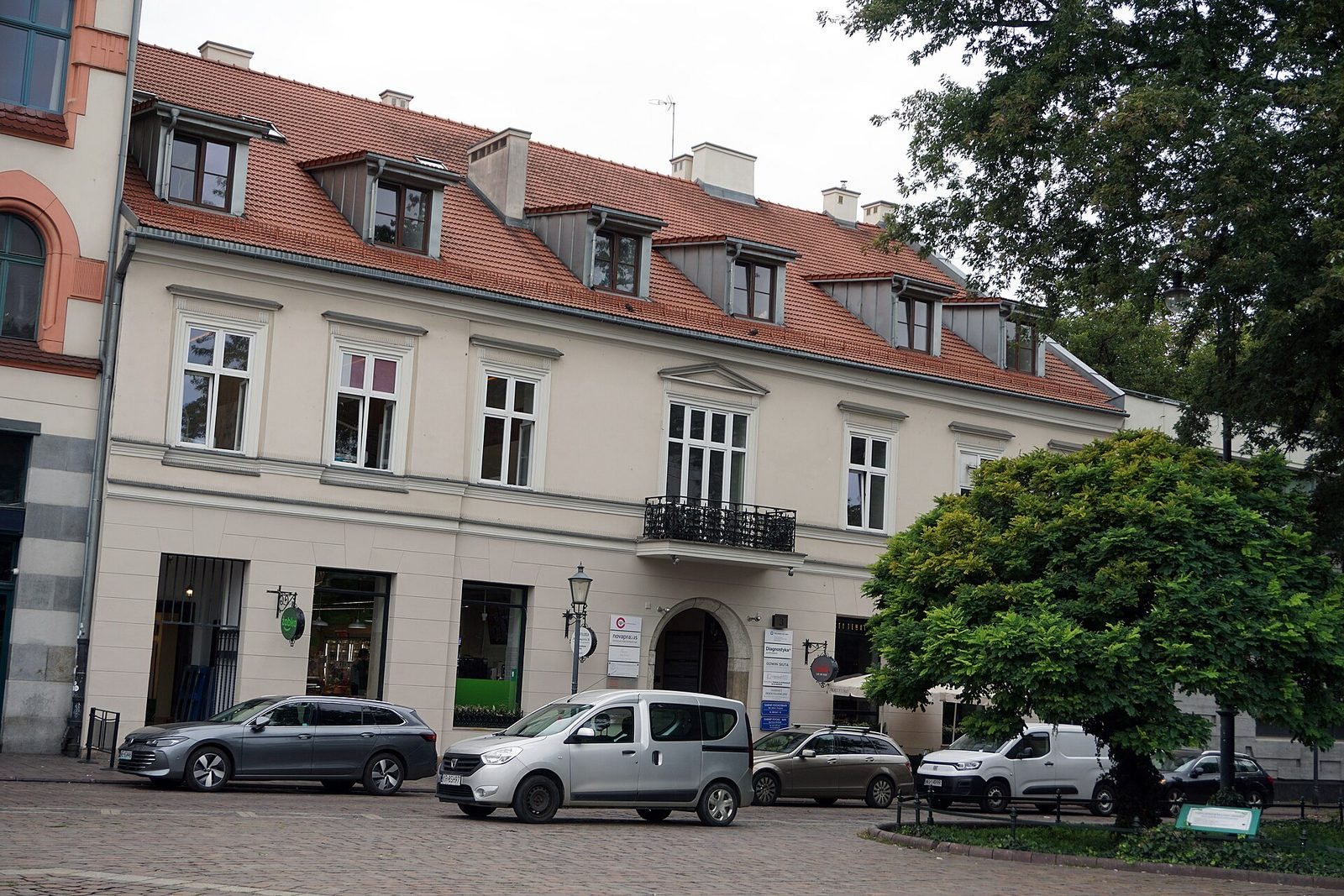
3 Szczepański Square in Kraków, Poland, is a historic tenement built in 1588 as a hospital for poor merchants during an epidemic. Two medieval plots were joined for the project; one had belonged to innkeeper Walenty Sporek. The founders were Hieronim Powodowski, parish priest of St. Mary’s Church, city councillor M. Fihauzer, and burgrave M. Doroszewski, an administrative official. The institution was first known as the Hospital of the Brotherhood of Our Lady, a religious confraternity devoted to worship and charity, or the Beggars’ Hospital. It later took the name Hospital of St. Stephen.
A pharmacy and infirmary operated in the building, with young members of a religious order working there. In 1628, Bishop Marcin Szyszkowski provided further endowment for the sick and called for care to extend to all sick and impoverished residents of Kraków. Renovations in the first half of the eighteenth century brought new furnishings and an altered façade. A crucifix placed there gave the house its name. The Charity Society took over the hospital in 1817, and it closed that year.
Residence and commercial uses
The vacant building was sold at auction and purchased by A. Szewelski in 1818. He had it converted into a residence to a design by J. Postawka. General Kajetan Żeromski lived there in the mid-nineteenth century. His nephew, the writer Stefan Żeromski, drew on him when creating Rafał Olbromski in Ashes. The Musical Society took possession of the property in 1876.
Roman Drobner bought the building in 1890 and used part of the ground floor for a shop selling chemical and sanitary goods, paints, and sports equipment. The remaining part housed a restaurant and café. In 1904, Drobner commissioned architect Jan Zawiejski to design a café pavilion on the garden site toward Planty. A fire on 5 February 1907 destroyed the roof and consumed the pavilion, which was rebuilt soon afterward. After Drobner’s death in 1913, partial reconstruction enabled the Wisła cinema to open on the upper floor. The Szarski family acquired the property in 1927.
Occupation and later adaptation
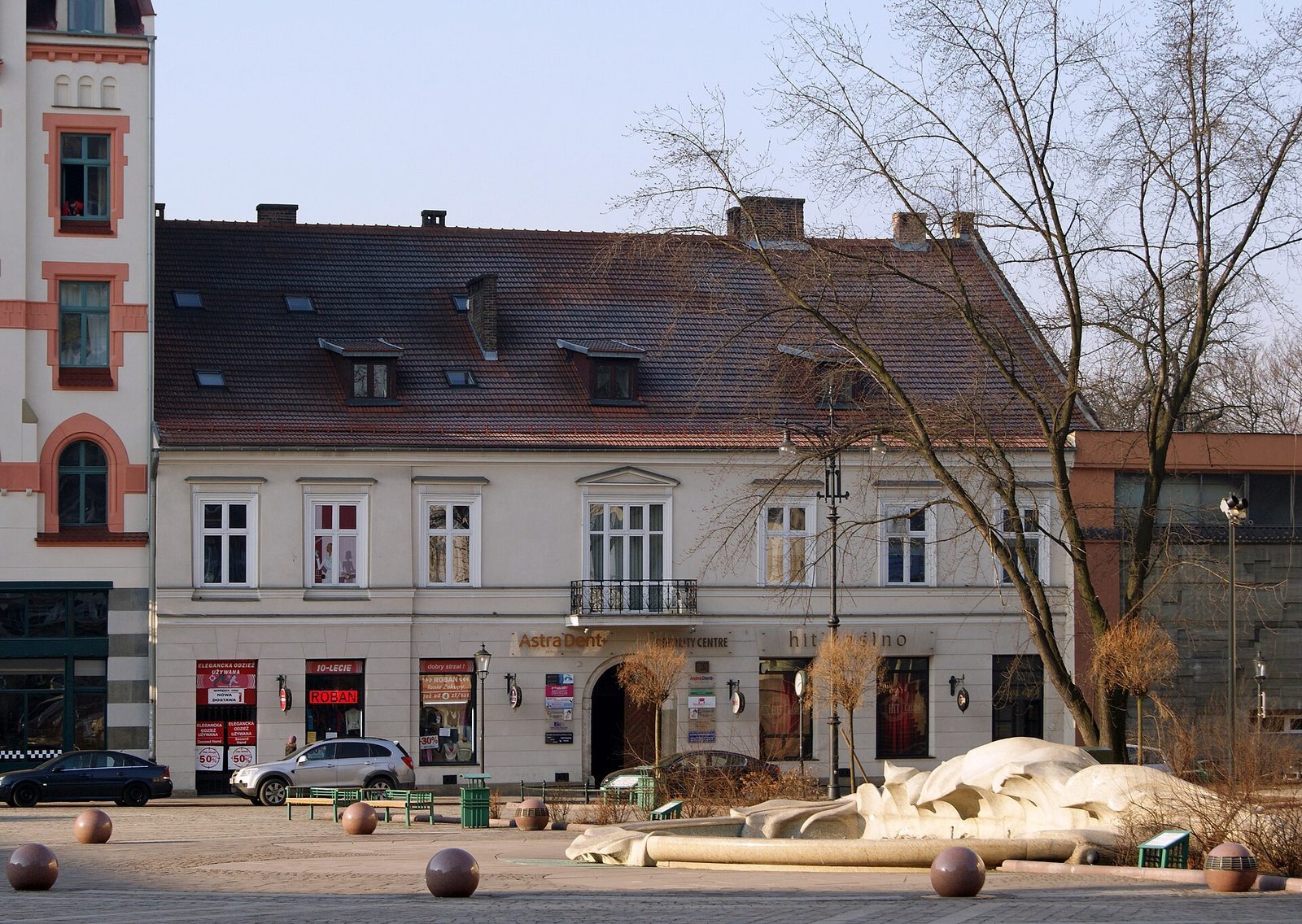
In 1940, the occupying authorities took control of the building and proposed demolishing it to make way for a hotel. Repairs carried out in 1951–1952, to a design by Cz. Wallis, adapted it for offices used by Orbis, a Polish travel enterprise, and the Association of Polish Artists of Theatre and Film. A rear annex for a medical clinic was added after 1990, and the façade was renovated late in the twentieth century. The tenement is the oldest building on Szczepański Square.
Remains
The tenement and its grounds
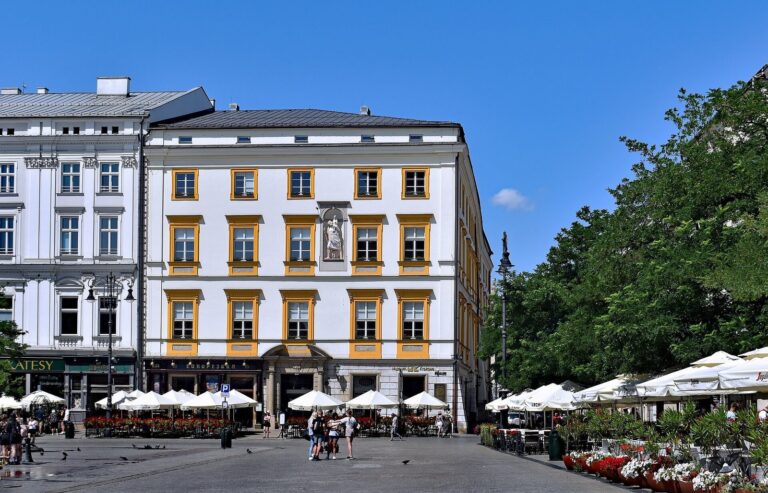
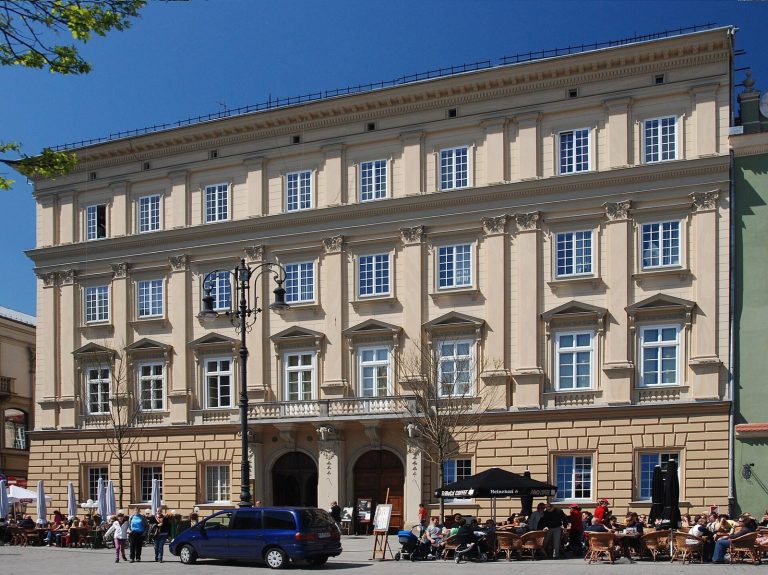
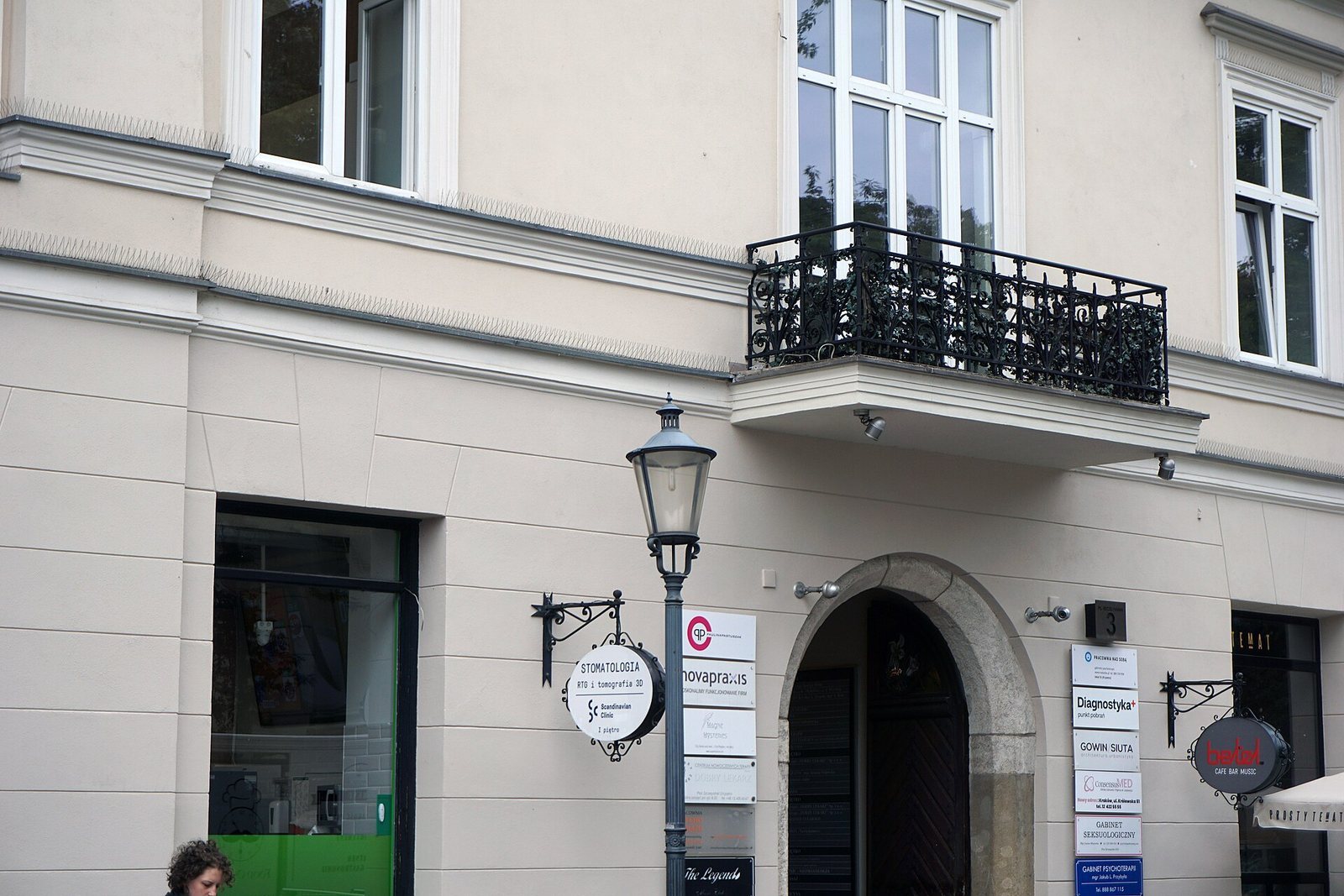
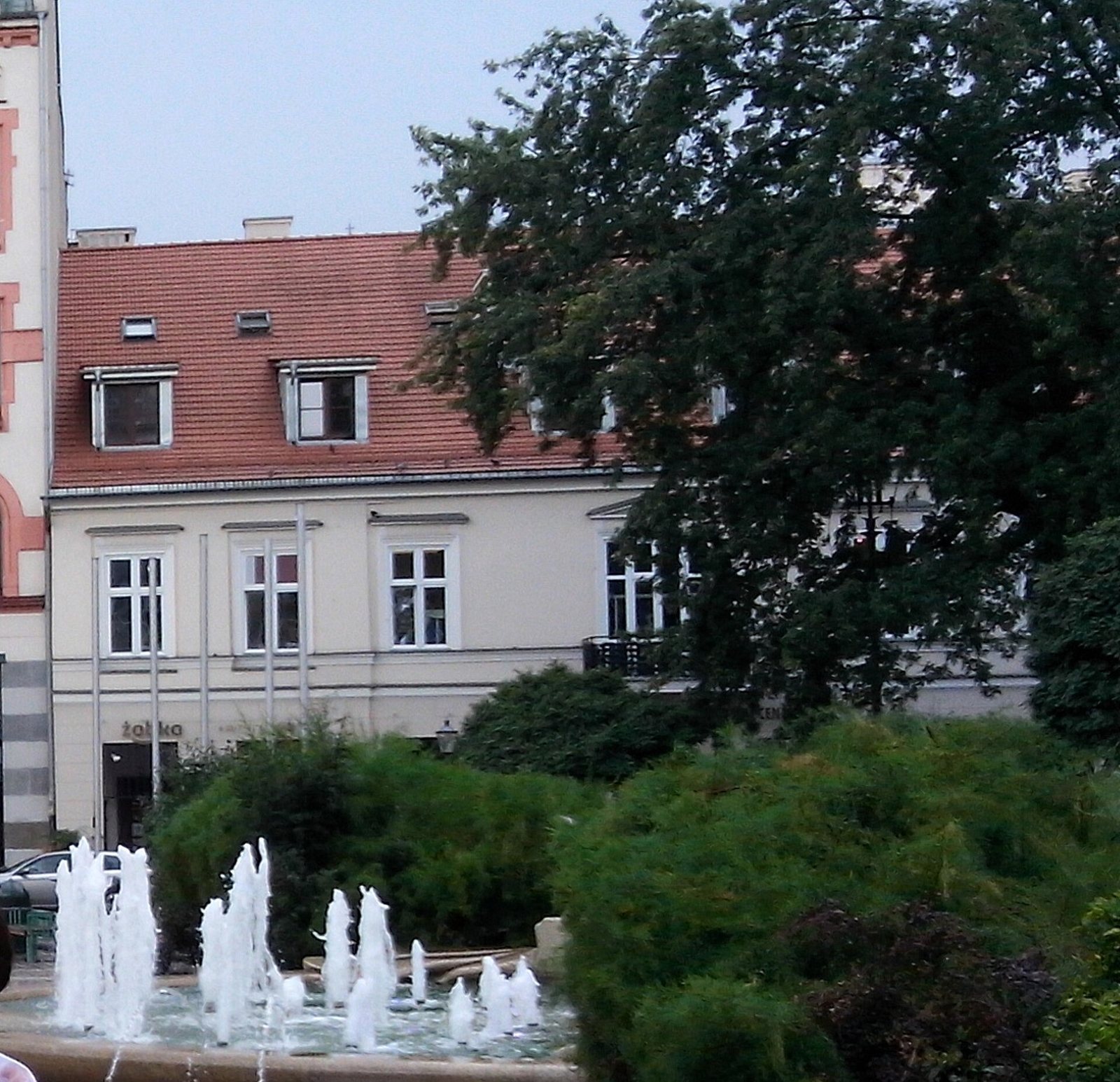
The spacious, two-storey building retains medieval wall sections, vaulted cellars, and portals, while its overall form largely follows Postawka’s residential design. That design featured a sand-coloured façade framed by two large corner buttresses, a central entrance gate, and a mansard roof covered with shingles. The building had a chapel, and a garden lay on the side toward the city walls. A glazed café pavilion known as the Drobnerion occupied the former garden site toward Planty. The façade once carried sculptures, religious paintings, and a crucifix, which is now in a Reformed Franciscan monastery. The rear annex, added after 1990, was intended for use as a medical clinic.