Santa Maria Assunta: A Renaissance Parish Church in Arrone, Italy
Site at a Glance
- Popularity
- Low
- Country
- Italy
- Primary era
- Medieval
- Eras represented
- Medieval, Early Modern
- Civilizations
- Papal States
- Site type
- Religious
- Remains
- Church
On this page13 sections
History
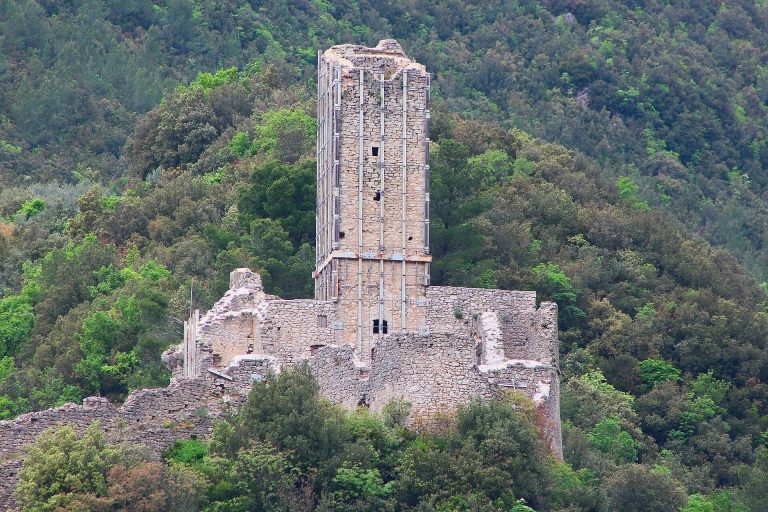
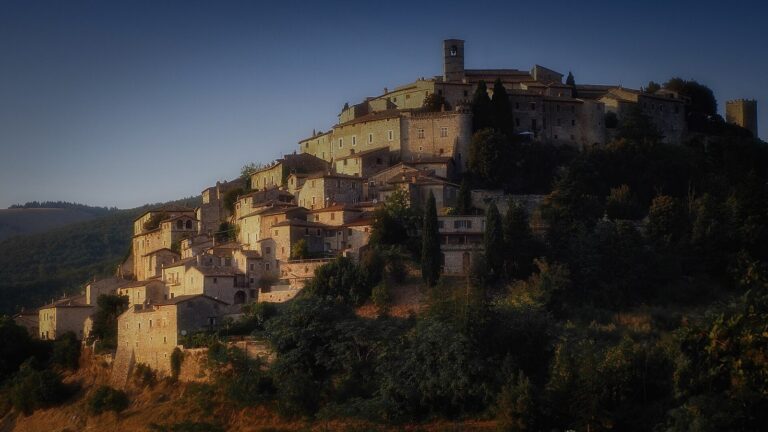
Santa Maria Assunta is a Renaissance Roman Catholic parish church in Arrone, Italy, built in the early fifteenth century outside Arrone Castle. Renaissance art belonged to a broad European movement that renewed interest in classical art and learning. The church stood in a newly established district that took its name from it and is affiliated with the Archdiocese of Spoleto-Norcia, a major territorial jurisdiction of the Roman Catholic Church.
The Arrone community commissioned frescoes, wall paintings made on wet plaster, for the central triumphal arch, which separates the main church from the apse, its often rounded end. Images of the Virgin drew on Filippo Lippi’s cycle of her life in Spoleto Cathedral. This approach was also adopted in other churches in the diocese.
A three-panel altarpiece from the church was stolen around 1970. It was recovered and returned to the municipality in March 2024.
Remains
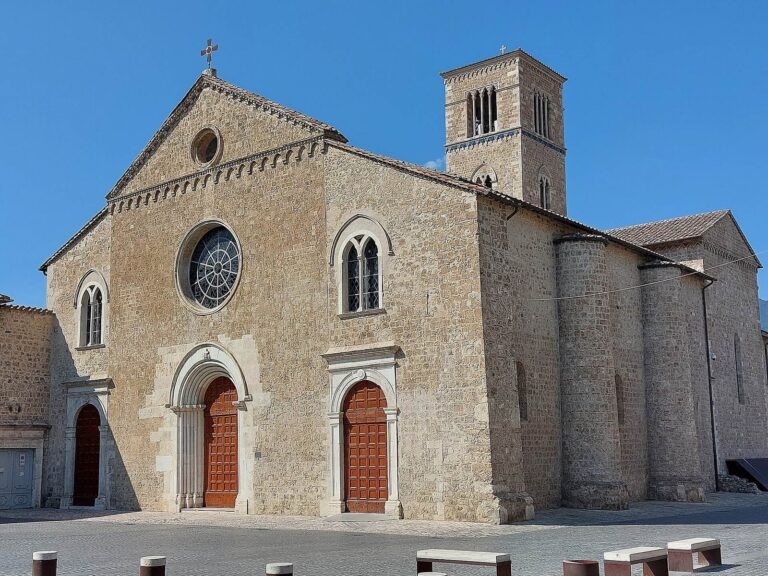
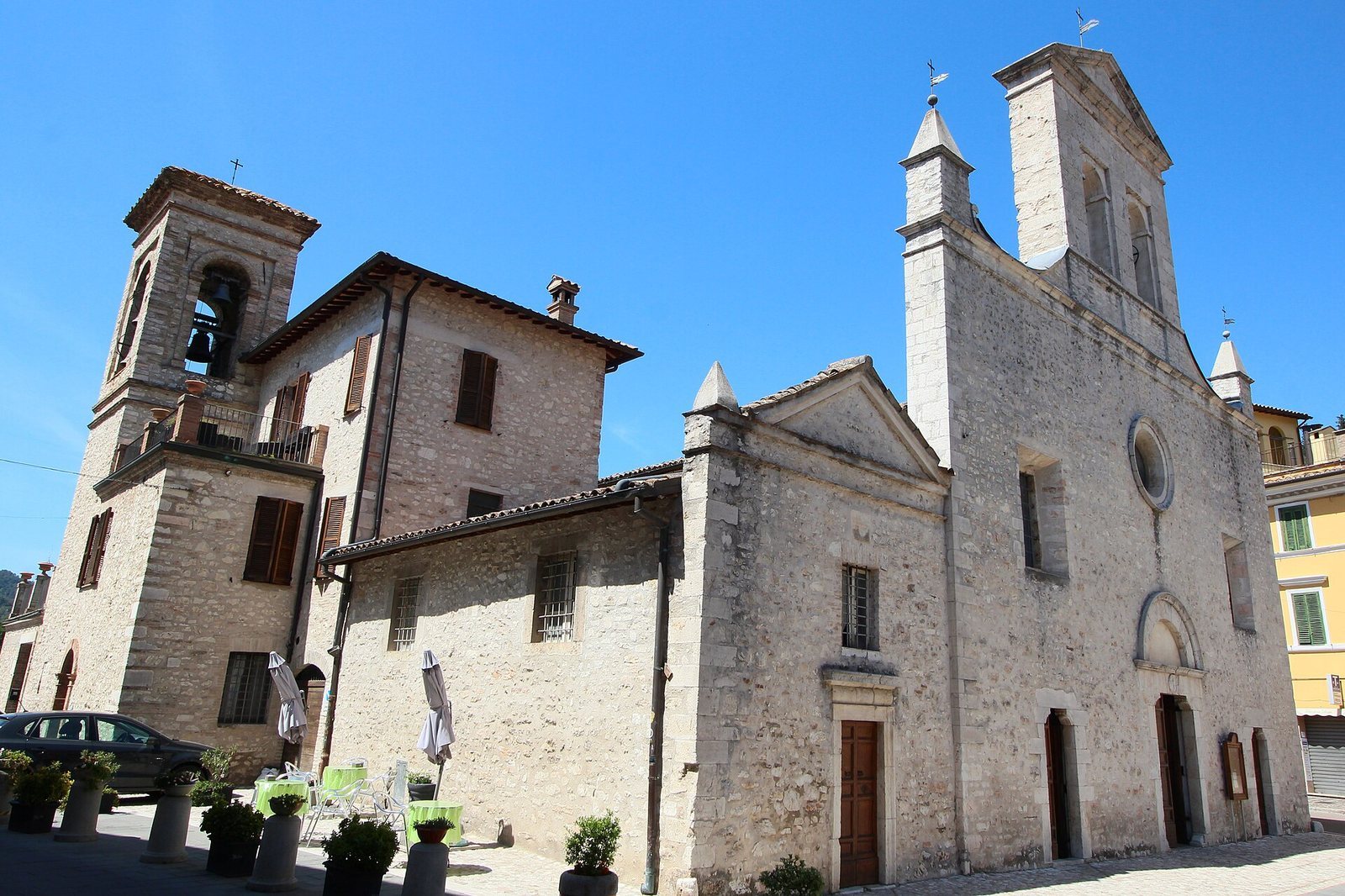
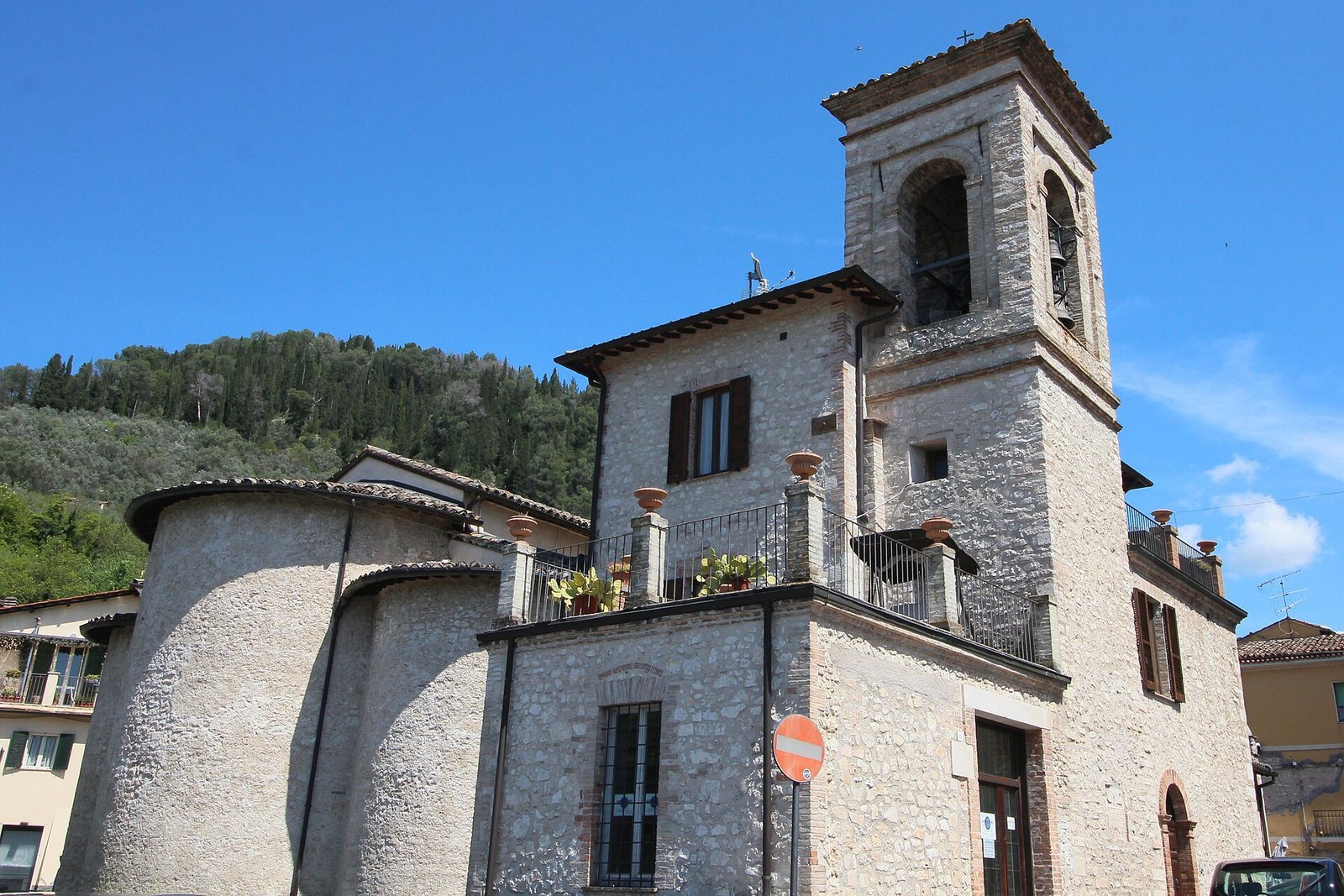
The Renaissance church combines a three-aisled nave, the main body of the building, with a white-marble facade. Three chapels stand at the end of the nave, while large arches divide its aisles.
Building and interior
Facade
The sober fifteenth-century facade is faced in white marble and has three portals. A date of 1493 marks the central portal, above which a lunette, a semicircular space over an opening, contains a fresco of the Virgin and Child with angels. A bell gable rises above the facade.
Nave and chapels
Large arches resting on octagonal pillars separate the central aisle from the two side aisles. The church’s three chapels occupy the end of the nave.
Paintings and altarpieces
Right nave
Several fifteenth- and sixteenth-century frescoes decorate the right aisle. Its notable altar, dating to 1609, has stucco ornament, plaster molded into decorative forms. A painting by Giuseppe Bastiani shows the Madonna of the Rosary, Mary represented in Christian art, with devotees; the work is approximately contemporary with the altar. Another painting, the Supper at Emmaus, is set in a Baroque frame. Baroque is a later artistic style often marked by dramatic movement and strong contrasts. The painting probably dates to around 1620 and is tentatively attributed to Spadarino, whose work is associated with the tradition of Caravaggio, an influential Italian Baroque painter.
Left nave
A seventeenth-century canvas depicts the Madonna and Child with Saints Peter and John the Evangelist. It came from an altar of the same century that was later destroyed. Proposed attributions include the Master of Arrone, a conventional name for an artist whose identity is uncertain, Giuseppe Puglia, and Francesco Cozza. Flaminio Torri is considered the more plausible attribution.
1487 triptych
The church’s triptych, an artwork composed of three panels, depicts the Madonna and Child with Saint John the Baptist and Saint Anthony Abbot. It is attributed to the so-called Master of the Arrone Triptych, an uncertain identity sometimes proposed to be Bernardino Campilio or Antonio da Viterbo, known as Pastura. Its predella, the lower section of an altarpiece, remained at the church.
Central arch and apses
Central arch and apse
An inscription dates the frescoes on the central triumphal arch and apse to 1515-1516. The scenes include the Dormition, a traditional depiction of Mary’s death, and the Adoration of the Shepherds below, with the Coronation of the Virgin in the semi-dome, a dome-shaped ceiling over a semicircular area. An Annunciation, the angel Gabriel’s announcement to Mary that she would bear Jesus, is also part of the cycle. Customary attributions give the overall design, Coronation, and Dormition to Vincenzo Tamagni, and the Adoration of the Shepherds to Giovanni da Spoleto, though their precise division of work is uncertain. The architecture, landscape, and grotesques, ornamental designs combining fanciful forms, have connections with works by Renaissance architect and painter Baldassarre Peruzzi.
Right apse
The right apse is entirely covered with frescoes of the Eternal Father and the Madonna of Mercy, an image of Mary as protector of the faithful, alongside scenes of Christ’s Arrest, Flagellation, crowning with thorns, Crucifixion, burial, and Resurrection. A pier decorated with grotesques bears the date 1544. The paintings are attributed either to Jacopo Siculo or to the brothers Lorenzo and Bartolomeo Torresani.
Left apse
The left apse retains sixteenth-century frescoes attributed to the workshop of the Torresani brothers. At its altar is a contemporary sculptural group made of painted terracotta, or fired clay, attributed to the workshop of Giacomo and Raffaele da Montereale.