San Valentino: The Church of Saint Valentine in Terni
Site at a Glance
- Popularity
- Medium
- Country
- Italy
- Primary era
- Early Modern
- Eras represented
- Early Modern, Modern
- Civilizations
- Italian, Papal States
- Site type
- Religious
- Remains
- Basilica
On this page14 sections
History
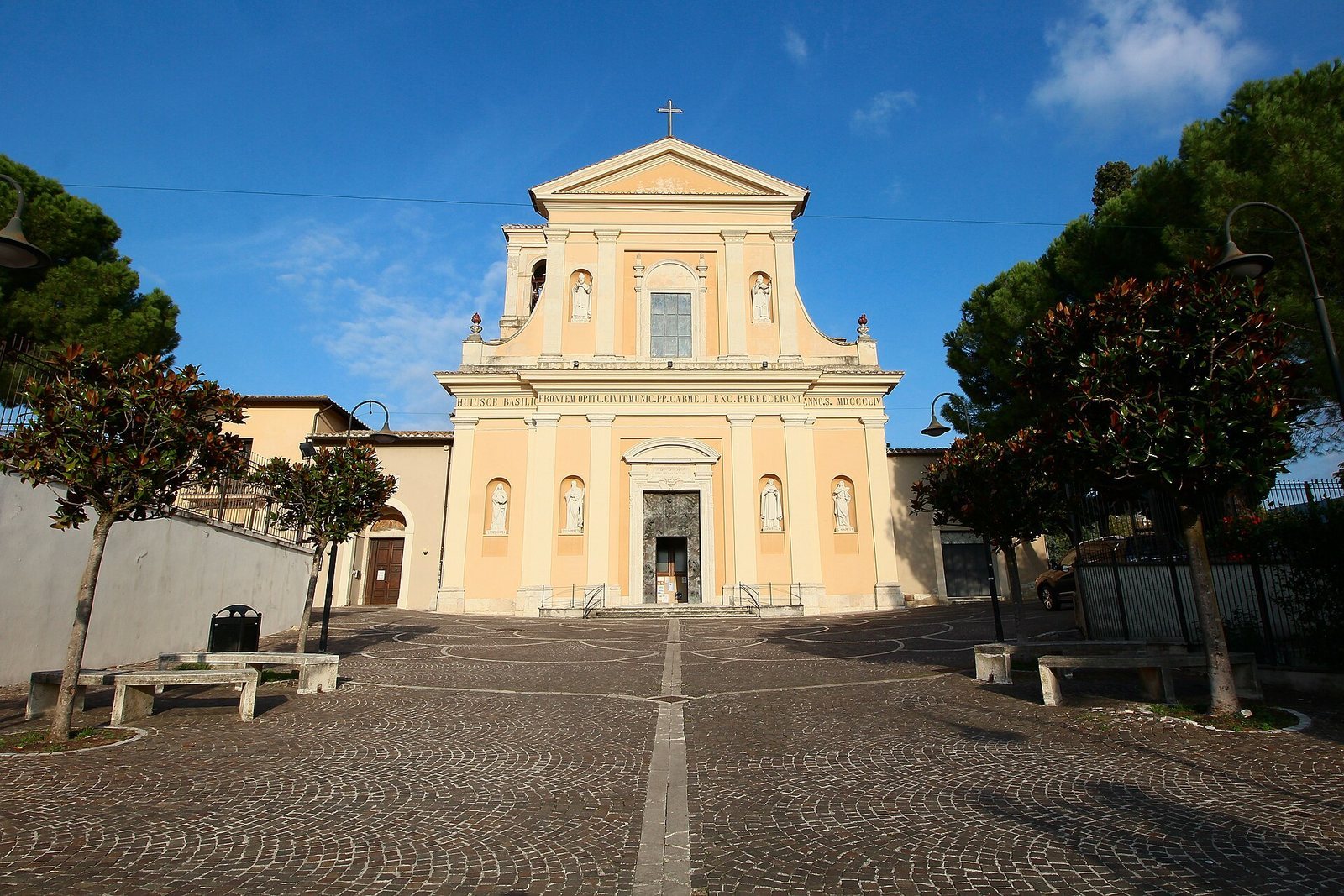
San Valentino, the Church of Saint Valentine in Terni, Italy, is a Roman Catholic parish church whose present Baroque building was begun in 1606 and consecrated in 1630. It stands on a site associated with Valentine’s tomb and remains the center of his cult.
Saint Valentine and the first church
Valentine, a bishop of Terni and Christian martyr, is said to have been beheaded on 14 February 273 by order of Furius Placidus, the prefect, or senior official, of Rome. His execution probably took place on the Via Flaminia near Terni. The Martyrologium Hieronymianum, an early Christian list of martyrs compiled between the first half of the fifth and first half of the sixth century, records his martyrdom. By the sixth or seventh century, people in Terni venerated him.
A legend that Valentine blessed the marriage of a pagan soldier and a young Christian woman helped connect him with lovers. In 496, the Church established his feast in his honor and in association with love, replacing the Roman pagan festival of Lupercalia. The first church was built over his tomb in the fourth century, near an early Christian burial ground. Goths destroyed it in the sixth century, and it was rebuilt in two campaigns, from 625 to 632 and from 642 to 648, when the Benedictines took charge.
Basilica and monastery in medieval Terni
In 742, Pope Zacharias met the Lombard king Liutprand in the basilica. Liutprand chose the church because Valentine’s remains were believed to have healing powers. During the meeting, he gave several cities, including Sutri, to the Church of Rome. The monastery of Saint Valentine near Terni belonged to the Benedictines from around the seventh century.
The monastery’s fortunes followed those of the local church. After the Diocese of Terni was suppressed in 598, its territory was incorporated first into the Diocese of Narni and then into the Diocese of Spoleto. In 1218, Pope Honorius III restored the Diocese of Terni and the Benedictine monastery.
Construction of the present church
In 1605, Pope Paul V authorized Terni’s bishop, Giovanni Antonio Onorati, to search for Valentine’s relics and those of his disciples. They were found near the altar, and a new church was planned on the site of the earlier buildings. Construction began in 1606. Discalced Carmelites, a branch of the Carmelite order, were established there by 1609, and the relics were transferred to the church on 22 July 1618. The building was completed and consecrated in 1630.
Archduke Leopold V of Austria visited in 1626 and undertook to pay for a marble high altar, completed in 1632. He also promised a portion of Valentine’s skull, which an ancestor had received centuries earlier. In 1630, the relics, including the skull, jaws, teeth, and ashes, were placed with a statue in an ornate urn. Work on the altar accompanied interior renovation, using materials salvaged from earlier buildings and stones carried by floods of the Rivo River. Silver statues for the high altar and funerary monuments for the Sciamanna family date from this period. Valentine became Terni’s principal patron saint in 1644, and a silver sarcophagus was made for his remains in the late seventeenth century.
Changes since the nineteenth century
After 1873, the Carmelite monastery was sold to Terni’s municipality and put to secular use. Over roughly fifty years, it was extensively converted into housing, while the church passed to clergy outside the monastery. The Discalced Carmelites returned to Terni in 1906 and built a modest monastery east of the church, restored in 1955. The neglected church underwent major renovation from 1924 to 1927 under the priest Valemmo Poscia.
From 1965 to 1970, parish priest Capogrossi oversaw roof repairs, installed central heating, and replaced the former Sacred Heart altar with one dedicated to the Infant Jesus of Prague. The statue of Saint Valentine was renovated in the 1970s. A portion of the saint’s skull was stolen from his tomb in 1979 and returned to Terni in 2003, when his tomb was moved to a new altar. San Valentino remains an active parish church in the Diocese of Terni-Narni-Amelia. Each 14 February, Terni holds religious observances for Valentine, including a procession and Eucharistic celebrations.
Remains
Exterior and plan
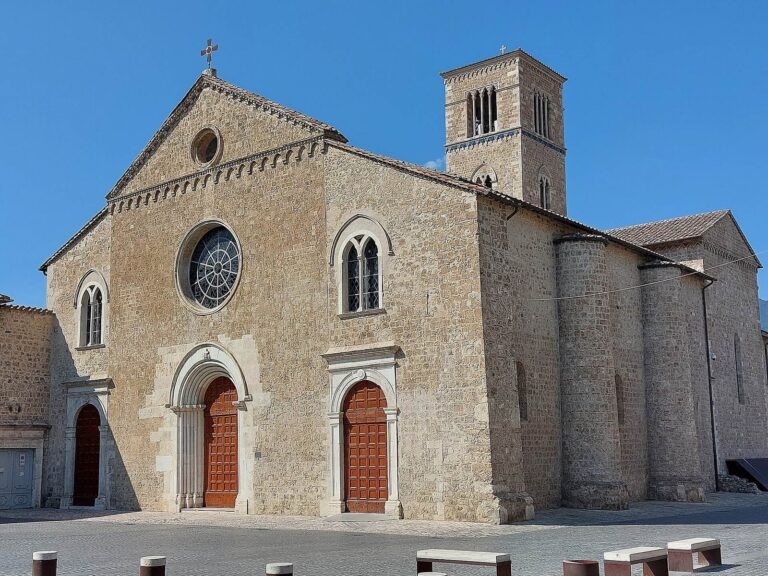
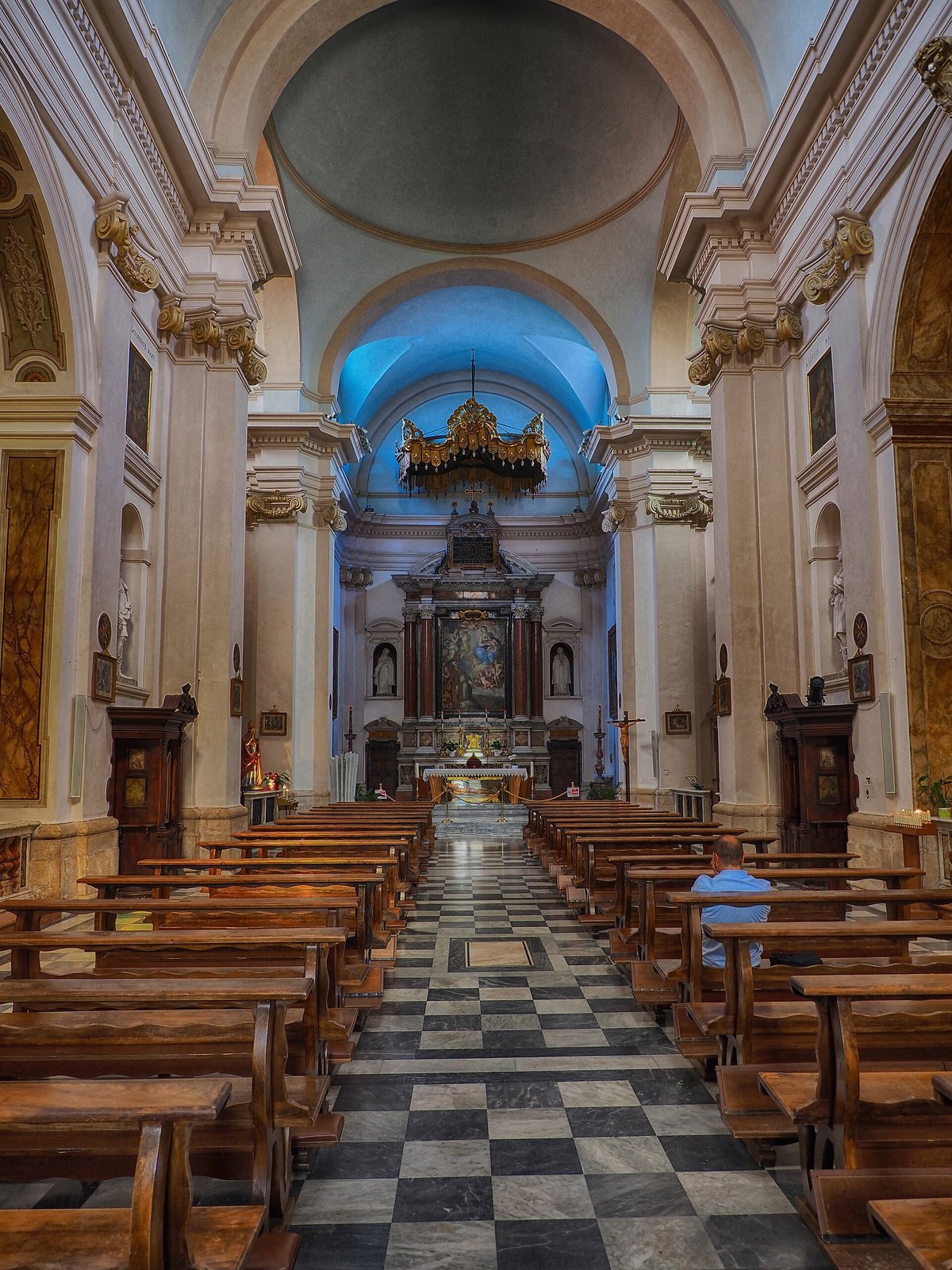
The Baroque church follows a Counter-Reformation layout, shaped by the Catholic Church’s response to the Protestant Reformation and its efforts to renew worship. Its plan centers on a broad nave, with chapels along both sides and two larger chapels in the crosswise arms, or transept. Flat projecting wall supports, called pilasters, divide the façade and articulate the interior; inside, they have garlands and Ionic capitals, the decorated tops of the supports. The façade’s elaborate portal and large central window date to 1854. Nineteenth-century stucco sculptures depict Terni’s patron saints, Valentine and Anastasius. Two chapels on each side of the nave belonged to prominent local families.
Chapels and paintings
Saint Michael Chapel
The right-hand chapel in the transept is dedicated to Saint Michael and belonged to the Sciamanna family. Family tombs stand on either side. The central altar holds Cavalier d’Arpino’s painting of the archangel Michael defeating the devil.
Teresa of Ávila Chapel
The chapel in the left arm of the transept is dedicated to Teresa of Ávila, a Spanish Carmelite nun and religious reformer. Its altarpiece by Lucas De La Haye shows the Madonna and Child with Saint Joseph and Saint Teresa. De La Haye, a Carmelite painter active in the second half of the seventeenth century, also contributed to the church’s interior decoration.
Nave and presbytery paintings
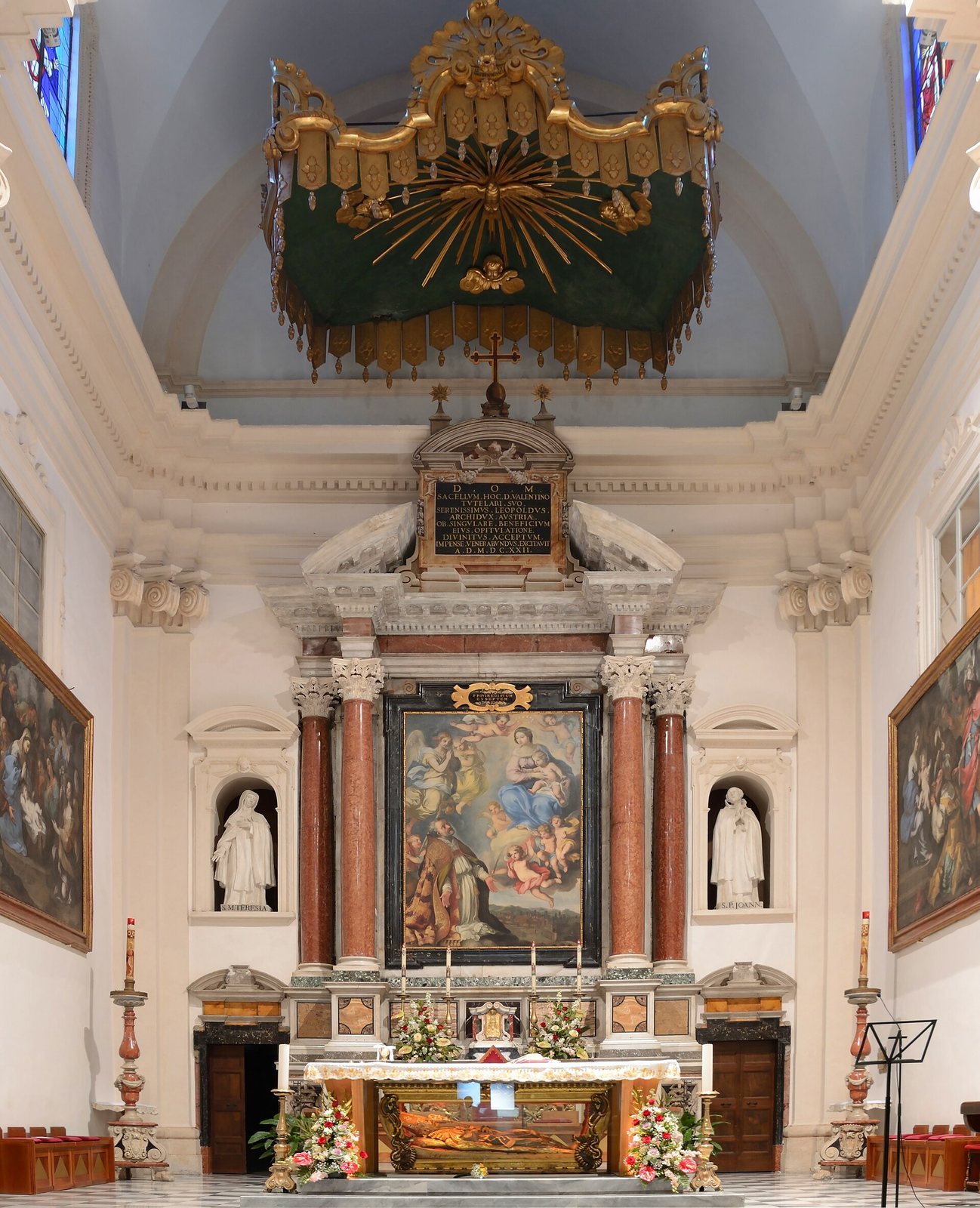
De La Haye’s other paintings include a high-altarpiece showing Valentine asking the Virgin Mary to protect Terni, two scenes of the Adoration, and works depicting the Four Evangelists and the martyrs of Terni: Catulus, Saturninus, Lucius, and disciples of Bishop Valentine. The Evangelists and martyr paintings are in the nave. His Baroque figures are richly draped and painted in warm colors. A nave chapel contains Andrea Polinori’s 1635 painting of the Madonna and Child with Saints Lawrence, John the Baptist, and Bartholomew, inspired by Caravaggio. A large painting of the Crucifixion is in the presbytery.
Altars and burial spaces
High altar and choir
In the presbytery, an altar table stands before the high altar, with a coffin containing Valentine’s relics beneath it. Behind the high altar, in the choir, is the altar known as the Confession of Saint Valentine, directly above the saint’s tomb. A seventeenth-century painting at its center depicts his martyrdom.
Crypt and relics
The crypt contains an earlier altar above an arched tomb recess where Valentine’s remains were found. Some finds from the burial area are gathered in a place beside the crypt. The saint’s relics were placed in an ornate urn with a statue in 1630, and a silver sarcophagus was made later in the seventeenth century to contain his remains.