Saint John the Baptist Orthodox Church in Gvardeisk: A Former Lutheran Town Church
Site at a Glance
- Popularity
- Medium
- Country
- Russia
- Primary era
- Early Modern
- Eras represented
- Early Modern, Modern
- Civilizations
- Duchy of Prussia, Kingdom of Prussia, Teutonic Order
- Site type
- Religious
- Remains
- Church
On this page8 sections
History
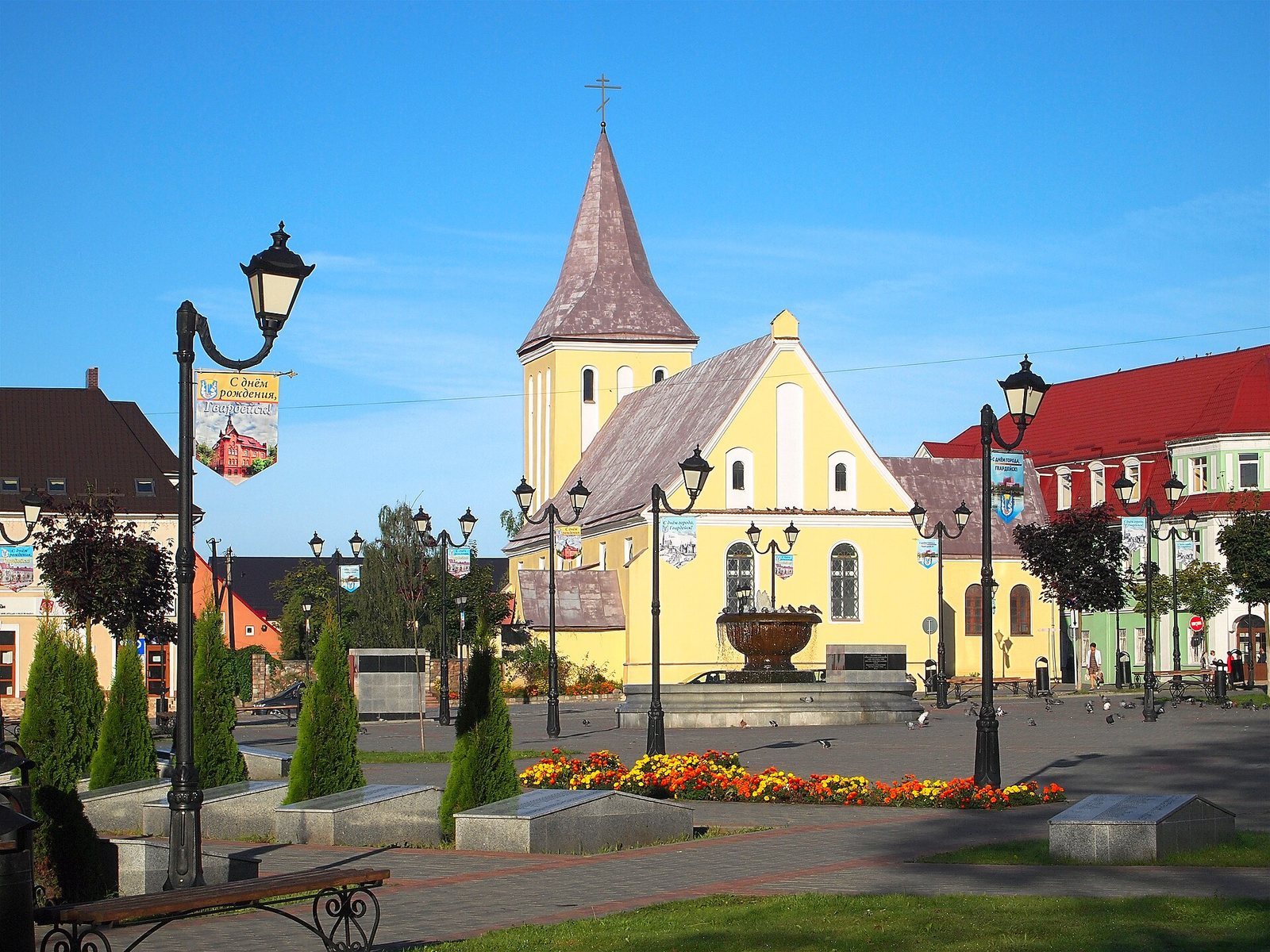
Saint John the Baptist Orthodox Church stands on the west side of the old market, now Victory Square, in Russia. The town was formerly called Tapiau. A wooden church was established at its market in 1502, and the site later became an Orthodox church after centuries of Lutheran use.
Origins and Lutheran beginnings
In 1407, Konrad von Jungingen, head of the Teutonic Order, gave an image of the Virgin Mary to a church in Tapiau. The Teutonic Order was a medieval Catholic religious and military organization that ruled territories in Prussia. It is uncertain whether Tapiau then had a parish church, or whether worship took place in the castle chapel instead.
Shortly before the Reformation, the sixteenth-century movement that gave rise to Protestant churches including Lutheranism, Tapiau had become a local church center. Lutheran reform took hold there early, and the town church served its community in that tradition until 1945.
Parish life and rebuilding
Fire damaged the church in 1661, and it was repaired in 1668. A second blaze destroyed it in 1689; the replacement was built of stone in 1694. During the 1760s the building was extended eastward, followed by another restoration in 1797.
The parish first came under the supervision of the chief court preacher in Königsberg. Later it belonged to the Wehlau church district in the East Prussian church province of the Evangelical Church of the Old Prussian Union, a Protestant union in Prussia. Before 1945, the parish covered more than 20 localities. In 1925 it counted 7,600 members, including 1,400 in the congregation serving the institution housed in the former Teutonic Order castle.
A second pastor’s post was created in 1735. In the late eighteenth century, another preacher was appointed to serve the castle’s poorhouse, which later became a correctional institution. From 1898, that institution had its own congregation.
Postwar changes and Orthodox use
The church sustained no major damage during the Second World War. After 1945 it was closed for worship and used as a warehouse, while a shop occupied the sacristy, a room for clergy vestments and liturgical objects. Flight and expulsion among the local population, together with restrictive Soviet religious policies, brought Lutheran church life in Tapiau to an end. By the late 1980s the building had badly deteriorated. A three-panel painting by Lovis Corinth, an artist born in Tapiau, had been kept in the sacristy. It depicted Christ on the cross at its center, with the Apostle Paul and the Evangelist Matthew on the side panels, and was lost in 1945.
The building passed to the Russian Orthodox Church in 1989. On 15 April 1991, Metropolitan Kirill, a senior Orthodox bishop who later became Patriarch of Moscow and All Rus’, consecrated it as a church dedicated to John the Baptist. Restoration work took place during the 1990s, including in 1998, and further repairs followed in 2012–13 alongside work on other buildings around Victory Square.
The church belongs to the Eastern Deanery, which groups parishes within the Chernyakhovsk Diocese, a bishop’s territory, and the Kaliningrad Metropolis, a wider church province. A Lutheran congregation was re-established in Gvardeisk in 1997 as a branch of the Resurrection Church in Kaliningrad, within the Kaliningrad Provostry, a regional administrative district of the Evangelical Lutheran Church of European Russia.
Remains
Church building
Layout and tower
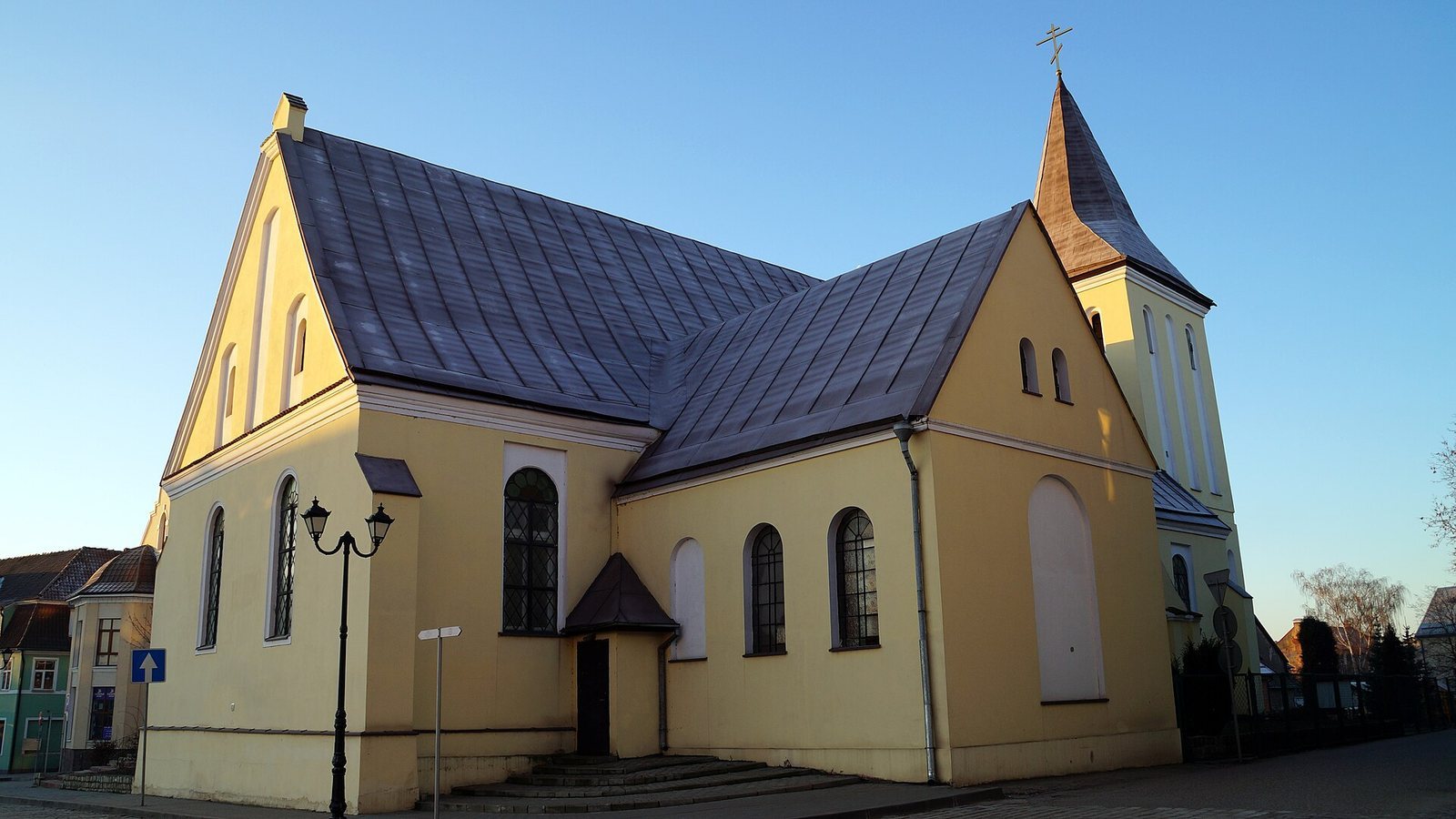
The plastered masonry building measures 32.8 by 11.7 metres and has no distinct sanctuary section. A sacristy is set on its north side, while a tower rises at the western end. The tower is 30 metres high and carries a tiled roof shaped like an eight-sided pyramid.
Interior and furnishings
The interior has a vaulted ceiling painted with biblical scenes. Its altar, pulpit, and confessional, a furnishing used for confession, date to about 1694. During the 1760s the altar and pulpit were probably joined into a single pulpit altar. The church also had two bells, cast in 1684 and 1840, and an organ dating to 1870. An iconostasis, a screen of icons separating the sanctuary from the main worship space, was installed during the Orthodox restoration.