Petersdorf Church (East Prussia): A Medieval Parish Church
Site at a Glance
- Popularity
- Very Low
- Country
- Russia
- Primary era
- Medieval
- Eras represented
- Medieval
- Civilizations
- Crusader, Teutonic Order
- Site type
- Religious
- Remains
- Church
On this page9 sections
History
Petersdorf Church (East Prussia) is a medieval parish church in an unidentified location in Russia. Its origins are associated with about 1368, when the Grand Marshal of the Teutonic Order, a medieval religious-military order that ruled parts of Prussia, granted the settlement of Heroldisdorf to his loyal servant Maschwarde.
Parish life and organization
The parish was important even before the Reformation, the sixteenth-century movement that led to the formation of Protestant churches. From the Reformation until 1945, the church served Petersdorf’s Evangelical parish. The parish later became the largest in the Wehlau district by area.
In 1925, the parish had 3,897 members across 32 settlements. It belonged to the Wehlau church district and the East Prussian church province, within the Church of the Old Prussian Union, which united Lutheran and Reformed Protestant churches in Prussia.
After 1945
The church survived the Second World War without damage, but was not used afterward and fell into disrepair. The flight and expulsion of the local population, along with Soviet anti-religious policies, ended church life in the settlement. A devotional cross outside the church walls may indicate that its property was transferred to the Russian Orthodox Church.
Since the 1990s, the settlement has been within the area served by an Evangelical Lutheran congregation in Talpaki. This branch congregation is subordinate to Resurrection Church in Kaliningrad, within the Kaliningrad provostry, a regional church administrative district, of the Evangelical Lutheran Church of European Russia.
Parish registers that survived the war are held at the Evangelical Central Archive in Berlin-Kreuzberg. They include baptism, marriage, and burial registers for 1844–1944; baptism indexes for 1723–1913; marriage indexes for 1827–1944; burial indexes for 1827–1913; and a separate register of war dead from 1914–1915.
Remains
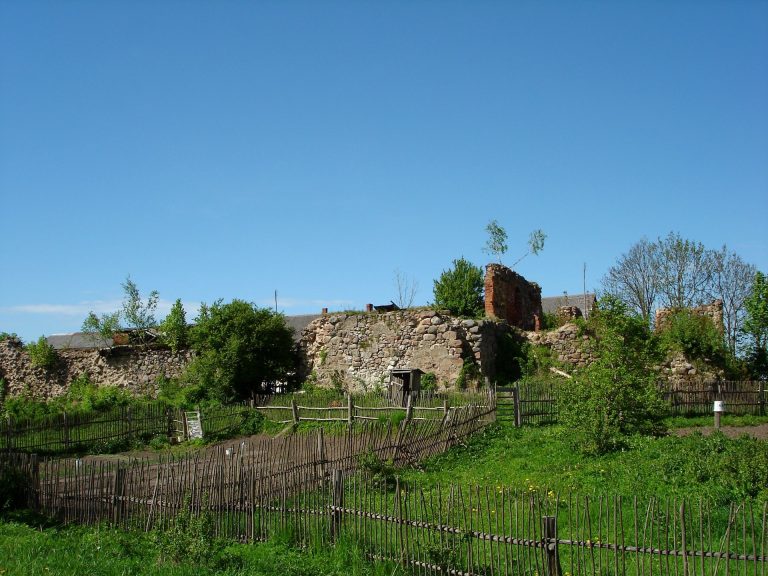
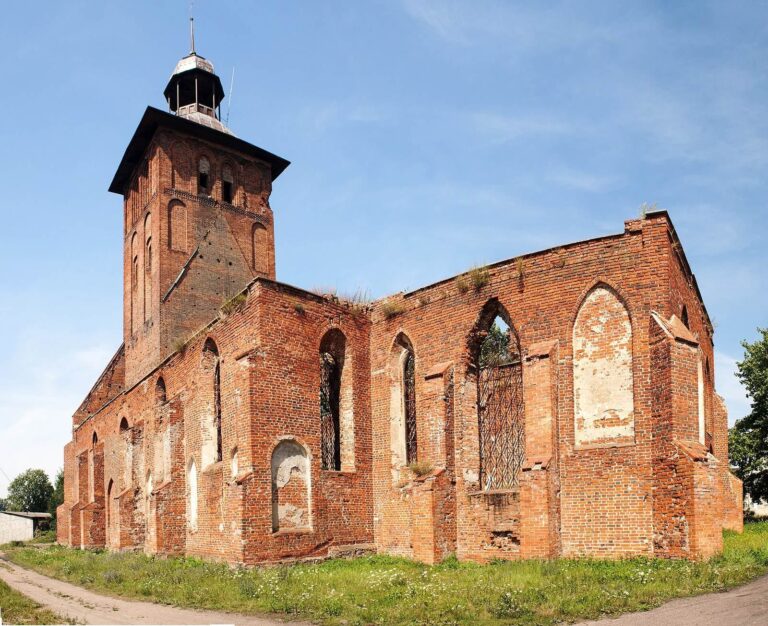
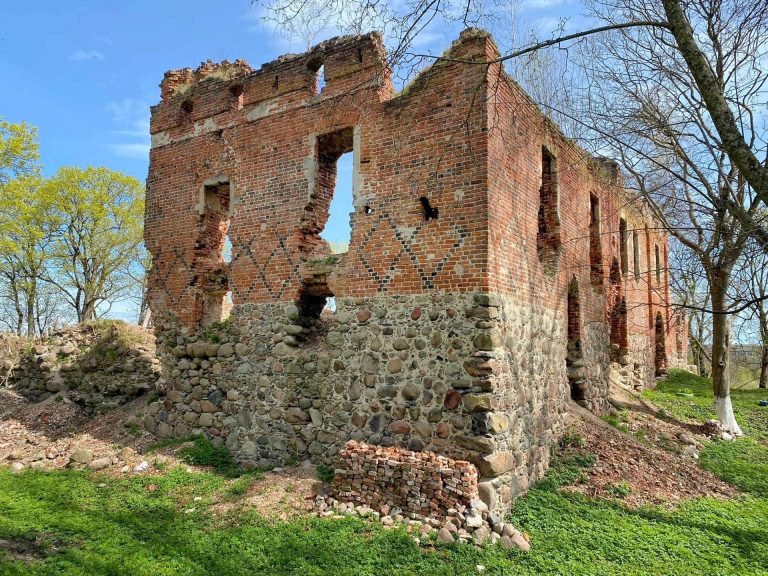
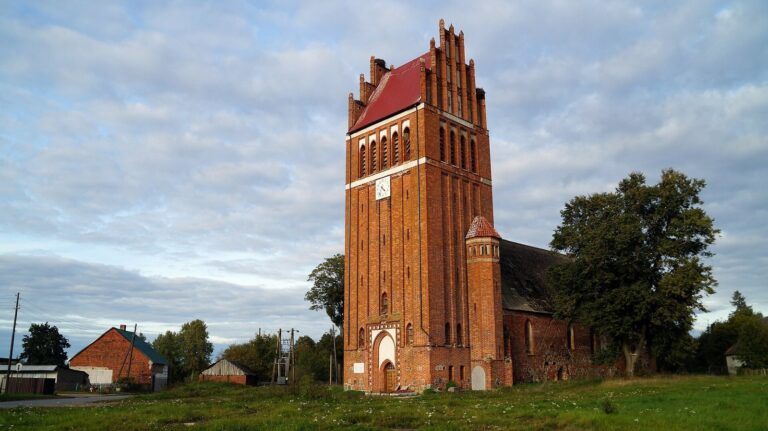
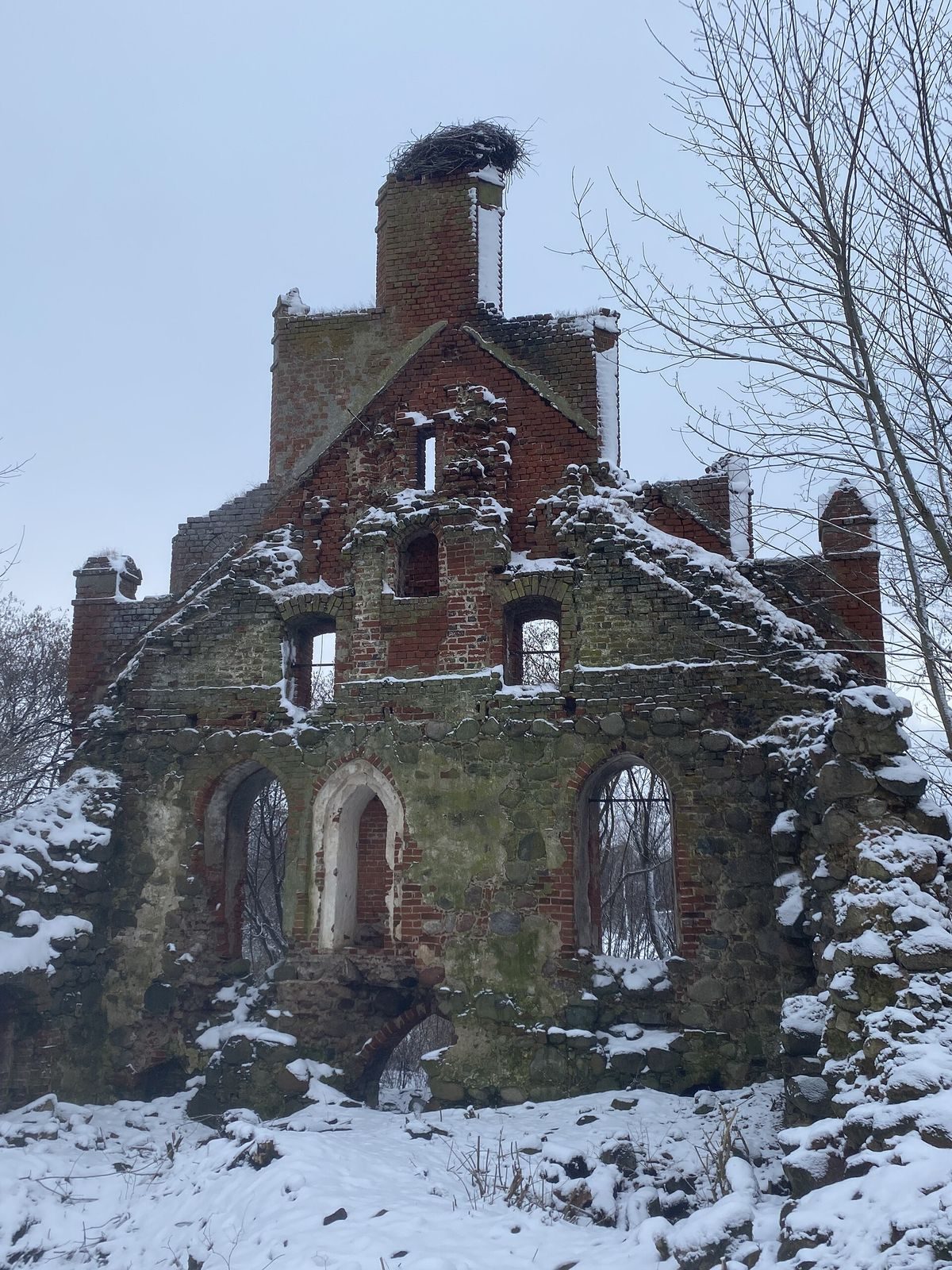
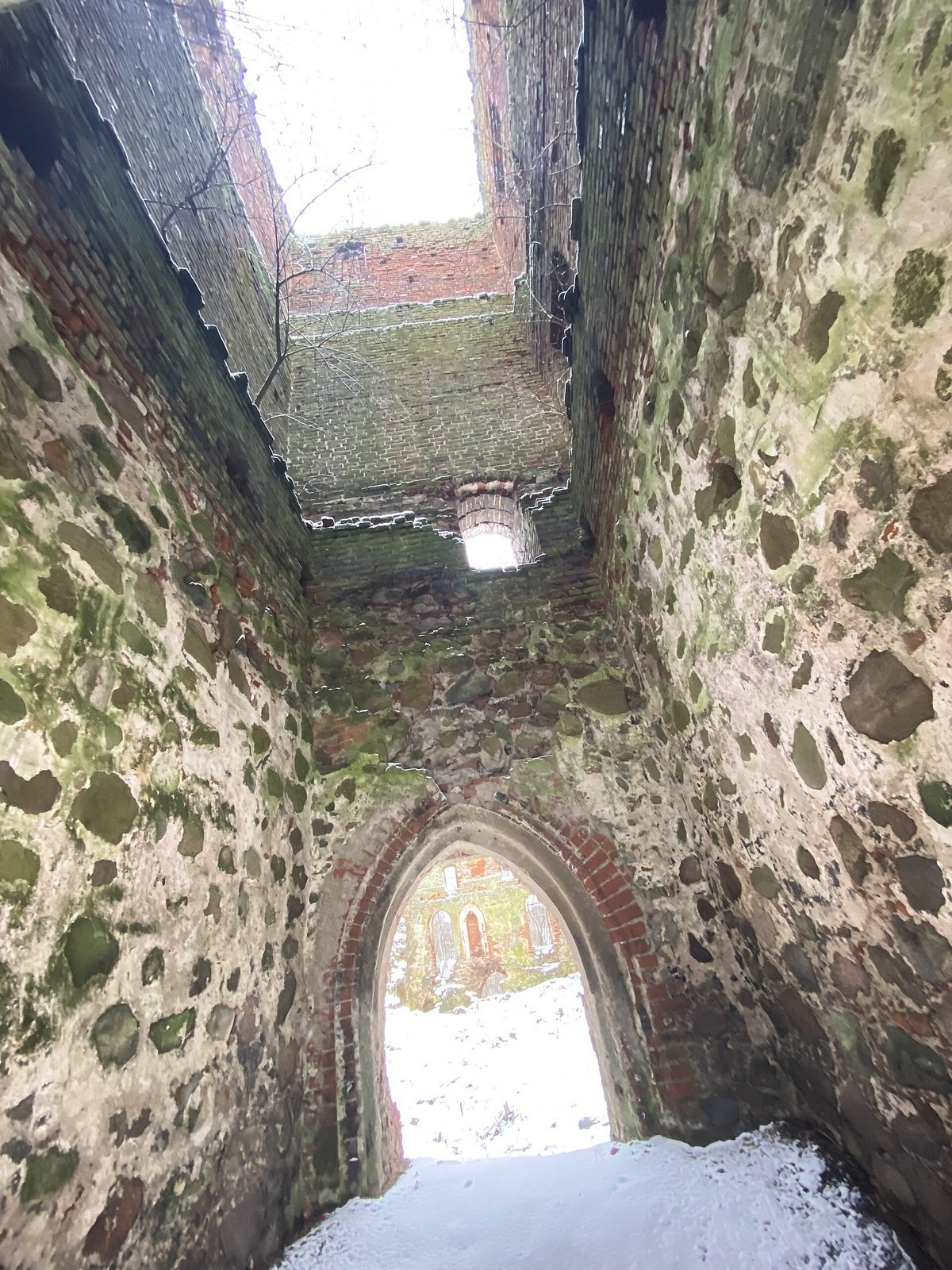
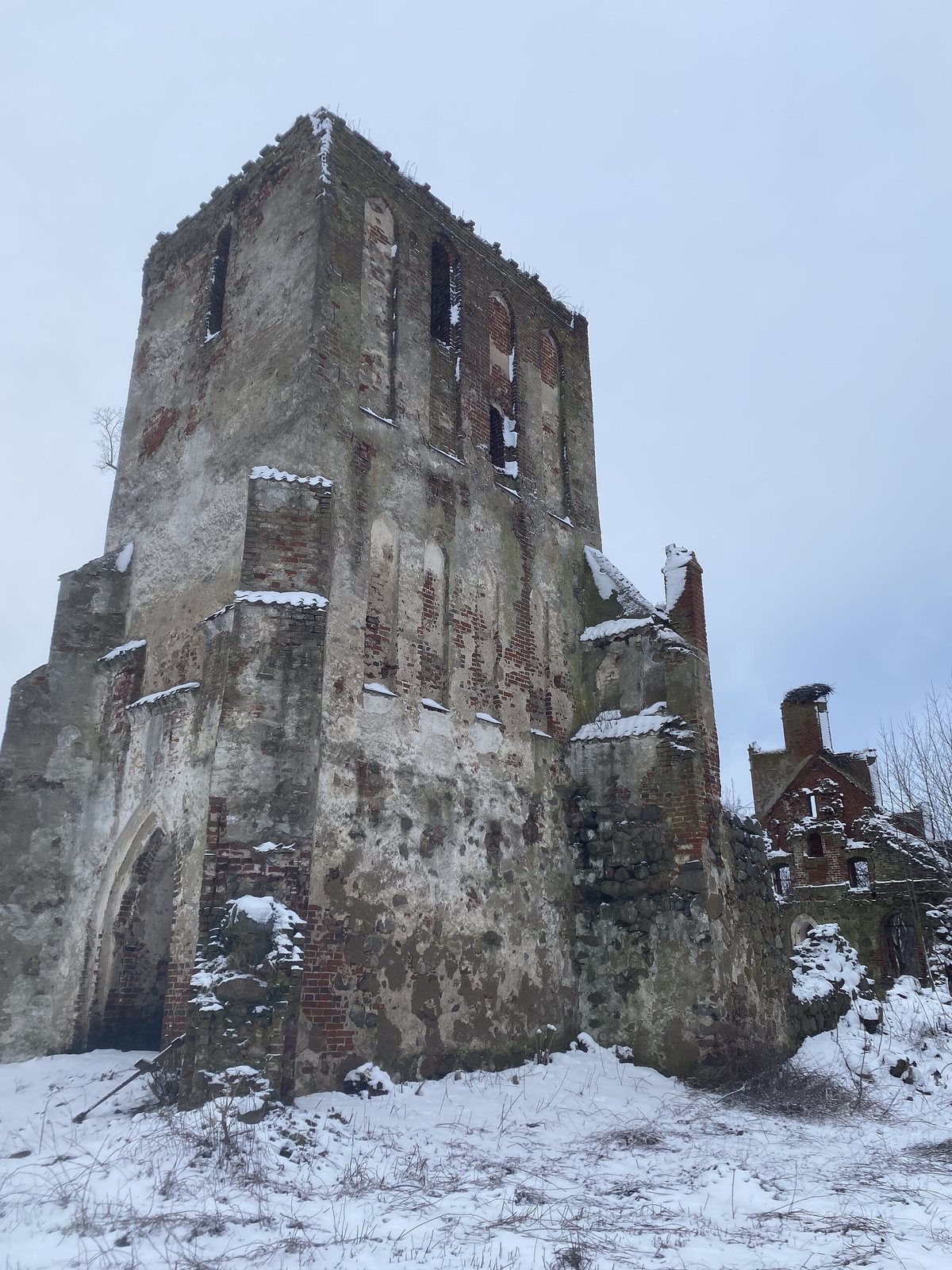
The church was originally a plastered fieldstone building, made with stones gathered from the ground rather than shaped blocks. It probably dates to the last quarter of the fourteenth century and had no separate chancel, the area around the altar. A west tower was added in the fifteenth century. Today, the remains stand in the center of the old village and consist of the tower ruin and remnants of the eastern gable.
Former interior
Ceiling and wall paintings
The interior had a ceiling shaped as a basket-handle arch, a shallow, flattened arch. It was painted around 1700 and received further painting in the nineteenth century. Traces of medieval wall paintings were also present.
Altar
The altar incorporated a reworked late-medieval folding altarpiece, a work with panels that could be opened or closed, from the church at Alt Wehlau, now Prudnoje. That church had probably been abandoned around 1534. Baroque additions and a painting of the Crucifixion formed part of the altar.
Pulpit, galleries, and figures
The pulpit and galleries dated from the seventeenth and eighteenth centuries. The interior also had angel figures representing divine glory and figures associated with baptism, from the same two centuries.
Organ and bells
The church had an organ attributed to Prussian organ builder Johann Josua Mosengel. Although it bore the date 1743, that was probably not its construction date; Mosengel likely built it in 1694. The organ case was dismantled in 1904, and the church also had three bells.