Holy Trinity Church in Troitskaya Sloboda: The Trinity-Sergius Lavra’s Moscow Metochion Church
Site at a Glance
- Popularity
- Medium
- Country
- Russia
- Primary era
- Early Modern
- Eras represented
- Early Modern, Modern
- Civilizations
- Russian
- Site type
- Religious
- Remains
- Church
On this page11 sections
History
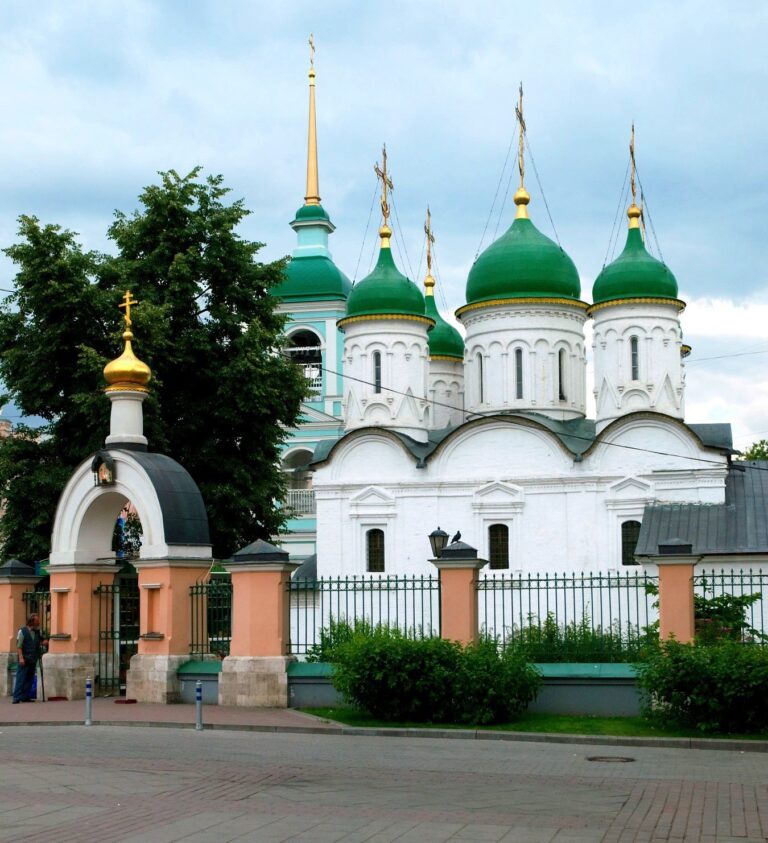
Holy Trinity Church in Troitskaya Sloboda is an Orthodox church in Moscow, Russia. Its stone building was constructed between 1696 and 1706 for the Trinity-Sergius Lavra, a major Russian Orthodox monastery. The church served the Lavra’s metochion, a dependent establishment maintained away from a monastery’s main complex.
Settlement and church construction
Troitskaya Sloboda first belonged to the village of Naprudnoye and was later settled by postal coachmen from Pereyaslavl. In 1609, Tsar Vasily Shuisky granted the land to the Trinity-Sergius Lavra in recognition of the monastery’s defense during the Time of Troubles, a period of political crisis and foreign intervention in Russia. The Lavra established its metochion there and retained it until the 1917 Revolution.
A wooden church was built in 1633 with a chapel dedicated to Sergius and Nikon of Radonezh. It was rebuilt in wood in 1688, then taken down in 1696 and replaced on the same site by the stone church, completed in 1706.
Monastic and metropolitan residence
A stone residence for the Lavra’s archimandrite was built between 1760 and 1767. In 1766, Platon (Levshin), a church hierarch and tutor to the future Emperor Paul I, became superior of the Lavra and promoted improvements to its metochion. The residence was rebuilt in 1875.
From 1815 to 1923, the metochion served as the permanent residence of Moscow’s metropolitans. Filaret (Drozdov) lived there from 1821 to 1867. Innokenty (Veniaminov-Popov) made it his residence from 1868, and Makary (Bulgakov) lived there from 1879 to 1882. Ignatius (Brianchaninov), Vladimir (Bogoyavlensky), and Makary (Nevsky) also stayed there at different times.
Revolution and secular use
On November 5, 1917, Vladimir (Bogoyavlensky) brought Tikhon (Belavin) news of his election as patriarch. Tikhon lived at the metochion from 1918 until 1922, when he moved to Donskoy Monastery. The metochion was abolished on May 19, 1922. Its buildings passed first to the Renovationist Higher Church Administration, a governing body associated with a reform movement in the Russian Orthodox Church, and later to secular institutions.
The church probably closed in 1924. During the 1960s and 1970s it housed an assembly-management office and later a kindergarten. Around the time of the Moscow Olympics, Troitskaya Sloboda was demolished and the area around the church was changed. The premises were transferred to the Russian Soviet Federative Socialist Republic’s Ministry of Culture, which assigned the church building to the Moscow State Symphony Orchestra.
Return to worship
In 1992, Patriarch Alexy II ordered the metochion to resume its activity and appointed the priest-monk Longin (Korchagin) as rector. The first liturgy after the church returned to worship took place in the Vladimir chapel on July 24, 1993; the first in the Trinity church’s central chapel followed on May 1, 1994. The metropolitan chambers returned to the metochion in the mid-1990s. On April 15, 2000, Alexy II performed the Great Consecration, the Orthodox rite dedicating a church for worship. The church belongs to the Russian Orthodox Church’s Moscow City Diocese and Sretensky Deanery, serves as the Trinity-Sergius Lavra’s Moscow metochion, and is a cultural heritage property of federal significance in Russia.
Remains
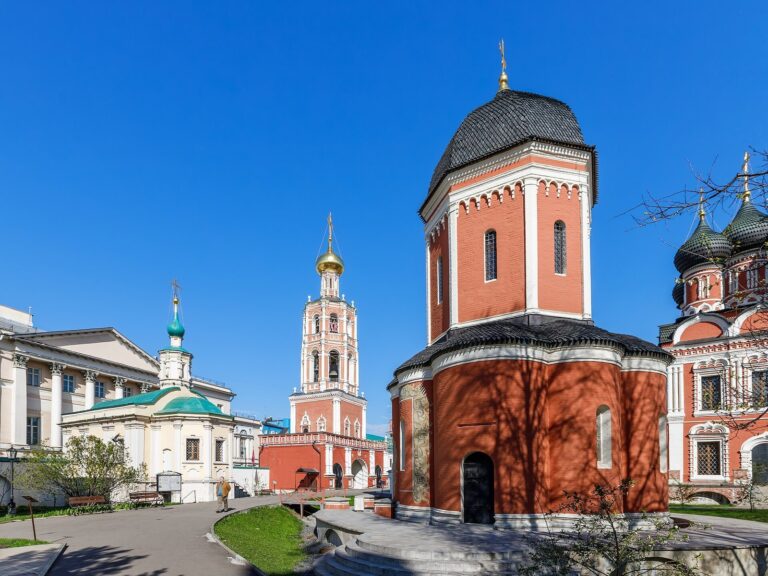
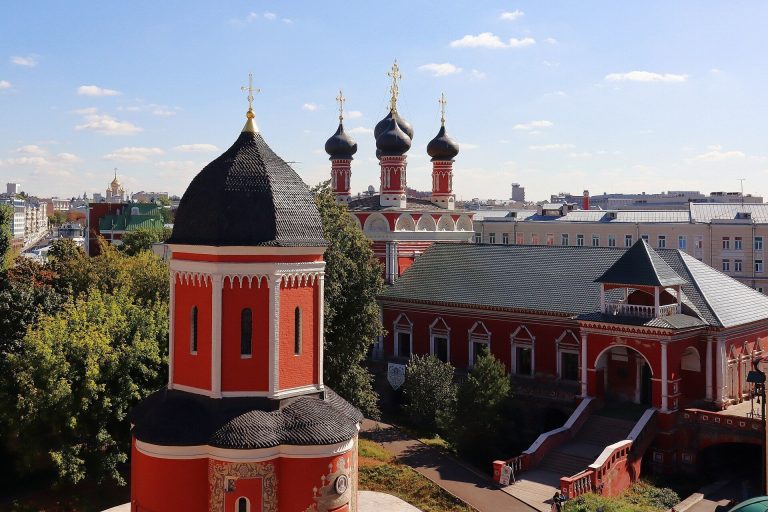
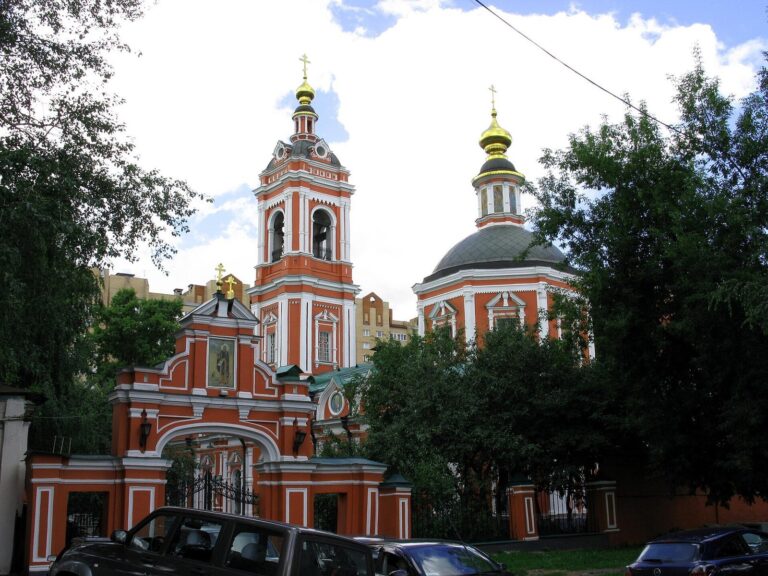
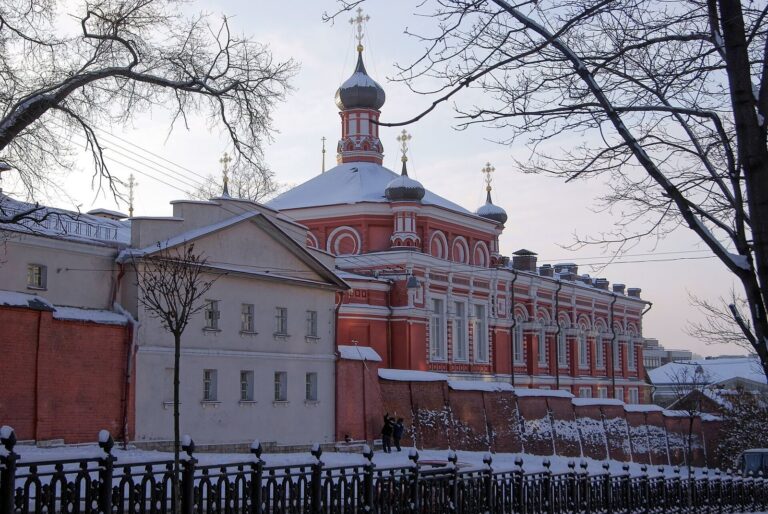
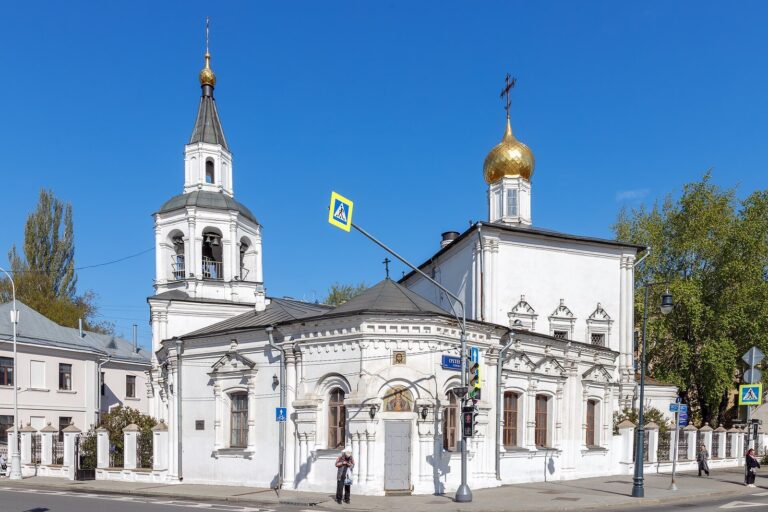
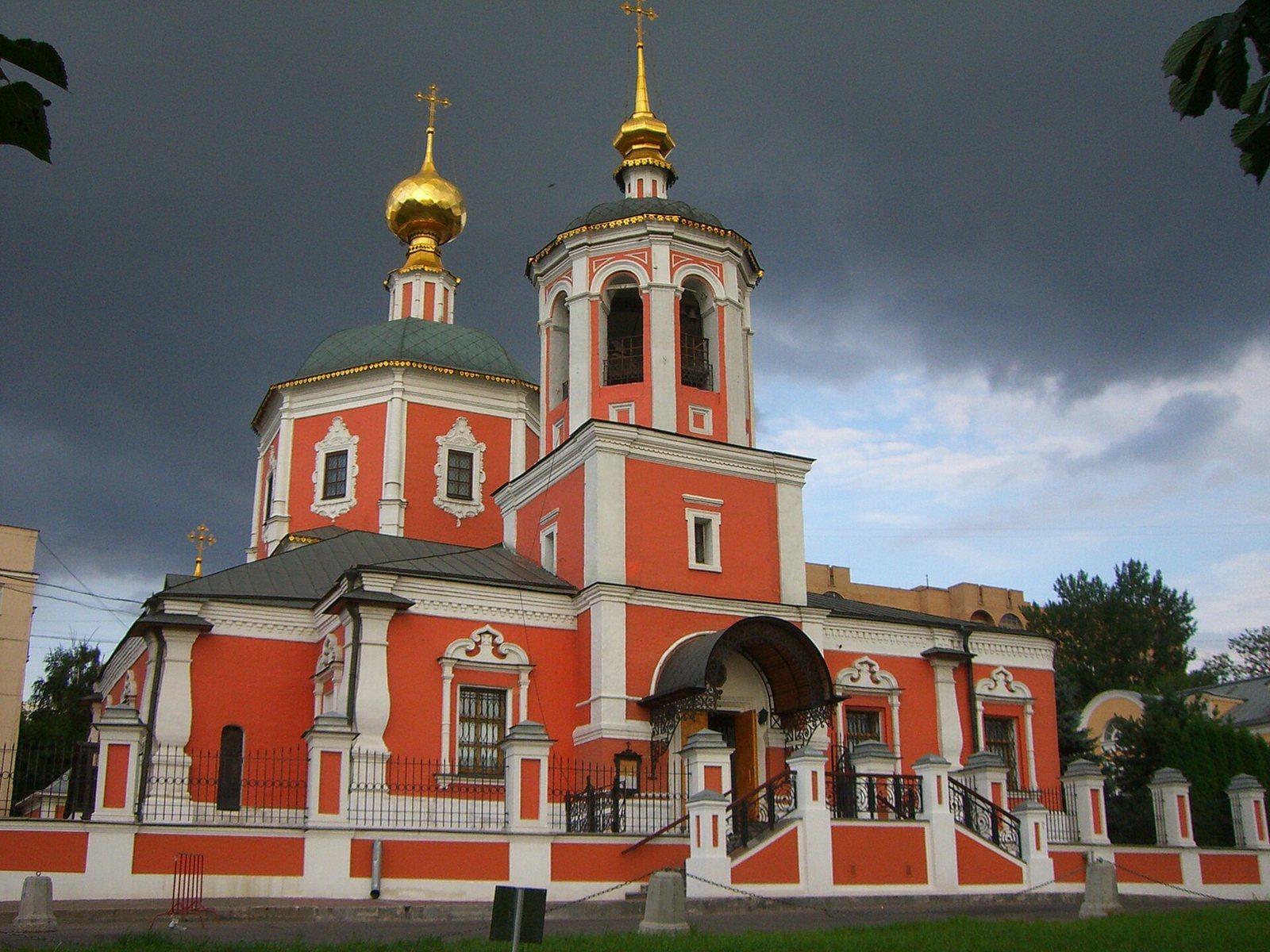
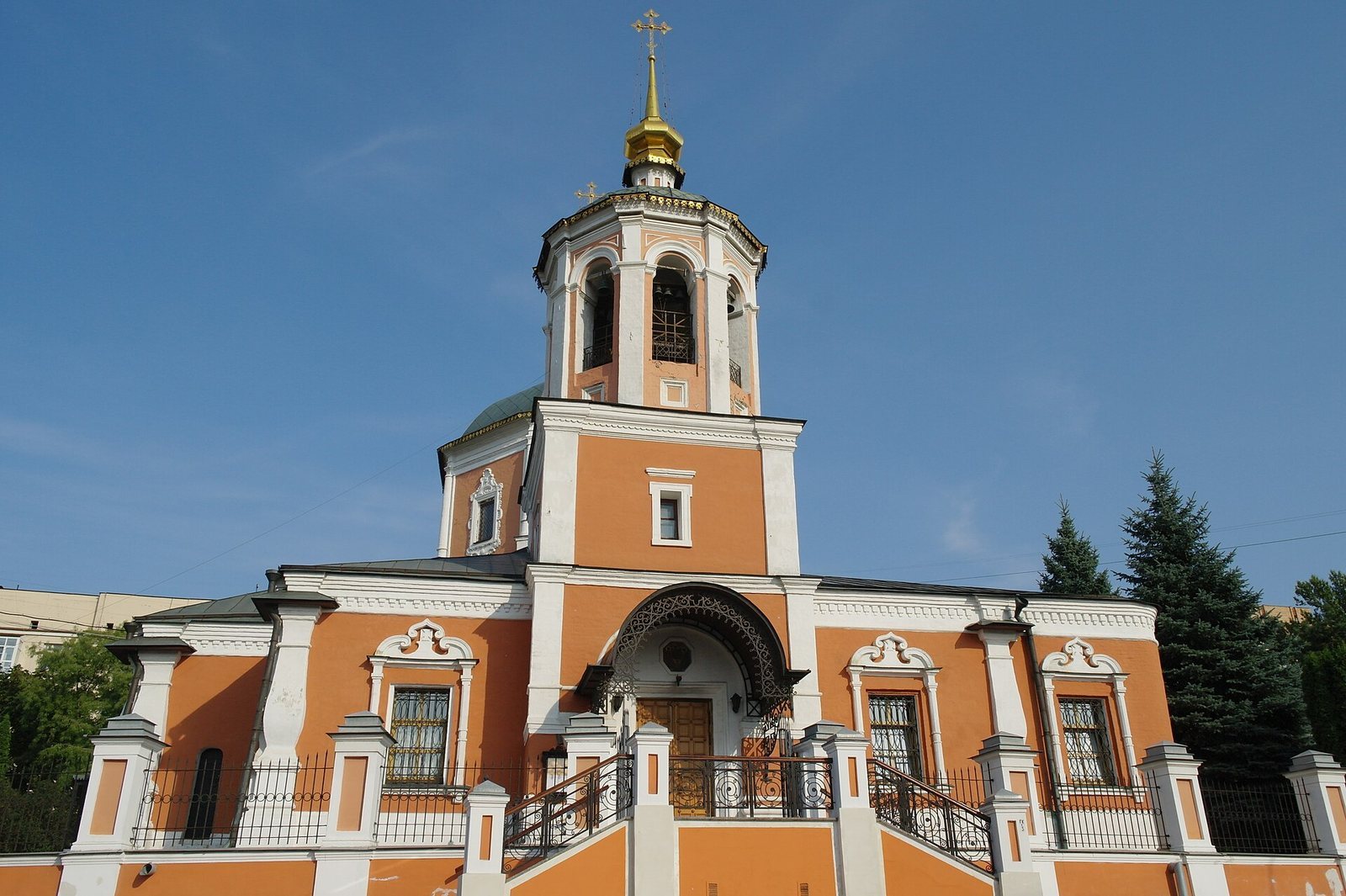
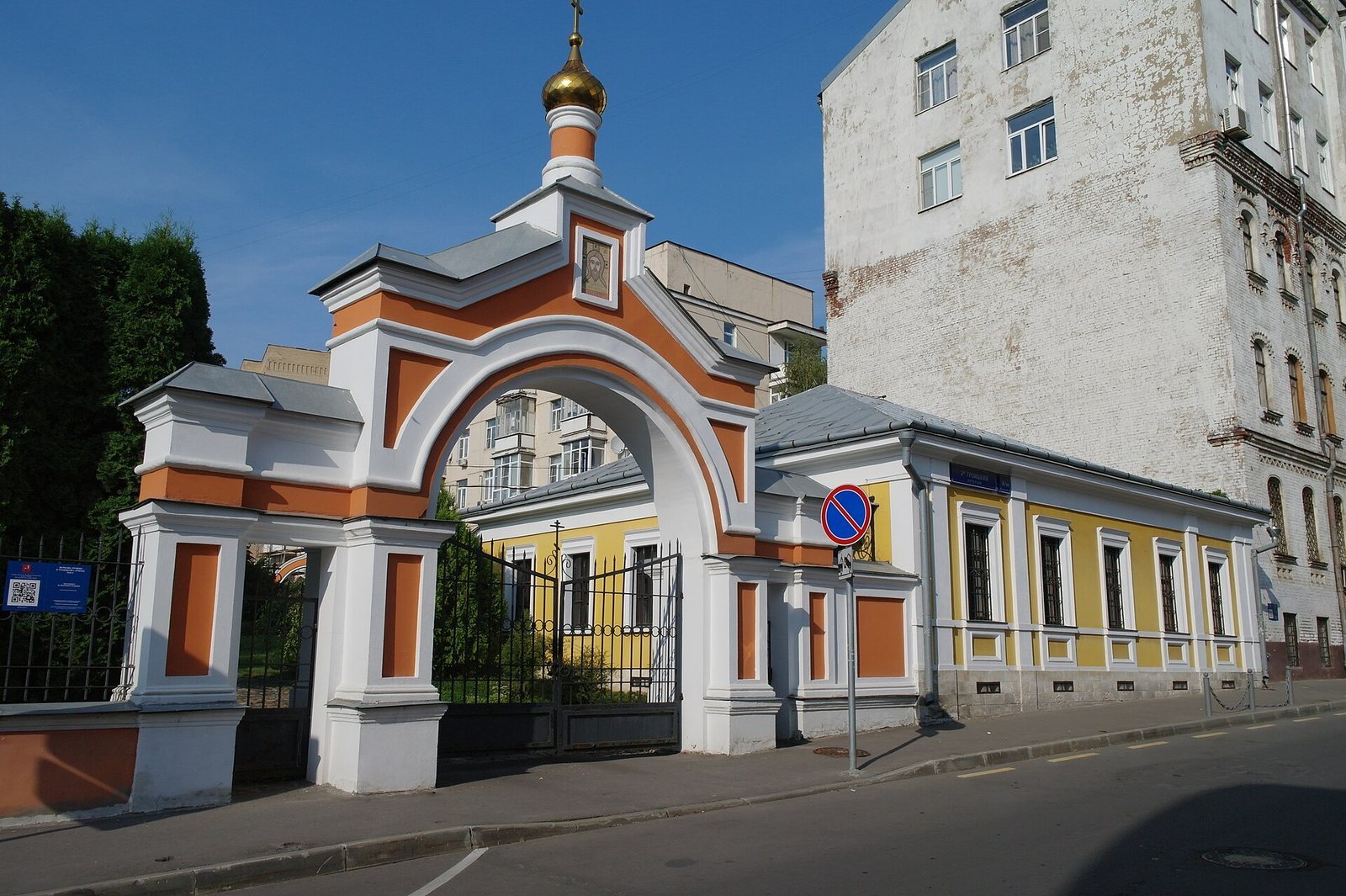
The physical remains include the stone church, its refectory and bell tower, and the two-storey stone metropolitan chambers. The church and chambers preserve the principal buildings associated with the former metochion.
Church and associated spaces
Holy Trinity Church
The stone church, built between 1696 and 1706, stands on the site of its wooden predecessor. Its altars are dedicated to the Life-Giving Trinity; Sergius and Nikon of Radonezh; the Vladimir Icon of the Mother of God; the First Hierarchs of Moscow; and the Iveron Icon of the Mother of God. After the church closed, its crosses were removed and its cupolas were partly dismantled. Bells were installed in the bell tower in 1994.
Refectory and Vladimir chapel
The refectory includes a chapel dedicated to the Vladimir Icon of the Mother of God, added in 1851. The refectory and chapel form an associated part of the church’s surviving fabric.
Metropolitan chambers
The two-storey stone chambers contained fifteen residential rooms and a house church originally dedicated to the Apostles Peter and Paul. A reconstruction in 1875 gave the facade a new architectural treatment. The chambers now contain a restored house church dedicated to the First Hierarchs of Moscow, senior bishops who led the church in the city. Its first liturgy was held on June 23, 2011.
Altered surroundings
An embankment was built around the church during the demolition of Troitskaya Sloboda around the time of the Moscow Olympics. The alteration opened a view of the church from Samotechny Boulevard.