Church of Saint Poimen the Great in Noviye Vorotniky: A Russian Orthodox Church
Site at a Glance
- Popularity
- High
- Country
- Russia
- Primary era
- Early Modern
- Eras represented
- Early Modern, Modern
- Civilizations
- Russian
- Site type
- Religious
- Remains
- Church
On this page7 sections
History
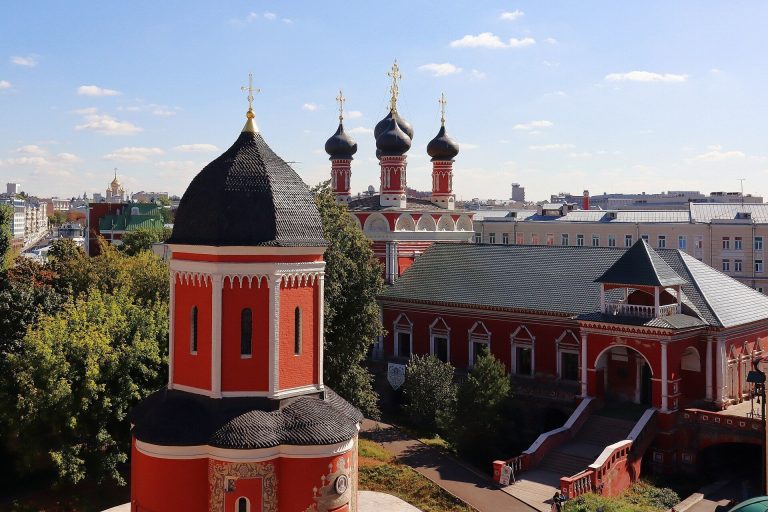
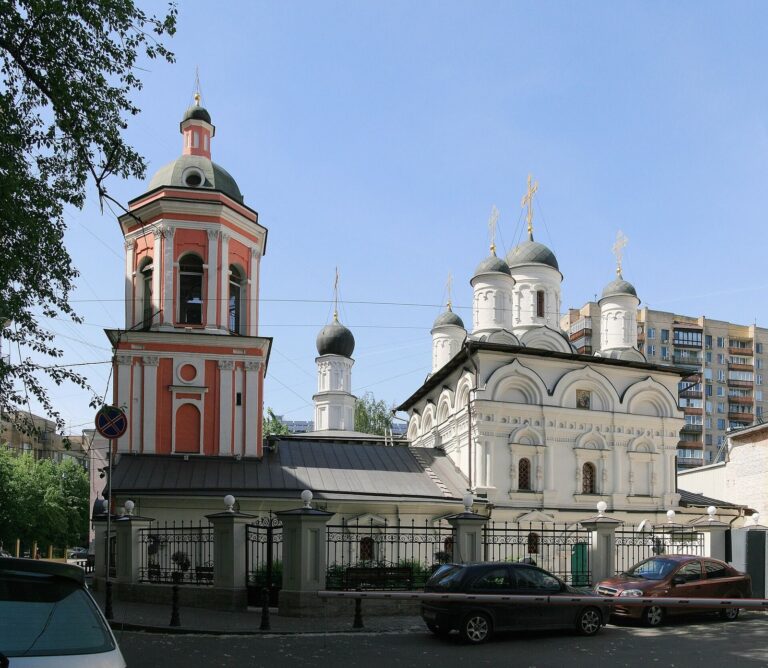
The Church of Saint Poimen the Great in Noviye Vorotniky is a Russian Orthodox church in Moscow, Russia, built between 1696 and 1702 in the Russian Baroque style, a regional form of Baroque architecture. Its origins lie in a church established by Moscow’s gatekeepers after they moved to a new settlement outside the city center.
Origins among Moscow’s gatekeepers
The gatekeepers, responsible for guarding Moscow’s city gates, first lived near the Kremlin, close to present-day Tverskaya Street. As the center became more densely built, they were resettled around 1658 in the outlying village of Sushchevo, where they formed the Gatekeepers’ Settlement. Around 1672 they built a wooden church dedicated to Saint Pimen the Great, an Egyptian Christian monk and ascetic of late antiquity. Its principal altar, the sacred place used in worship, honored the Holy Trinity, the Christian teaching of God as Father, Son, and Holy Spirit. The new church repeated the design of their earlier church, while nearby lanes took names recalling the settlement and its patron saint. The wooden building burned in 1691.
Stone church and later changes
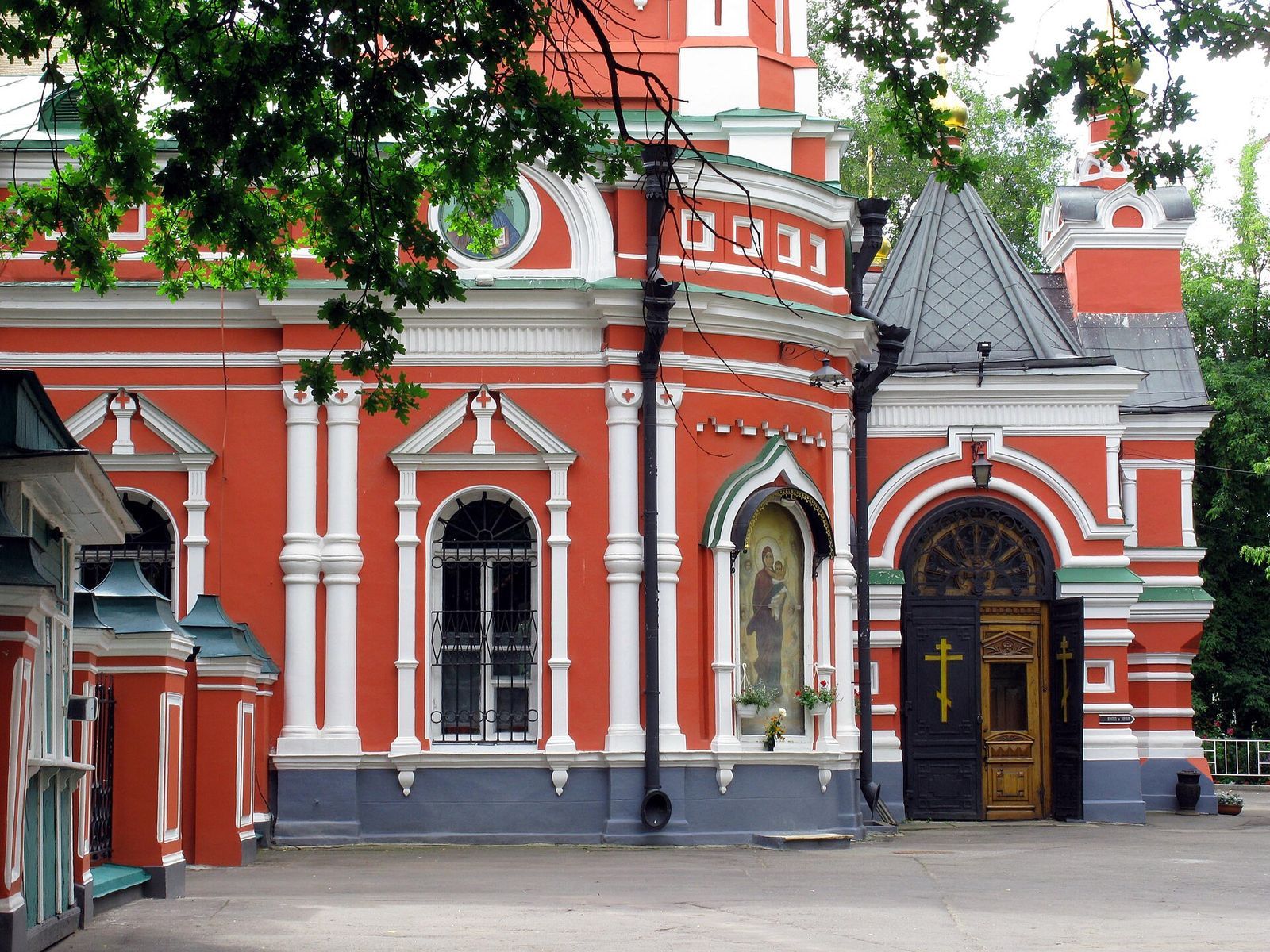
With the blessing of Patriarch Adrian, the gatekeepers’ church was rebuilt in stone from 1696 to 1702. A bell tower and refectory, a communal dining hall associated with a church, were added in 1702. A chapel dedicated to the Vladimir Icon of the Mother of God, a revered image of the Virgin Mary, was constructed between 1796 and 1807. A tradition linked to the icon tells of a blind boy who regained his sight after rubbing his eyes with the hand that held the small stone image. The church enclosure was built in 1825. In 1870, a new design for the facade and bell tower received approval, and architect Konstantin Bykovsky oversaw renovation of the Vladimir chapel. Further alterations followed in the 1890s and early 20th century.
The church during the Soviet period
The church remained open during the Soviet period. In April 1922, authorities confiscated twelve poods of church valuables, including gold and silver fittings. A pood was a traditional Russian measure of weight. From 1927 to 1932, the choir’s director was the monk Platon Izwiekow, who later became Patriarch Pimen. He returned in later years for the church’s patronal feast, the feast day associated with its dedication, and to mark his own name day, the feast of his namesake saint. Alexei Protopopov served there as a deacon from 1930 to 1934 and was later venerated as a hieromartyr, a cleric honored as a martyr.
In early 1937, following the closure of the Renovationist Church of the Transfiguration, this church passed to the Renovationists, a movement that had broken with the Russian Orthodox Church hierarchy. It became the cathedral of their leader, Metropolitan Alexander Vvedensky. A cathedral is a bishop’s principal church, and a metropolitan is a senior Orthodox bishop. After most Renovationists reunited with the Russian Orthodox Church in 1944, the church remained their last stronghold in Moscow, with Vvedensky continuing to serve there.
After Vvedensky died in 1946, the church returned to the Moscow Patriarchate, the central governing authority of the Russian Orthodox Church, on October 9. Patriarch Alexy I celebrated a liturgy there in late December. At the time, water leaking through the roof had mixed with the wall paint, turning the walls reddish. Alexy remarked that the walls had blushed for those who had served in the church. The church remains active in the Moscow Diocese and Iveron Deanery, an administrative district within the diocese, and is protected in Russia as a federal-level cultural heritage monument.
Remains
Layout and exterior
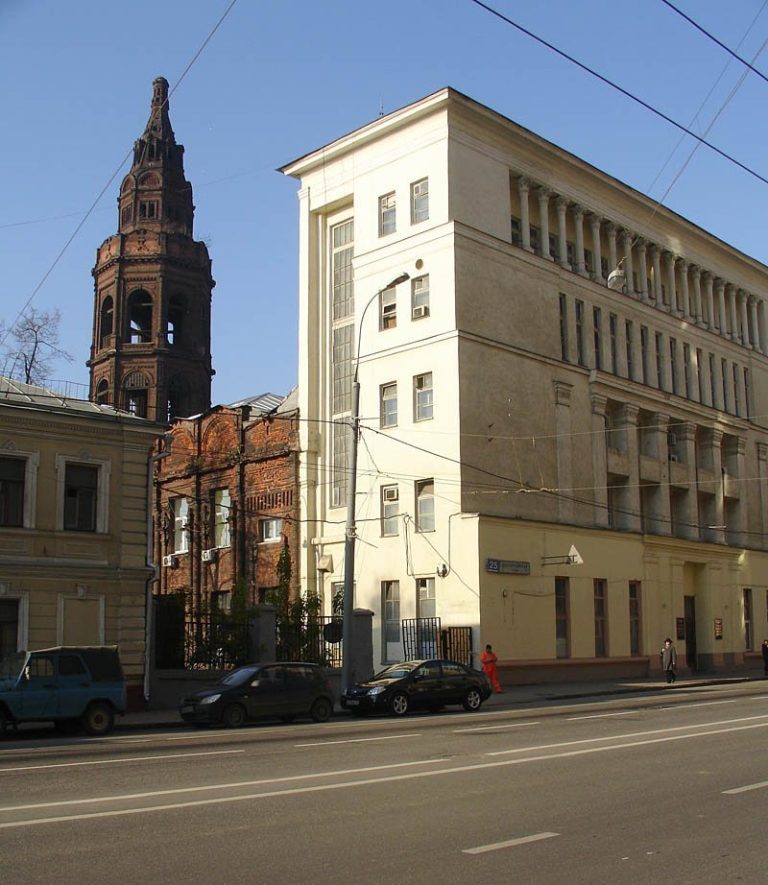
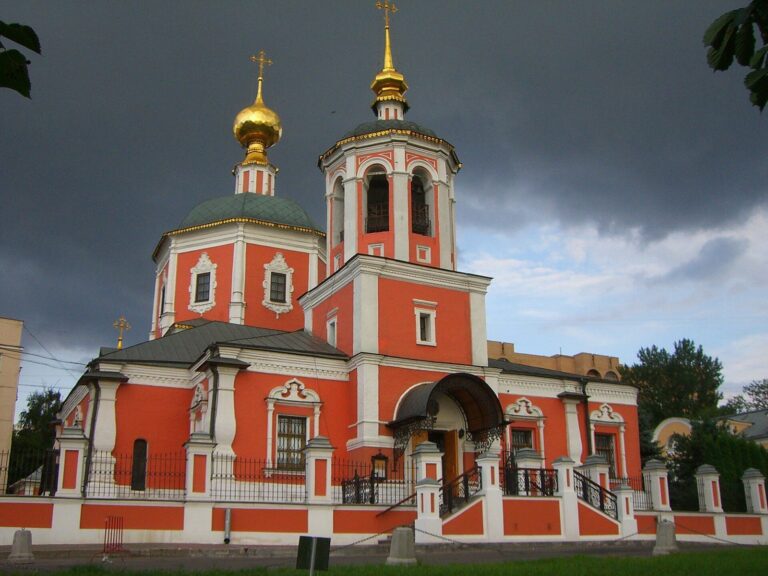
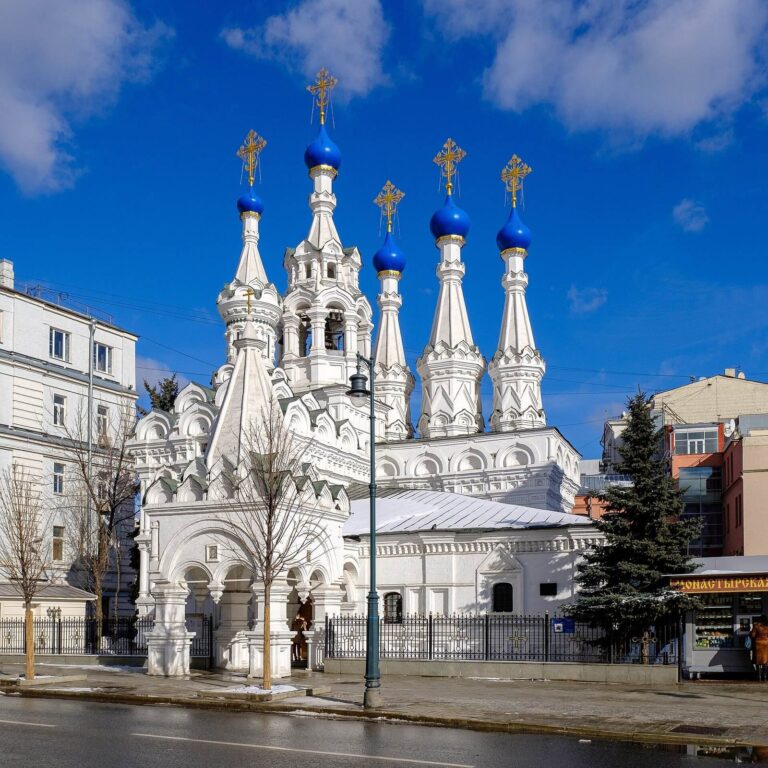
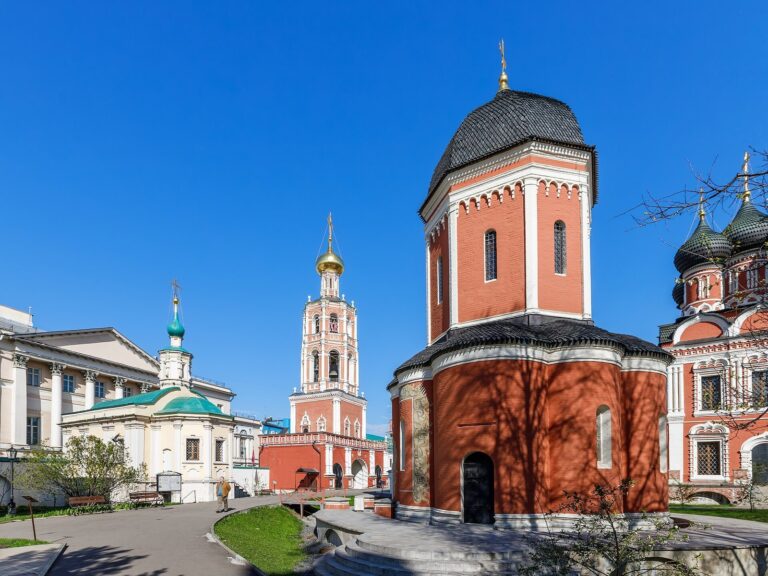
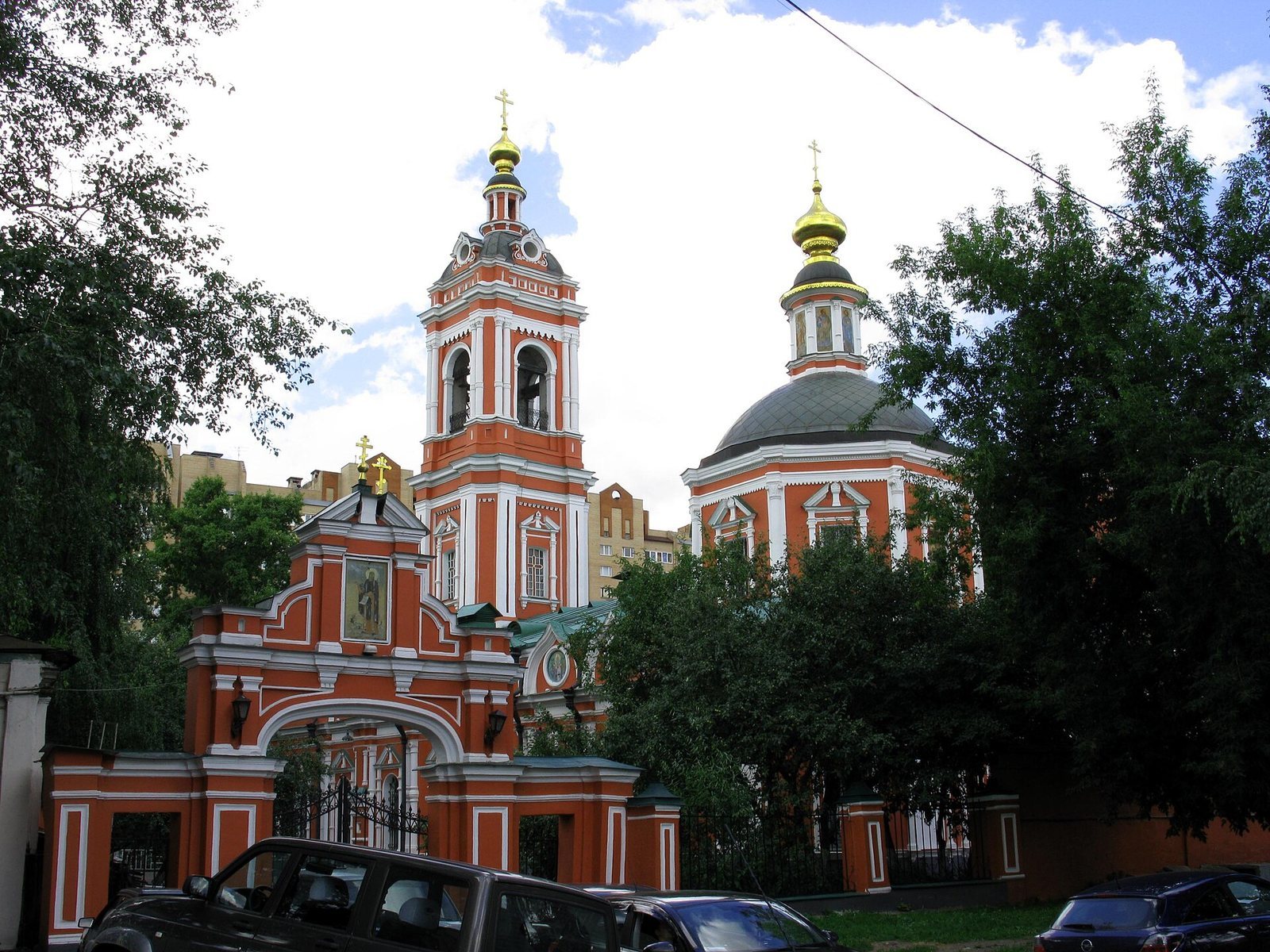
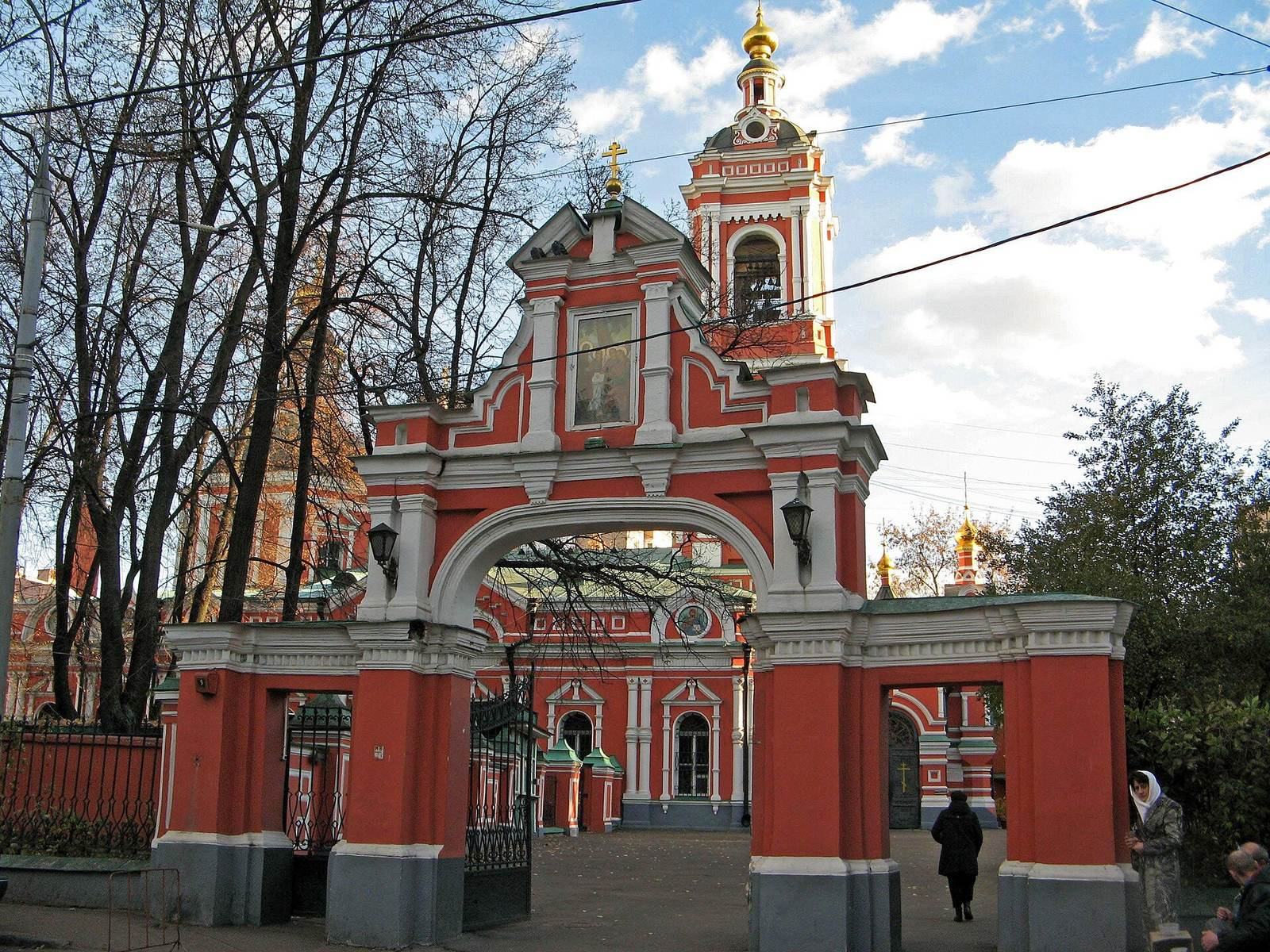
The stone church stands in the Russian Baroque style and, when built, was beside a large pond. Its form includes a single bell tower and four domes, along with a refectory and three altars. The main altar is dedicated to the Holy Trinity; the side altars honor Saint Pimen the Great and the Vladimir Icon of the Mother of God. Three icon screens separate the sanctuary from the main body of the church. The Vladimir chapel is a distinct addition to the building. A small icon carved in stone, associated with the tradition of the blind boy, was kept in the church for a long time. The church enclosure, built in the 19th century, survives.
Interior and furnishings
Fiodor Szechtel’s 1897 interior scheme included fresco designs modeled on compositions by the painter Viktor Vasnetsov in Saint Vladimir’s Cathedral in Kyiv. Architectural historian Evgenia Kirichenko considered the interior one of Szechtel’s major achievements. A marble icon screen made in 1907 is ornamented with palm and other branches and clusters of grapes. These motifs were associated with the persecution of early Christians and their refuge in catacombs.