Dendra: A Mycenaean Cemetery in the Argolid
Site at a Glance
- Popularity
- Medium
- Country
- Greece
- Primary era
- Bronze Age
- Eras represented
- Stone Age, Bronze Age
- Civilizations
- Mycenaean
- Site type
- Burial
- Remains
- Necropolis
On this page18 sections
History
Dendra is a prehistoric burial site in the Argolid on the Peloponnese in Greece, and one of the region’s major Mycenaean cemeteries. Mycenaean culture belongs to the Late Helladic period, the final phase in the Early, Middle and Late Helladic sequence used for Bronze Age mainland Greece. The cemetery was in use from approximately 1450 to 1180 BCE, spanning Late Helladic II through Late Helladic IIIB.
The graves are generally thought to have served the elite of nearby Midea, a Mycenaean citadel, or fortified settlement, about 1.5 kilometres southeast of Dendra. People from other settlements may also have been buried there.
Settlement before and after the cemetery
The area was inhabited during the Neolithic, before the Bronze Age, and the Early Helladic period. A settlement was also present from the Hellenistic period, which followed Alexander the Great’s conquests, into the Byzantine period of the medieval Eastern Roman Empire. A local tradition recorded in the twentieth century held that the village had once been called Sanga.
Mycenaean use and reuse
The chamber tombs began to be used around the end of the Middle Helladic period or the start of the Late Helladic period, and remained in use into the early twelfth century BCE. After an interment, tombs could be closed and later reopened for further burials and cult ceremonies. This repeated use extended the cemetery’s history across several generations.
Excavations
Work at Dendra began in 1926 after Nikolaos Bertos, an official responsible for antiquities in the Argolid, invited Swedish archaeologist Axel W. Persson to investigate the domed tomb. In 1927 Persson excavated three chamber tombs and Bertos excavated two. Persson returned in 1937 while investigating a story that a large gold vessel had been discovered and lost in the nearby village. He concluded that the cup had never existed, but excavated another tomb. In 1939 he excavated four more.
The Second World War interrupted the excavations. Greek archaeologist Nikolaos Verdelis and Swedish archaeologist Paul Åström resumed work in 1960, uncovering Chamber Tomb 12 and its bronze armour. Later investigations followed attempts to plunder tombs that had not previously been excavated.
Remains
Layout and earlier remains
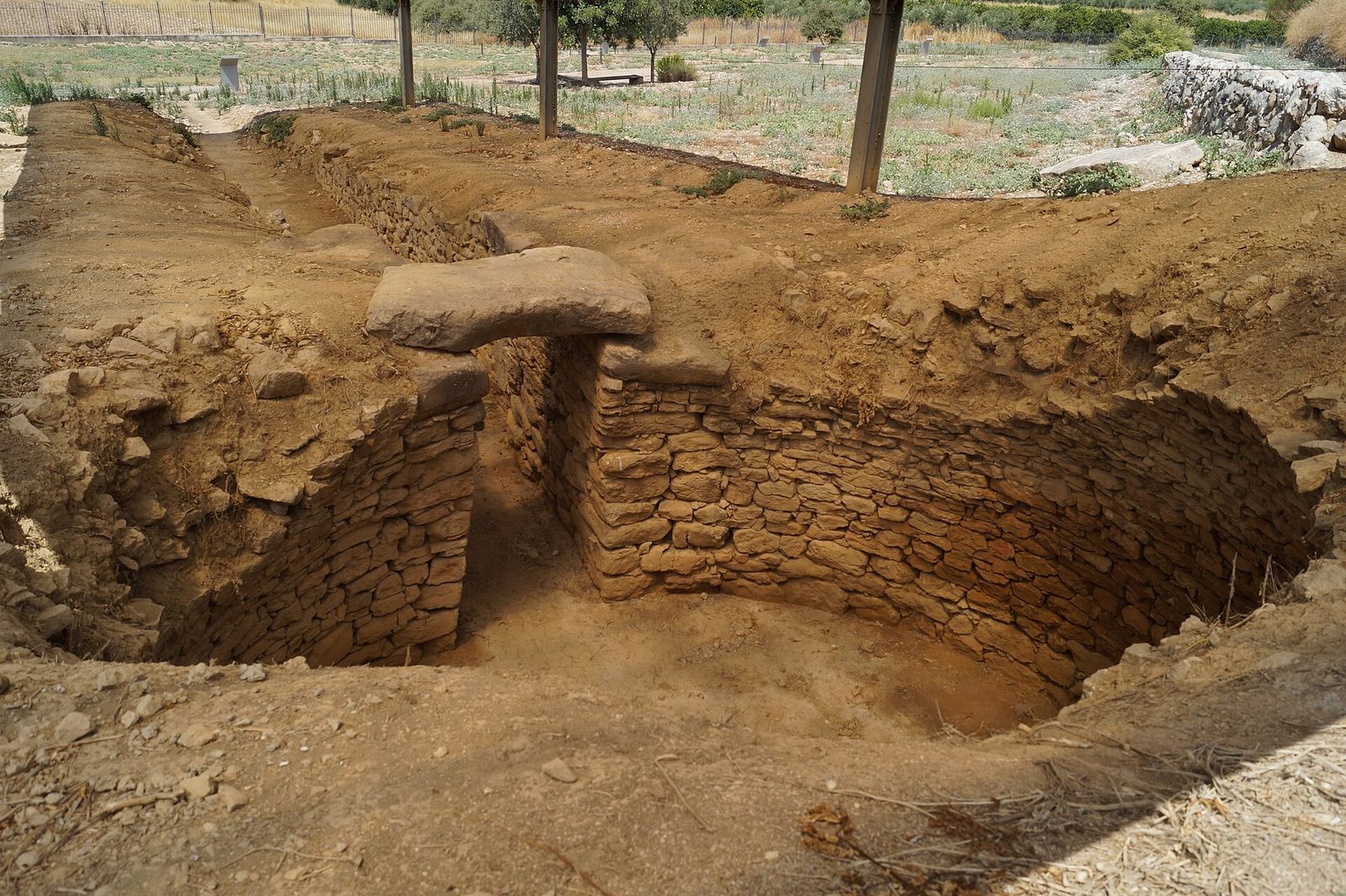
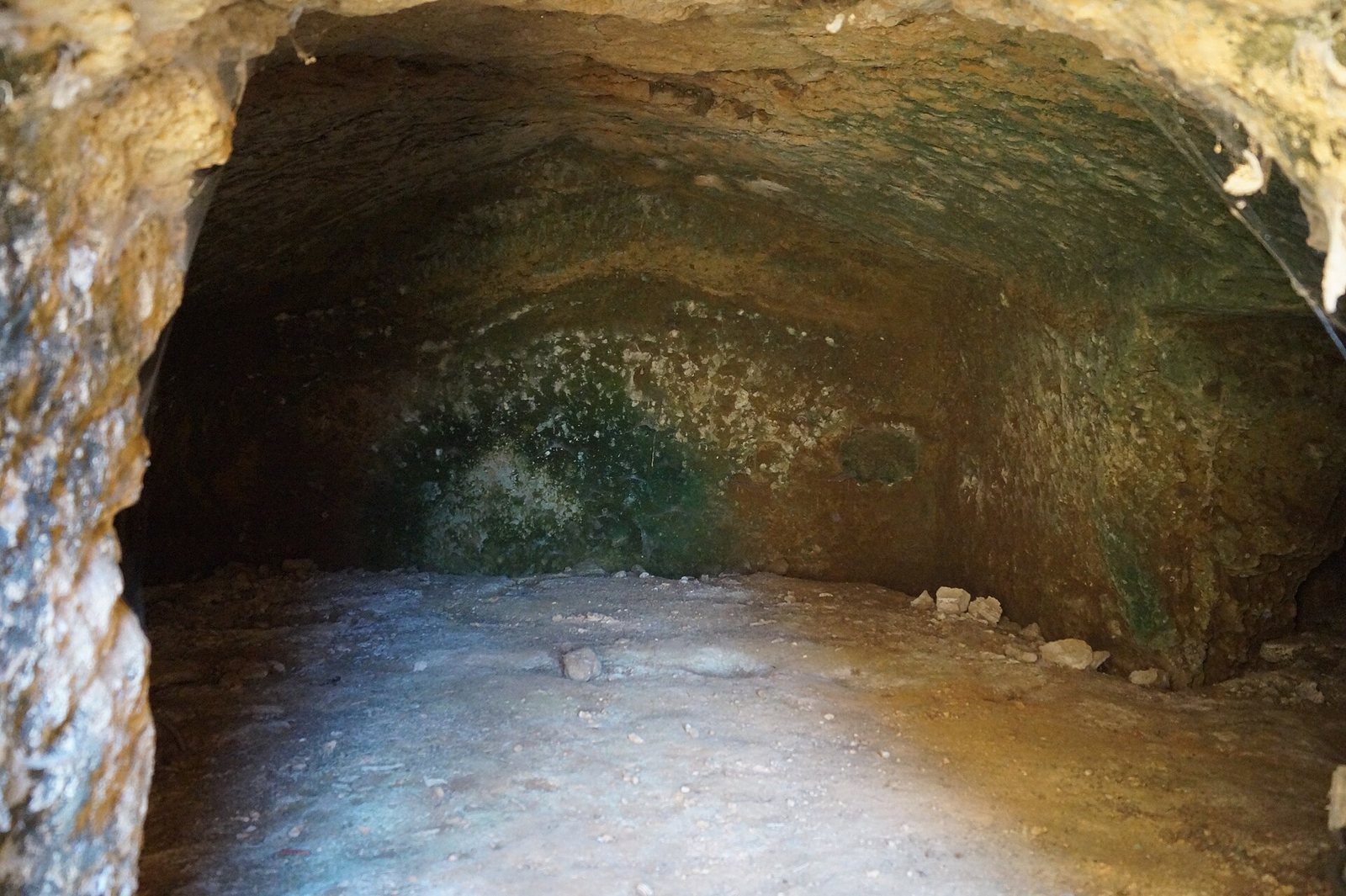
The cemetery comprises a circular domed tomb, three burial mounds and 16 chamber tombs. The chamber tombs were cut into bedrock, with passages leading to roughly rectangular underground rooms. Remains of houses from the Neolithic and Early Helladic periods lie within the excavation area. At least three of the burial mounds date to the Middle Helladic period. Chamber Tombs 3, 4, 5, 11, 13 and 14 have been backfilled.
The domed tomb
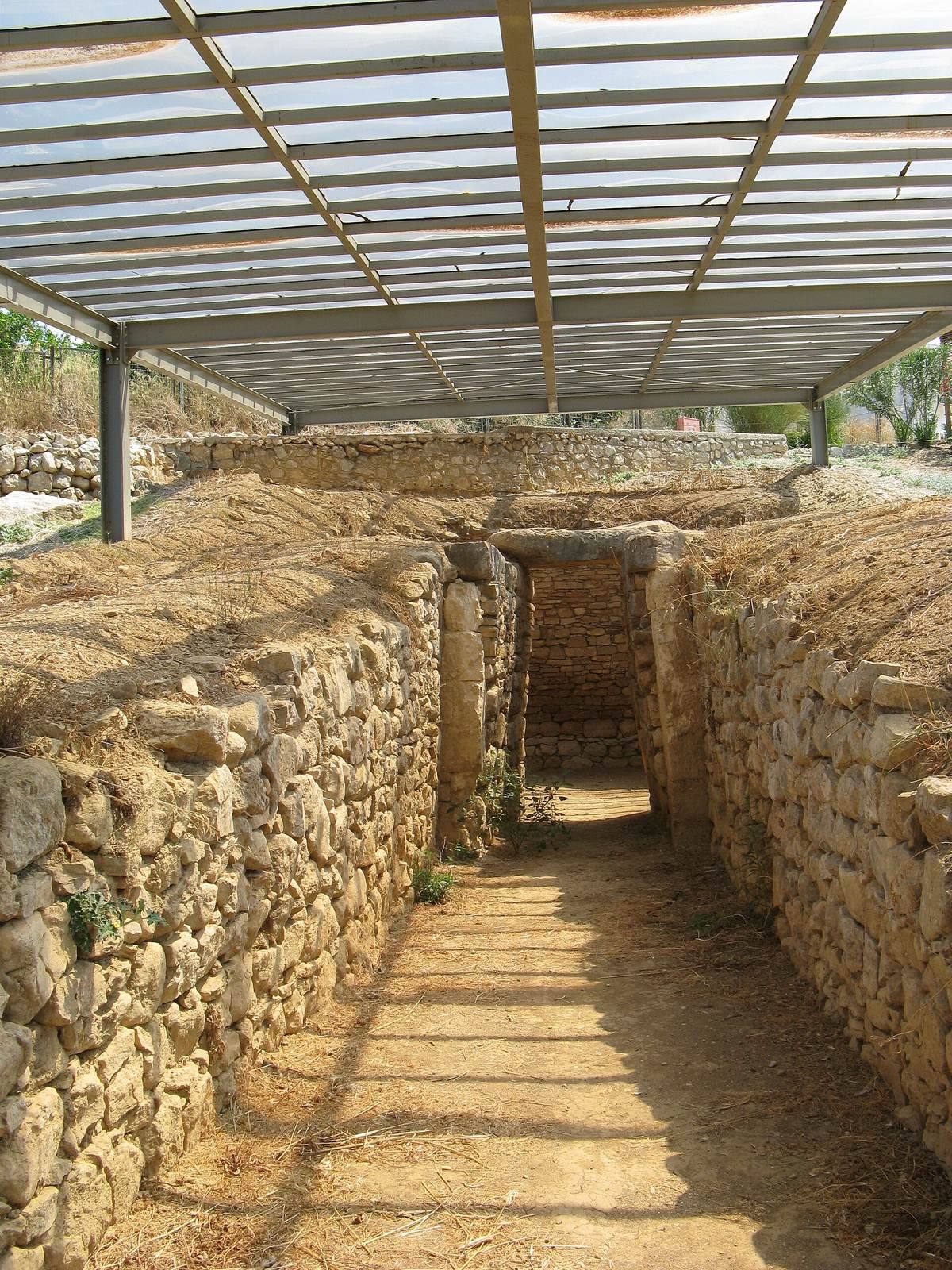
The tholos, or circular tomb with a domed roof, was built between about 1450 and 1350 BCE and is also assigned to Late Helladic IIIA. Persson called it the Royal Tomb. Its masonry entrance passage is 17.9 metres long, comparable in length to the passage of the so-called Treasury of Atreus at Mycenae. The dome was built as a corbel vault, made from successive stone courses that project inward. It collapsed in the ninth century BCE; its span was about 7.3 metres, and its original height is estimated at about 7 metres.
Four burial pits were found inside the tomb. Their contents included gold, silver and bronze vessels, jewellery, finely made seal stones, and three unusual rings built from layers of silver, lead, copper and iron. A male skeleton was buried with the gold Dendra Octopus Cup. Persson interpreted him as a king, and gave the labels queen and little princess to two female skeletons. These were his interpretations; bones from at least three other people were also found.
Attempts to plunder the tomb date back at least to the eleventh century BCE, but burials placed in pits in its floor escaped successful looting. In the ninth century BCE, a further burial was placed in the entrance area alongside the dome’s collapse. This burial belongs to the Protogeometric period, an early Greek archaeological period after the Bronze Age collapse.
Chamber tombs
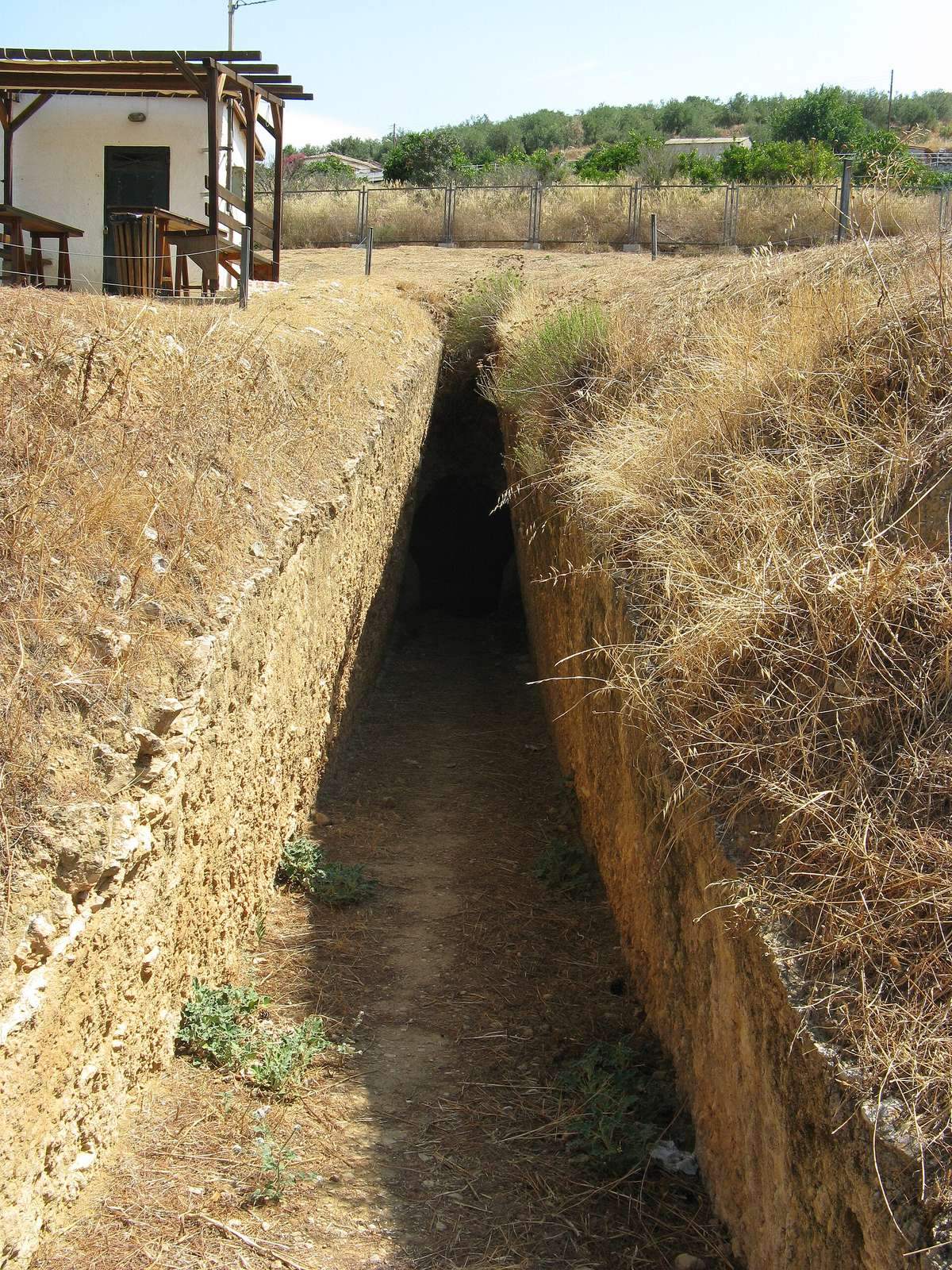
The entrance passages of the chamber tombs approach from the west or southwest. Some tombs have a side room south of the main chamber, and one or more burial shafts were cut into the chamber floors.
Chamber Tomb 9
About 30 metres north of the domed tomb, the long entrance passage of Tomb 9 cuts through a clay layer that formed the floor of an Early Helladic house dated to 3100–2000 BCE. Its rectangular chamber contains six shafts, three used for burials, and a niche with two recesses in the north wall. The chamber roof has collapsed. Two grooves in the entrance passage may have linked the tomb to the outside world. Finds included a silver vessel handle, a steatite oil lamp made from soft stone, a female figurine of faience, a glazed silica-based material, a stirrup jar with loop handles and a narrow pouring spout, and jewellery.
Chamber Tomb 8
About 20 metres north of Tomb 9, Tomb 8 has a side chamber connected to the main chamber by two grooves. A stone bench was cut into the rock along the main chamber’s north side. One person was buried in a wooden coffin. Grave goods included a bronze shoulder guard, two knives, a dagger, obsidian or flint arrowheads, and ivory carvings.
Chamber Tomb 6
Tomb 6 lies about 10 metres south of Tomb 8. It has a side chamber that may have served ritual purposes, along with two grooves in its entrance passage. Two burial pits were found in the chamber. One, covered by two stone slabs, remained undisturbed, and at least three later burials were also present. Finds included a clay brazier, boar’s teeth and bronze arrowheads.
Chamber Tomb 10
About 15 metres south of Tomb 6, Tomb 10 is among Dendra’s oldest and richest graves. Two burial shafts held different groups of objects: one contained a woman with a gold cup and gold jewellery, while the other held fine pottery, an ivory bowl and gold vessels. The chamber has collapsed.
Chamber Tomb 12
Tomb 12 lies immediately north of Tomb 10’s entrance passage. It is the cemetery’s smallest tomb and was entered through a shaft rather than a passage. Its chamber and entrance area have collapsed. Although looted shortly before systematic investigation, it yielded the Dendra armour set, the oldest such armour known from Europe. Bronze plates protected the chest and back and were joined by leather or fabric straps. The set also included bronze greaves, or lower-leg guards, and a boar’s-tusk helmet, of which only remains survive. The armour is held at the Archaeological Museum of Nafplio.
The northern burial mound and Chamber Tomb 7
About 40 metres farther north is the best-preserved of the cemetery’s three Middle Helladic burial mounds. Tomb 7 lies immediately east of it, though its chamber has collapsed. Four of its five burial shafts had been looted; the undisturbed shaft contained bronze weapons and vessels. An ash layer in the tomb may have resulted from funerary rites.
Horse burials and a cist grave
Immediately north of the burial mound, a grave held four male horses aged between 14 and 17 years. A simple cist grave, formed from stone slabs, lay beside it. About 10 metres farther north, between Tombs 15 and 16, bones from three more horses were found. Their cause of death is unknown, though sacrifice has been proposed.
Chamber Tombs 16 and 15
Tomb 16 lies four metres north of the cist grave. Its construction slightly cut into an older burial mound, which was repaired afterward. A dry-stone wall blocked the entrance passage, and plaster covered the chamber walls. A few pottery vessels and bones were recovered. Tomb 15 lies eight metres farther north. Its construction also cut into an older mound, later repaired, and its chamber floor was covered with white earth. The final body associated with the tomb was placed above its entrance. Grave goods place its use in Late Helladic IIIA, in the fourteenth century BCE.
Chamber Tomb 2
About 10 metres west of Tomb 16, Tomb 2 had a rectangular chamber and shafts containing rich grave goods, despite looting. Finds included a steatite lamp, alabaster vases, bronze weapons, a boar’s-tusk helmet, seal stones and ivory inlays. Two rare iron objects, a button and an amulet, were gilded; iron was scarce and highly valued in the fifteenth century BCE. Three limestone slabs were also found, and the largest probably supported a wooden coffin. A woman’s burial in the entrance passage had spindle whorls, a needle and glass-paste objects once coated with gold leaf. A pit in the passage contained a group of bronze vessels and utensils.
The chamber has been interpreted as a cenotaph, a symbolic tomb without the deceased’s body. Persson proposed that it commemorated a warrior killed on a raid into Egypt, an explanation later considered fanciful in favour of the possibility that the tomb had been looted. Some scholars have interpreted the two smaller limestone slabs as standing stones representing the dead, and connected the bronze equipment with rites intended to communicate with the dead. They have compared these ideas with Book 11 of the ancient Greek epic Odyssey, which describes encounters with the dead.
Chamber Tomb 1
About seven metres north of Tomb 2, Tomb 1 has a rectangular chamber with rounded corners and five burial shafts, each containing a deceased person. Finds included pottery, clay figurines, a bronze ring, steatite buttons and glass beads. Several figurines were ceramic phi figures, named for their resemblance to the letter phi; one was of the kourotrophos type, depicting a figure nurturing a child.
Finds from the domed tomb and Tombs 2 and 10 are displayed at the National Archaeological Museum in Athens. Other finds, including the armour from Tomb 12, are held at the Archaeological Museum of Nafplio.