Kaigarayama Shell Mound: A Yayoi-Period Archaeological Site in Japan
Site at a Glance
- Popularity
- Very Low
- Country
- Japan
- Primary era
- Classical
- Eras represented
- Stone Age, Iron Age, Classical
- Civilizations
- Jomon, Yayoi
- Site type
- City
On this page8 sections
History
Kaigarayama Shell Mound lies in Kiyosu, Aichi Prefecture, Japan, and is associated with the neighboring Asahi settlement. A shell midden is an accumulation of discarded shells and other food remains. Asahi was a large Yayoi-period settlement, from the era when wet-rice agriculture spread in Japan, and is estimated to have supported about 1,000 people.
Early excavations
Tsutomu Kato, a teacher at Tsushima Girls’ High School, excavated the midden in November and December 1929, drawing attention to its Yayoi-period remains. On 24 December that year, Japanese anthropologist and archaeologist Ryuzo Torii excavated Kaigarayama and nearby Kenmizuka. Torii proposed that burial mounds had been built over both shell middens.
Protection and modern development
Kaigarayama was designated a National Historic Site in 1971 as part of a protected area of about one hectare. The midden was excavated again in 1972 during construction of an interchange on National Route 302. Investigation of the wider Asahi site also began amid road construction, and some road plans were modified as archaeological work continued alongside development.
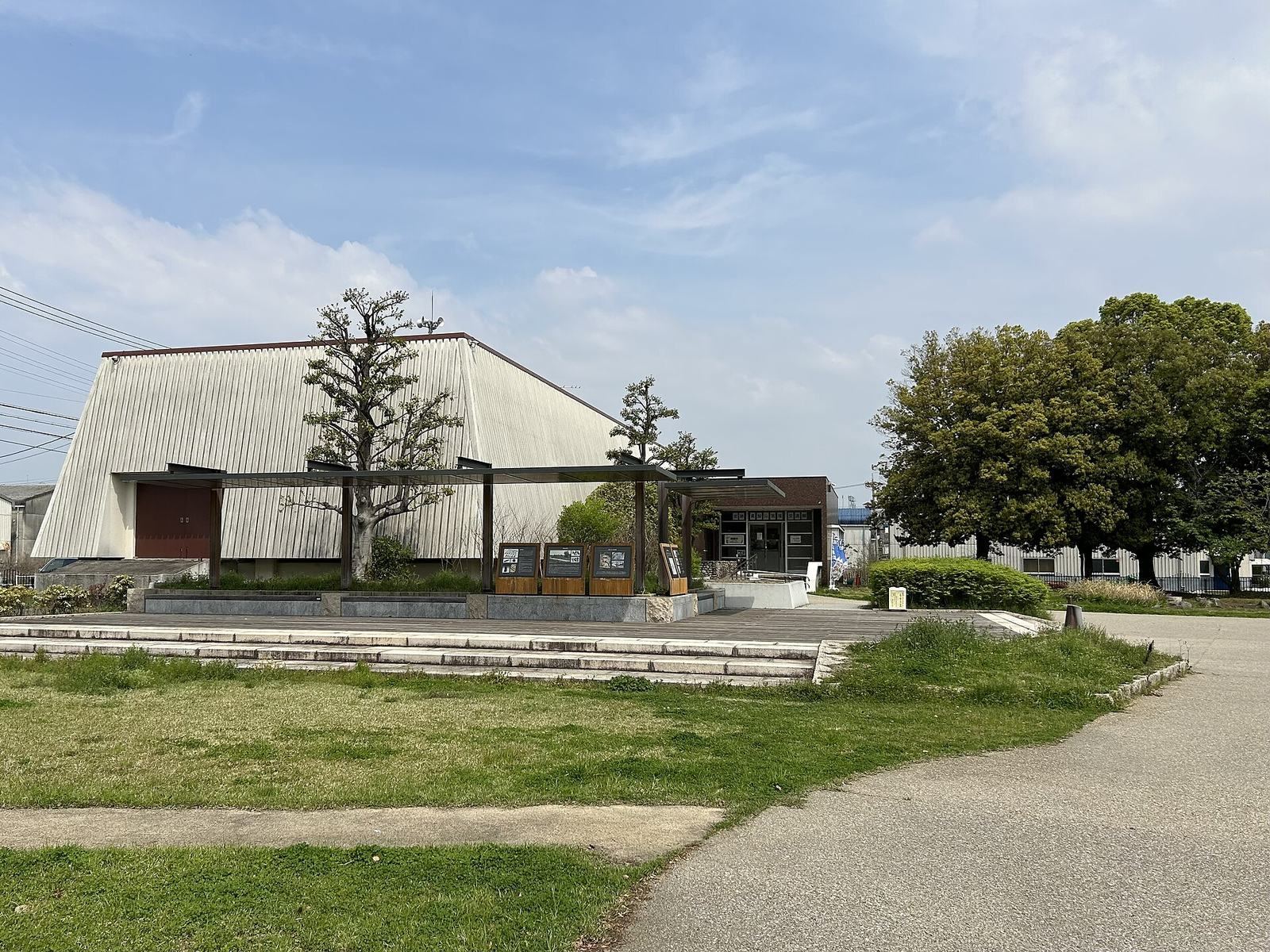
Roads and expressways now cross the center of the wider Asahi site, leaving little of its former landscape visible. Kaigarayama and Kenmizuka remain among its surviving traces. A prefectural museum and exchange center opened in a corner of the site in 1975 to display some excavated objects. In 2020, the Aichi Asahi Site Museum opened to interpret the wider archaeological site, and the earlier museum was renewed as its annex.
Remains
The midden
Setting and form
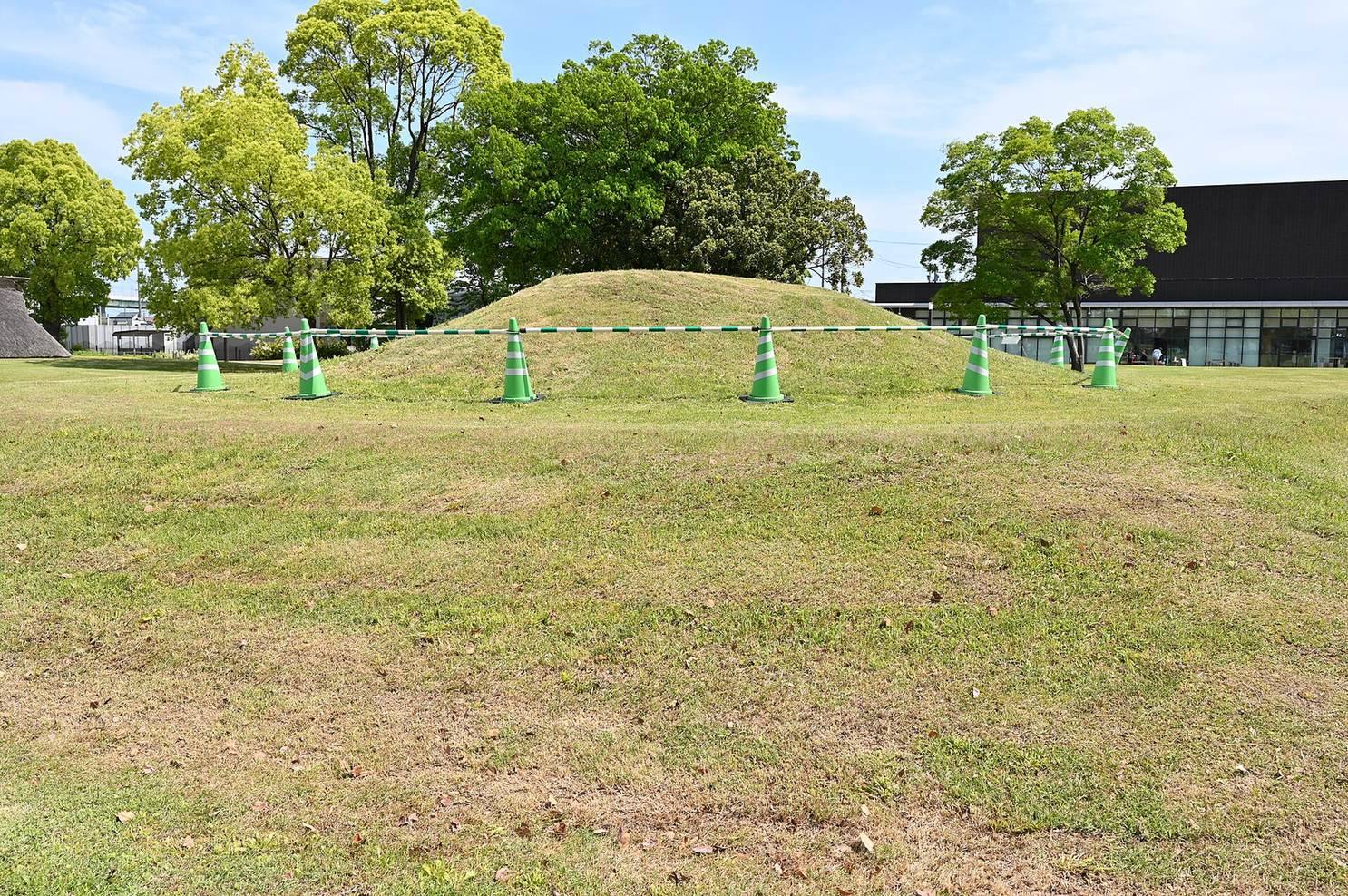
The midden lies in the grounds of the on-site museum, on low-lying land formed by deposits from the Kiso River at the northern end of the Nōbi Plain. Its elevation is about five metres above modern sea level. Measuring roughly 15 metres across and 2.5 metres deep, it is the largest of several middens in the area.
Deposits and finds
The lowest deposits date to the final stages of the Jōmon period, associated with pottery-making communities. The layers extend through the Yayoi period and reach the early Kofun period, named for its large burial mounds. Finds include clam shells, fish and animal bones, stone tools, and Yayoi pottery. Early Yayoi pottery of the Onga River tradition, an early ceramic style associated with western Japan, occurred in the same layer as Jōmon pottery linked to eastern Japan. Excavations south of the midden in 1995 and 1996 recovered early Onga River pottery alongside pottery from the final phase of a tradition whose vessels were decorated with raised clay bands.
The Asahi settlement
The associated settlement extended about 1.4 kilometres from east to west and 0.8 kilometres from north to south. Its features included moats and square tombs enclosed by ditches.