Owari Kokubun-ji Temple: Successor to a Provincial Buddhist Monastery

Site at a Glance
- Rating
- 4
- Popularity
- Very Low
- Country
- Japan
- Primary era
- Medieval
- External website
- Open
- Eras represented
- Medieval
- Civilizations
- Yamato
- Site type
- Religious
- Remains
- Monastery
On this page15 sections
History
Owari Kokubun-ji Temple is the modern successor of a provincial Buddhist monastery in Inazawa, Japan, established under Emperor Shomu’s 741 decree. That policy created a kokubunji, or provincial monastery, and a paired nunnery in every province as part of a state-supported Buddhist system. The ancient Owari monastery stood about 900 meters south of the present temple.
The ancient provincial monastery
The monastery appears in the Shoku Nihongi in entries dated 749, 767, 769, and 775. The entry for 769 places the provincial capital, monastery, and nunnery downstream from the Unuma River, identified with the modern Kiso River. The monastery therefore formed part of the religious and administrative landscape of Owari Province.
A fire destroyed the ancient monastery in 884. Its functions were then transferred to Ganko-ji, an officially registered temple in Aichi County, possibly at the site of the former Owari Gango-ji in Nagoya. The later history of the original complex remains difficult to trace. The monk Kuya’s eulogy and the history of Rokuharamitsu-ji state that he shaved his head at Owari Kokubun-ji in his early twenties, probably during the 920s, but the temple named in those accounts cannot be identified with certainty. A 1391 register also lists an Owari Kokubun-ji as a subsidiary of Saidai-ji, although that reference may concern another institution.
Names connected with the former monastery survived in the local landscape into the Edo period. Tradition also places four subsidiary temples around the ancient monastery, to the north, east, south, and west. The northern and southern sites are associated with temples that survive, while the eastern and western locations are regarded as former temple sites.
Enko-ji and the present temple
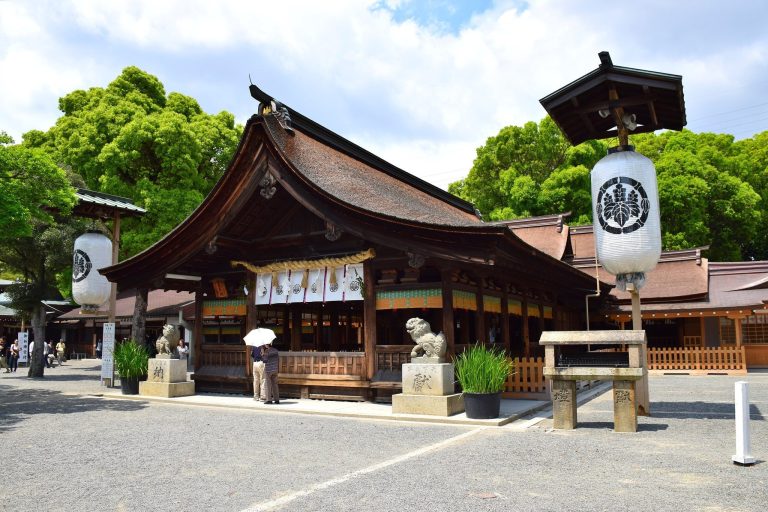
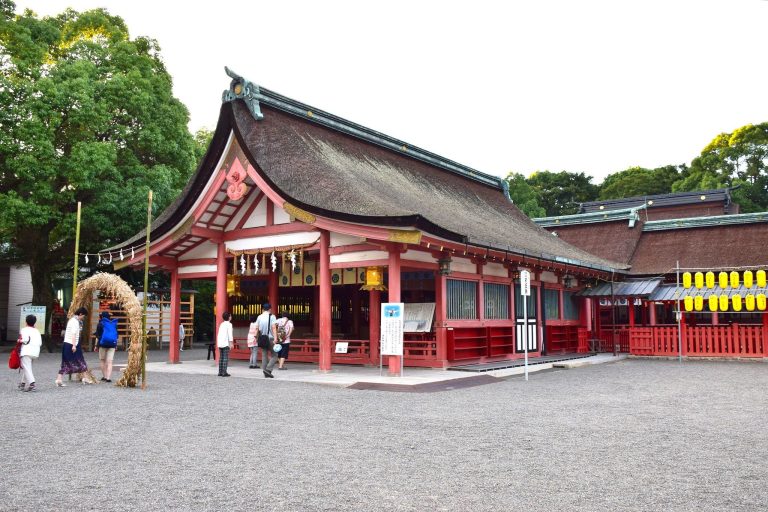
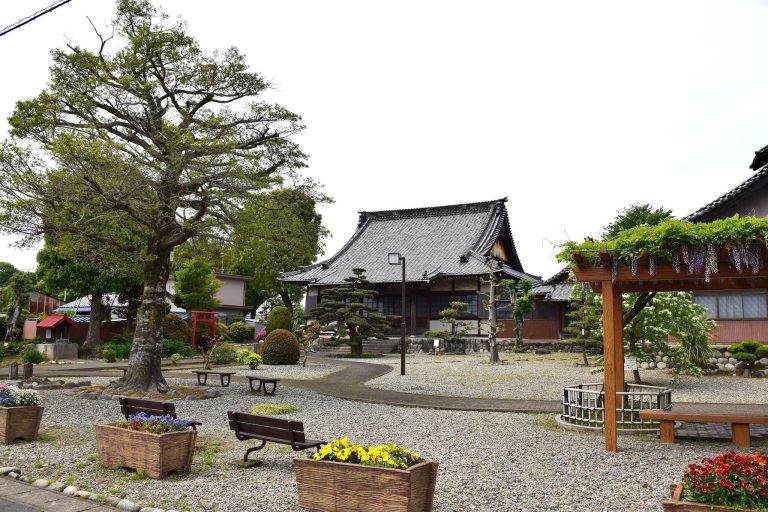
The present temple was formerly called Enko-ji and belongs to the Myoshin-ji branch of the Rinzai school, one of the major Japanese Zen traditions. Its foundation date is uncertain. Traditions place its establishment in either 1328 or 1375 and name different founders, while historical evidence indicates that it already existed before 1328.
Enko-ji originally stood at Ipponmatsu, to the north. In the early seventeenth century it was moved to the site of Yawase Castle, where the present temple stands. At the same time, a former Owari Kokubun-ji Shaka chapel, also called the Kokubunji Hall, was transferred from Shiinoki into the temple compound. During the Edo period, that chapel housed a statue of Yakushi Nyorai, the Buddha associated with healing and protection from illness, which was regarded as the principal image of the ancient monastery. The image was later moved into the main hall and became Enko-ji’s principal image.
In 1886, drawing on the temple tradition that it had inherited the ancient monastery’s principal image and continuity, Enko-ji adopted the name Owari Kokubun-ji. The temple was also described as one of the “two Enko-ji temples,” together with the nearby Enko-ji known as the “Hagi Temple.”
Archaeological investigation and the nunnery tradition
Seventeen archaeological investigations were carried out at the ancient monastery site between 1961 and 2013. Excavated remains, the site’s proximity to the presumed Owari provincial capital, documentary evidence, and local traditions led to its designation as a National Historic Site in 2012. The designated area was enlarged in 2018.
The provincial nunnery associated with Owari Kokubun-ji is traditionally placed near Hokke-ji in Hokkeji-cho, about 1.5 kilometers northwest of the monastery site. Documentary evidence places the nunnery in active use during the late tenth and early eleventh centuries. An official document from 988 records the provincial governor Fujiwara no Motomichi refusing to provide funds for its repair, while a petition by Oe no Masafusa in 1009 refers to repairs undertaken or requested between 1001 and 1004.
According to Hokke-ji tradition, a predecessor temple was established on the former nunnery site in the early sixteenth century. Warfare involving the Oda clan later destroyed it, after which the temple was moved to its present location. The subsequent history of the nunnery is unknown.
Remains
The ancient monastery occupies a natural levee, a raised riverbank formed by flood deposits, on the left bank of the Miyake River. Its precinct is estimated to have extended about 200 meters from east to west and at least 300 meters from north to south. Excavation has revealed a north-south arrangement centered on the Main Hall and Lecture Hall, with cloisters along both sides of the Main Hall and a Pagoda east of the cloisters.
Ancient monastery buildings
Main Hall
The Main Hall stood on a tiled platform whose foundation measures approximately 25.6 by 21.6 meters. Its position formed the principal axis of the monastery, with the Lecture Hall and presumed South Gate aligned to the north and south.
Lecture Hall
Only two foundation stones survive from the Lecture Hall, which also stood on a tiled platform. Its relationship to the Main Hall reflects the organized north-south plan of the provincial monastery.
Pagoda
The Pagoda had a foundation approximately 14.7 meters square and stood east of the cloisters. The weakness of its foundation has led to an interpretation of either a three-story or five-story structure. Four foundation stones remain at the ancient site.
Gates and cloisters
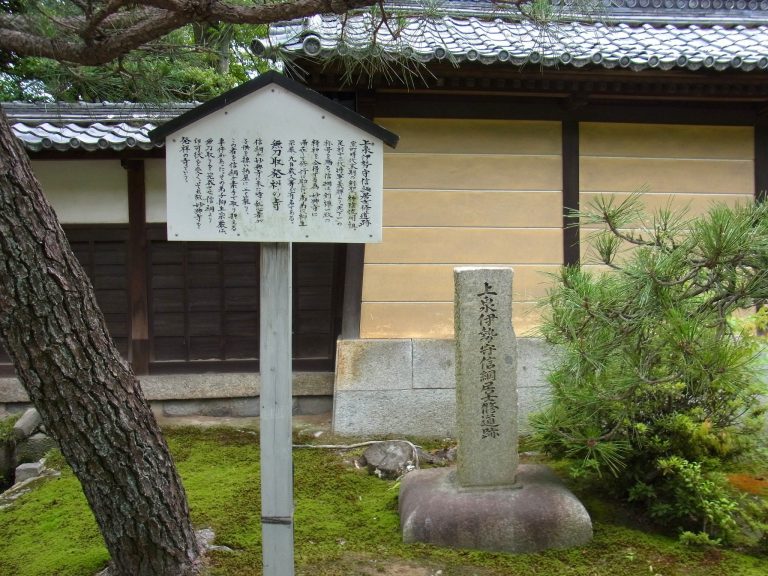
Part of the cloister has been identified beside the Main Hall, and the presumed South Gate belongs to the reconstructed plan of the complex. A stone monument bearing the inscription “Former Site of Owari Kokubun-ji” was erected at the site in 1915. Large quantities of roof tiles recovered within the estimated precinct further define the monastery’s architectural remains.
Images preserved at the present temple
Shaka Nyorai images
The present temple preserves two seated wooden images of Shaka Nyorai, both dated to the Kamakura period, conventionally dated from 1185 to 1333. The smaller statue is 60.7 centimeters high, while the larger measures 103.1 centimeters and rests on a pedestal. Both were carved from joined blocks of hinoki cypress, a method that assembles several carved sections into one image.
Monk image
A seated wooden statue attributed to a monk is 84 centimeters high and depicts him on a curved-back chair. It uses the joined-block technique in hinoki cypress and is also dated to the Kamakura period.
Figures associated with Atsuta Shrine
Two seated wooden statues are traditionally identified as a male and female pair associated with the grand priest of Atsuta Shrine, a major Shinto shrine in Nagoya. They measure 60.7 and 60.9 centimeters in height, respectively, and both are made of joined blocks of hinoki cypress. The pair dates to the Kamakura period. Together with the two Shaka images and the attributed monk, these five sculptures are designated National Important Cultural Properties.
Hokke-ji and the traditional nunnery site
Near the traditional location of the former nunnery, four garden stones at a private residence have been considered possible foundation stones. Hokke-ji preserves a seated wooden statue of Yakushi Nyorai dated to the late Heian period, conventionally dated from 794 to 1185. The statue is designated a National Important Cultural Property.