Villa Barbarigo: A Renaissance Rural Palace in Italy
Site at a Glance
- Popularity
- Medium
- Country
- Italy
- Primary era
- Early Modern
- Eras represented
- Early Modern
- Civilizations
- Venetian
- Site type
- Domestic
- Remains
- Villa
On this page13 sections
History
Villa Barbarigo is a late-sixteenth-century rural patrician palace in Italy, transformed for the Venetian Barbarigo family from 1588. Its design combines Renaissance forms, from a period of renewed interest in classical art and architecture, with Palladian influences shaped by the sixteenth-century architect Andrea Palladio, as well as classical Venetian features.
Construction and aristocratic ownership
In 1540, the Venetian nobleman Giacomo Barbarigo purchased a house and dovecote on the site. The family began replacing that residence in 1588. Master builder Venturin carried out the work to plans by an architect whose name is unknown.
In the 1620s, the villa passed to the Loredan family through marriage. They retained it until 1755, when it became the property of the Rezzonico family. The names Villa Barbarigo Rezzonico and Villa Barbarigo Loredan Rezzonico reflect these ties between Venetian aristocratic families.
Agricultural and civic uses
The estate served both as a rural residence and as a center for agricultural business. Grain was traded, measured, and paid for in the central building, while the surrounding agricultural work and collection of produce were handled in the annexes.
From 1836 to 1891, the building housed a college run by the Mechitarist Congregation of Venice, an Armenian Catholic monastic community. After the municipality of Noventa acquired the villa in 1891, it first used it as a school and later made it the town hall, its present function.
Remains
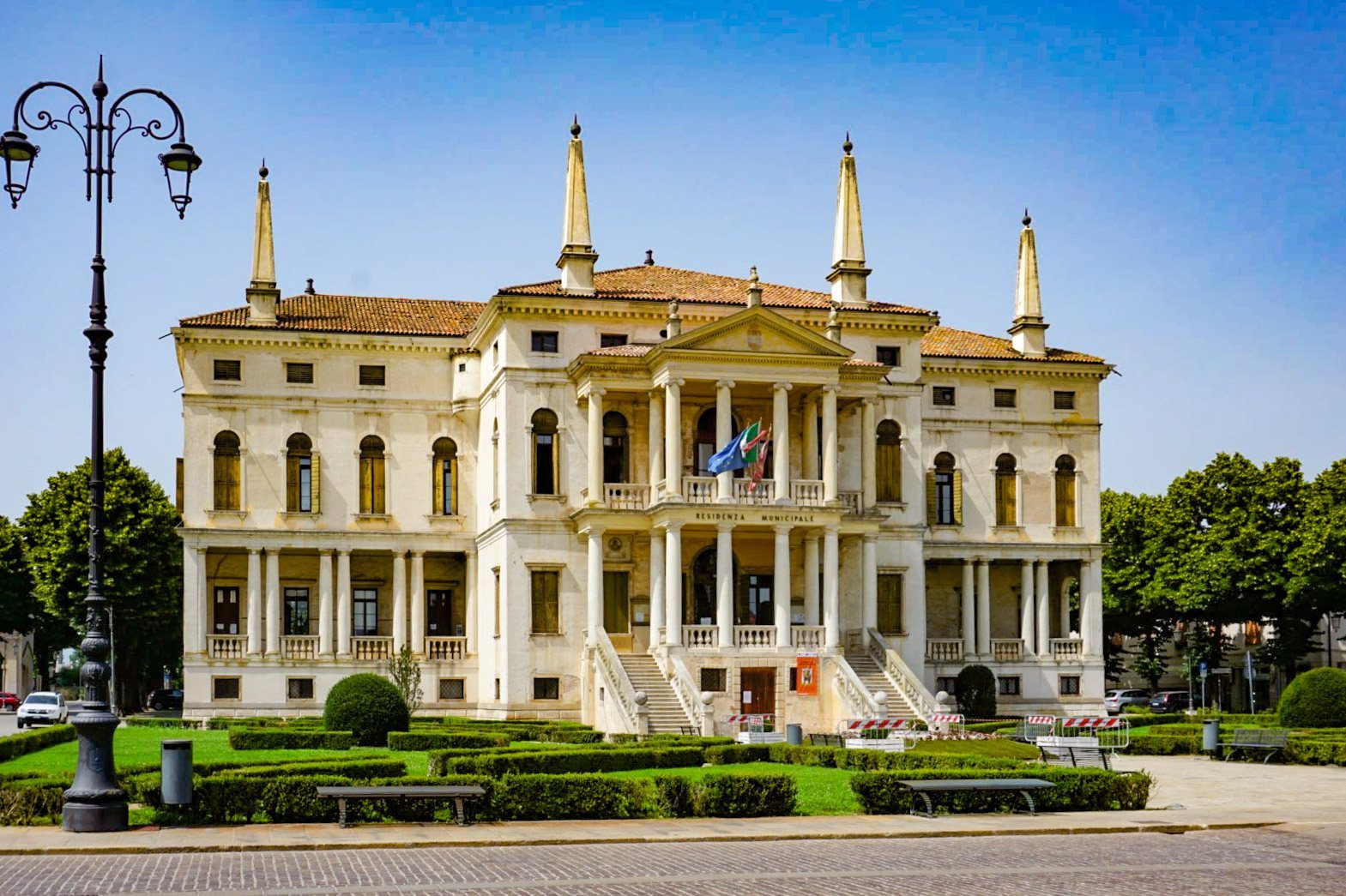
The complex brings together a four-storey central palace, an Italian-style garden, a large forecourt, agricultural service buildings, an enclosing wall, and two towers at the rear. Its principal rooms preserve an extensive cycle of painted decoration.
Palace and grounds
Central palace
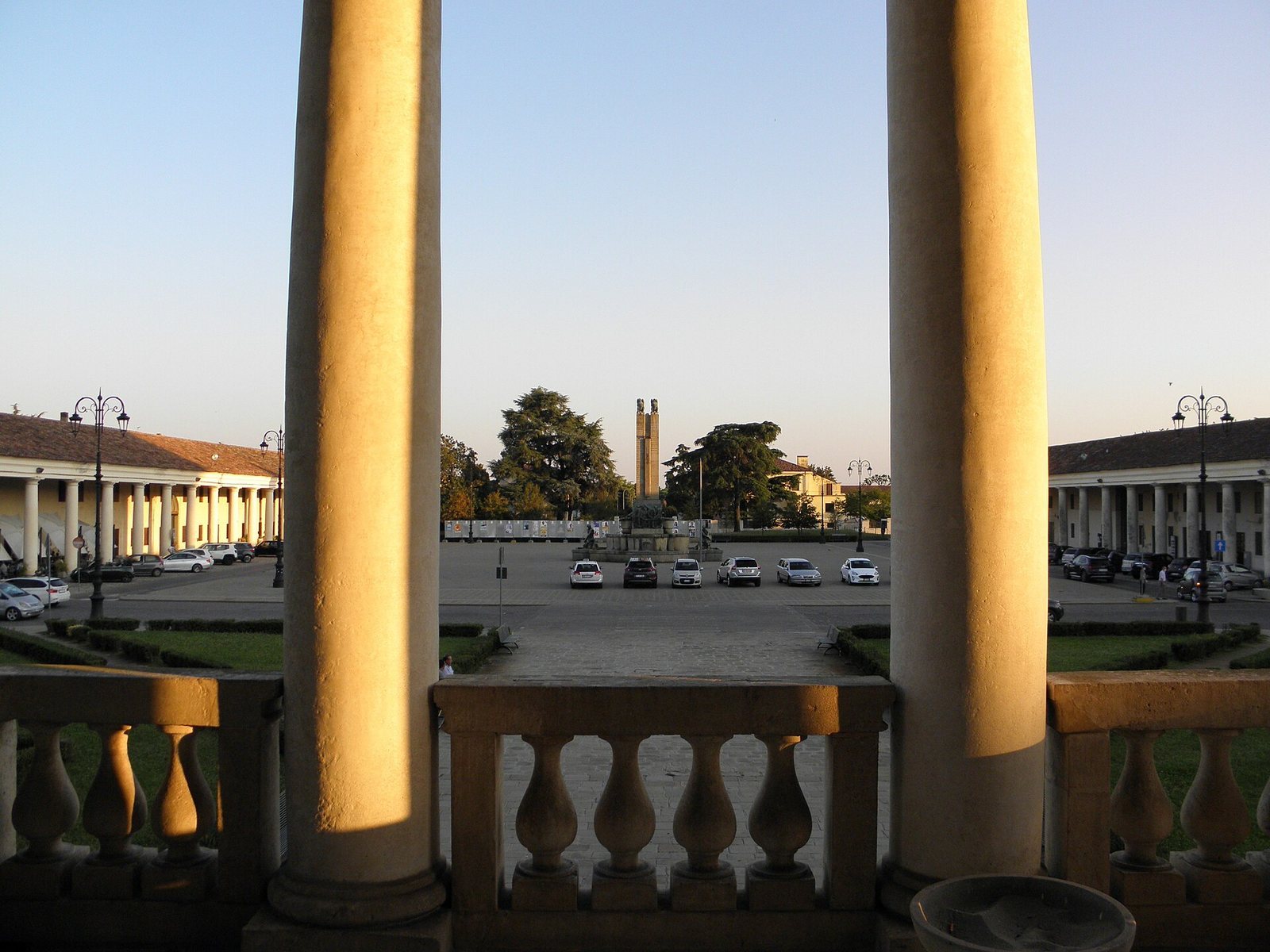
The palace’s central loggia, a covered gallery open along its sides, rises through three floors. Tall openings on the first floor accentuate the building’s height, while pyramidal forms crown the facade.
Garden and forecourt
An Italian-style garden forms part of the grounds, and a large square lies before the palace. Two agricultural service buildings, called barchesse, flank the square and contribute to the composition of the complex. The square is now Piazza IV Novembre and was formerly called Piazza del Collegio Armeno. A large fountain with a central obelisk commemorates those who died in the First World War.
Rear features
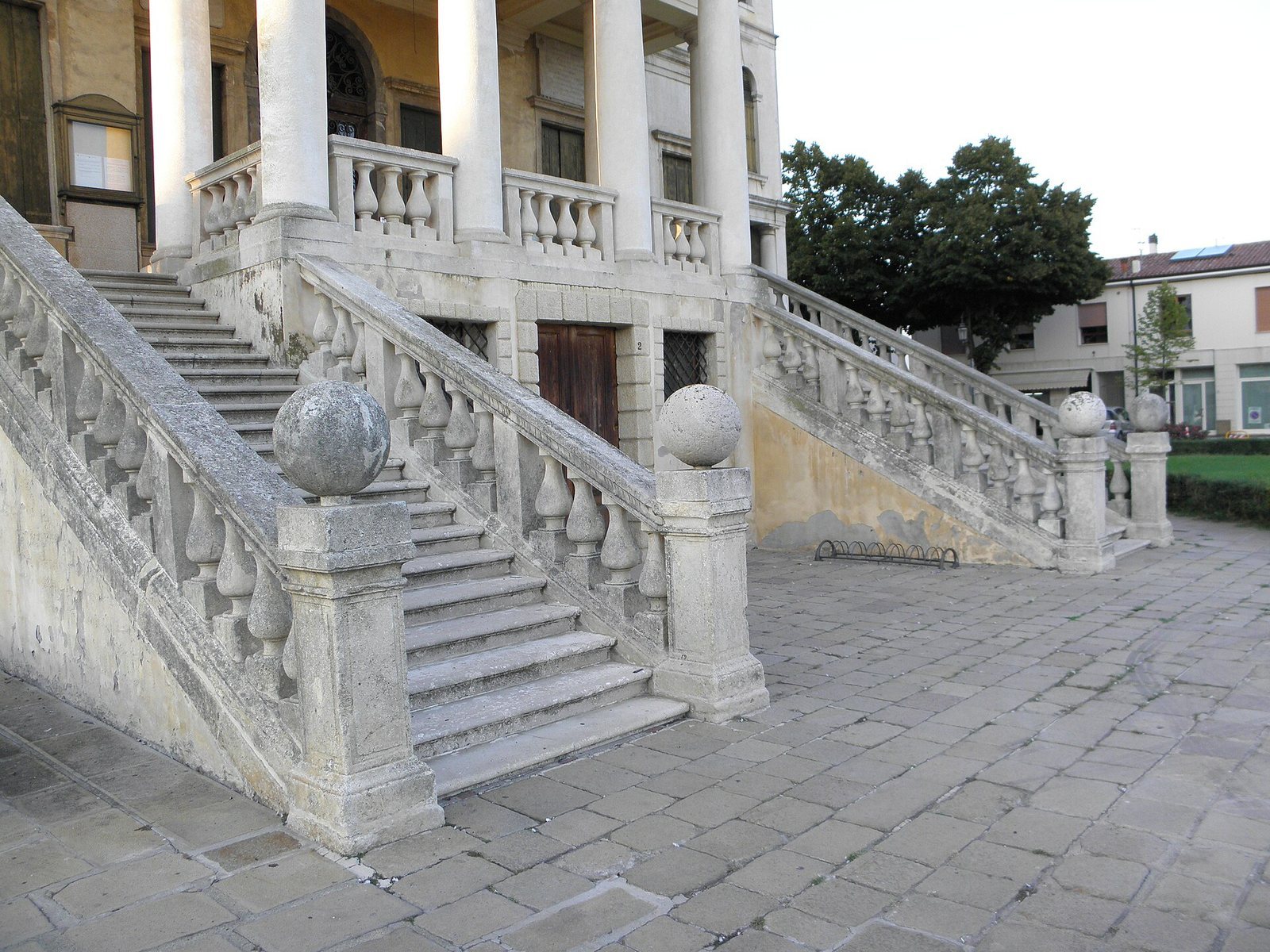
Two dovecote towers stand behind the palace. The rear of the building was later changed with a staircase and three projecting sections. A plaque on the staircase commemorates Umberto Masotto.
Painted interiors
Family histories and historical scenes
Frescoes on the principal floors were created by Alessandro Maganza, Antonio Foler, Antonio Vassilacchi, known as the Aliense, and, at a later stage, Luca Ferrari, also called Luca da Reggio. Paintings on the second floor portray episodes connected with the Barbarigo family, including Queen Maria of Hungary granting knighthood and the Venetian siege of Patras against Turkish forces. Another scene shows the Battle of Lepanto, a major 1571 naval battle between the Ottoman fleet and a Christian alliance, and the wounding and later death of Agostino Barbarigo, commander of the Venetian left wing.
Ballroom and adjoining room
The third-floor ballroom has classical-style decoration with mythological scenes, including Diana and Actaeon, figures from a story in which Actaeon is transformed into a stag after seeing Diana bathing. The Rezzonico coat of arms appears above the scenes. A large ceiling painting shows Truth unveiled by Time. The room is noted for its acoustics, and a smaller adjoining room depicts Olympian deities, the major gods and goddesses of ancient Greek religion.
Rooms beside the entrance
Two small rooms beside the entrance share a painted scheme. One depicts the doge Marco Barbarigo enthroned; a doge was the elected chief ruler of the Venetian Republic. The other shows doge Agostino Barbarigo with a white beard, pointing towards his son, who died young. Allegorical figures representing Peace, Abundance, Mediation, and Wisdom appear on the walls. The rooms differ in style, particularly the pair on the second floor. In the room to the left of the entrance, the Aliense painted himself looking out from behind a column.
Cardinal Gregorio Barbarigo
Other rooms show Cardinal Gregorio Barbarigo before the Pope and speaking with fellow prelates. A cardinal is a senior cleric in the Catholic Church. Above the doors in the room to the left of the entrance wing, complex allegorical figures complete the painted decoration.