Palazzo Pianetti vecchio: A Former Convent and Noble Residence in Jesi
Site at a Glance
- Popularity
- Very Low
- Country
- Italy
- Primary era
- Early Modern
- Eras represented
- Early Modern
- Civilizations
- Papal States
- Site type
- Domestic
- Remains
- Elite Residence
On this page9 sections
History
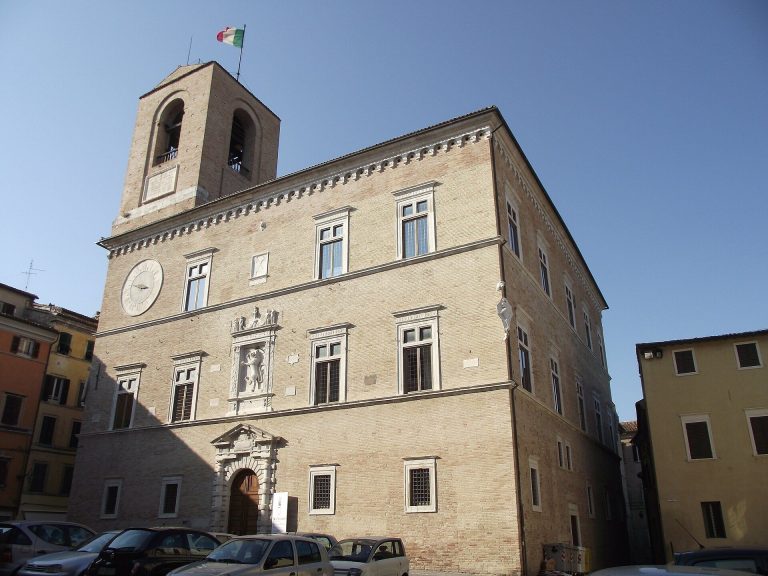
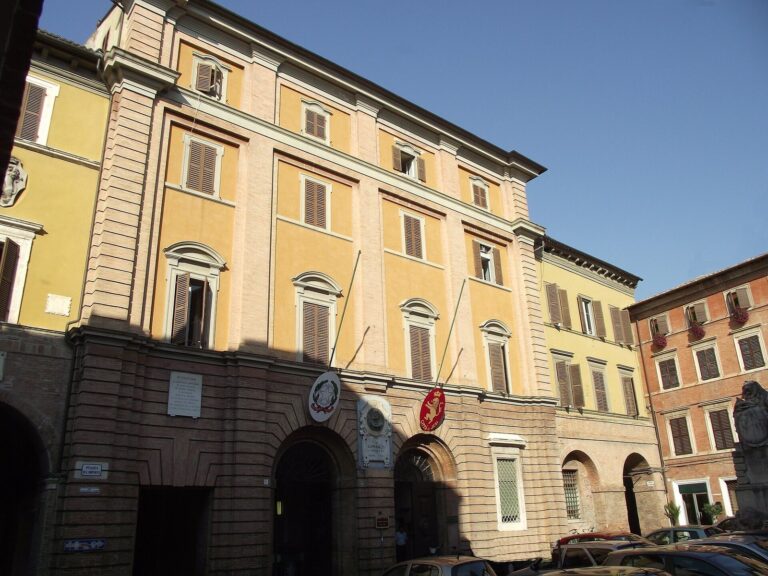
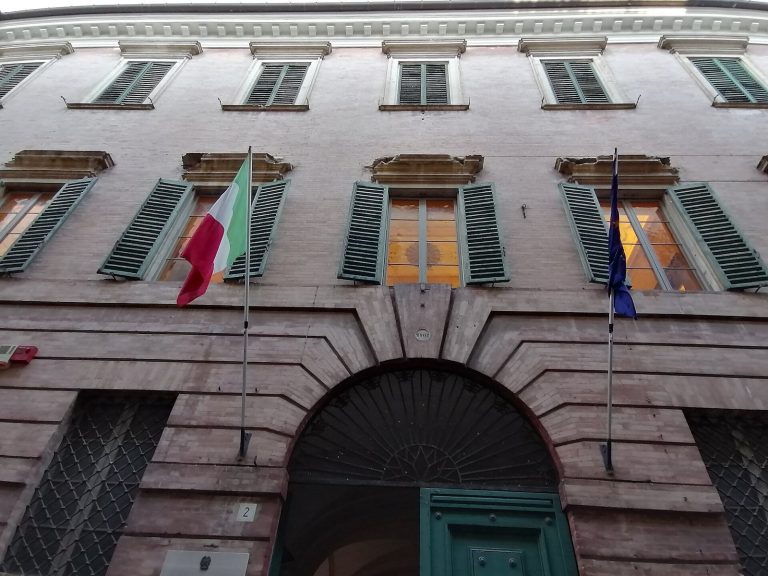
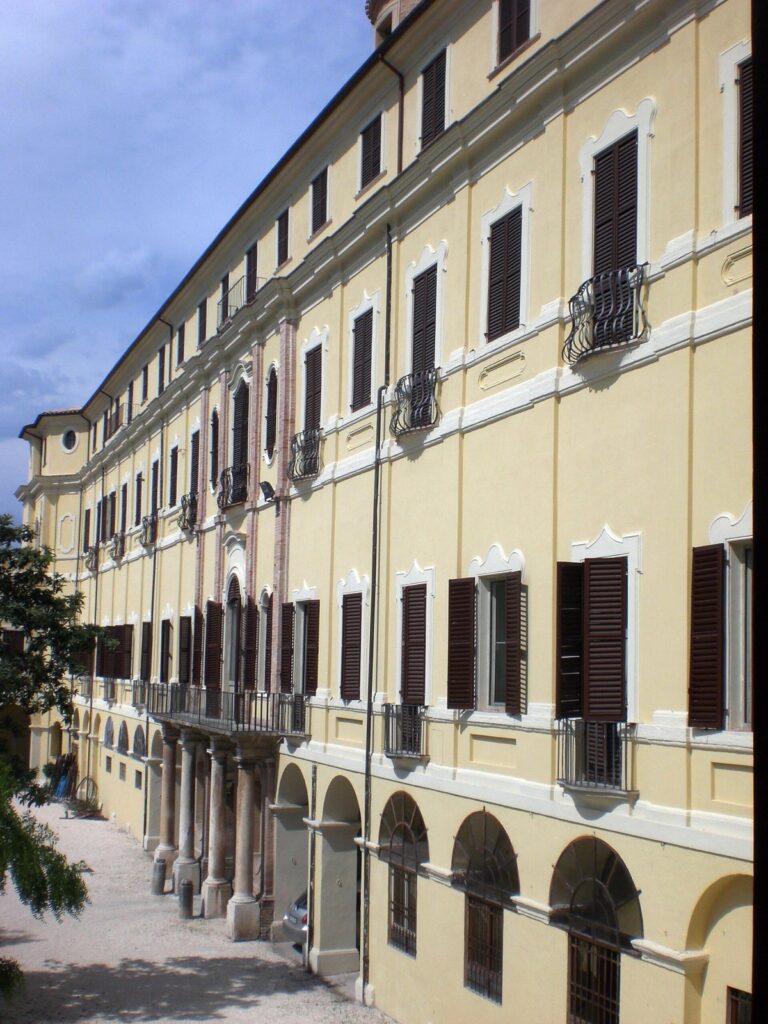
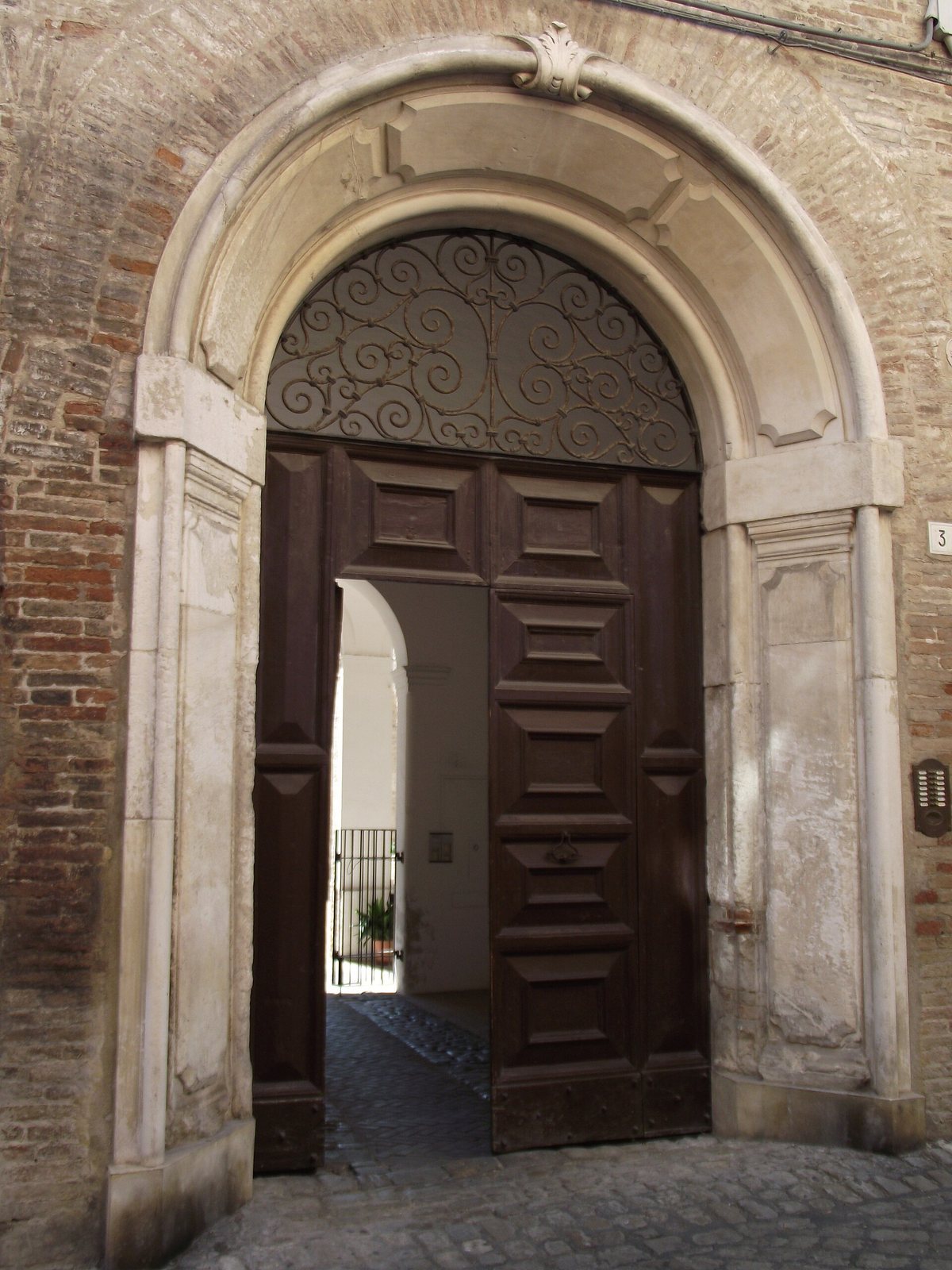
Palazzo Pianetti vecchio, also known as Palazzo Pianetti di Porta Valle, is a former Poor Clare convent and noble residence in Jesi, Italy. The complex was built in brick from 1570 to 1579 for the Poor Clare nuns, a Catholic women’s order in the Franciscan tradition, to a design by Raffaele Spacciolo of Urbino. It later served the Pianetti family and underwent religious, cultural, and commercial transformations.
The convent and its site
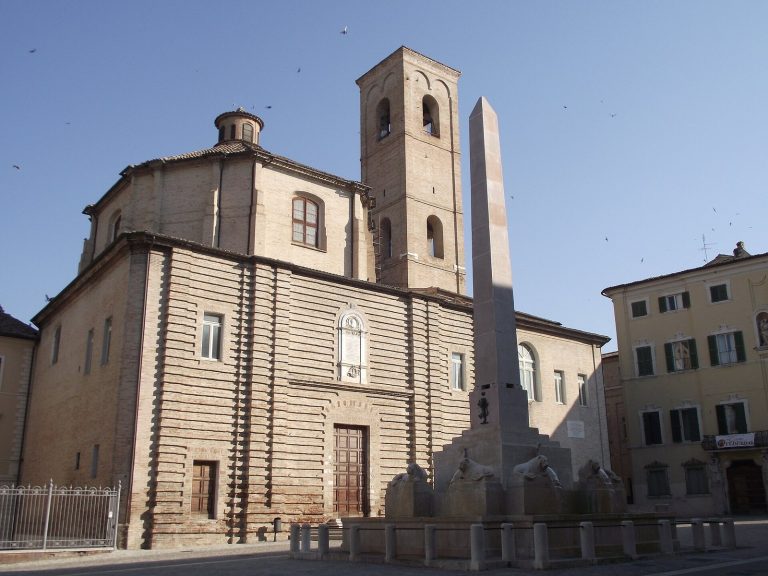
Before the convent was established, houses and gardens belonging to the Baldassini and Moriconi families occupied the land between the Church of San Pietro and Porta Valle, beside the ancient Roman main street. In the second half of the sixteenth century, the Moriconi family gave the property to the nuns. They commissioned the monastery and its attached church, completed between 1570 and 1579.
The Pianetti residence and its Baroque transformation
The Pianetti family had patronage rights over an altar in the convent church from 1618, giving it a recognized connection to that altar. After the nuns left during the seventeenth century, Marcantonio Pianetti of Terravecchia acquired the complex in 1636. The family made it their residence until 1764, when they moved to the new Palazzo Pianetti.
In 1710, the former refectory was adapted to hold a large library assembled at Todi by Bishop Giuseppe Pianetti (1673-1709). His nephew, Cardolo Maria Pianetti, enlarged the collection and made it available for public consultation. Around the same period, Cardolo Maria’s wife, Marchioness Susanna Mannelli, established a chaplaincy, an endowed provision for a priest’s religious duties, and began a Baroque renovation. Baroque was a European artistic and architectural style associated especially with the seventeenth and eighteenth centuries.
Library, printing, and municipal use
The Pianetti family gave the library to the Municipality of Jesi in 1906. It was transferred first to the Church of San Floriano and later to its present home in the Biblioteca Planettiana at Palazzo della Signoria. From 1921, a printing works operated by Duilio Diotallevi occupied the main hall and guest quarters; it closed in 1991. The complex then passed to the municipality for extensive restoration. The Studio for the Arts of Printing opened there as a museum in 2000, recalling Jesi’s printing tradition, begun by Federico de’ Conti in 1470-1471. A municipal restoration of the long-neglected church, which had been used as a coal store, began in 1990 and returned it to public use. The complex now serves cultural and residential purposes.
Remains
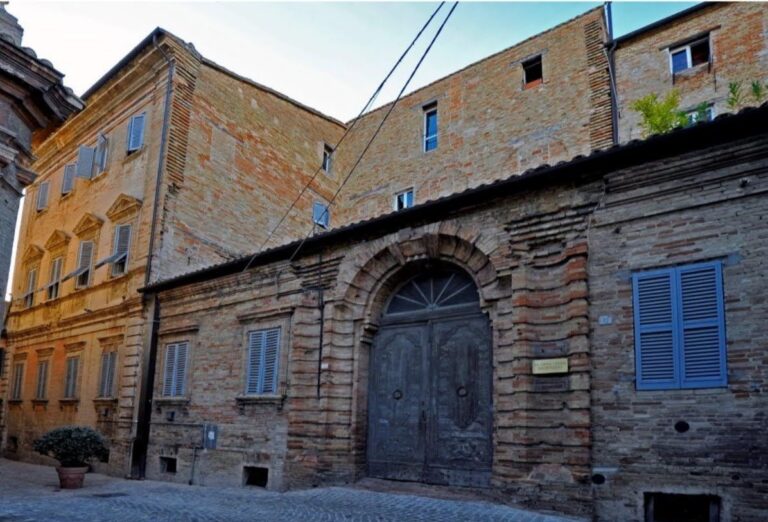
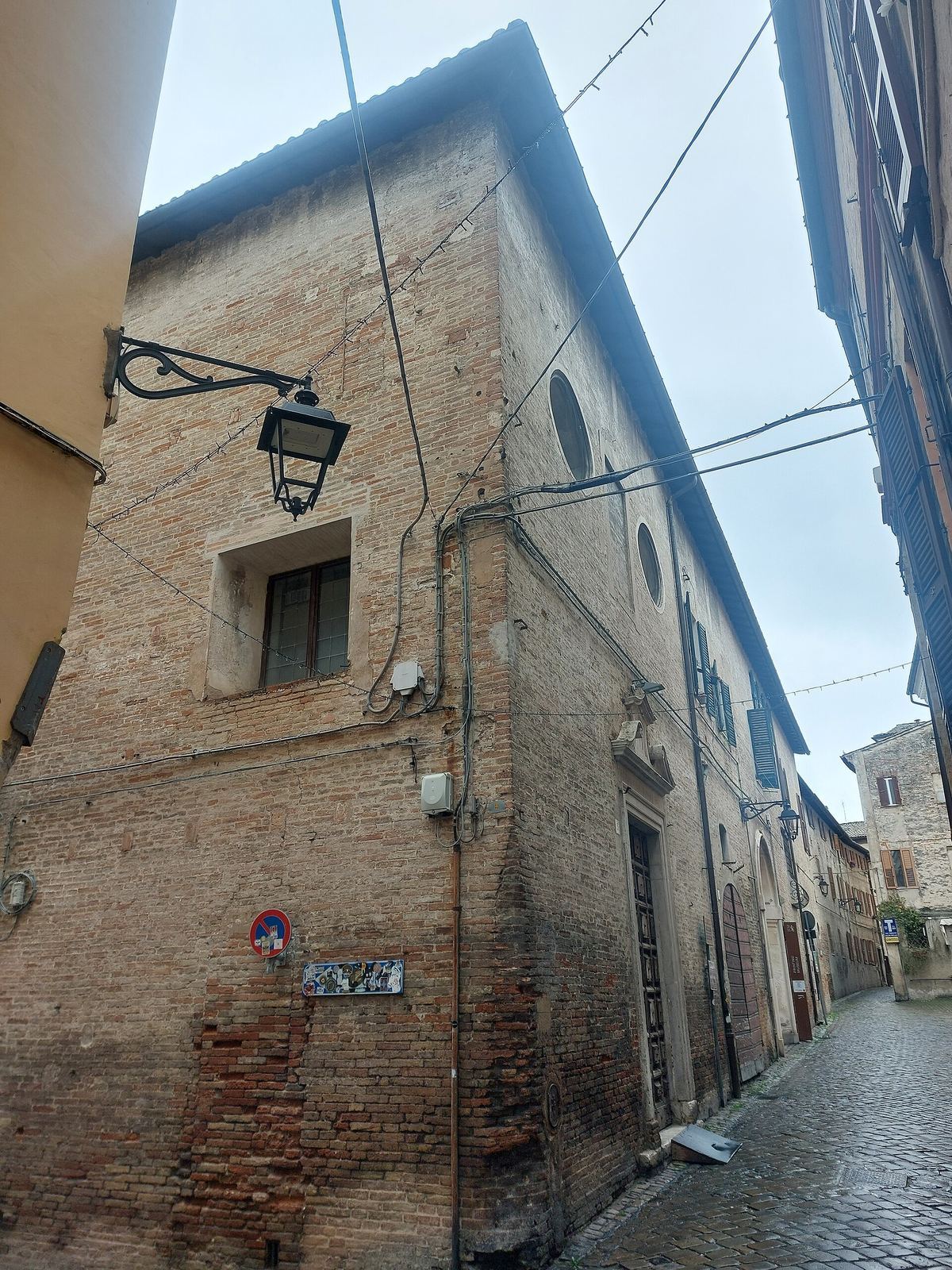
Built in brick, the complex stands between the Church of San Pietro and Porta Valle, alongside the route of the ancient Roman main street. Its surviving spaces include parts of the former monastery, an attached church, and a courtyard.
Convent and palace spaces
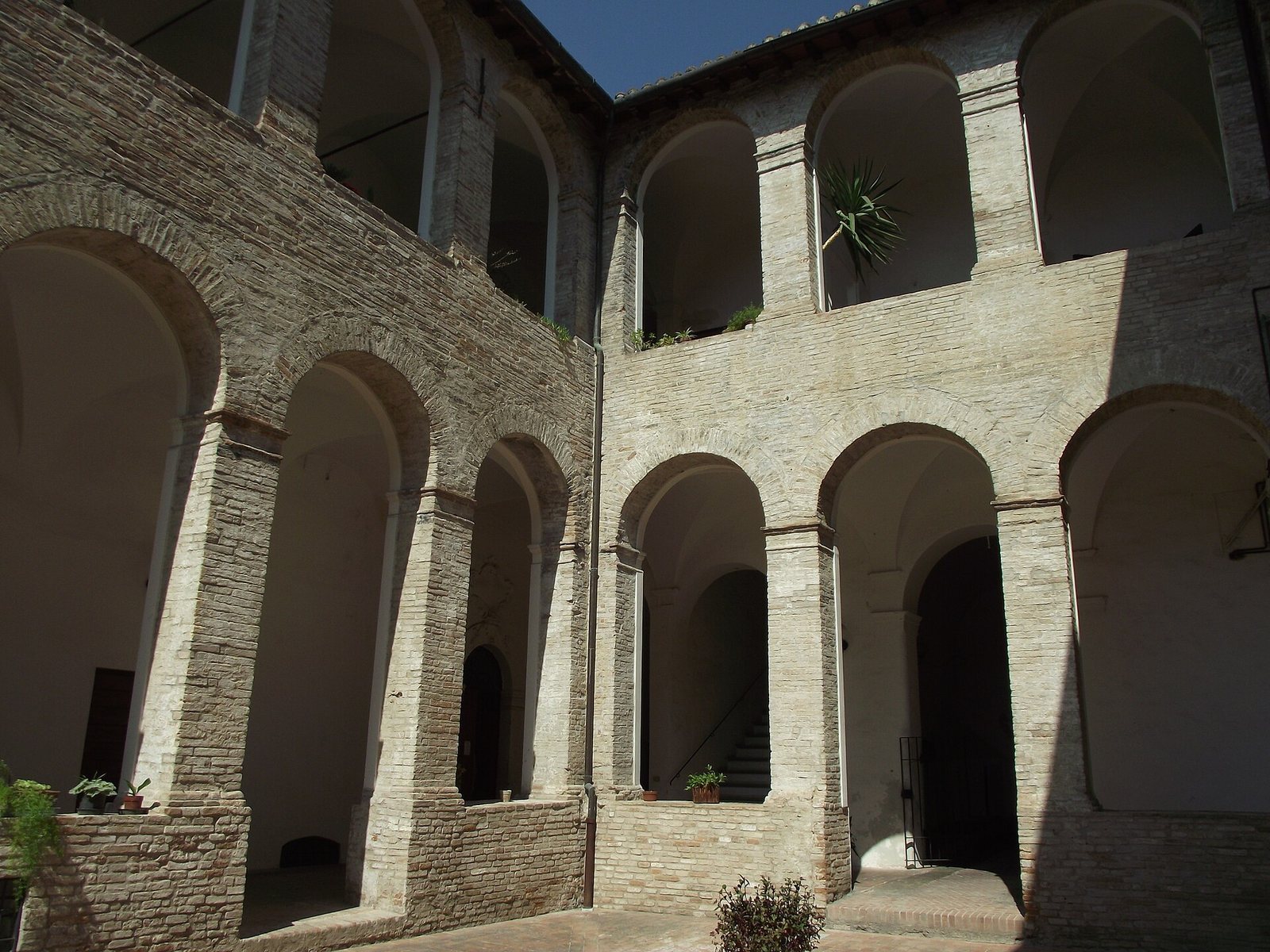
The guest quarters and former refectory preserve spaces associated with the convent’s original use. The refectory now serves as the main exhibition hall. The complex also retains a cloister, a covered walkway around a monastery courtyard, and a courtyard of its own.
Church of Saint Bernard the Abbot
Plan, altar, and stucco decoration
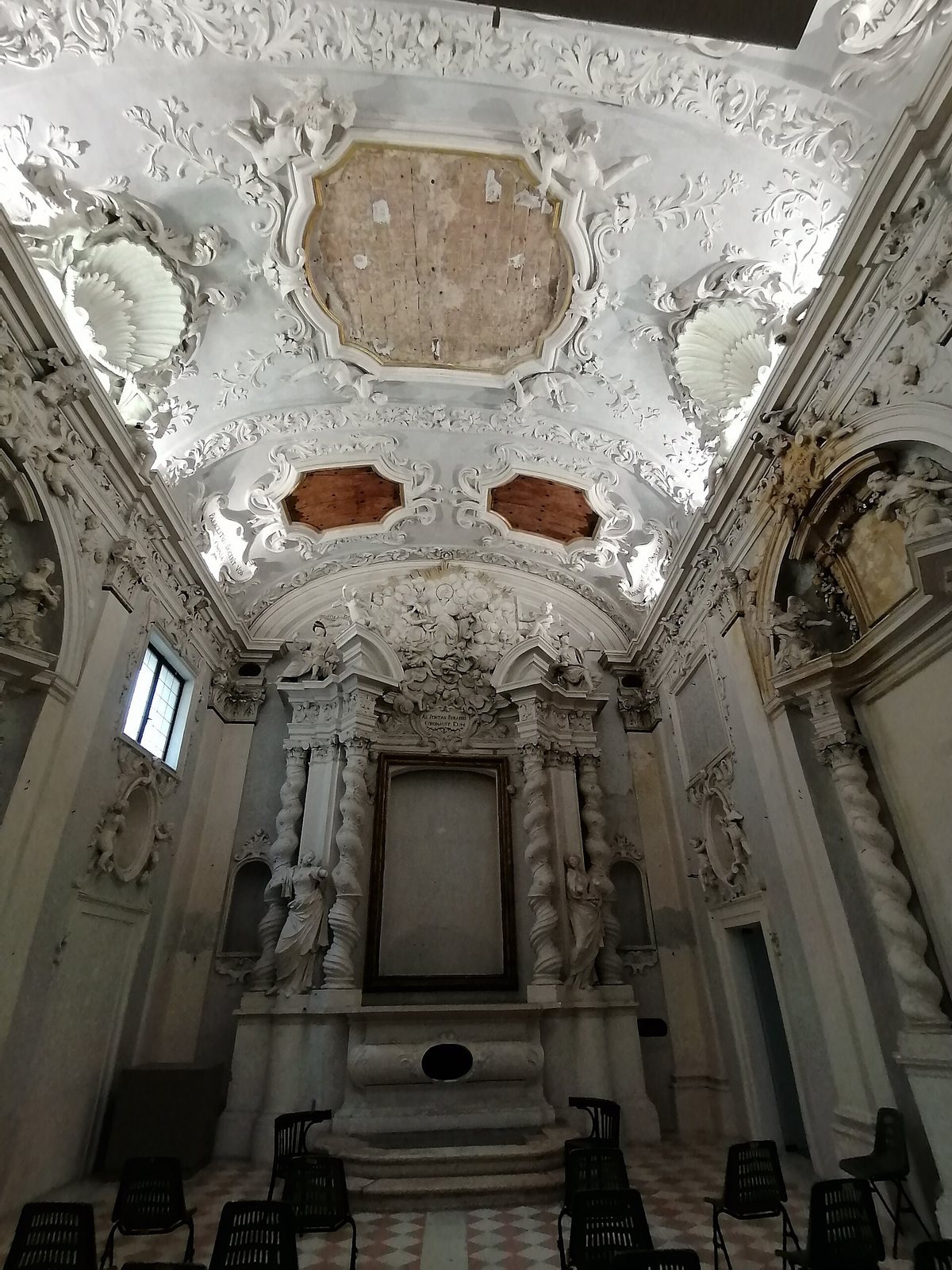
The rectangular church measures 11 by 7.5 metres and has a flattened barrel vault, a barrel-shaped ceiling with a lowered profile. Corinthian pilasters, shallow wall projections in an ornate classical style, divide the walls into framed panels, some of which contain side altars. The main altar is formed by a screen of twisted columns beneath a broken, inverted pediment, a split architectural crown turned downward.
Stucco, molded plaster used as decoration, covers the walls and vault with floral and heraldic designs. Several artisans created this work between 1714 and 1719. Figures of Faith and Innocence appear below Prudence and Justice, while the tympanum, the central field within a pediment, contains the Glory of Saint Bernard in ecstasy among angels and cherubs.
Painted works
The church’s painted ensemble comprised thirteen works: five oval pictures in the vault, the main altarpiece, two paintings for the side altars, a painting in the sacristy lunette, and four preparatory sketches made by Giacomo del Pò’s workshop in 1715. Much of the ensemble was dispersed. Marchioness Metella Pianetti, the family’s last descendant, donated the two side-altarpiece paintings to the Civic Art Gallery in 1972. The sketch for the main altarpiece is held in the Biblioteca Planettiana.