Forte Longone: A Spanish Coastal Fortress and Later Penitentiary on Elba
Site at a Glance
- Popularity
- Medium
- Country
- Italy
- Primary era
- Early Modern
- Eras represented
- Early Modern, Modern
- Civilizations
- Italian, Spanish
- Site type
- Military
- Remains
- Fort
On this page9 sections
History
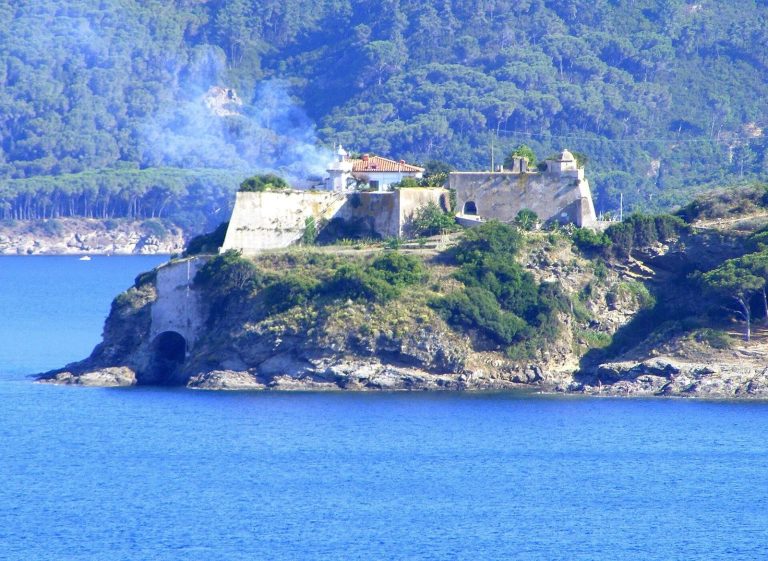
Forte Longone is a coastal fortress on the promontory above Porto Azzurro, on Elba in Italy. Spanish forces began establishing it on 8 May 1603, and the main works were completed between 1603 and 1605 during the reign of Philip III. The fort strengthened the State of the Presidi, a Spanish-administered territory in coastal Italy organized around fortified outposts, which included parts of Elba’s eastern and southern shores. Its position was intended to counter Portoferraio, a Tuscan possession that impeded traffic in the northern Tyrrhenian Sea.
Spanish foundation and sieges
Juan Alonso Pimentel de Herrera, the viceroy of Naples and fifth Count of Benavente, directed the building operation. In connection with him, the fortress was also known as Forte Pimentel and Forte Benaventano. Its design drew inspiration from the citadel of Antwerp, and alterations to the works continued into at least the eighteenth century.
The fort became a focus of conflict between Spain and its rivals. In 1646, French chief minister Cardinal Mazarin sent a fleet to capture it. The Spanish garrison resisted fiercely before surrendering. Spain regained Longone in 1650 under the command of Don Juan of Austria, a Spanish royal military leader. The French surrendered after losing half their men during the severe siege. In 1708, during the War of the Spanish Succession, an allied force supporting the emperor besieged the fort. French assistance to the Spanish helped break the siege, and the attackers suffered heavy losses. The war was a European conflict over who would inherit the Spanish throne.
Garrison under Spanish and Bourbon rule
In 1722, 400 soldiers under an Austrian officer plotted to kill the commander, Alaun. Authorities uncovered the plan, and its leaders were arrested, tried by court martial, and executed. Revenge for an earlier slight by the emperor may have been a motive. In 1759, after the Bourbon Kingdom of Naples formally separated from Madrid, Spanish garrisons in Tuscany, including Longone, were transferred to Naples. The fort was reinforced. During a visit in 1769, Grand Duke Pietro Leopoldo of Tuscany counted 1,200 men there in three battalions. British traveler Richard Colt Hoare later related that a soldier who escaped from Longone to Portoferraio, accused of an offense in Tuscan territory, preferred the Tuscan penal galleys to service in the Bourbon army.
French and Napoleonic rule
During the French occupation of Elba in 1799, Longone’s Neapolitan soldiers joined island rebels in resisting the French. They broke the siege, forcing the French to entrench themselves at Portoferraio, where they surrendered several weeks later. After the Peace of Lunéville and subsequent treaties transferred Elba to France, the garrison at Longone surrendered to its former French enemies.
On 10 January 1805, a fire in the San Filippo Armory triggered a major explosion inside the fort. It killed three people, injured numerous soldiers and civilians, and badly damaged buildings. On 8 April 1810, German soldiers in the garrison were discovered plotting to blow up a powder magazine and hand the fort to the British; the conspirators were executed. As Napoleon’s rule collapsed in 1814, insurgents attacked the commander, Gottman, and his staff. After Napoleon became ruler of the Principality of Elba that year, he visited Longone. Rooms were renovated for use as his third official residence on the island, and he stayed there from 5 to 24 September.
Military decline and penitentiary use
As Elba passed wholly to the Grand Duchy of Tuscany during the nineteenth century, Longone’s military importance declined. Changing weapons and defensive ideas made its older works obsolete, although the fort continued to serve observation and defense functions until the middle of the century. By 1842, its garrison had fallen to 31 soldiers, alongside coast-guard gunners, a chaplain, and a surgeon. The gunners were later incorporated into the island’s coast-guard battalion.
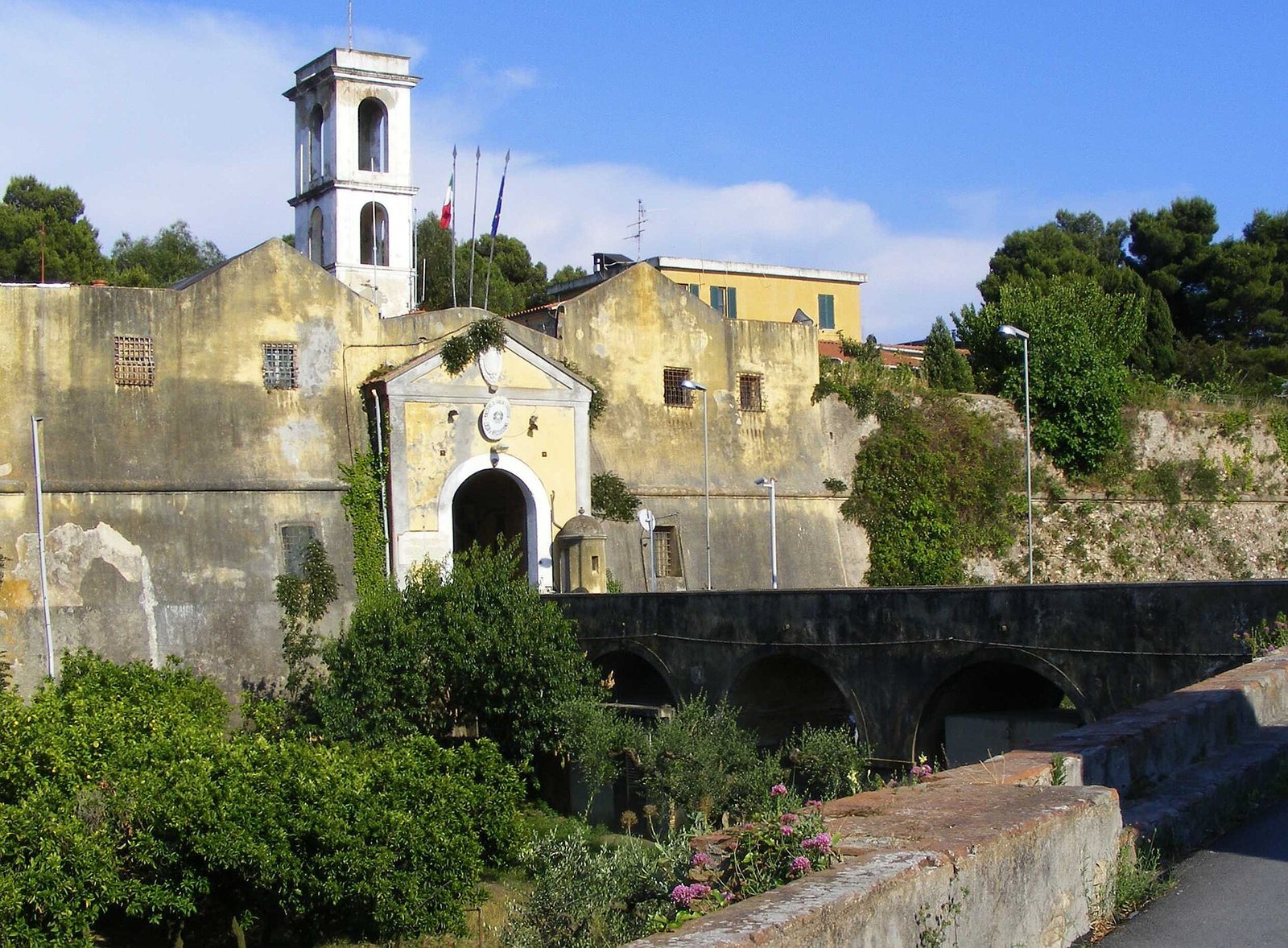
A disciplinary company for unruly soldiers was established in 1856, and the fort was prepared to receive it two years later, helping set the stage for its conversion into a prison. Convicts had also been sent there during the Neapolitan period, although confinement was not then a central purpose. Under the Kingdom of Italy, Longone became a civil penitentiary. Local residents proposed the change during a severe economic crisis, hoping the prison would provide employment.
Under Fascism, Italy’s authoritarian regime under Benito Mussolini, the prison held political prisoners and gained a reputation for harsh conditions. In 1947, residents sought to rename their town Porto Azzurro, partly to distance it from the prison’s reputation. The prison population reached as many as 1,100 between 1950 and 1953, then gradually decreased as living conditions improved.
Remains
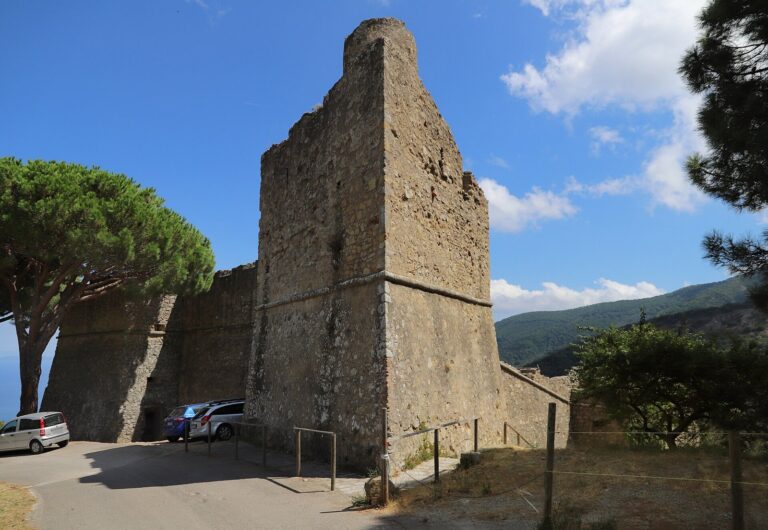
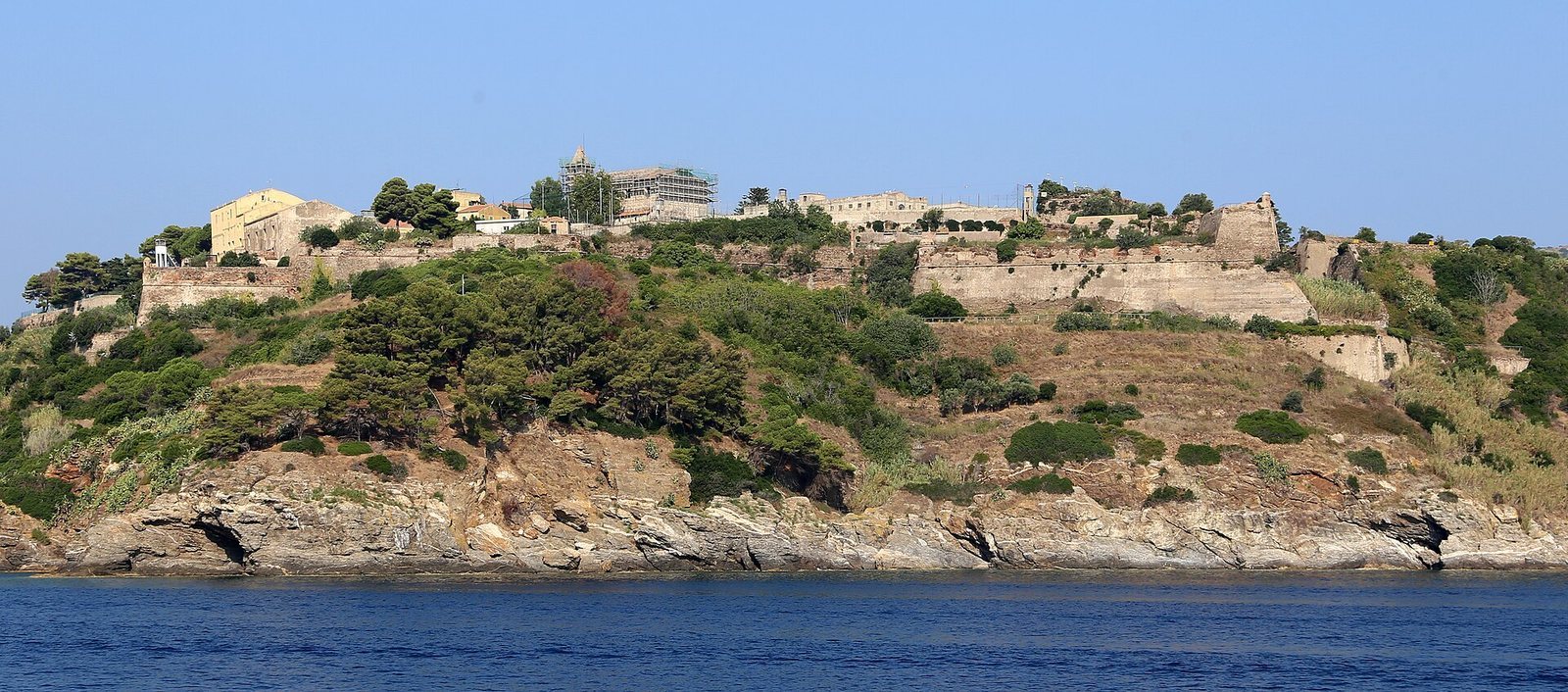
Forte Longone occupies a promontory above Porto Azzurro’s harbor bay, facing east across the water and toward the Piombino Channel. It also faces Forte Focardo at Capoliveri. The plan is star-shaped, approximating an irregular pentagon. Its outer defensive walls use brick facing in some stretches and stone in others, with massive sloping bases. Ditches once bordered the landward sides. On the northwest, the most heavily defended approach, a ditch was cut into bedrock and low, unarmored exterior buttresses added. The inner perimeter measures 1,700 metres and the outer one 2,500 metres. The area is 3,000 square metres, the maximum length 650 metres, and the sides of the inner square average 350 metres. The fort could accommodate 2,000 soldiers.
Internal buildings and water supply
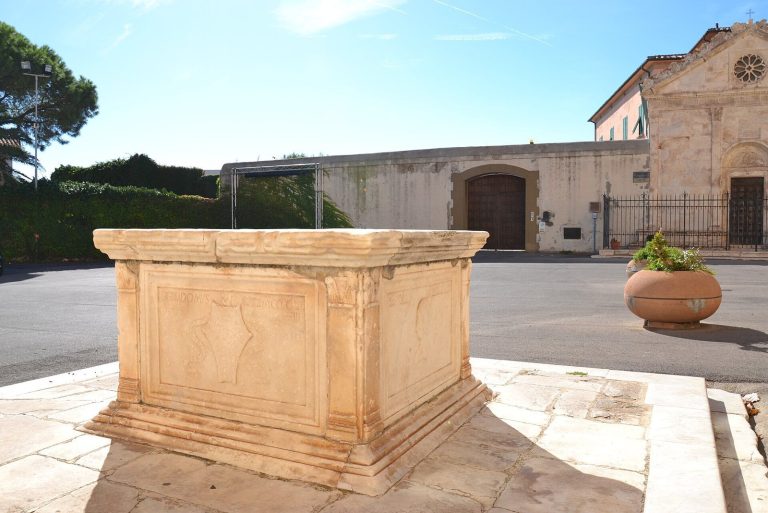
The fort’s artillery included numerous guns of different sizes. A governor’s palace and an officers’ palace provided residences and contained stores and a granary. Ten soldiers’ barracks were arranged in two groups, with a further group built of wood. The complex also contained two prisons, a hospital, two weapons workshops, two mills including a windmill, three powder stores, a bread oven, and seven guardhouses. Eleven cisterns of modest capacity stood around the central parade ground.
Religious buildings and associated artwork
The Baroque Church of St James the Greater stood within the fort and had a majestic altar. A chapel dedicated to St Barbara occupied the parade ground. A seventeenth-century silver bust of St Barbara, made by an unknown artist, is now kept in the Church of the Carmine.
Penitentiary buildings
As the fort developed into a prison, a new penitentiary building with 296 cells was added to the older prison. A third building and separate services followed in the early twentieth century, alongside other structures built for the prison’s use.