San Pietro in Valle: An Abbey in Umbria
Site at a Glance
- Popularity
- High
- Country
- Italy
- Primary era
- Medieval
- Eras represented
- Medieval
- Civilizations
- Lombard, Papal States
- Site type
- Religious
- Remains
- Monastery
On this page10 sections
History
Foundation and early history
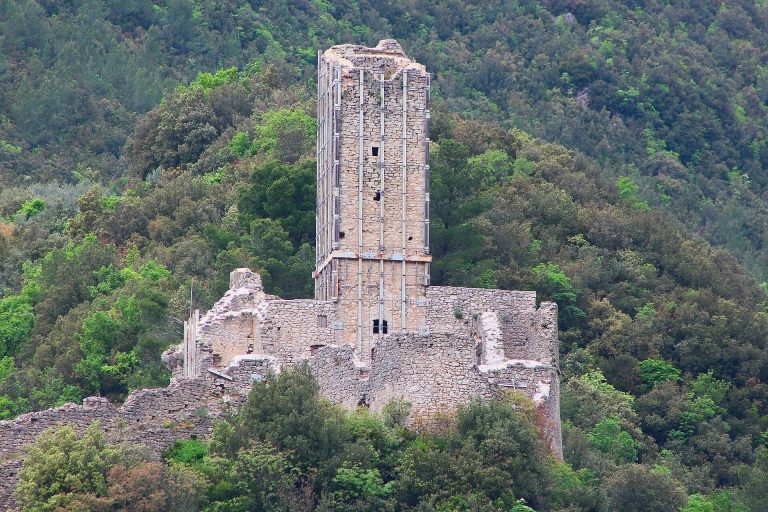
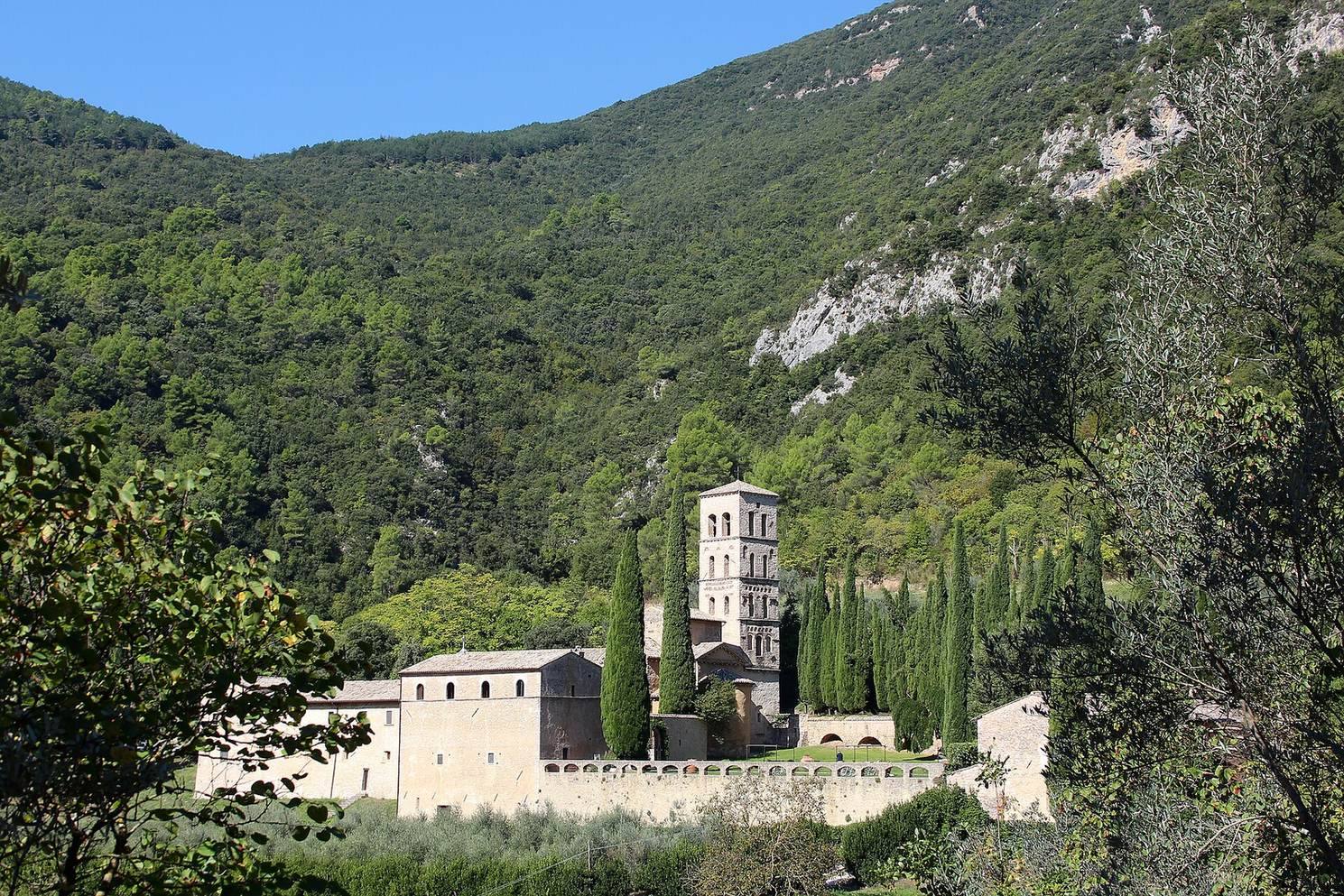
San Pietro in Valle is a Catholic abbey in Ferentillo, Umbria, Italy, founded in the eighth century by Faroaldo II, a Lombard duke of Spoleto. The abbey arose at a place where the Syrian hermits Lazzaro and Giovanni were said to have lived. According to legend, Saint Peter appeared to Faroaldo in a dream and urged him to establish a Benedictine monastery with monks from Farfa. Several years later, Faroaldo gave up his title and entered the monastery as a monk.
The monastery became closely connected with Spoleto and received the remains of many of its dukes. Near the end of the ninth century, Muslim raiders sacked it. The abbey was revived in 996 at the request of Otto III, the Holy Roman Emperor.
Medieval and dynastic control
In 1234, Pope Gregory IX transferred the abbey to the Cistercians, a Catholic monastic order. The change came amid developments involving the order in the Lazio region under Gregory’s predecessor, Pope Innocent III.
In 1484, Pope Innocent VIII granted the abbey’s fief to the Cybo family and established a principality for his son Franceschetto Cybo. Franceschetto held the titles of Duke of Spoleto and Count of Ferentillo and governed the abbey. He married Maddalena de’ Medici. Their son Lorenzo married Ricciarda Malaspina, Marchioness of Massa and Carrara. Their son Alberico I adopted the Malaspina name at Ricciarda’s request after her death. He became Marquis of Massa and Count of Ferentillo, among other titles, and held the abbey as lord. Cybo-Malaspina control of the fief continued until 1730, when Alderano Cybo was its ruler.
Later ownership and modern history
The Spoleto noble family Ancaiani held the abbey under an arrangement entrusting an ecclesiastical benefice to a designated holder. The abbey was finally sold in 1907, and the convent passed into private hands in 1917. The abbey is designated a national monument. The 2016 earthquake seriously damaged the church, and restoration work began in 2023.
Remains
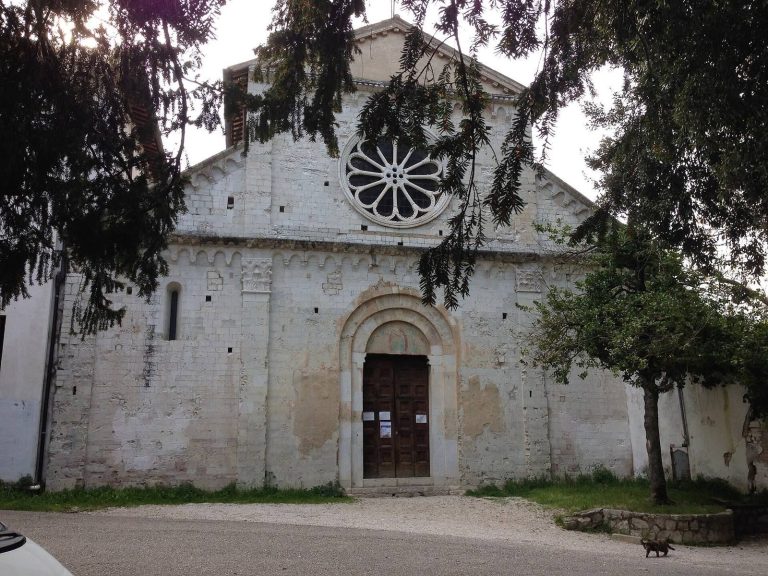
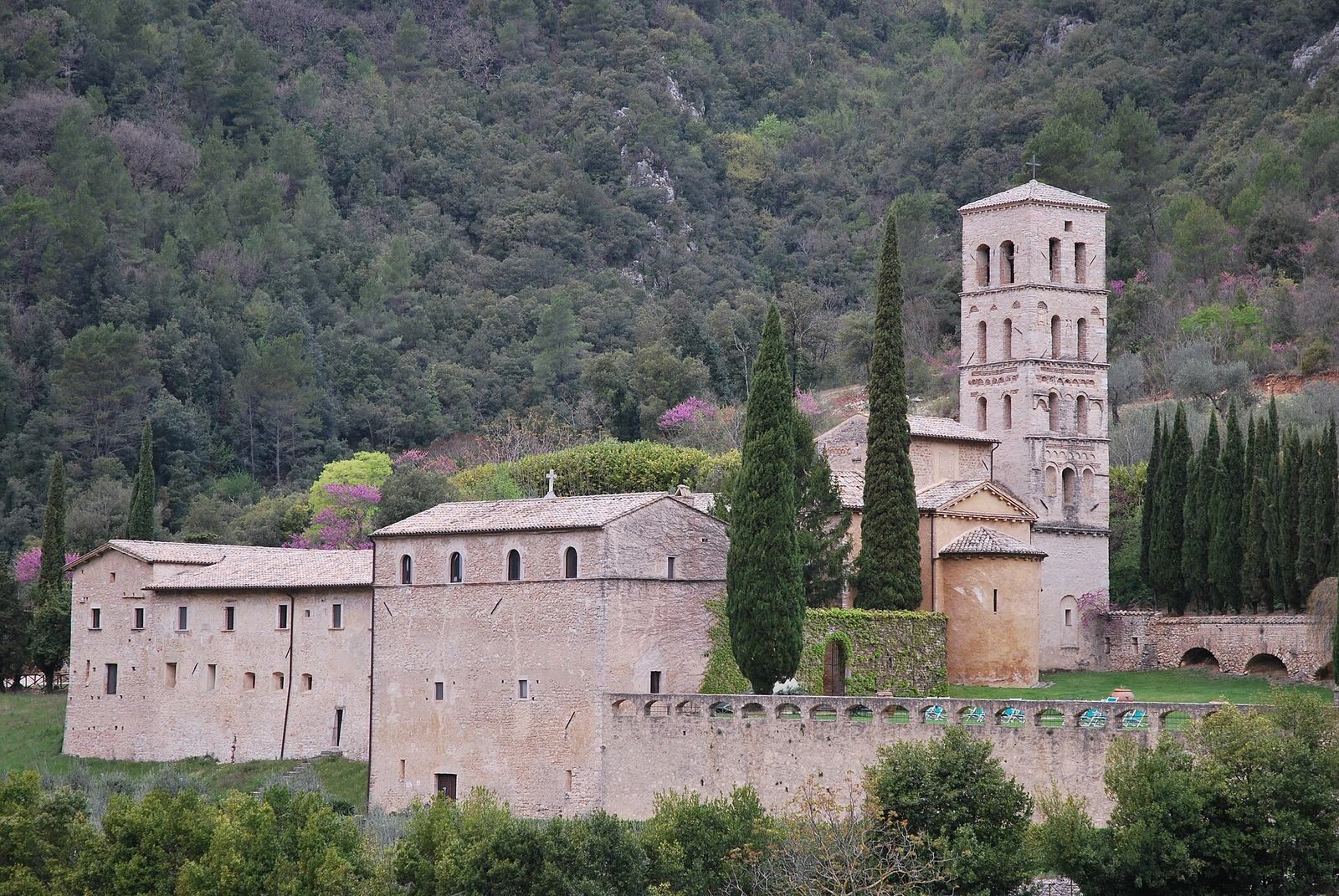
At about 370 metres above sea level, the abbey has monastery buildings physically separate from its Romanesque church. The monastery is privately owned, while the church belongs to the diocesan authorities. The church has a single nave dated to the seventh century and an apse dated to the twelfth.
Church architecture and paintings
Nave and apse
The church’s single nave and later apse form its principal architectural spaces. The nave walls carry a large cycle of Romanesque frescoes, while the apse contains paintings dated to a later period.
Frescoes
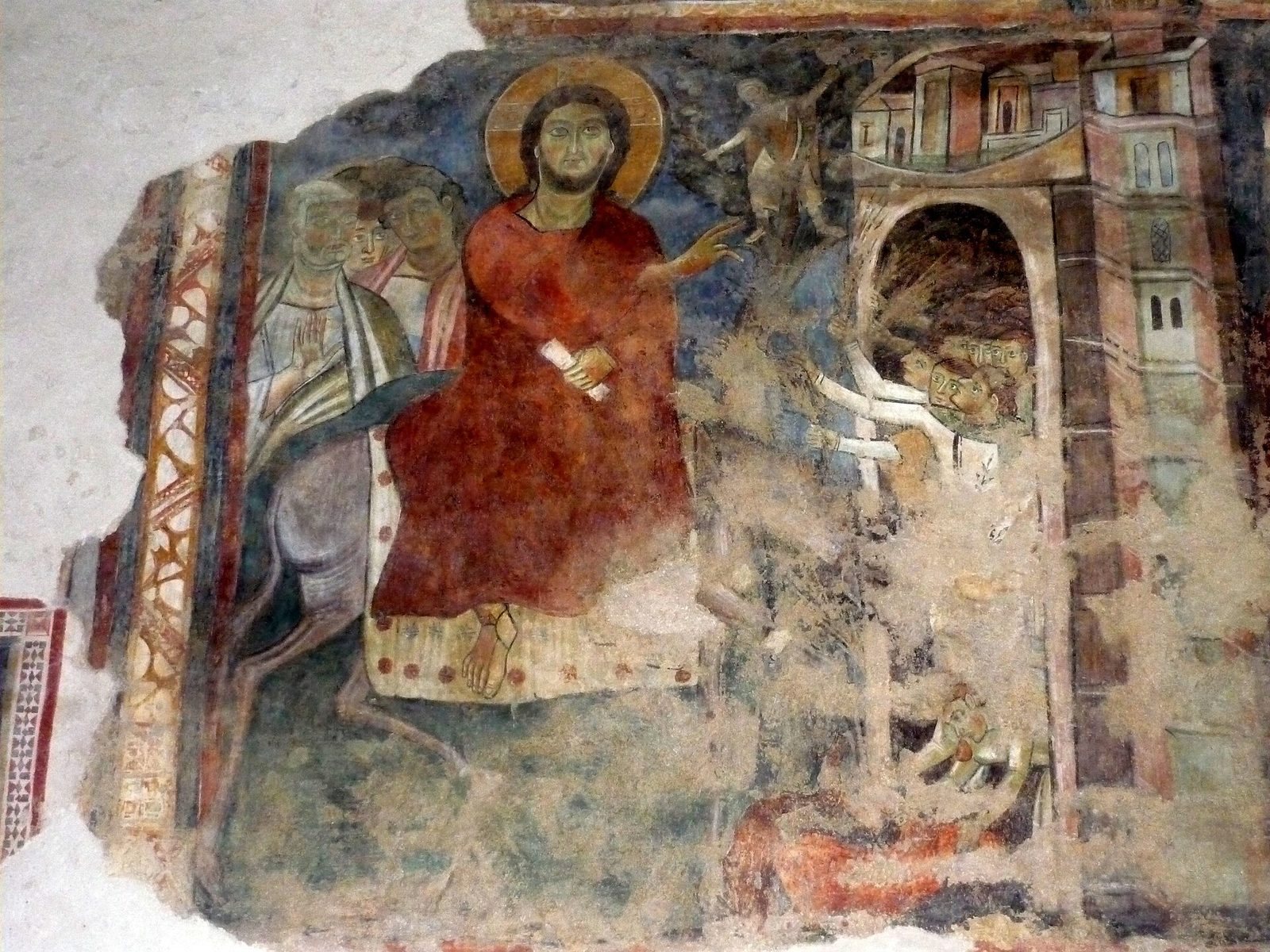
The church preserves medieval and Renaissance frescoes associated with the Umbrian school, including scenes from the Old and New Testaments. A cycle attributed to the Roman school and dated to the mid-twelfth century predates the work of Pietro Cavallini. One painting shows Christ entering Jerusalem. The apse frescoes are attributed to the Master of Eggi, an unidentified painter, and date to 1445.
Second-century sarcophagi
Four sarcophagi from the second century CE are preserved in the church. Their style and imagery have been associated with artists from the East. One depicts three boats, interpreted as a journey to Hades, the underworld in Greek mythology. Another, associated with Faroaldo, shows Dionysus, Silenus, Pan and a dancing Maenad, a female follower of Dionysus. The remaining sarcophagi depict Cupid and Psyche, and a group of hunters.
Main altar
Two Lombard-period slabs carved in low relief form the main altar. The front slab bears an inscription honoring Saint Peter and asking Saints Leo and Gregory to save a soul. It names Ilderico Dagileopa, duke of Spoleto from 739 to 742, and includes the words Ursus magester fecit, meaning “Master Ursus made it.” The inscription distinguishes the patron from the artisan, making the slab a rare medieval example of both being identified. It also depicts two bare-chested figures in short garments, their arms bent and raised amid plant forms ending in discs marked with crosses. One figure holds a narrow pointed tool, possibly a chisel, and is thought to represent Ursus; the other figure’s identity is less certain. The raised-arm pose has been interpreted as ritual, perhaps connected with clothing worn after baptism by immersion. Comparisons have been made with a bone altar associated with Bishop Ludger at Werden and a slightly earlier sarcophagus associated with Bishop Agilbert at Jouarre. A 2016 interpretation offered further possibilities while retaining a ritual reading.