Spike Island: A Fortress and Prison in Cork Harbour
Site at a Glance
- Popularity
- Very High
- Country
- Ireland
- Primary era
- Modern
- Eras represented
- Early Modern, Modern
- Civilizations
- British
- Site type
- Military
- Remains
- Fort
On this page10 sections
History
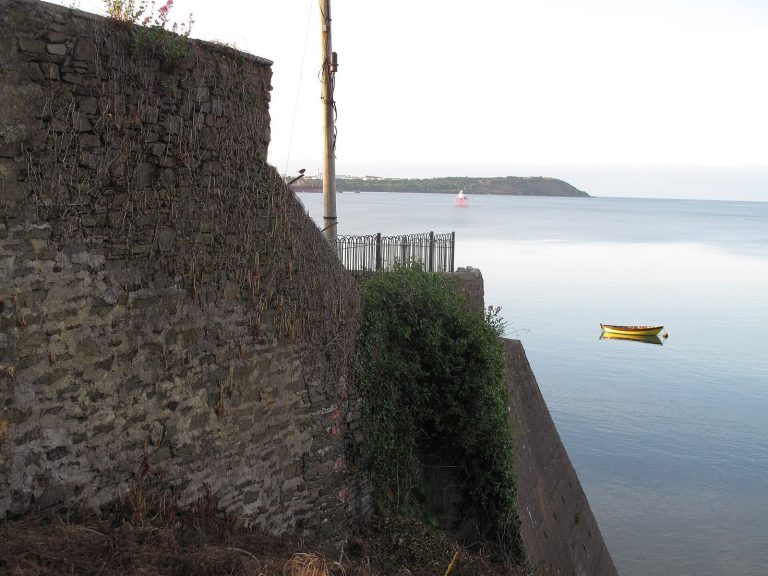
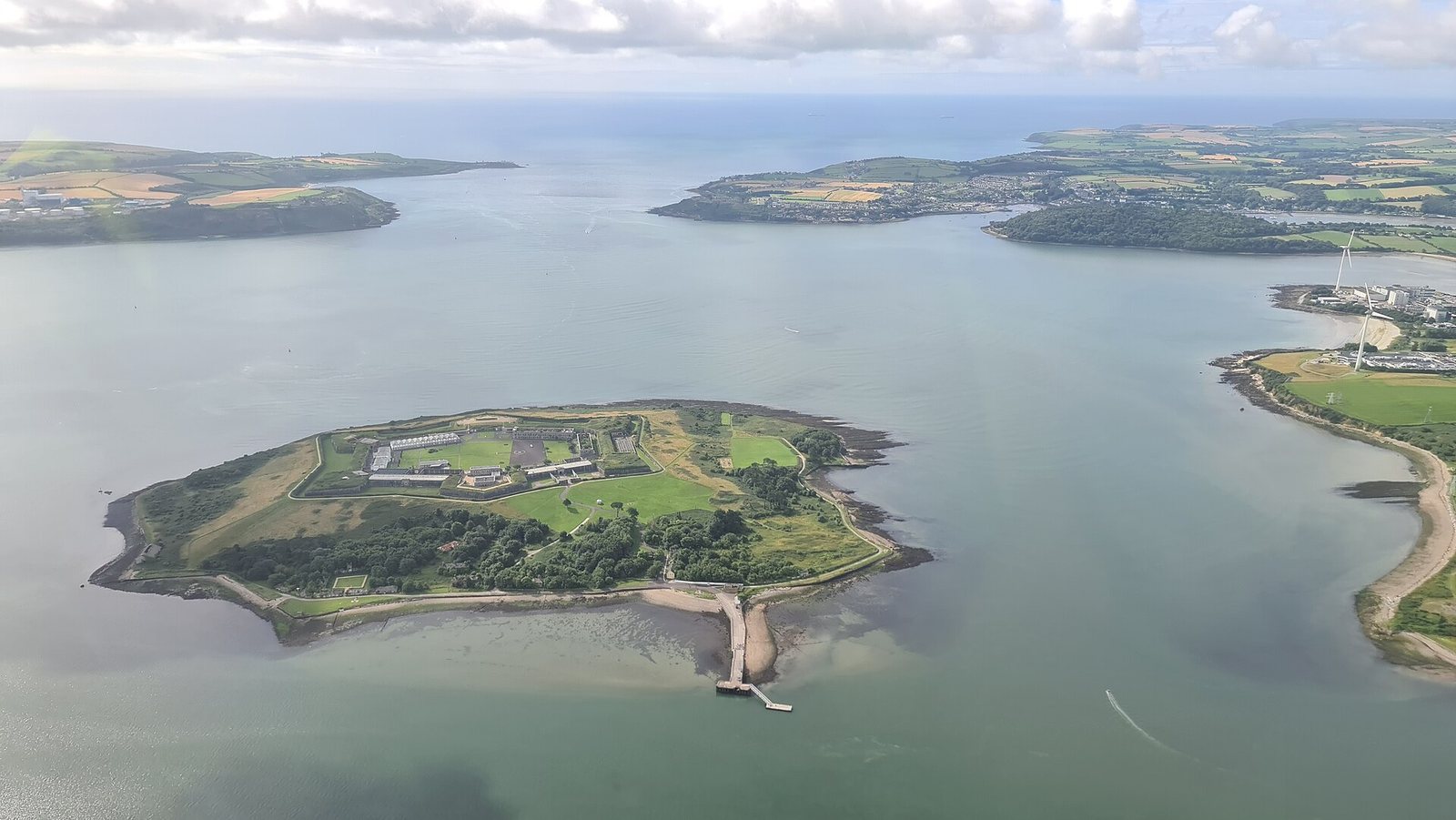
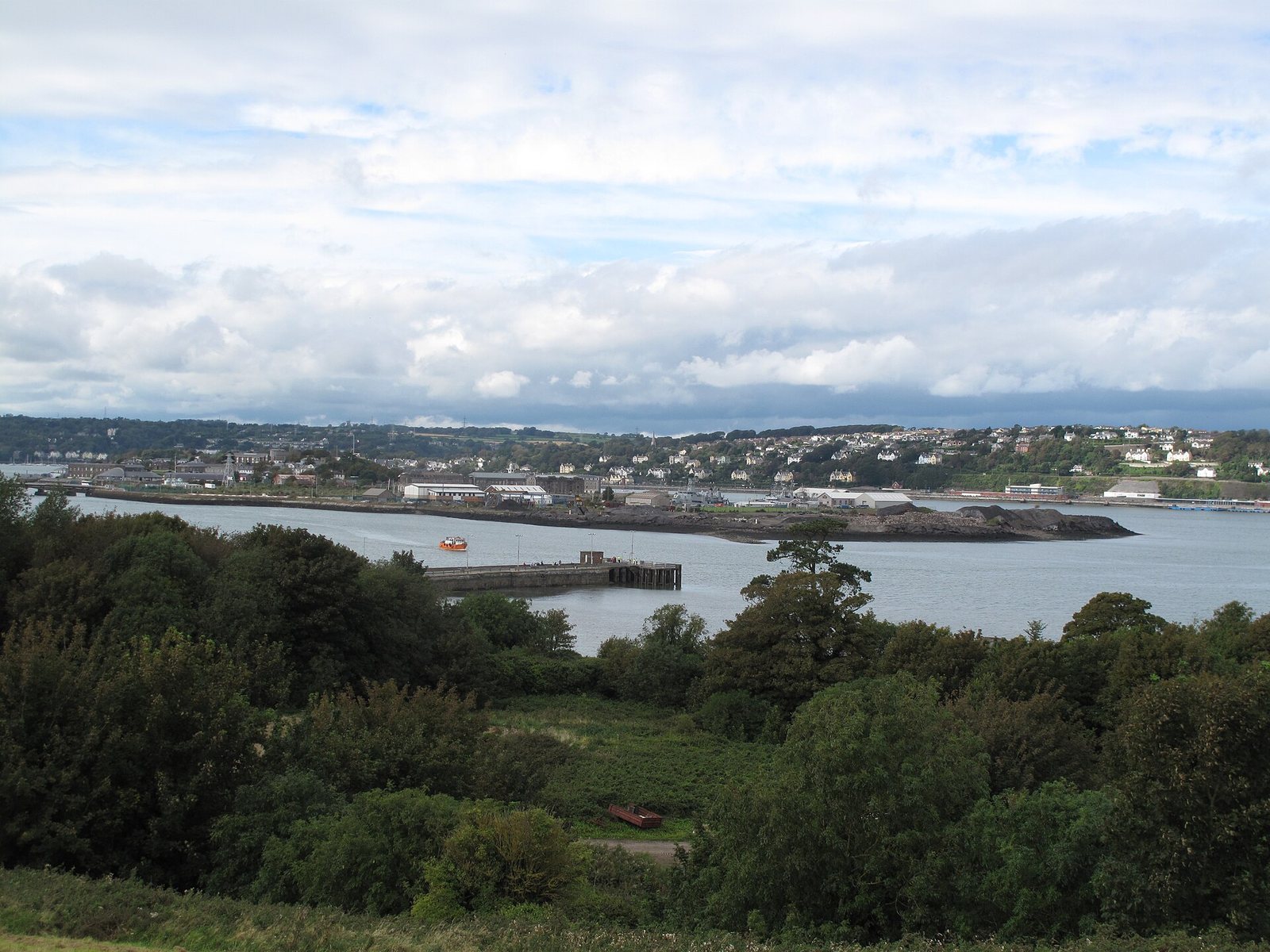
Spike Island is a fortified island at the entrance to Cork Harbour in County Cork, Ireland. British military authorities began its large star-shaped fortress in 1804, following earlier harbour defences. Its history also includes early Christian traditions, use as a prison, and service as a military base.
Early foundations and changing ownership
Tradition places a monastery founded by Saint Mochuda, an Irish Christian saint, on the island in the seventh century. In 1178, the island’s Church of Saint Rusien was granted to St Thomas’s Abbey in Dublin. This church grant has also been regarded as evidence for an early Irish Christian foundation. That same year, Diarmid McCarthy, King of Desmond, surrendered lands that included Spike Island to the Normans. Raymond Mangunel received a grant of the island in 1182.
Ownership changed again over the following centuries. In 1427, William, son of John Reych, granted John Pyke lands that included Innyspyge. In 1490, Thomas Pyke transferred his Spike Island holdings to Maurice Ronan of Kinsale. The Roche and Galwey families held the island in the seventeenth century, but forfeited it during the 1641 rebellion, an uprising against English rule. The forfeiture was reversed after Charles II returned to the throne in 1660, although the families did not regain possession. In 1698, Arnold Joost van Keppel, Earl of Albemarle, conveyed the island to William Smith of Ballymore on Great Island. Nicholas Fitton held it in the 1770s.
The island may have sheltered smugglers. A map from around 1600 shows what appears to be a fortified tower, similar to one depicted at Belvelly Castle on Great Island. Its position at the harbour entrance also gave it military importance, including during the French intervention that followed the Glorious Revolution of 1688–89, the change of monarchs that brought William of Orange to the English throne as William III. Church ruins were noted on the island in 1774.
Harbour defences and Fort Westmorland
In the 1770s, the government leased part of the island for fortifications while Fitton remained in residence. His house was later demolished as fort construction proceeded, and the government eventually rented the whole island. The first artillery position was built in 1779, during the American Revolution and after France and Spain entered the war against Britain. Cork Harbour served as a convoy assembly point, at one time holding more than 400 vessels and supplying British forces in the West Indies and North America. The temporary Spike Island Battery mounted eighteen 24-pounder guns transferred from Cobh Fort. It was demolished after the Treaty of Paris ended the war in 1783.
In 1789, military engineer Charles Vallancey persuaded John Fane, Earl of Westmorland and the Crown’s senior representative in Ireland, to authorize a permanent fort. Westmorland named the unfinished work Fort Westmorland during a visit in October 1790. Construction stopped in 1794 under his successor, probably William Fitzwilliam, but later resumed. A French attempt to land at Bantry Bay in 1796 heightened concern about an attack on Cork Harbour. Fort Westmorland remained incomplete in 1797 and was finished by 1802.
The larger fortress and prison
In 1802, General John Hope, Earl of Hopetoun, recommended replacing the existing fort with a much larger stronghold for 2,000 to 3,000 men. Senior officers David Dundas and William Twiss supported the proposal. The Acts of Union had brought Great Britain and Ireland under one parliament in 1801 and transferred responsibility for Irish fortifications to the Board of Ordnance, the British authority responsible for military supplies and fortifications. Charles Holloway, the Cork District’s chief engineer, began the new works. General Sir Eyre Coote laid the foundation stone on 6 June 1804. Troops and civilian labourers carried out the construction, with the first major phase continuing until about 1817.
From 1847, the fort served as a prison and a holding depot for people awaiting penal transportation, the forced removal of convicted prisoners to overseas colonies. It opened as theft convictions rose during the Great Famine and was probably the British Empire’s largest prison for several years in the mid-nineteenth century. It later became known as “Ireland’s Alcatraz.”
Ellen, known as Nellie, Organ, lived on the island. Shortly before she died at the age of four, she received special permission to take First Communion, a Catholic child’s first reception of the Eucharist. Her story prompted a pope to lower the age for First Communion from 12 to 7.
Irish independence and later uses
During the Irish War of Independence, the 1919–21 conflict between Irish independence forces and the British government, Spike Island served as both a garrison and a prison for Irish Republican Army (IRA) prisoners. Richard Barrett escaped during the 1921 truce. At its peak, the prison held more than 1,400 men. Under the Anglo-Irish Treaty, Britain retained harbour defences at designated Treaty Ports, strategically important harbours where British forces kept specified military facilities. The Royal Navy remained on the island after the Irish Free State was established in 1922. British sovereignty there ended on 11 July 1938, when the island was ceded to Ireland under the Anglo-Irish Trade Agreement.
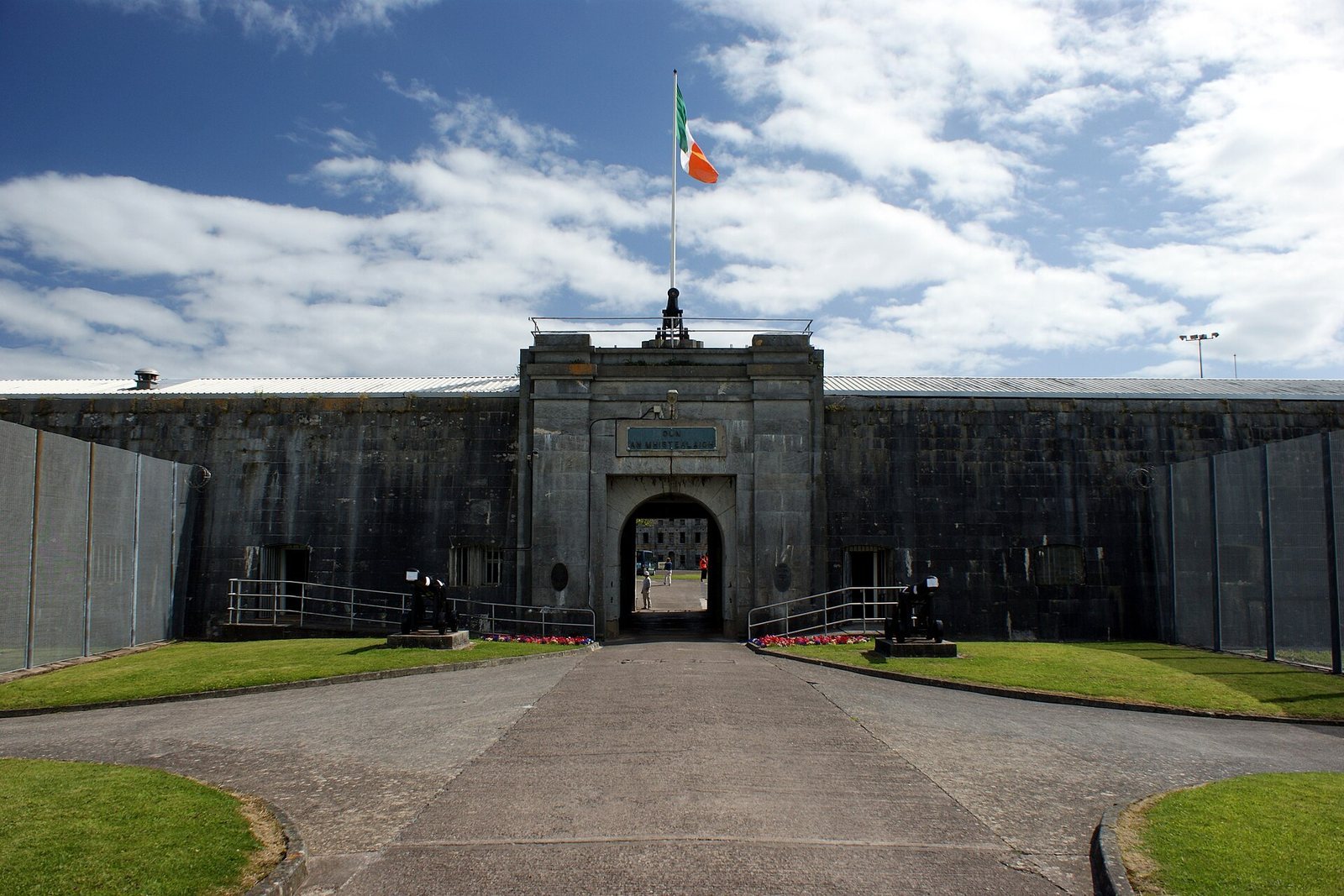
After the handover, the fort was renamed Fort Mitchel in honour of John Mitchel, an Irish nationalist writer and political activist who had been imprisoned there. The island continued as a prison and military base, used by the Irish Army, its FCÁ reserve force, and later the Navy. It also served as a youth correctional facility late in the twentieth century. A small civilian community lived on the island, with a school, a church, and a launch service to Cobh; residents later left, moving chiefly to Cobh.
Inmates rioted on 1 September 1985. A committee of the Dáil, Ireland’s parliament, later reported that civilians, prison officers, and members of the Gardaí, Ireland’s police service, had effectively been held prisoner. The prison closed in 2004. Spike Island is identified as a National Monument, a site protected for its historical or archaeological importance.
Remains
The star fort and its buildings
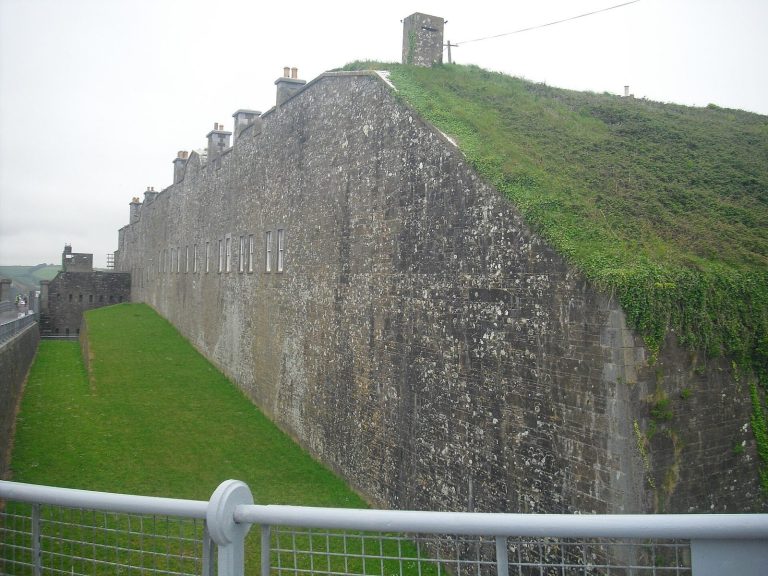
The island covers about 42 hectares and measures roughly 0.8 kilometres long by 0.5 kilometres wide. Its large star-shaped fortification dominates the site. In 1804, the island was lowered by 25 feet, and the excavated material was used to create a level foundation for the fortress works.
Ramparts and magazines
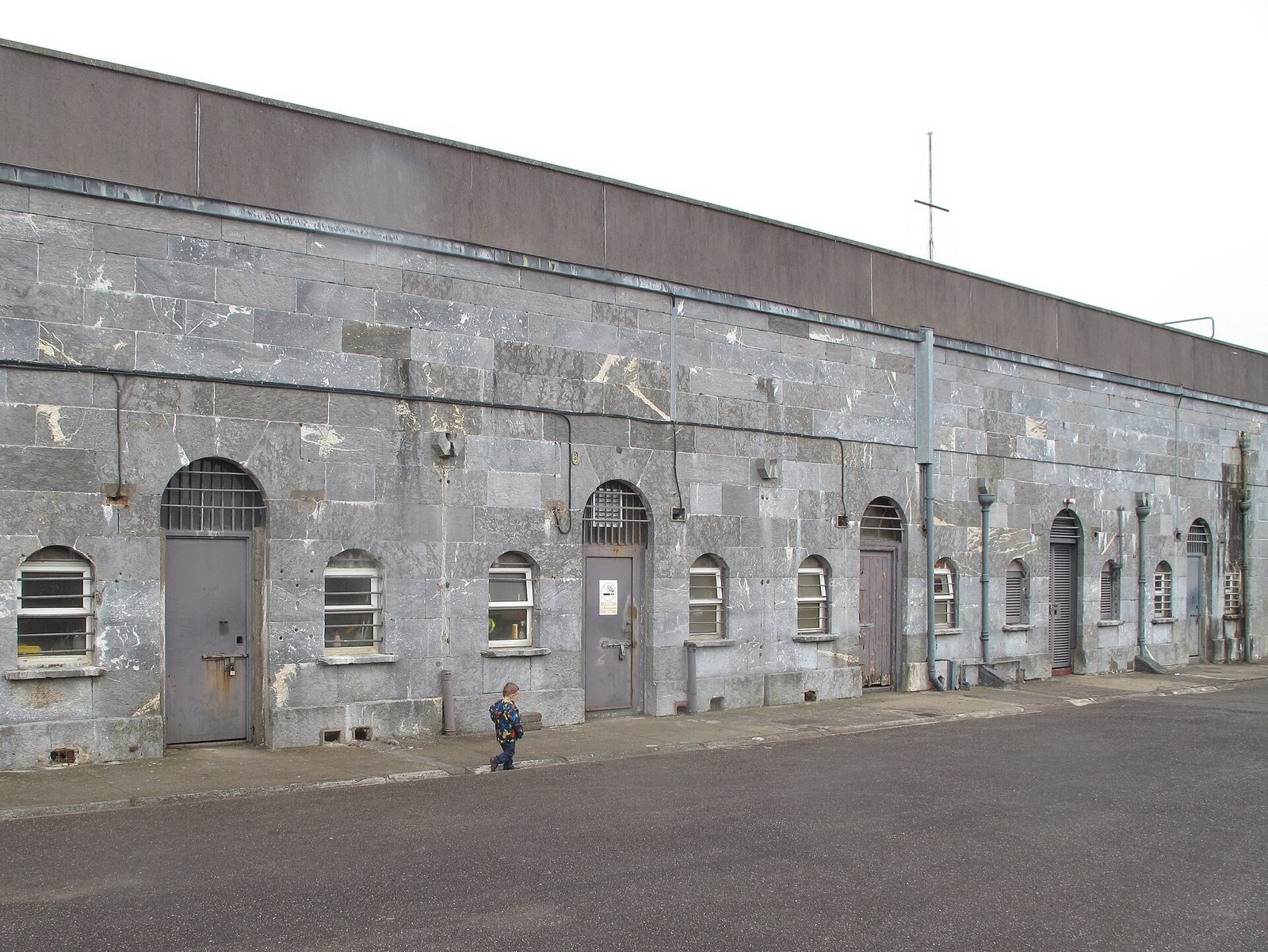
Two groups of bombproof casemates, fortified chambers set within a rampart, were built into the northeast and northwest ramparts. Four magazines, rooms for storing ammunition, were also constructed around the time of the first building phase. Bombproof construction was intended to withstand explosive attack.
Barrack blocks
The plan included six barrack blocks, with one built as the officers’ mess. Its ground floor contained bombproof rooms with brick-vaulted ceilings, while its slate-roofed first floor was vulnerable to bombardment. A Block incorporated bombproofing into its roof, unlike the original proposal. The ground floor of B Block, intended to follow A Block’s design, was built before the first phase ended around 1817. A Block caught fire during the 1985 riot and became known as the Burnt Block.
Fort Westmorland’s armament
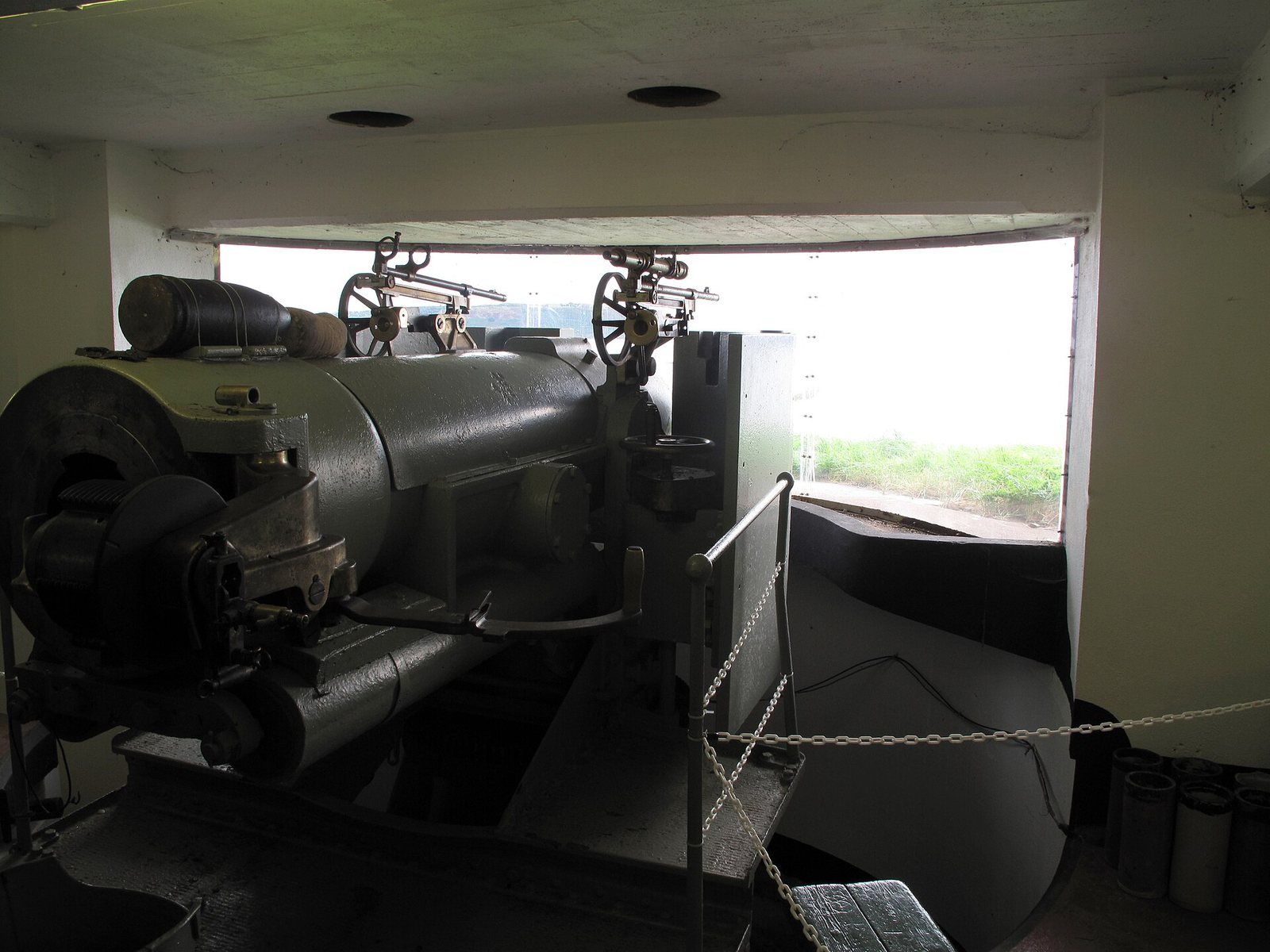
By 1800, Fort Westmorland’s artillery included three 13-inch, two 10-inch, two 8-inch, and six 5.5-inch mortars; twenty-nine 24-pounder guns; two 12-pounder guns; twelve 6-pounder cannon; two 6-pounder field guns; and two 5.5-inch howitzers.