Seltsou Monastery: A Post-Byzantine Monastery and Memorial Site
Site at a Glance
- Popularity
- Very Low
- Country
- Greece
- Primary era
- Early Modern
- Eras represented
- Early Modern
- Civilizations
- Ottoman
- Site type
- Religious
- Remains
- Monastery
On this page10 sections
History
Seltsou Monastery is a post-Byzantine monastery in Greece, and its present church was built in 1697 under Ottoman rule. The monastery is associated with the 1804 Holocaust of Seltsou, a commemoration of Souliote resistance and deaths whose traditional account remains uncertain.
Early buildings and the 1697 foundation
The monastery’s first buildings date to the tenth century. They were destroyed in the early fifteenth century, around the time Ottoman forces began incursions into the region. The present monastery was established in 1697, when its church was also built.
An inscription above the doorway between the main church and the narthex, the entrance area at a church’s west end, names people whose contributions it records. They include the monk-priests Rigin, Bartholomew, Zacharias, and Alexios; the priest Alexios; Jacob; Dionysios; Bishop Arsenios; and the prominent lay figures Nikos and Apostolos. A separate foundation tradition identifies Nikos and Apostolos as brothers who commanded Arta’s armatoles, armed local forces serving in Ottoman-era Greece.
Ecclesiastical jurisdiction and observance
Until 1830 the monastery belonged to the Diocese of Radovizia, a bishop’s ecclesiastical district. It then came under the Orthodox jurisdiction of Larissa until 1881. After most of the Arta region passed to the Kingdom of Greece that year, Seltsou, as a dependency of Rovelist Monastery, came under the Metropolis of Arta.
The monastery marks the Dormition of the Virgin, the Orthodox feast commemorating Mary’s death, on 23 August, the ninth day of the feast. The date avoids coinciding with the 15 August celebration at a nearby monastery of the same name in Spilia, Agrafa.
The 1804 tradition
In Greek historical usage, the name Holocaust of Seltsou refers to a mass-death episode associated with collective sacrifice; it is unrelated to the twentieth-century Holocaust. The historical details remain uncertain. The familiar narrative is unconfirmed folk tradition, shaped by romantic Greek national mythmaking, rather than an established account.
In this tradition, Ali Pasha of Ioannina, an Ottoman provincial ruler, began his third campaign against the Souliotes, the people of Souli known for resisting him, in 1800. George Botsaris, leader of the strongest Souliote clan, defected to Ali and claimed that Souli could not hold out for thirty days without him. The siege continued for three years. Ali then threatened to burn George alive unless he surrendered the town. George took poison, and leadership of the Botsaris clan passed to his second son, Kitsos. George’s older son had been killed in 1792.
A presumed final Ottoman attack began on 7 December 1803. After five more assaults failed, Ali withdrew and sent his son Veli to negotiate the Souliotes’ departure. On 13 December, the parties gave their word of besa, a pledge of honour understood as binding. Photos Tzavelas led one group to Parga, from where they crossed to Russian-controlled Corfu. Another group, persuaded by Kitsos Botsaris to trust Ali, set out for the monastery at Zalongo.
On 16 December, 3,000 soldiers under Bekir surrounded the group at Zalongo. Bekir said they would be disarmed and taken to Ioannina. After two days of resistance, about 60 women are said to have thrown their children into a ravine and jumped after them, an episode remembered as the Dance of Zalongo. The remaining Souliotes broke out, with up to 1,400 said to have survived.
The tradition says that survivors went first to Vulgareli and then sought refuge at Seltsou. Ali’s forces besieged the monastery for four months. In the story, 250 women and children leapt from a precipice into the mountain river rather than be captured. Kitsos Botsaris, his son Markos, 50 other fighters, and one woman are said to have escaped to Parga and then Corfu. Another part of the account tells how Notis Botsaris, wounded by five sabre blows and captured, escaped from Klisura fortress and reached Corfu. Fearing capture, his daughter is said to have pushed her wounded mother from the precipice before jumping herself.
The numbers and outcomes remain unsettled. Figures of 250 to 500 deaths are associated with Seltsou, while the escape through Parga to Corfu also belongs to the tradition. The figure of 1,400 is linked to the commemoration.
Commemoration
A government decree designated the monastery a historic monument in 1959. Annual memorial observances continue at the site, including a liturgy and the casting of a wreath into the ravine.
Remains
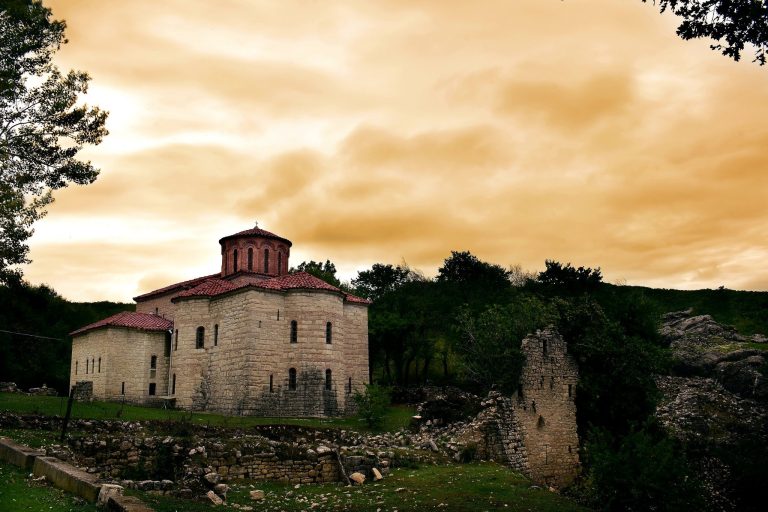
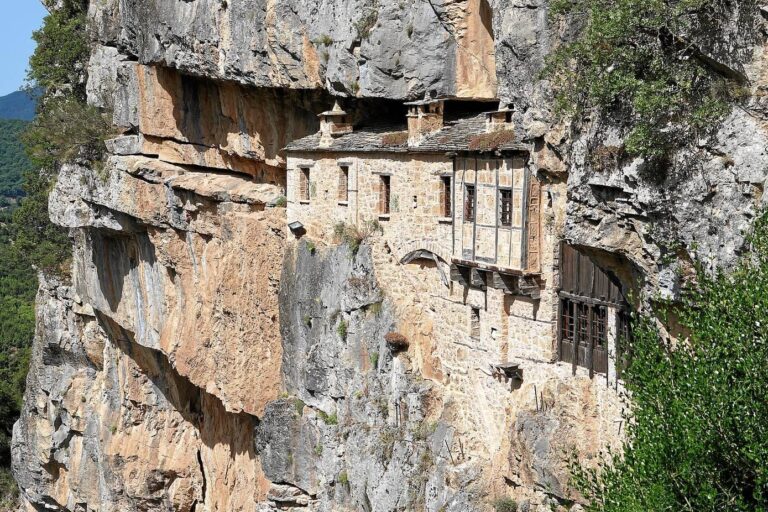
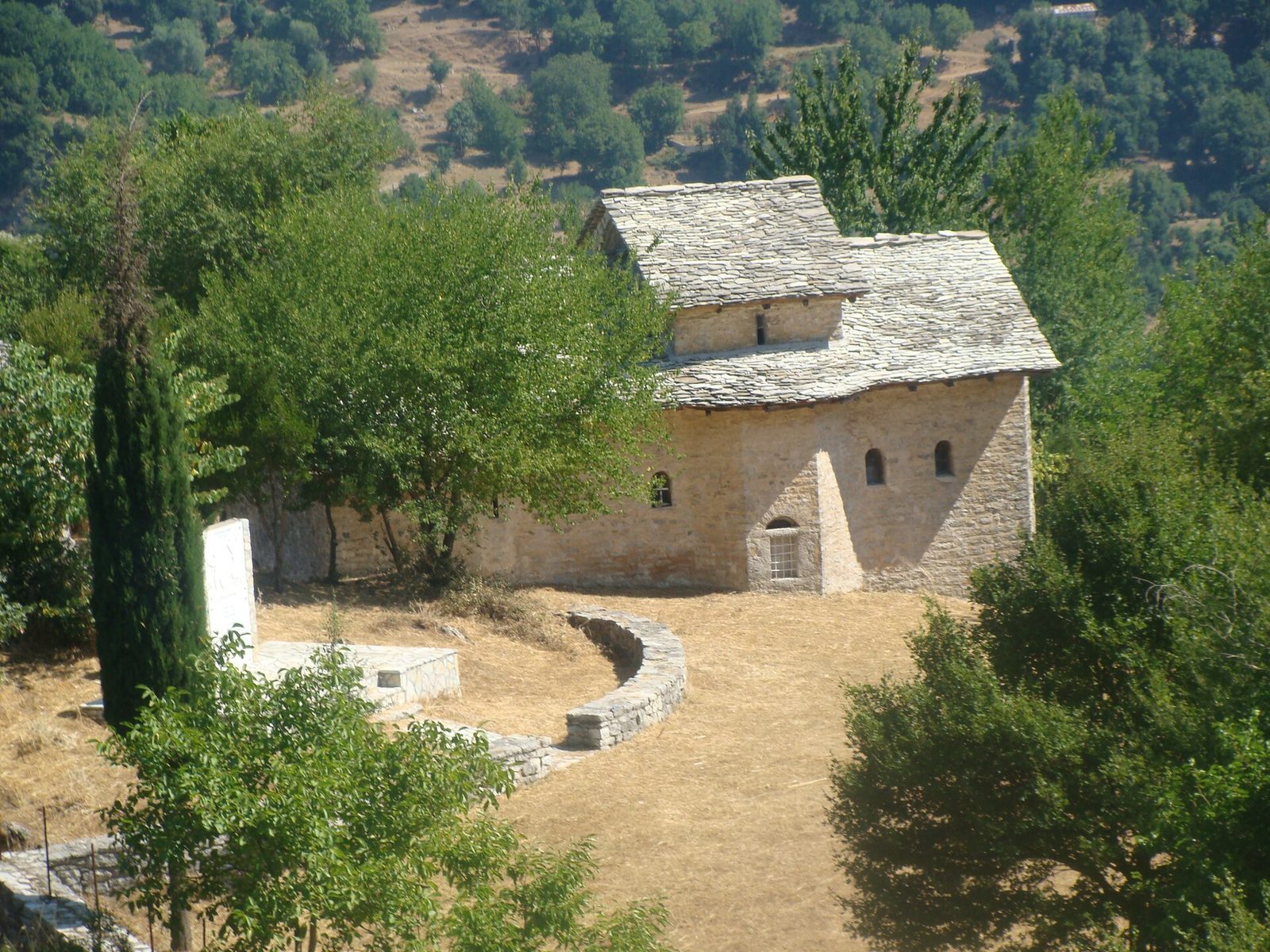
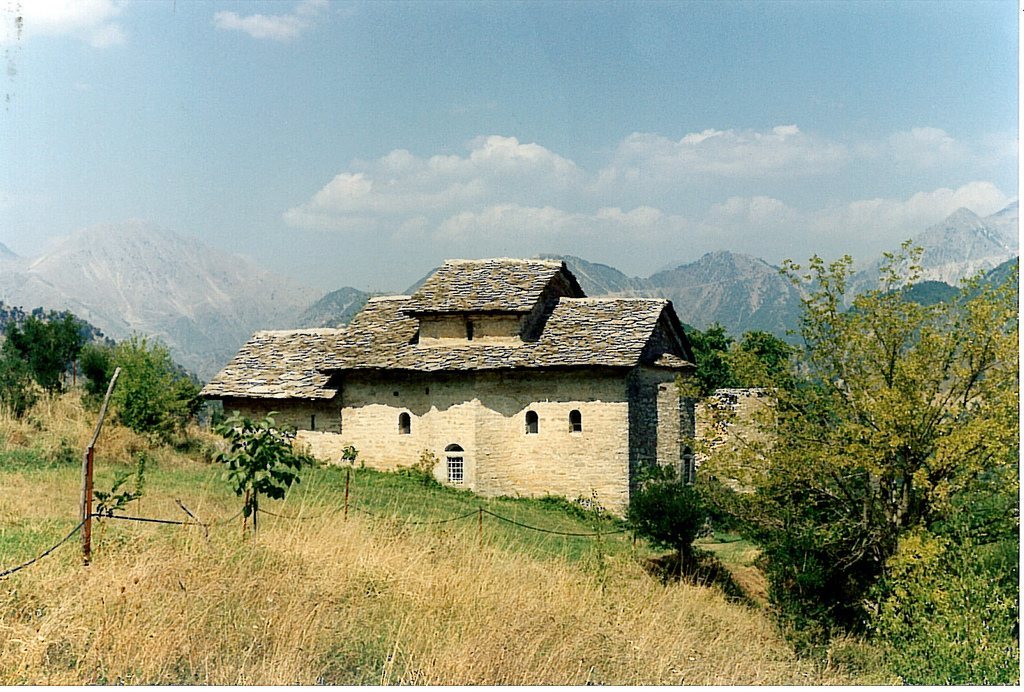
At about 800 metres above sea level, north of Piges, the monastery stands among mountain ranges on a precipice above the Acheloos River. Its surviving complex centers on a stone, single-nave basilica following an Athonite-type plan, an architectural tradition associated with Mount Athos. This church is the only preserved monastery building; the surrounding monastic cells are ruins.
The church
Plan and lighting
The church’s dome is rectangular on the outside and circular within, and spans across the nave. Small, widely spaced windows in the north and south walls provide limited natural light.
Painted decoration
The interior paintings are attributed to Nikolaos, a priest from Arta, and his sons. A scene of the Dormition of the Virgin appears above the founders’ inscription at the doorway between the main church and the narthex. At the eastern end, Nikos and Apostolos are shown as haloed figures alongside full-length saints. They hold a double cross and present a model of the church to the Virgin Mary.
Carved wooden screen
The church’s iconostasis, a decorated screen separating the sanctuary from the main church, is carved from wood and gilded. Its plant and animal ornament appears against a blue-and-red background.