Chuquisaca Prefecture Palace: A Government Building in Sucre
Site at a Glance
- Popularity
- Medium
- Country
- Bolivia
- Primary era
- Modern
- Eras represented
- Early Modern, Modern
- Civilizations
- Spanish
- Site type
- Civic
- Remains
- Palace
On this page9 sections
History
The Chuquisaca Prefecture Palace is a palace on Plaza 25 de Mayo in Sucre, Bolivia, beside the city’s Metropolitan Cathedral. Dated to 1896 and described as Baroque and Classical, it was planned as a presidential residence before becoming the seat of the Prefecture of Chuquisaca.
Archiepiscopal origins
La Plata, the colonial name for Sucre, was the seat of the Diocese of Charcas, named for a historical region in the Spanish colonial Andes. The diocese was established in 1552 and raised to an archbishopric in 1609, but its prelates lived in private or rented houses rather than a permanent residence. On July 5, 1679, Archbishop Cristóbal de Castilla y Zamora acquired the cathedral grounds for an archiepiscopal palace and seminary.
The presidential palace project
After Bolivia became a republic in 1825, the archbishopric left the property, which passed to the new government. A palace there was intended to serve as the presidential residence. Construction began during Aniceto Arce’s presidency, from 1888 to 1892. A public-works society was formed in Sucre, and an Austrian engineer directed the technical work and prepared a plan approved by the national government. Although the palace is dated to 1896, construction remained incomplete in the early twentieth century.
From national palace to departmental government
The building was known as the Palacio Nacional and later as the Palacio de Gobernación. Severo Fernández Alonso, elected president in 1896 and a member of the Conservative Party, faced the Bolivian Civil War, also called the Federal War. The executive seat was subsequently transferred to La Paz. Fearing he would be killed, Fernández Alonso fled to Chile, and the palace became the seat of the Prefecture of Chuquisaca, the department-level administration headed by a prefect.
After the 2009 Constitution and a referendum approving departmental autonomy, the Autonomous Departmental Government of Chuquisaca replaced the prefecture, and an elected governor took the place of the prefect. The palace is designated a National Monument of Bolivia.
Remains
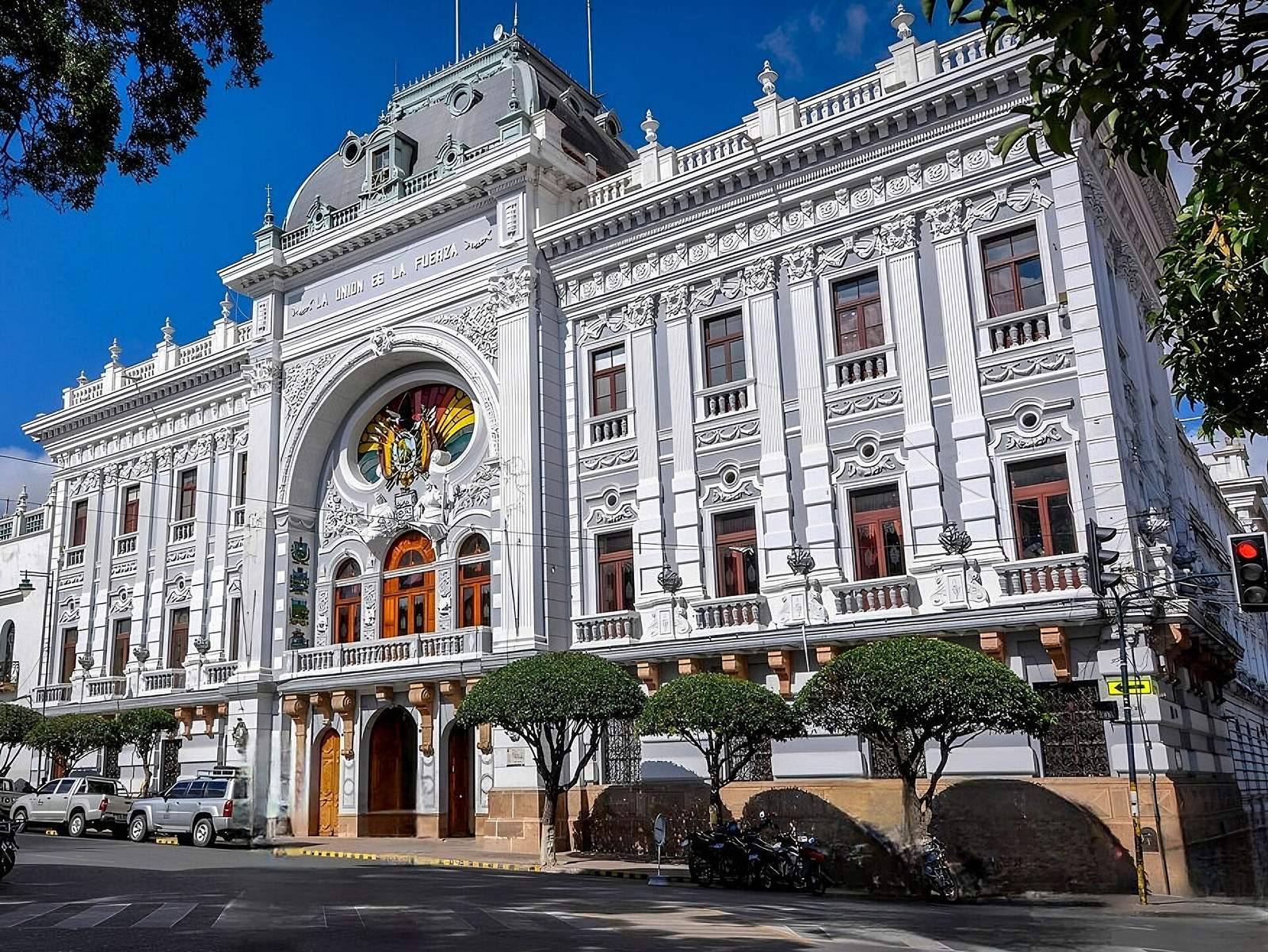
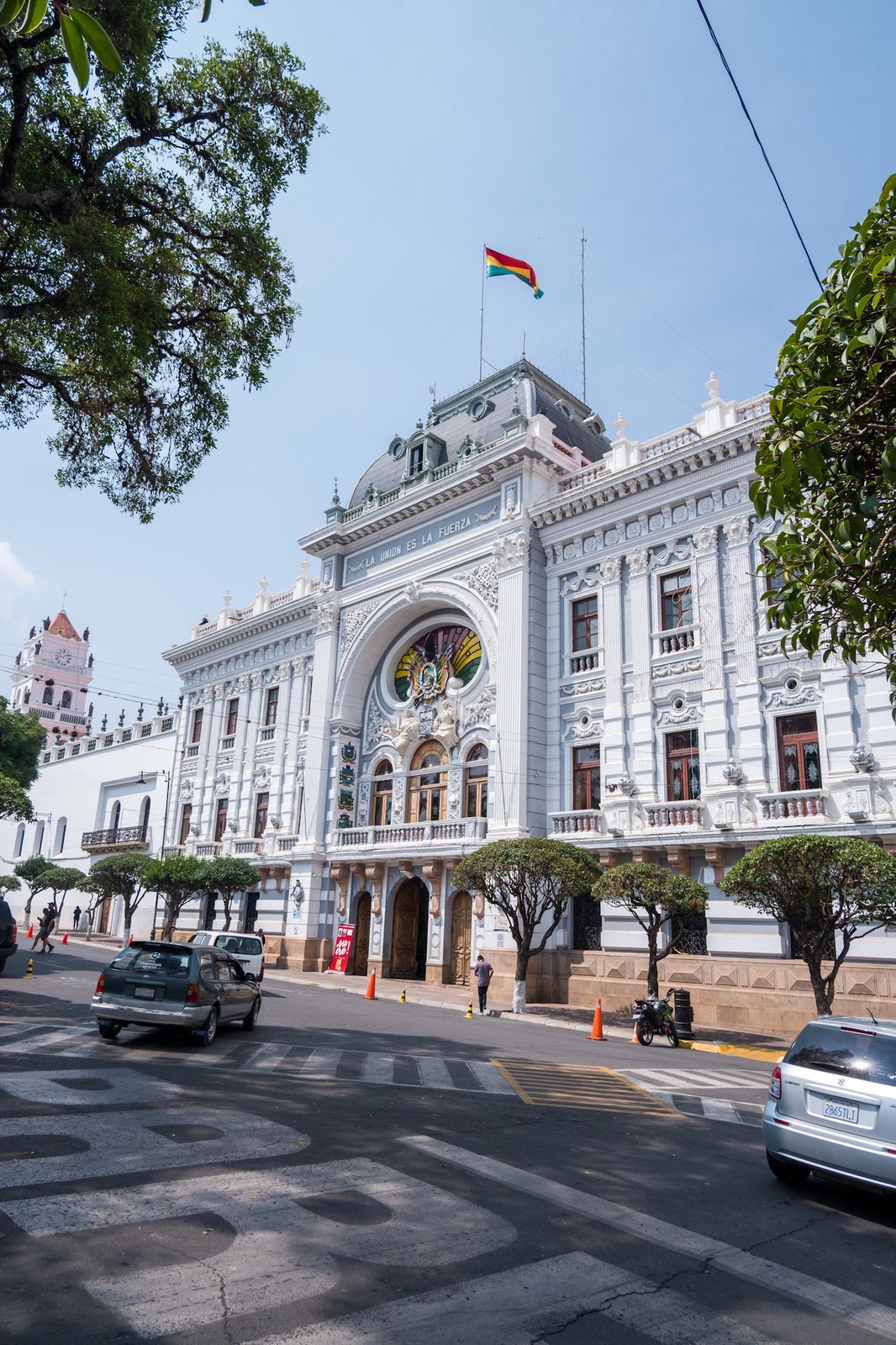
The palace stands beside the Metropolitan Cathedral on Plaza 25 de Mayo. Its Baroque and Classical design is organized around a three-part principal façade, while the interior plan separates official, private, and security functions.
The earlier archiepiscopal palace
The earlier palace on the grounds had the character of a colonial public building. Its entrance porch combined spiral Baroque ornament with Doric columns, a classical column order. Three courtyards structured the building: the first had a covered gallery of arches, rooms surrounded the second and once served as barracks, and the third was an orchard.
The present palace
Principal façade
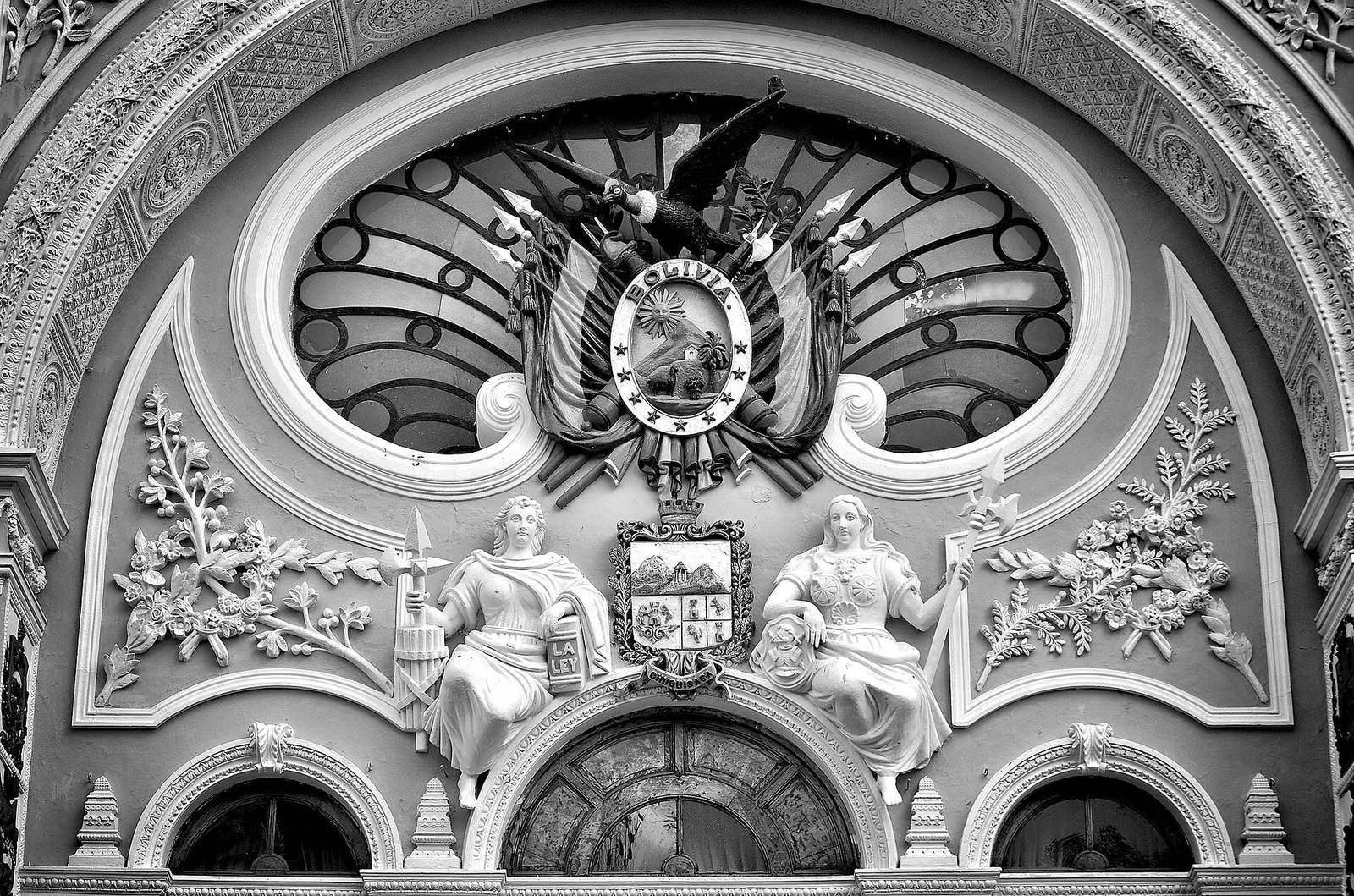
The façade is arranged in three blocks. A large semicircular arch in the central block frames an elliptical opening. Below it are a three-part window and a balcony, while a metal dome rises above. Each of the two side blocks has four divisions, paired columns encircled by bands around their lower thirds, and two windows set one above the other between the columns. The upper central section carries Bolivia’s national coat of arms and the inscription “Unity is Strength.”
Interior plan
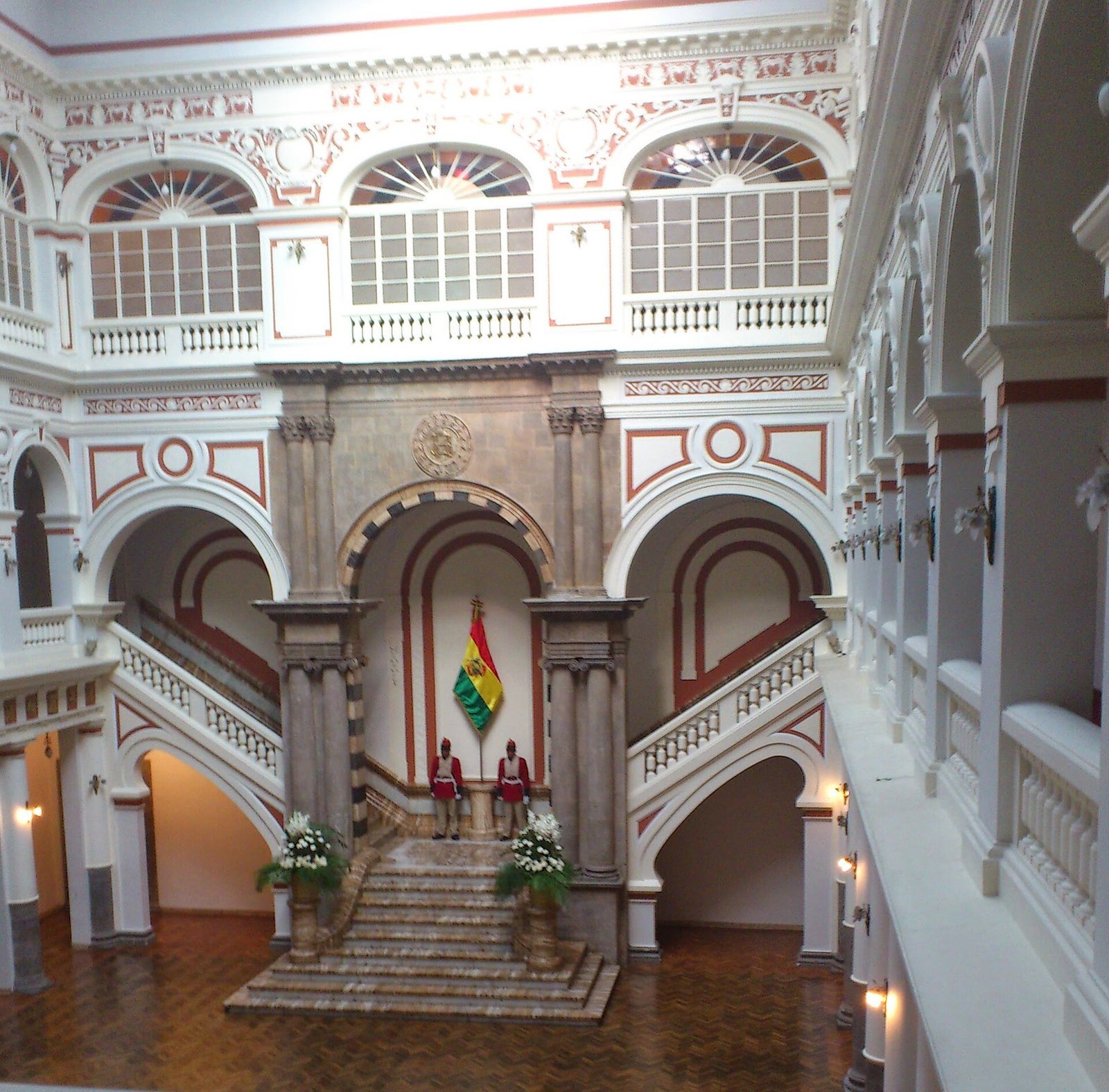
The official section was entered from Plaza 25 de Mayo and contained the president’s private secretariat, a large diplomatic reception hall, ministries, and a secure room for the National Treasury. The private section, intended for the president and family, had its entrance on Bustillos Street. On the upper floor, a passage connected the president’s private salon with the official secretariat. A separate section was intended for the National Guard. The interiors were richly decorated in the style of the period.