Red Church (Vourgareli): A Byzantine Monastery Church in Greece
Site at a Glance
- Popularity
- Medium
- Country
- Greece
- Primary era
- Medieval
- Eras represented
- Medieval
- Civilizations
- Byzantine
- Site type
- Religious
- Remains
- Church
On this page10 sections
History
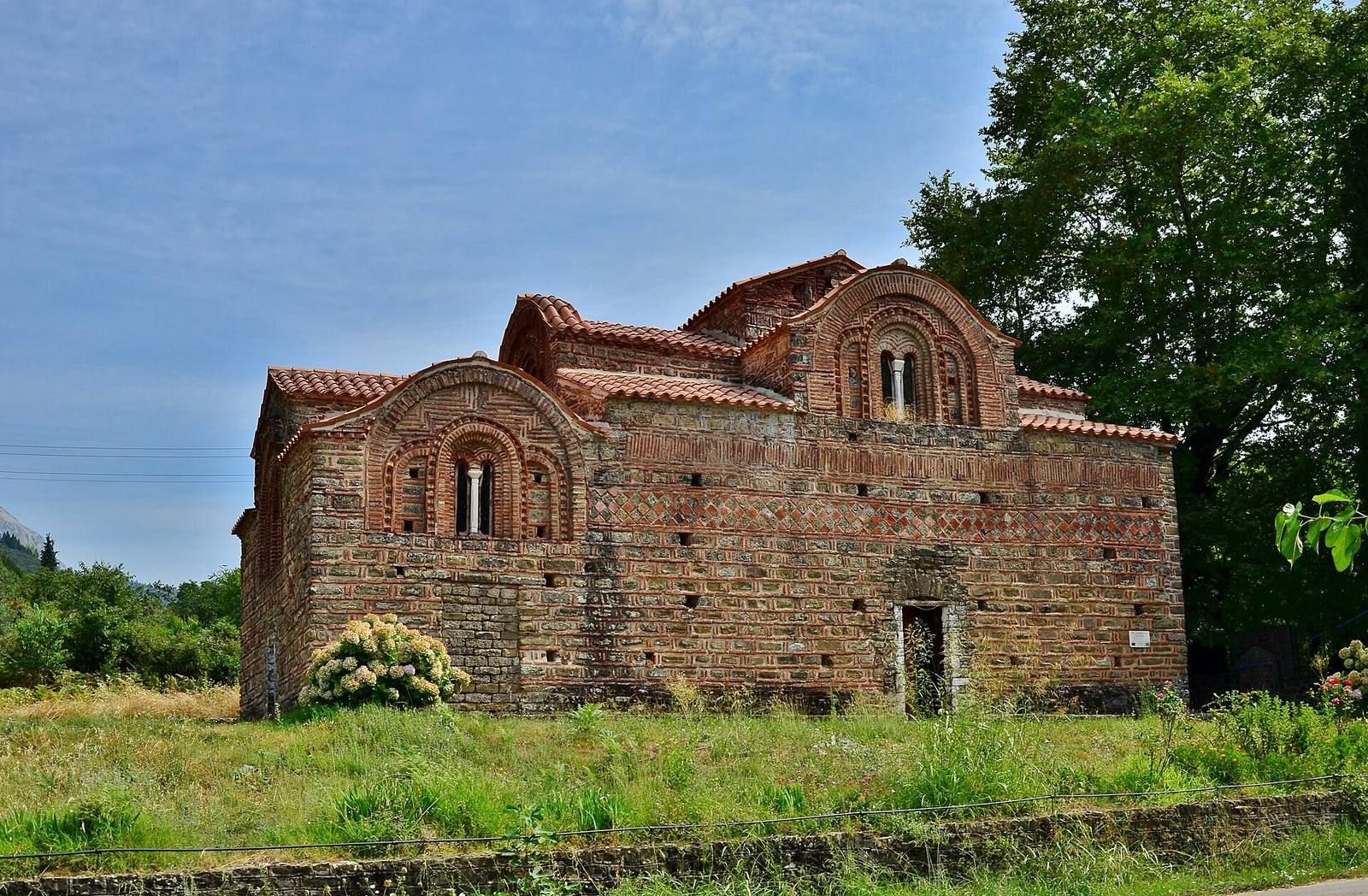
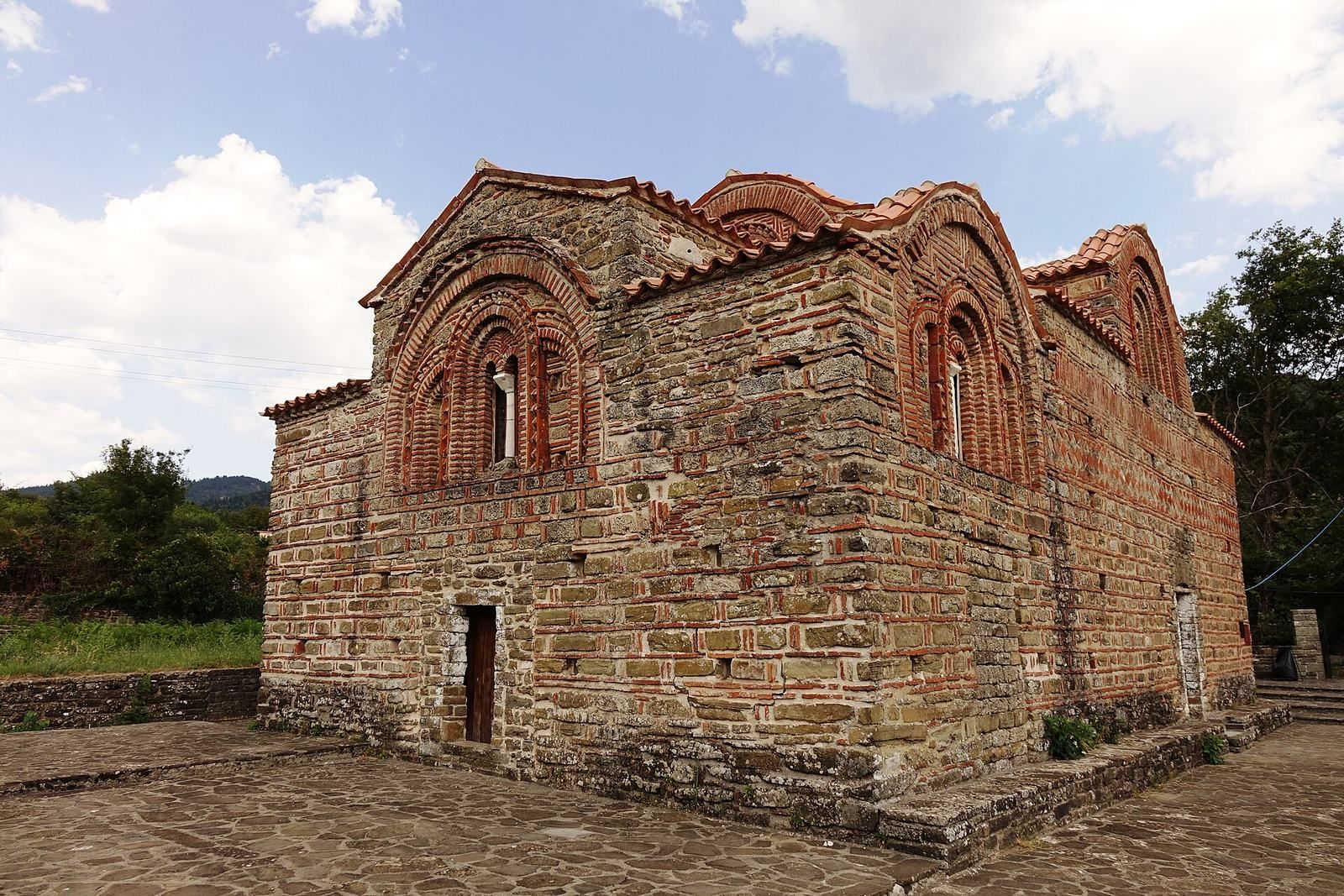
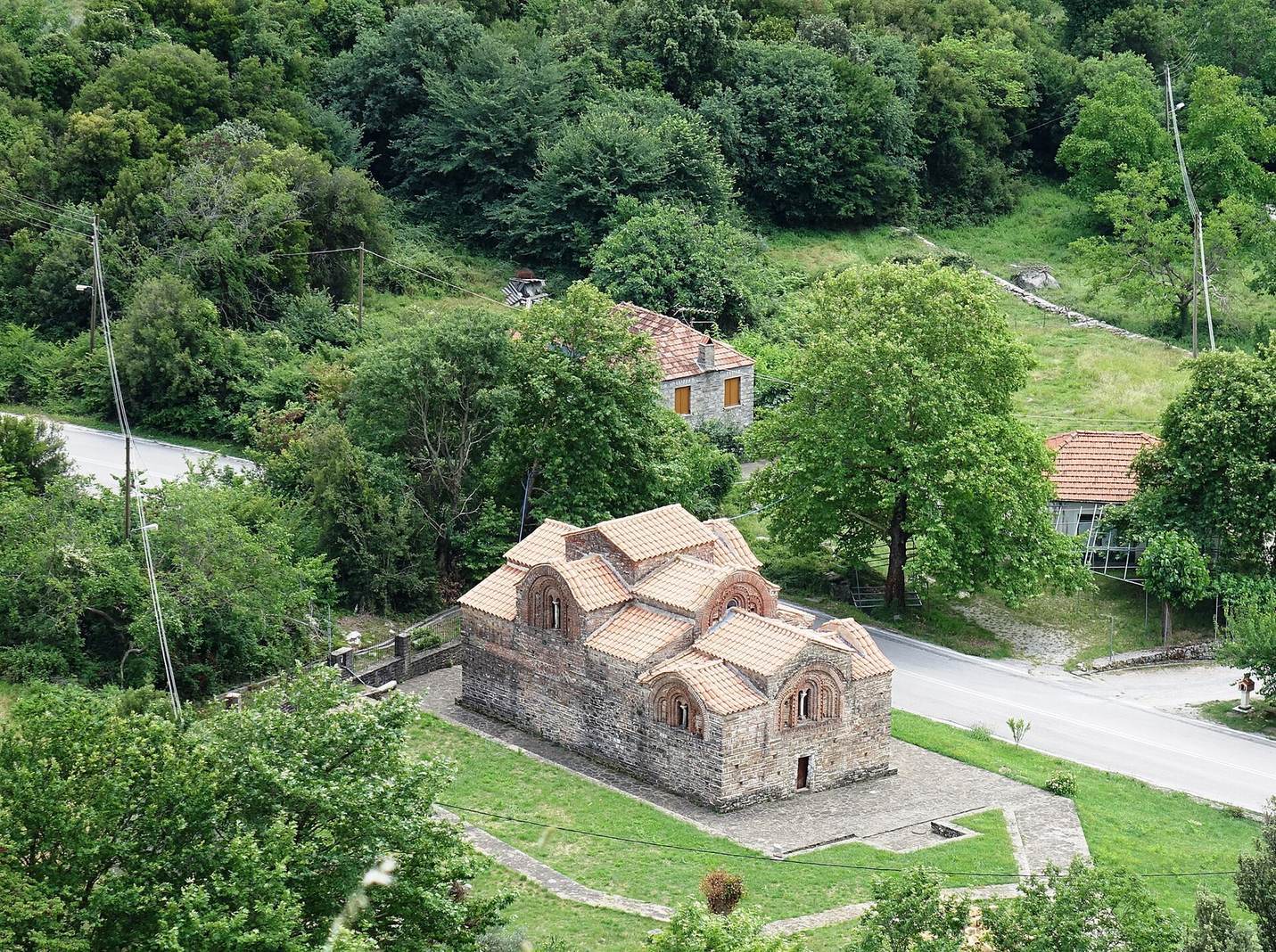
The Red Church (Vourgareli) is a Byzantine monastery church near Vourgareli in Greece, built around 1280 during the rule of Nikephoros I in the Despotate of Epirus, a Byzantine successor state in the western Greek lands. It served as the monastery’s principal church and is the only surviving Byzantine monument in central Tzoumerka.
Foundation and Byzantine setting
Brothers John and Theodore financed the church’s construction. Both held the Byzantine title protostrator, a senior military and court office. Dedicated to the Nativity of the Virgin Mary, the church’s feast day is September 8. Its designation as the Royal Monastery reflected its intended role as a monastery’s main church and its connection with the court of the Despots of Epirus.
The church later became a dependency of the Monastery of Vellas, about 35 kilometres north of Ioannina, and was also known as the Virgin of Vellas. During the Despotate, it stood beside a road linking Arta and Trikala and connecting Epirus with Thessaly. It is among the region’s notable monuments associated with the Komnenian-Doukas dynasty, the ruling house of Epirus.
Later monastic use and modern conservation
Between 1690 and 1714, after the Monastery of St. George was established in Vourgareli, the Red Church became its dependency. It remained so until the beginning of the twentieth century. By the time Greek forces took control of the region during the First Balkan War of 1912–1913, the church was already ruined and abandoned.
The church became a state-protected architectural monument in the 1950s. An earthquake damaged it in 1967, prompting extensive restoration that proceeded intermittently. Work on the roof and floor was carried out systematically in the 2000s.
Remains
Plan and structure
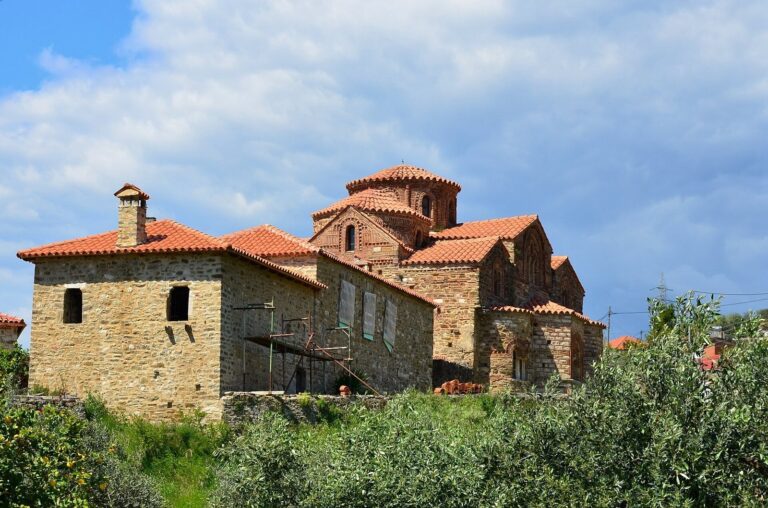
Built with conspicuously red brick, the church stands near Paleochori in the Tzoumerka area, about 3 kilometres south of Vourgareli. It measures 16 by 9.15 metres and is described as both cross-shaped and octagonal. Inside, an entrance vestibule leads into the main church. The building originally had five entrances, three of which were later blocked, and six large arched windows across its sides. A dome about 3 metres wide once crowned the church; after its destruction, a wooden gabled roof replaced it. The church’s architecture and interior have been compared with those of the Church of the Virgin Perivleptos in Ohrid. The resemblance has prompted suggestions that the two churches shared a group of builders and that the Red Church may once have been under the authority of the Archdiocese of Ohrid, an Orthodox church jurisdiction.
Interior remains
Iconostasis and columns
Parts of the original plaster iconostasis, a screen separating the sanctuary from the main worship space, survive. Two columns in front of it probably came from a classical building that stood on the site before the church was built.
Wall paintings
Fragments of the wall paintings remain. An inscription dates the church’s painted decoration to 1295–1296, making it the only dated and inscribed group of wall paintings from the Despotate of Epirus. On the eastern wall of the entrance vestibule, a donor scene shows the enthroned Virgin Mary holding the Christ Child, accompanied by two angels. Smaller heads of saints appear below. The scene also includes two donor couples: Theodore holds a model of the church in his left hand and presents it to the Virgin, with his wife Maria beside him; John and his wife Anna appear to the Virgin’s right. The donors wear richly decorated clothing and are portrayed naturalistically, rather than in the more severe manner usual for Byzantine figures.
Carved work
The surviving entrance vestibule is also noted for its carved work.
Burials beneath the church
Restoration excavation beneath the floor revealed closely spaced graves separated by stone slabs. Their arrangement suggests that many people were buried together at one time, perhaps during a military conflict or a deadly epidemic. The cause remains uncertain.