Dwór Oliwski: A Historic Manor in Gdańsk, Poland
Site at a Glance
- Popularity
- Medium
- Country
- Poland
- Primary era
- Early Modern
- Eras represented
- Early Modern
- Civilizations
- Polish–Lithuanian Commonwealth
- Site type
- Domestic
- Remains
- Manor House
On this page6 sections
History
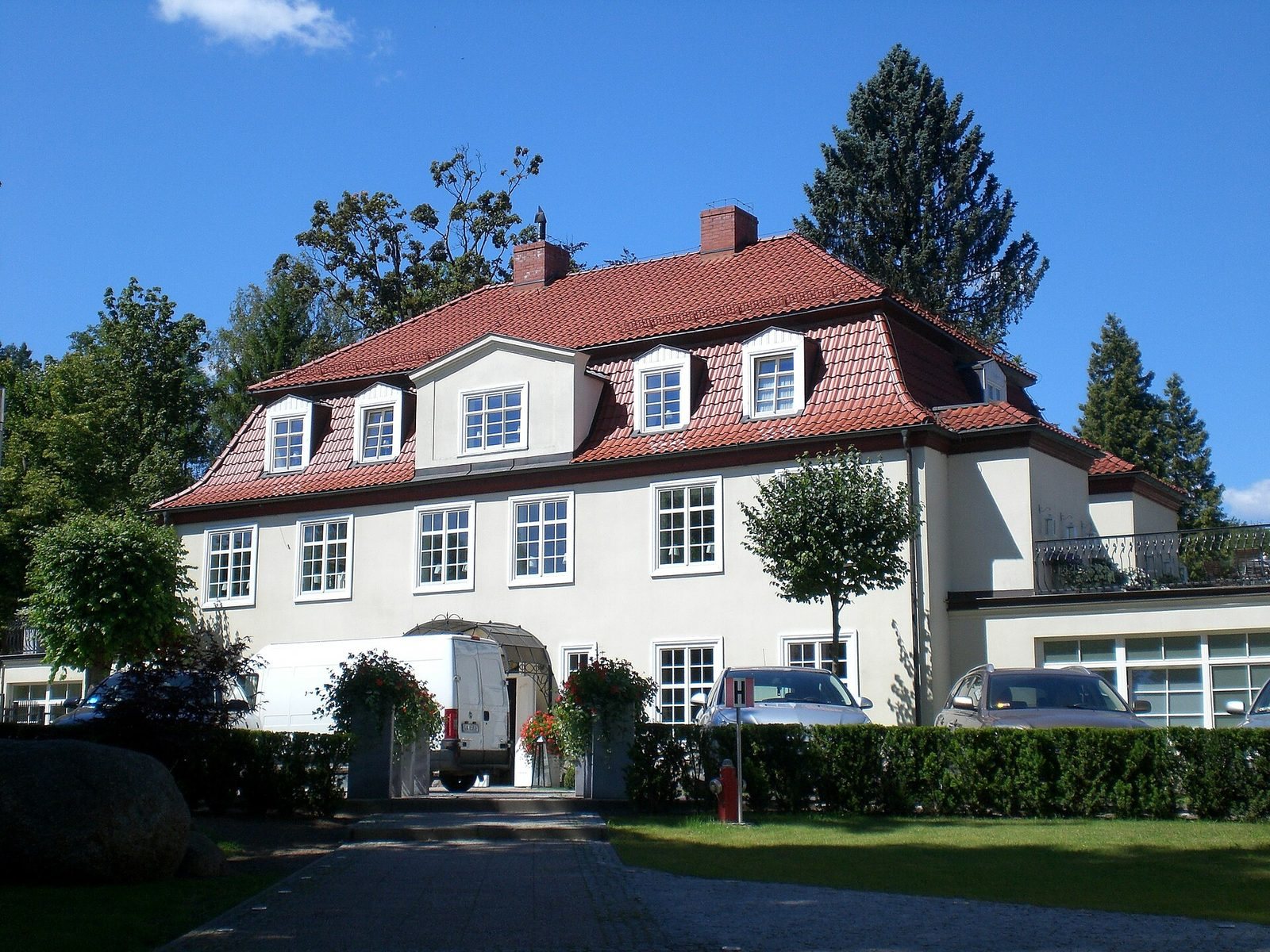
Dwór Oliwski is a historic manor in Oliwa, a district of Gdańsk in northern Poland. The estate probably originated in the second half of the sixteenth century, and its surviving residence is a seventeenth-century Baroque house, part of a European artistic and architectural style.
Origins and Schwabe’s Estate
The land beneath the manor and its buildings belonged to the Oliwa monastery of the Cistercians, a Catholic monastic order. Kacper Jenisch owned a pond and working mill there. By the end of the sixteenth century, the estate also included an orchard and garden; its first recorded mention dates to 1597.
In 1601, Jakub Schwabe, a junior official in Gdańsk’s municipal government, received privileges allowing him to buy the pond and mill. He acquired the manor and adjoining farmland in 1611 and settled there with his wife. The estate prospered over the next four years, with a successful copper-working forge and a wine bar Schwabe gave to his beloved.
In 1615, Schwabe was accused of extensive embezzlement from Gdańsk’s treasury. After the scandal became public, his wife left him. Overcome by her departure and his disgrace, he died by suicide, hanging himself at the manor’s main entrance. The story gave the manor the name Dwór Schwabego, also known as Schwabenthal in German, for the following three centuries. The surrounding valley is still sometimes called Schwabe Valley.
Later History
The manor changed hands roughly twenty times before 1945. It was among the few historic manor complexes in and around Gdańsk that were not remodeled after the Second World War. Postwar socialist authorities considered public uses for the estate, including a creative-work center, but those proposals did not proceed. A late-1960s plan to convert it into a pigsty also fell through.
Without renovation and eventually without supervision, the complex deteriorated. Its historic barn and granary collapsed in the mid-1980s.
Remains
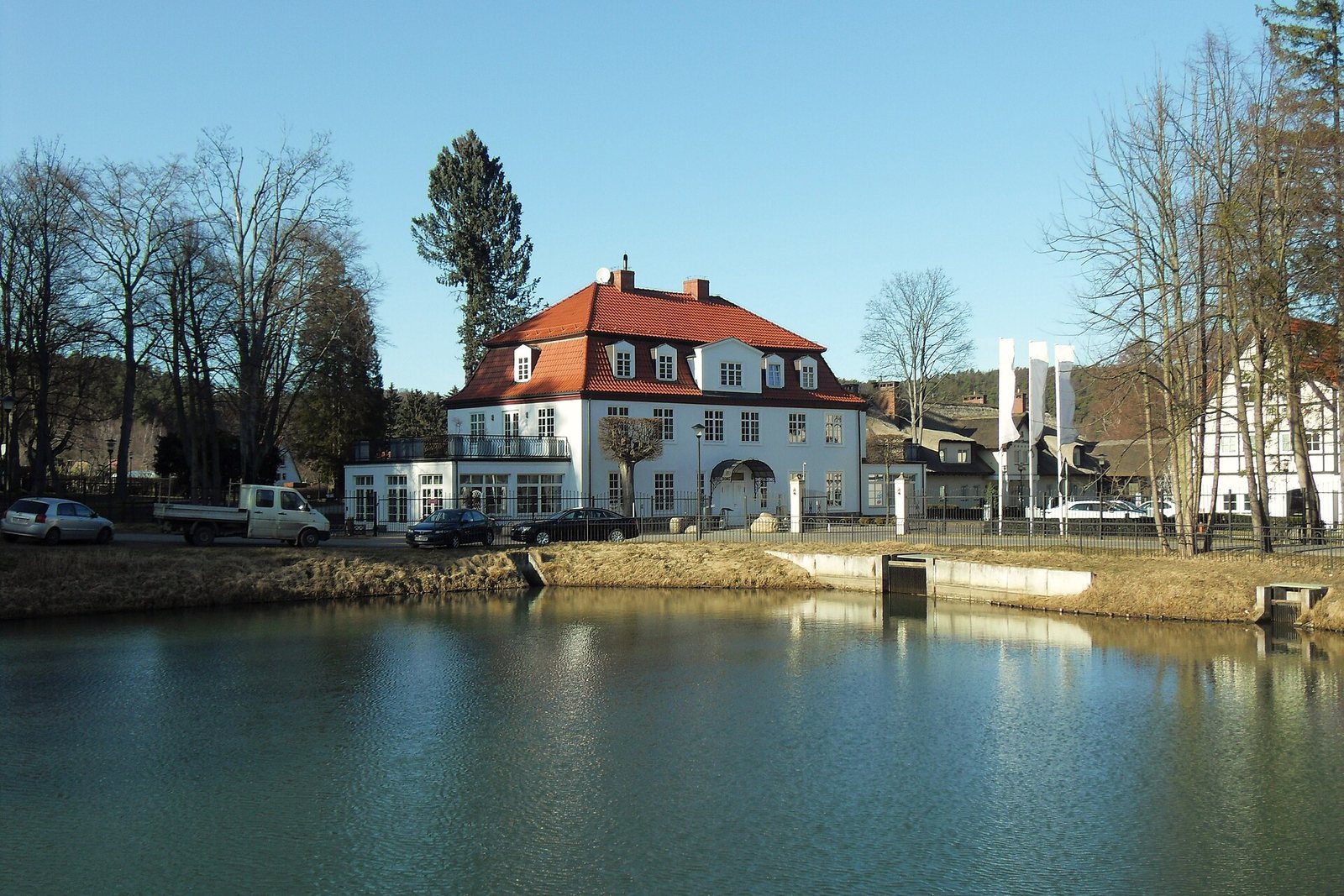
The manor complex stands beside the Oliwa Stream, where the Valleys of Joy and Rotten Bridges meet. Oliwa Forests, part of Tricity Landscape Park, surround it on three sides. The estate includes the historic residence, a park to the northwest, and farm buildings.
Manor House and Cellar
The seventeenth-century residence survives intact as the complex’s historic house. It is a simple, compact rectangle with two storeys, shutters, profiled wooden cornices below the roof, and a mansard roof with two slopes on each side and a steeper lower slope. Inside, the entrance hall and Rococo staircase remain; Rococo is a European style associated with light, ornate decoration. The first floor has ornamental paintings and stucco, or decorative plasterwork. Beneath it, a sixteenth-century cellar has a cross-vaulted ceiling formed by intersecting vaults. Schwabe first established his wine bar in the cellar.
Park, Pond, and Farm Buildings
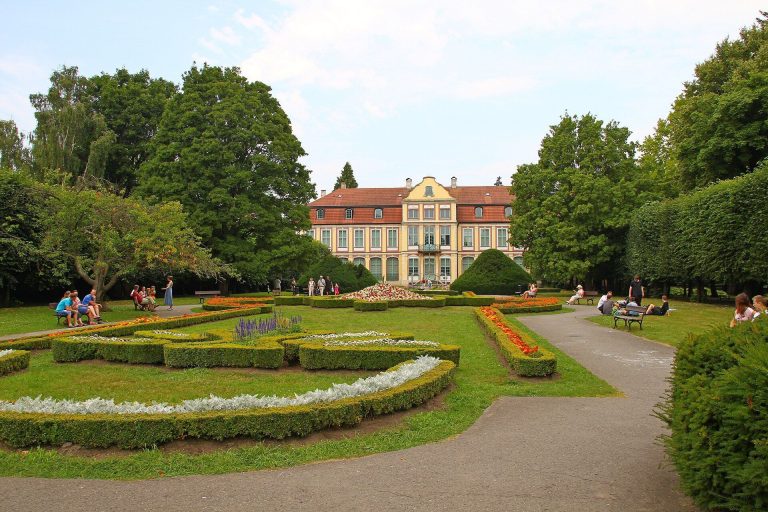
The nineteenth-century park, laid out in the English style, probably occupies the site of an earlier Baroque garden created by Jesuits, members of the Catholic Society of Jesus. A pond once lay where the Oliwa and Prochowy streams meet, with a mill beside it. The farm buildings have since been reconstructed on stone foundations, with thatched gable roofs following their original form. Their interiors are in the Provençal style and furnished with Tuscan furniture.