Holy Myrrhbearers Church: A Russian Orthodox Church in Nizhny Novgorod
Site at a Glance
- Popularity
- Medium
- Country
- Russia
- Primary era
- Early Modern
- Eras represented
- Medieval, Early Modern, Modern
- Civilizations
- Russian
- Site type
- Religious
- Remains
- Church
On this page9 sections
History
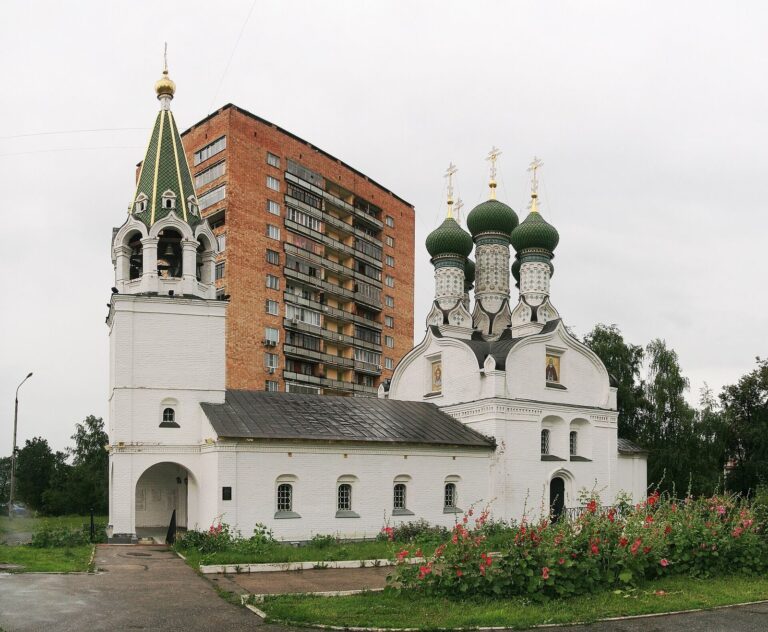
The Holy Myrrhbearers Church in Nizhny Novgorod, Russia, is a two-storey stone Russian Orthodox church built in 1649. Its dedication refers to the women in Christian tradition who visited Jesus’ tomb after his crucifixion.
Medieval origins and the 1649 church
A wooden church stood on the site in the thirteenth century. The stone building that replaced it became the first parish church built of stone in Nizhny Novgorod’s Upper Posad, an urban quarter associated with a Russian town. Euthymius of Suzdal and Macarius of Zheltovodsk were born within the parish. Both were Russian Orthodox monks later venerated as saints associated with miracles.
Nineteenth-century alterations
In 1805, Nizhny Novgorod merchant P. Perepletchikov financed a two-storey brick addition on the north side of the refectory, a communal dining hall. A fire in 1848 led to the renewal of the church’s wall paintings, made on wet plaster. The side chapels were enlarged between 1894 and 1896.
Closure, return, and renewed worship
After the Revolution, the church was closed, its domes were demolished, and a technical college for the light industry used the building. It returned to the Diocese of Nizhny Novgorod, an ecclesiastical district overseen by a bishop, in the 1990s. A presidential decree dated 20 February 1995 designated it a federal-level cultural heritage monument. The church remains active.
Restoration in the early twenty-first century drew on historical photographs by Russian documentary photographer M. P. Dmitriev. The first phase, focused on the exterior, was complete by 2011, followed by work on the interiors and chapels. The lower church, dedicated to the Sign of the Mother of God, an Orthodox icon showing Mary with the Christ Child, was consecrated by Archbishop George on 25 January 2012, followed by its first liturgy in many years. A chapel dedicated to Macarius and Euthymius was consecrated on 29 December 2012. On 18 December 2013, Metropolitan George consecrated the chapel of the apostles Peter and Paul.
Remains
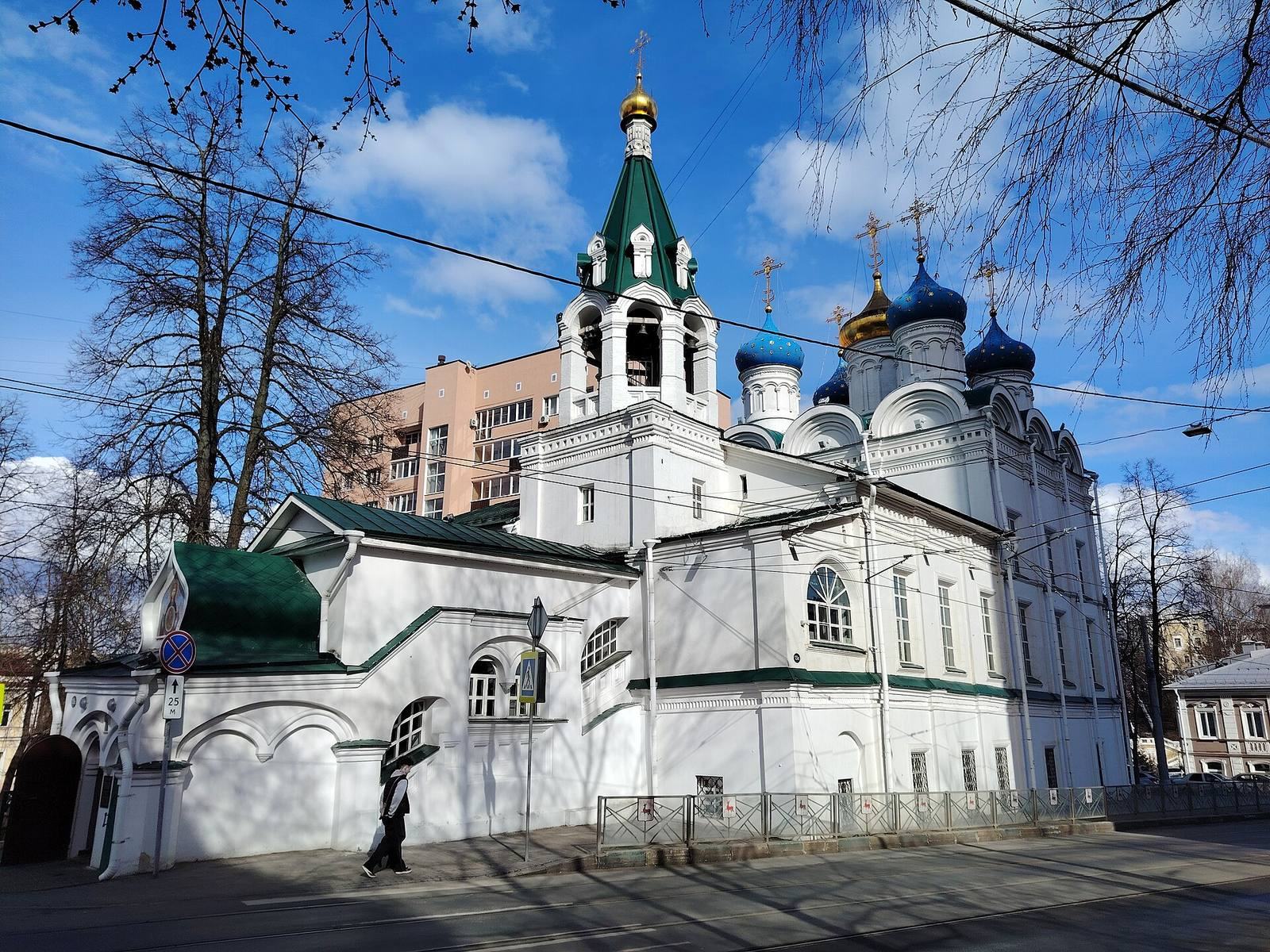
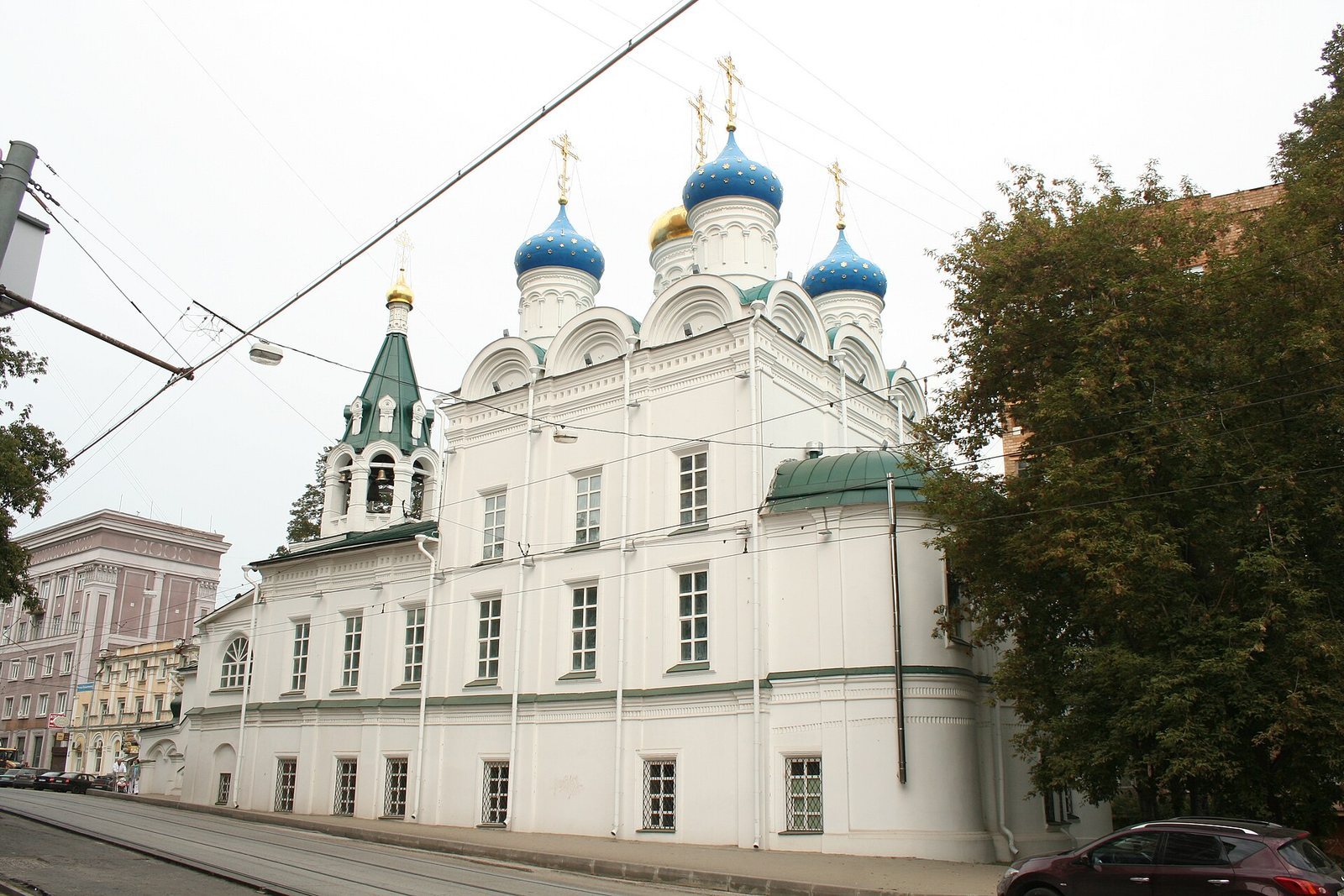
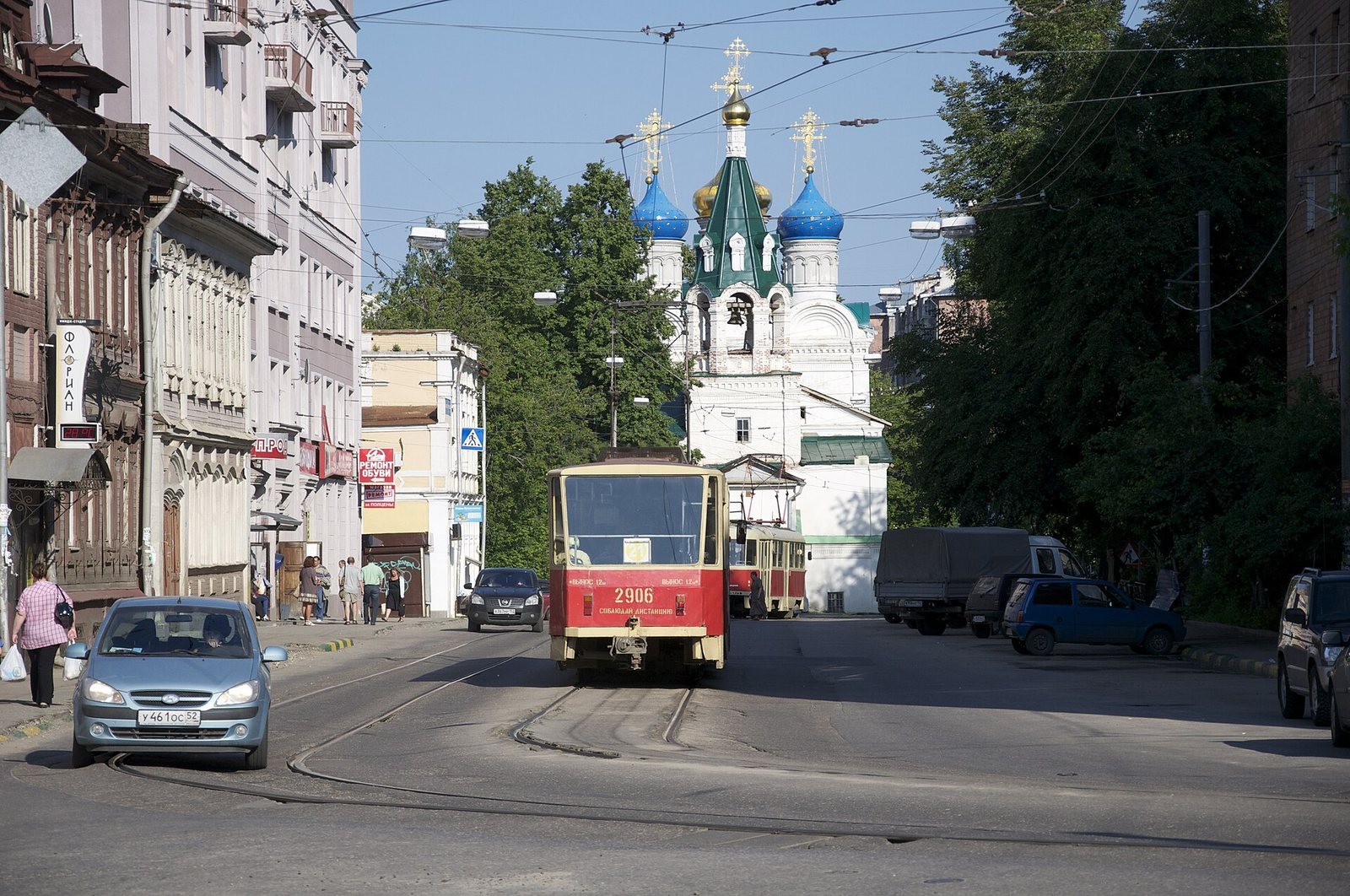
The church has an axial plan described as the first ship-type example in Russian architecture. The altar, worship hall, refectory, and bell tower are arranged in sequence along a single axis, with the tower above the western entrance.
Worship spaces and chapels
Two churches occupy the building: the winter church is dedicated to the Sign icon, while the summer church and main altar are dedicated to the Holy Myrrhbearers. Other dedications include the apostles Peter and Paul, Euthymius of Suzdal, and Macarius of Zheltovodsk.
North-side addition
The two-storey brick addition is attached to the north side of the refectory. Its lower chapel is dedicated to Peter and Paul, and its upper chapel to Euthymius of Suzdal; the refectory carries the dedication to Macarius of Zheltovodsk.
Domes, crosses, and interior furnishings
A dome was installed above the Macarius chapel in July 2004, while gilding work was under way on the main dome. Restoration between 2004 and 2006 included new domes and crosses, and a large cross was placed on the bell tower on 10 October 2006. Work began in July 2011 on a wooden, two-tier iconostasis, a screen of icons separating the sanctuary from the worship space, for the lower Sign chapel. It was designed to include local icons and a Deesis row, an arrangement of Christ with intercessory figures, and was intended to be painted in the Byzantine style by staff of the Kovcheg workshop. Painting of the chapel altar began in September 2011.
Tram-side setting
A city tram loop runs immediately beside the church. In summer 2005, a 200-metre section of track was relaid with surfacing designed to reduce vibration.