San Giulio Church: A Catholic Church in Cravegna
Site at a Glance
- Popularity
- Very Low
- Country
- Italy
- Primary era
- Early Modern
- Eras represented
- Medieval, Early Modern
- Civilizations
- Duchy of Milan, Holy Roman Empire, Swiss
- Site type
- Religious
- Remains
- Church
On this page10 sections
History
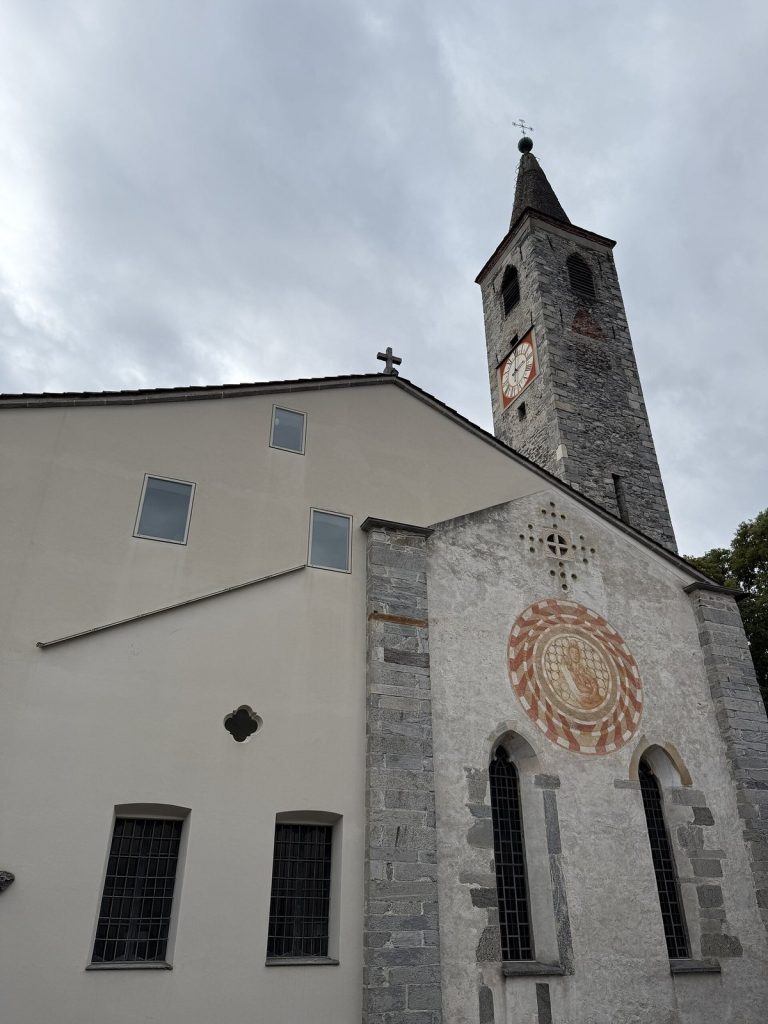
San Giulio Church is a Catholic church dedicated to Saint Julius of Orta in Cravegna, a hamlet of Crodo, Italy. Its Romanesque predecessor, in a medieval architectural style, probably dates to the 11th or 12th century; the present church was completed in 1523. A Madonna and Child image became a focus of devotion and pilgrimage after events associated with it in 1492.
Early church and traditions
A document from 1291 names the church and the cemetery behind it together. Cravegna has ancient settlement origins, and early Christian evangelizers who established churches and chapels may have passed through. The first church may have had a different dedication, but its original name is unknown. Some have proposed Saint Peter as its first dedicatee, although this remains unproven.
In 1721, canon Antonio Maria Bonino, a cleric serving a cathedral or collegiate church chapter, recorded a foundation tradition in his Life of Saint Julius. It claimed that Cravegna’s church was the first built in Ossola, an Alpine valley in northern Piedmont, among a hundred churches established by Saints Julius and Julian in Ossola and Cusio, the area around Lake Orta. The story said the saints later built the Church of the Assumption of Mary in Santa Maria Maggiore, in nearby Val Vigezzo. Later lives of the saints challenged this account, as did the longstanding description of the Santa Maria Maggiore church as Ossola’s mother church.
Rebuilding and later changes
The 16th-century church was completed in 1523, while the date 1516 appears on its main doorway. The fresco of the Madonna and Child, an image of the Virgin Mary with Jesus, was associated with miraculous events in 1492 and drew devotion and pilgrims. Giovanni Antonio Facchinetti, born in Bologna to a family from Cravegna, became Pope Innocent IX in 1591.
The dates associated with the church’s bell towers have an uncertain sequence. Construction of a new tower just outside the churchyard is dated to 1771, while the Romanesque tower was damaged by lightning in 1796, after which its demolition and replacement were decided. The chronology of these events is unclear.
Remains
The church stands on the slope of Mount Cistella, in southern Cravegna. Its present alignment is north–south, and its interior is divided into three naves, or lengthwise sections. The cemetery lies behind the church, while a 17th-century oratory, a small place of worship dedicated to Saint John the Baptist, stands beside it.
Earlier church fabric
The Romanesque church probably had a different orientation from the present building, and only a few traces remain. Its 34 blind arches, decorative recessed arches that do not open through a wall, were reused in the gable of the current church. A Madonna and Child fresco in the left nave once adorned the facade of the earlier church.
Facade and gable
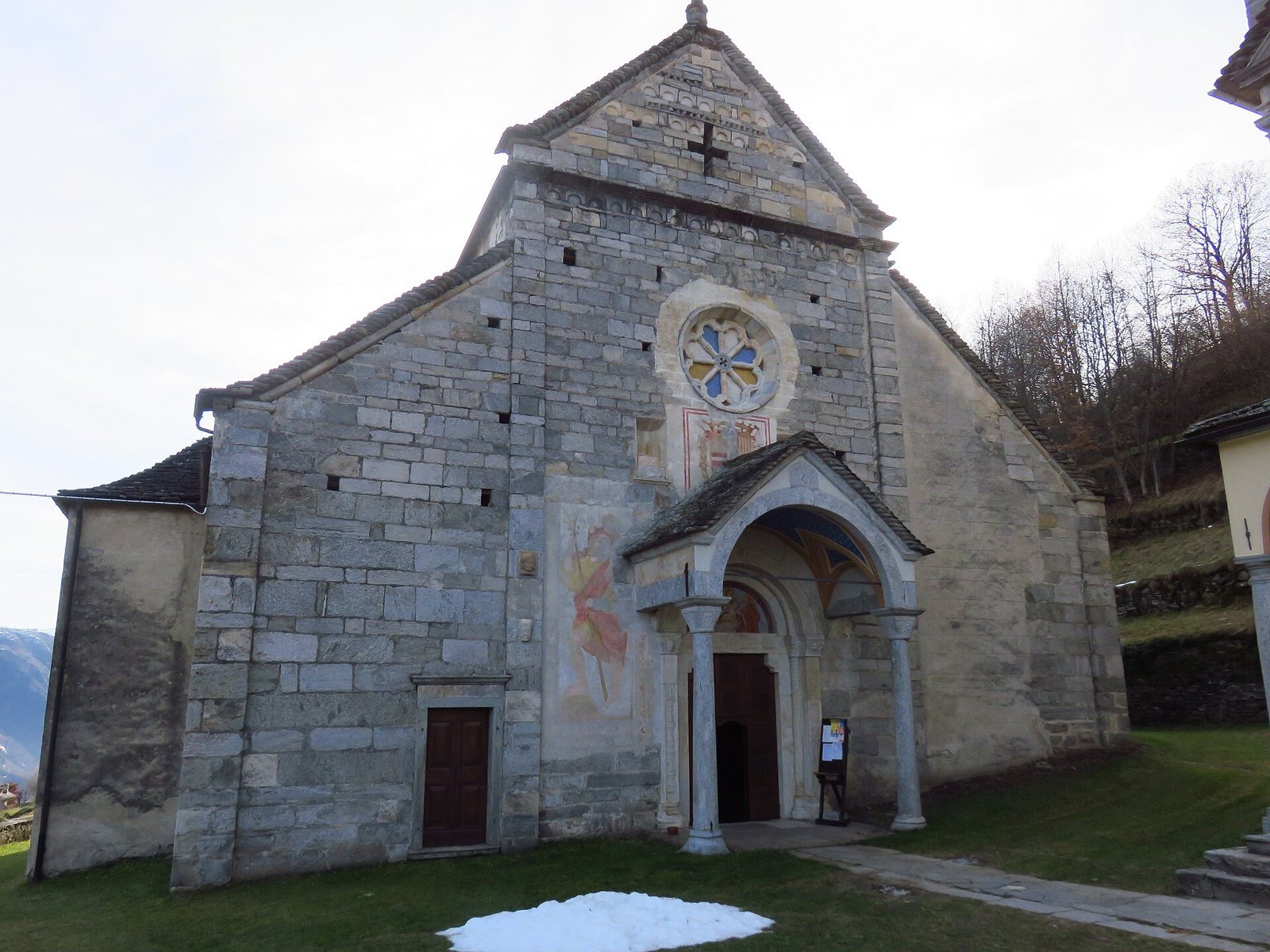
The facade’s central section resembles that of the Church of Saint Gaudentius at Baceno, though San Giulio has a small projecting porch. Regular blocks of serizzo, a regional building stone, follow the lines of the three naves. Three rows of blind arches decorate the gable; a sawtooth cornice runs above the upper two rows. Two cross-shaped openings are set into the gable, one of them blocked with lighter stone.
Entrance and sculpted details
The main doorway has a portal of Crevola marble, sheltered by a porch added in 1596. A marble rose window was inserted later, damaging the surrounding masonry; that damage was left unrepaired. A fresco of Saint Christopher by Antonio Zanetti survives in traces to the left of the entrance. Two carved heads on the left pilaster, a shallow vertical projection from the wall, are traditionally identified as portraits of two De Rhodis feudal lords, who are said to have financed the church.
Bell tower and churchyard
Interrupted masonry and a rebuilt pilaster to the left of the entrance mark where the former Romanesque bell tower stood. The replacement tower was built just outside the churchyard, and a bronze bust of Pope Innocent IX is set into one of its walls. To the right of the churchyard stands a 17th-century ossuary, a building for storing human bones; its walls and roof survive.
Interior and furnishings
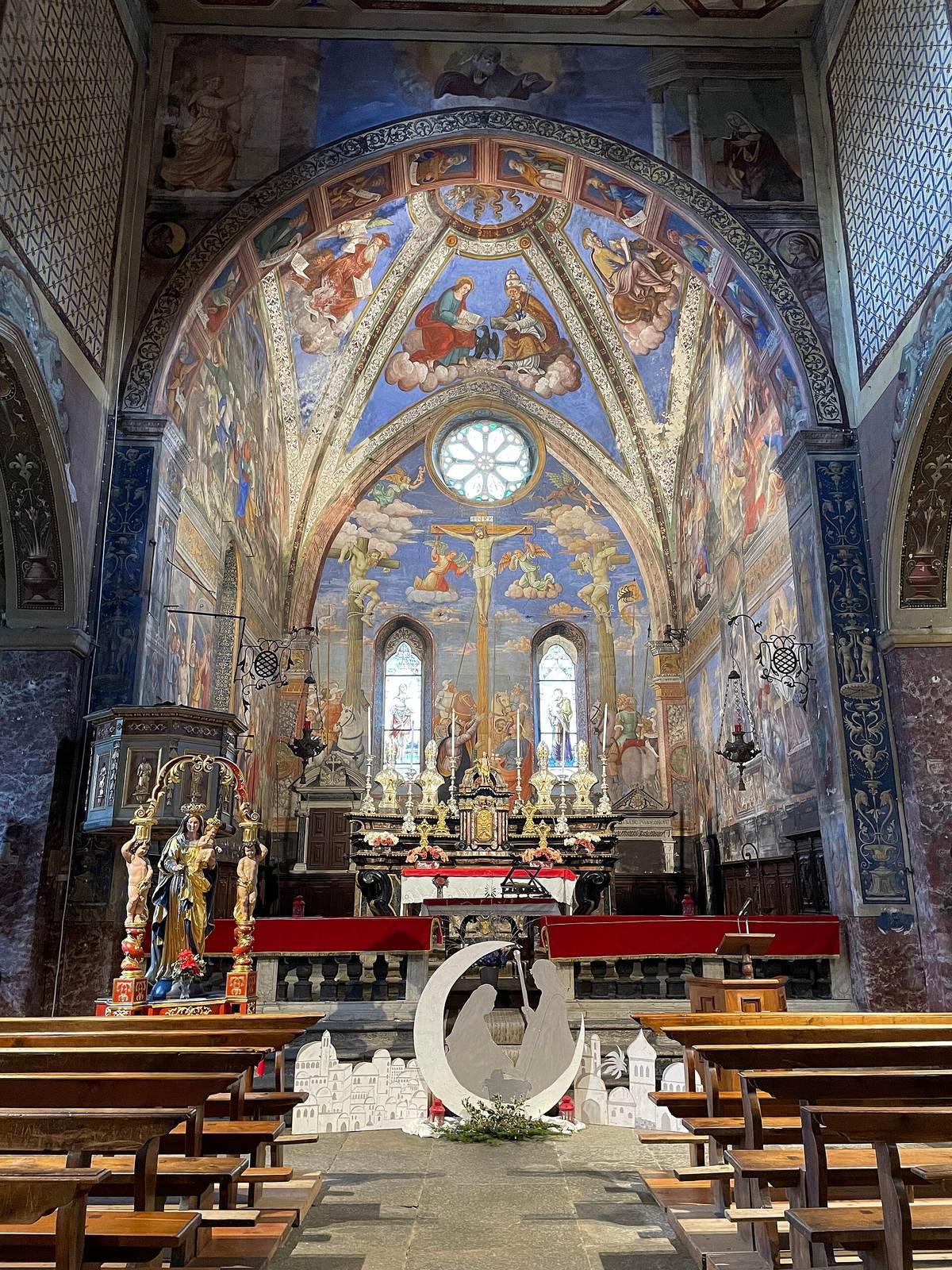
Serizzo columns and pointed arches divide the interior into three naves. The ceiling decorations depict the life of Pope Innocent IX. A marble baptismal font from Crevola dates to 1564, and a wooden cupboard in the sacristy bears northern motifs.
Choir paintings
The choir has a Passion scene on its left wall, a Crucifixion on the back wall, and another Crucifixion on the right. More elaborate ornamental painting frames the scenes and decorates the rose window, windows, and ribs of the cross vault, a ceiling formed by intersecting vaulted sections. An inscription beneath a window on the right wall is partly illegible but includes the name Battista da Legnano, who probably executed the choir frescoes.