Rákóczi Palace in Mukachevo: A Baroque Urban Residence
Site at a Glance
- Popularity
- Medium
- Country
- Ukraine
- Primary era
- Early Modern
- Eras represented
- Early Modern, Modern
- Civilizations
- Austria-Hungary, Habsburg, Hungarian
- Site type
- Domestic
- Remains
- Palace
On this page8 sections
History
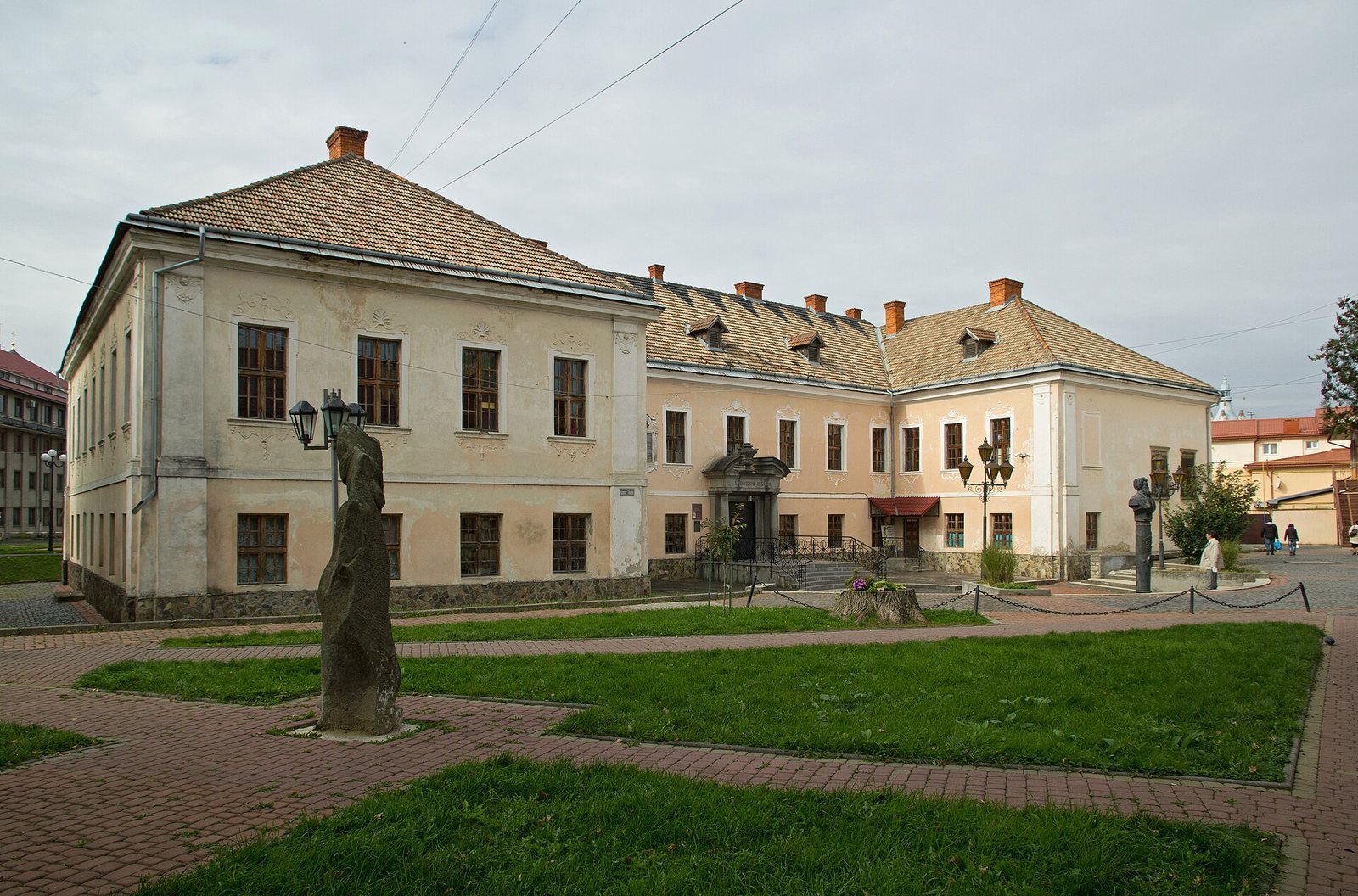
The Rákóczi Palace, also known as the White Palace, is a former urban residence in Mukachevo, Ukraine. The Transylvanian princely Rákóczi dynasty built it in 1667 in the Baroque style, known for elaborate, dramatic forms. The family lived there until 1711.
The Rákóczi residence and uprising
In June 1703, Ferenc II Rákóczi, a Hungarian nobleman leading an uprising against Habsburg rule, stayed at the palace. The Habsburgs were a European ruling dynasty whose lands included Austria. Tradition holds that Rákóczi wrote an appeal there urging Hungarians to resist Habsburg authority. On June 28, insurgents fought Austrian forces led by General Montecuccoli near the palace. The poorly armed rebels retreated, and Rákóczi withdrew toward Verecke Pass to regroup.
Schönborn ownership and civic use
After the uprising was defeated in 1711, the palace passed to the Austrian ruler. In the 1720s, the property and extensive estates were granted to the German count Schönborn-Buchheim. The palace hosted formal receptions for nobles and foreign ambassadors. During the nineteenth century, it housed an exhibition of the Mukachevo local-history museum, founded by Transcarpathian archaeologist Tivadar Lehoczky. Lehoczky also worked as a lawyer in the count’s office.
Military and educational uses
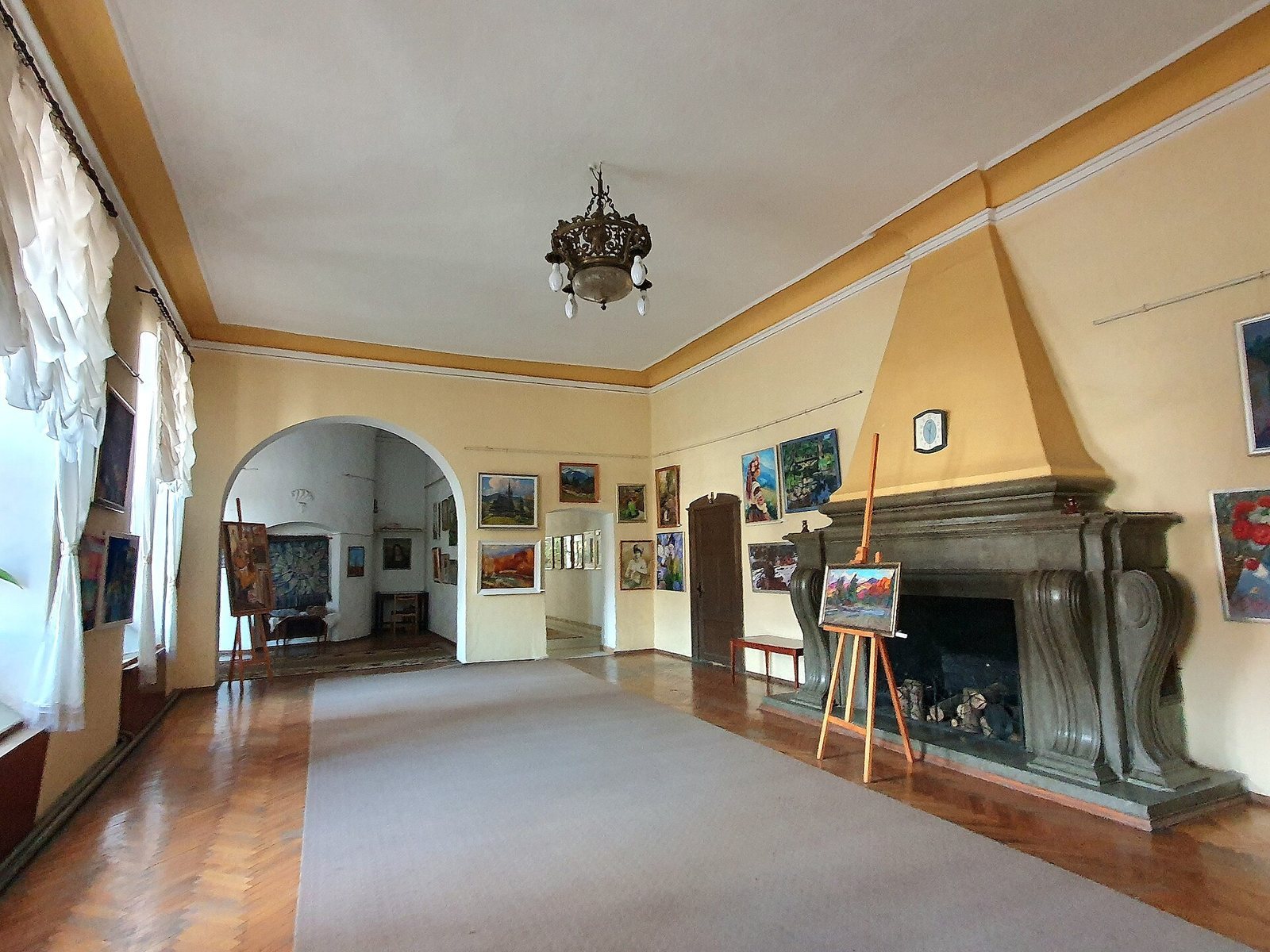
From 1945, after Transcarpathia became part of Soviet Ukraine, the palace housed the headquarters of a Soviet Army military formation. It later served as one of Mukachevo’s secondary schools. A children’s art school opened there in 1979; described as the first of its kind in Transcarpathia, it bears the name of Hungarian painter Mihály Munkácsy. The palace is designated a national architectural monument of Ukraine.
Remains
Plan and architectural development
The palace combines an original one-storey building and large terrace with a later U-shaped plan. Its white exterior gave it the name White Palace. In 1746 and 1747, a major rebuilding designed by German architect Johann Balthasar Neumann retained older building elements, added another storey and a new wing, and arranged the enlarged structure with an emphasis on proportion and symmetry. The resulting building included Renaissance features alongside its Baroque character.
Facade and interior
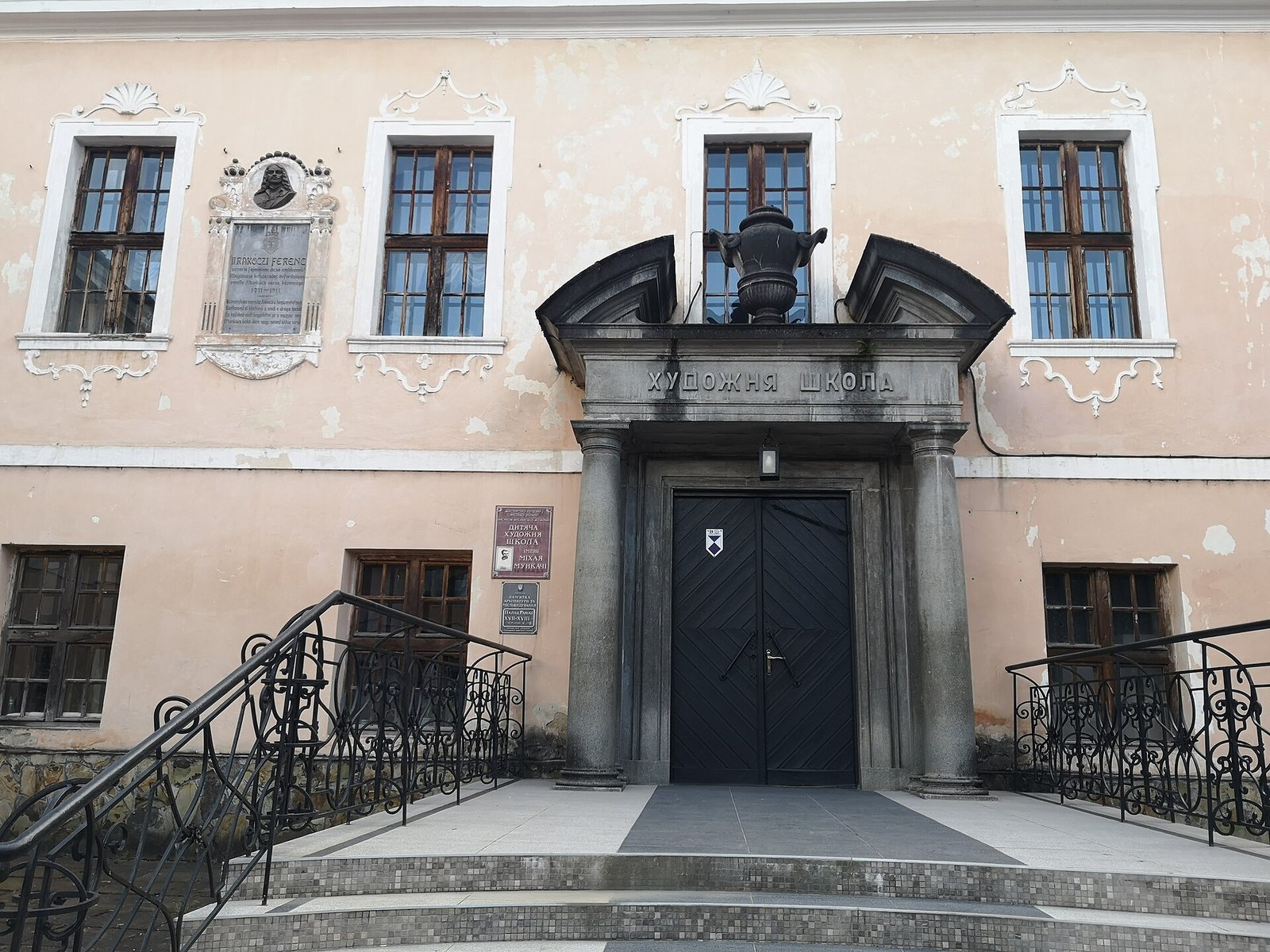
The facade has two original windows and five reconstructed windows in the Renaissance style. An open staircase rises to the main entrance, whose nineteenth-century stone portal is framed by columns and topped with a decorative vase. Stucco, or decorative plasterwork, adorns the windows on the main facade and the interior vaults, which are arched ceilings. The central wing has dome-shaped vaults. The building contains 21 rooms, 98 windows, 91 doors, and 10 old stoves. An underground passage was filled in 1945.
Memorials
A memorial plaque to Ferenc II Rákóczi, installed in 1911, sits between two windows to the left of the central entrance. It remained undamaged through the Soviet period. The palace also has a memorial plaque to Munkácsy. A bust of Munkácsy stands in front of the building, while inside are a bust of Rákóczi and a statue of Munkácsy.