Church of the Exaltation of the Holy Cross in Chistiy Vrazhek: A Russian Orthodox Church
Site at a Glance
- Popularity
- Medium
- Country
- Russia
- Primary era
- Early Modern
- Eras represented
- Early Modern, Modern
- Civilizations
- Russian
- Site type
- Religious
- Remains
- Church
On this page8 sections
History
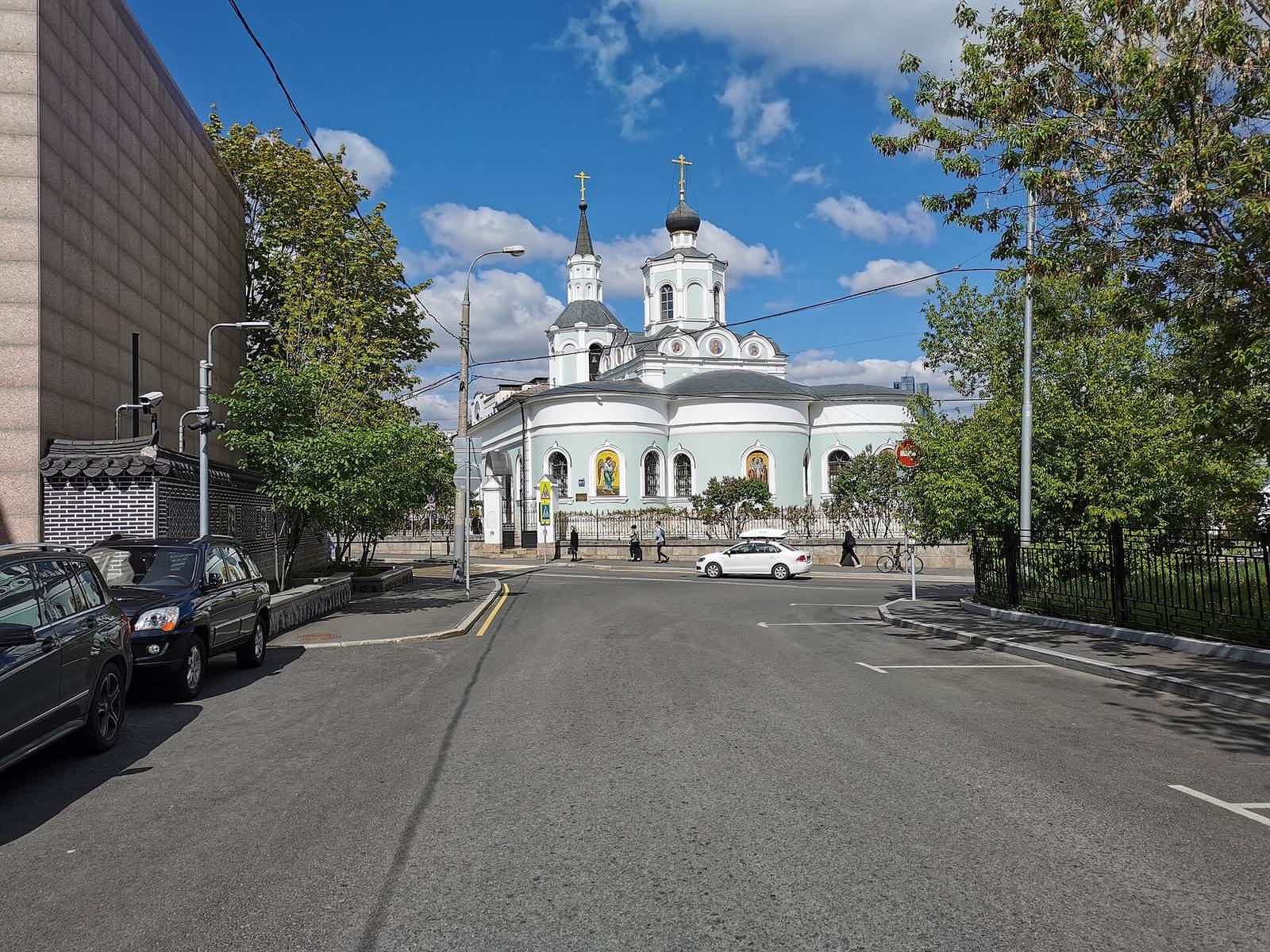
The Church of the Exaltation of the Holy Cross in Chistiy Vrazhek is a Russian Orthodox church in Russia, founded in the 1650s and shaped in a Byzantine-Russian style that combines Byzantine and Russian forms. A wooden predecessor was built sometime between 1640 and 1658. In 1701, court official Vasily Sheremetev funded a stone church on the site, which may have incorporated walls from the earlier building. It was consecrated in 1708.
Rebuilding and expansion
The church was enlarged in 1708, then almost entirely rebuilt in 1761-1762. During that work, both altars and the entrance area were enlarged; further expansion followed in 1798. The fire that devastated Moscow in 1812 damaged the church, which was reconsecrated the next year.
In the nineteenth century, the name Chistiy Vrazhek was associated with a ravine beside Truzhenikov lanes. Manure from the sovereign’s New Stables yard was dumped there during that period. In 1846, merchant G. M. Blokhin and factory owner Ganeshin funded a bell tower, and a third altar was added. The enlarged complex was consecrated in 1852. Further building work in 1894-1895 followed a design by architect Fiodor Kolbe and included renovations to the altars.
Parish life and modern changes
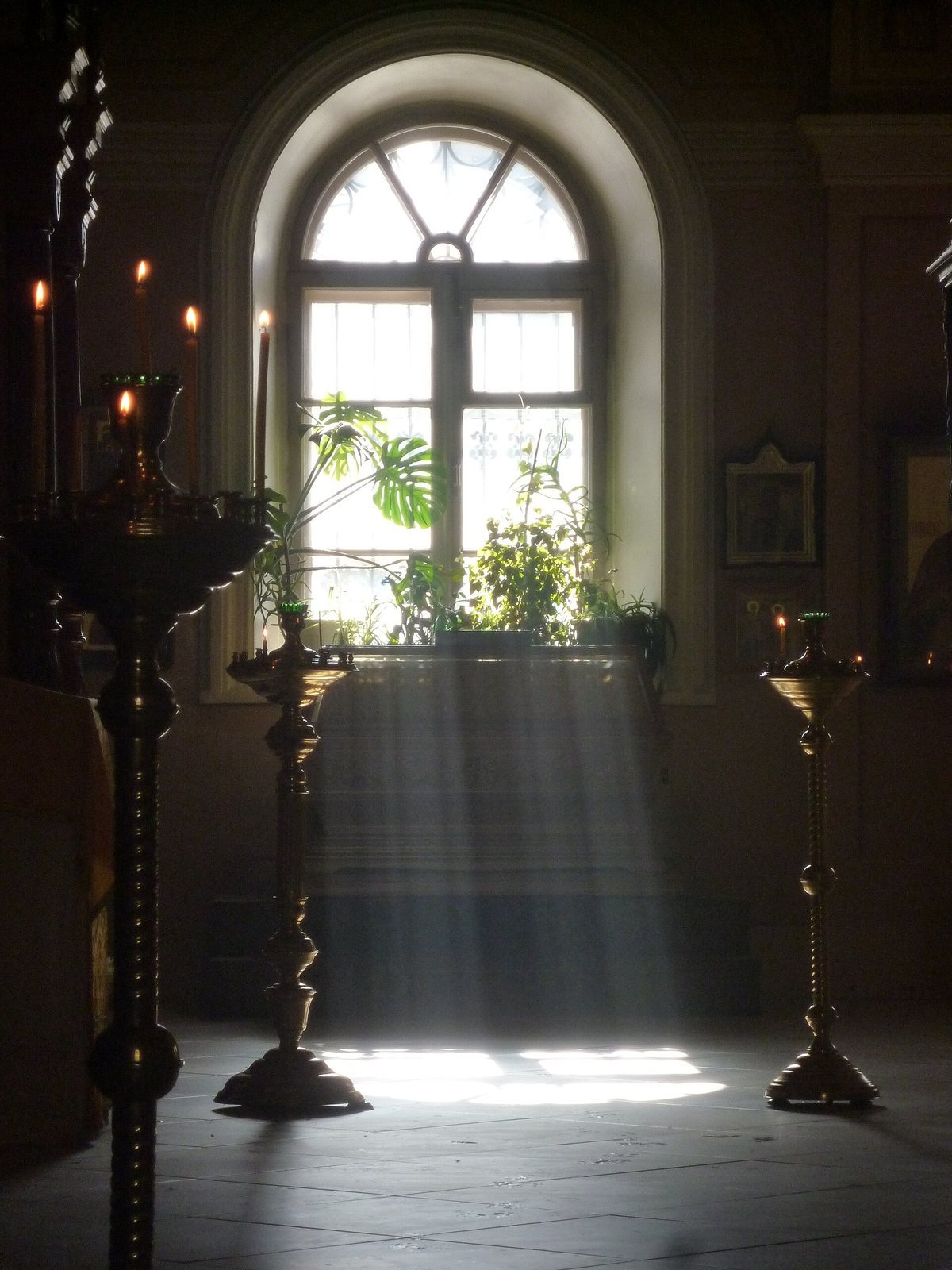
Private donors, chiefly Moscow merchants, furnished the church with a rich interior regarded as among the city’s most valuable. Anton Chekhov married there on May 25, 1901. Parishioners included members of the Musin-Pushkin, Dolgorukov, and Sheremetev families, among them the poet Ivan Mikhailovich Dolgorukov. During the 1920s, Patriarch Tikhon, head of the Russian Orthodox Church, and Bishop Seraphim served at the church repeatedly.
Much of the church’s interior was looted in 1918, and Soviet authorities removed further objects in later years. The church closed around 1930-1931. Its last parish priest, Nikolai Saryevsky, was sentenced to exile, and the building was used first for dormitory or residential quarters and later for workshops. The Russian Orthodox Church recovered the building in 1992, and services resumed there. Restoration under a project by O. Kolbe was completed in 2000. The church belongs to the Russian Orthodox Church’s Moscow City Eparchy, or diocese, and Central Deanery, a local grouping of parishes. It is recognized as a regional cultural heritage site. Its feast is observed on September 14 in the Julian calendar and September 27 in the Gregorian calendar.
Remains
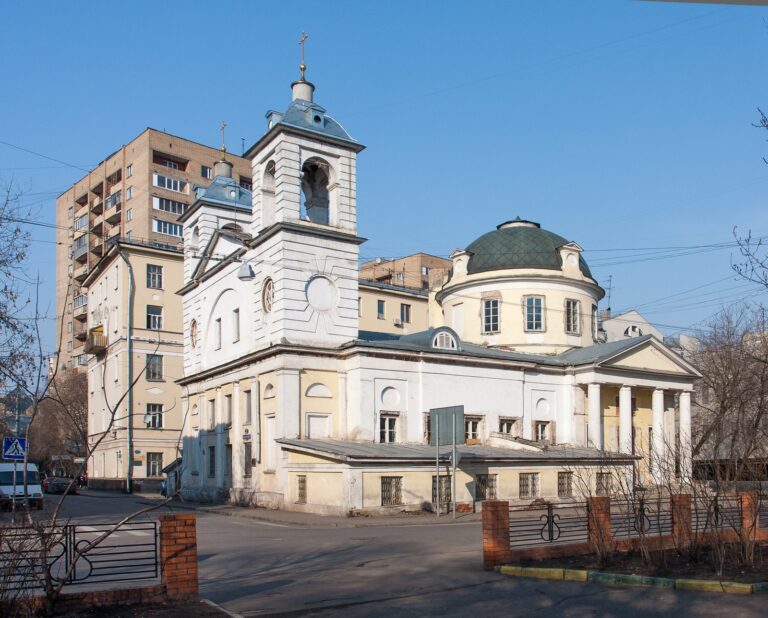
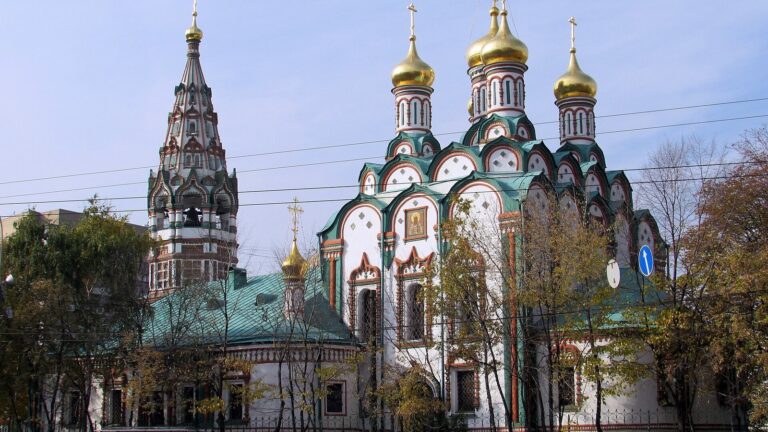
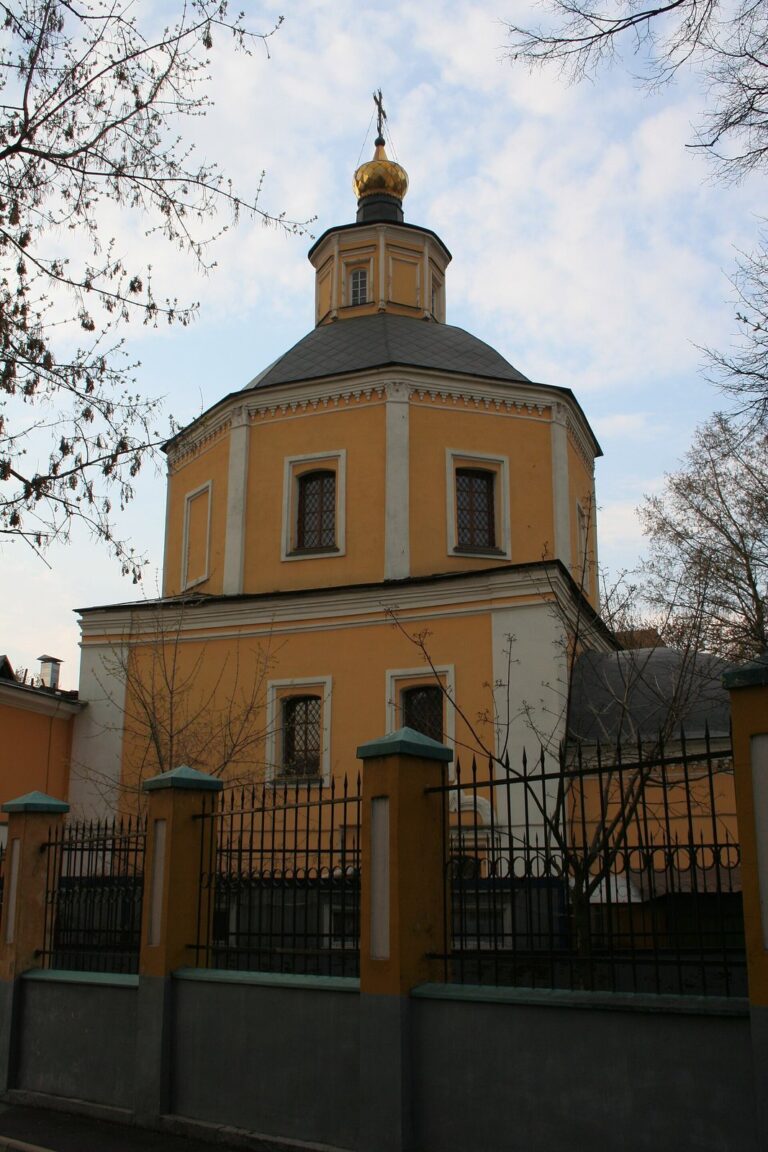
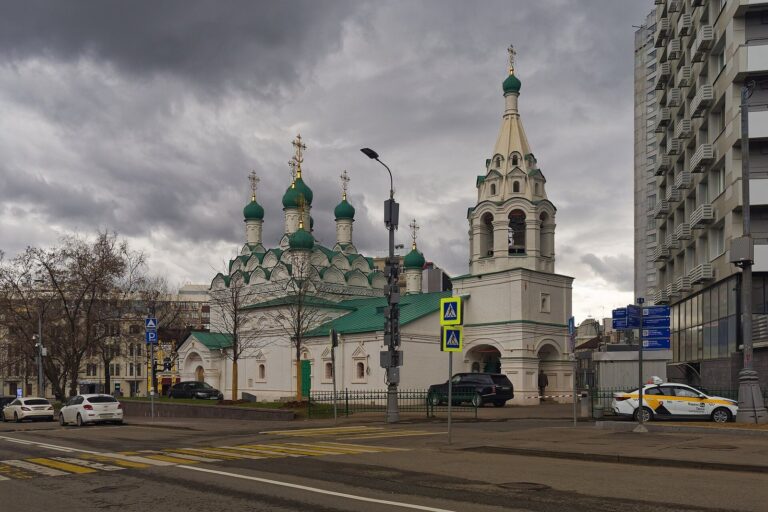
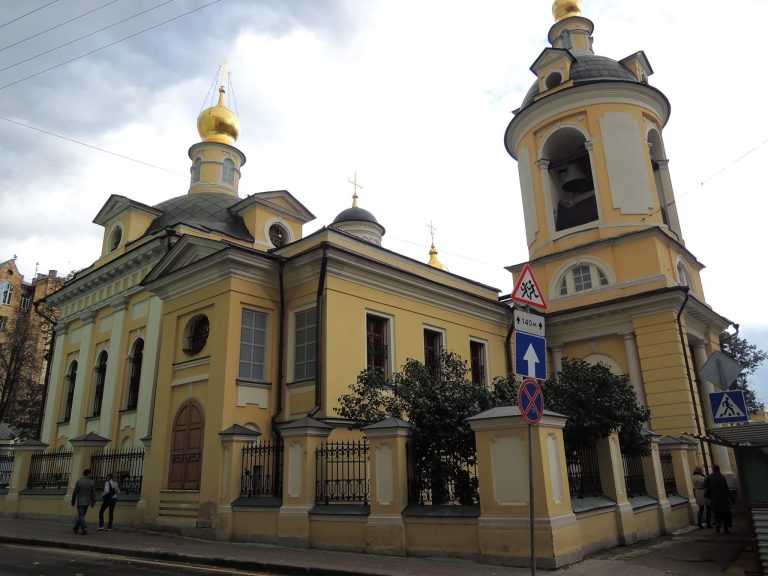
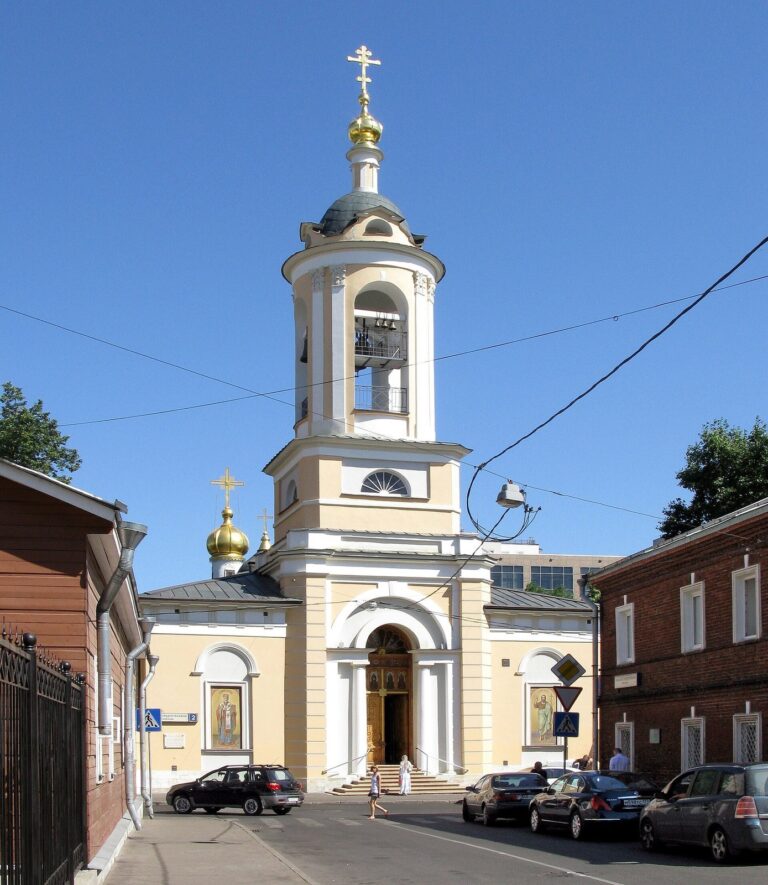
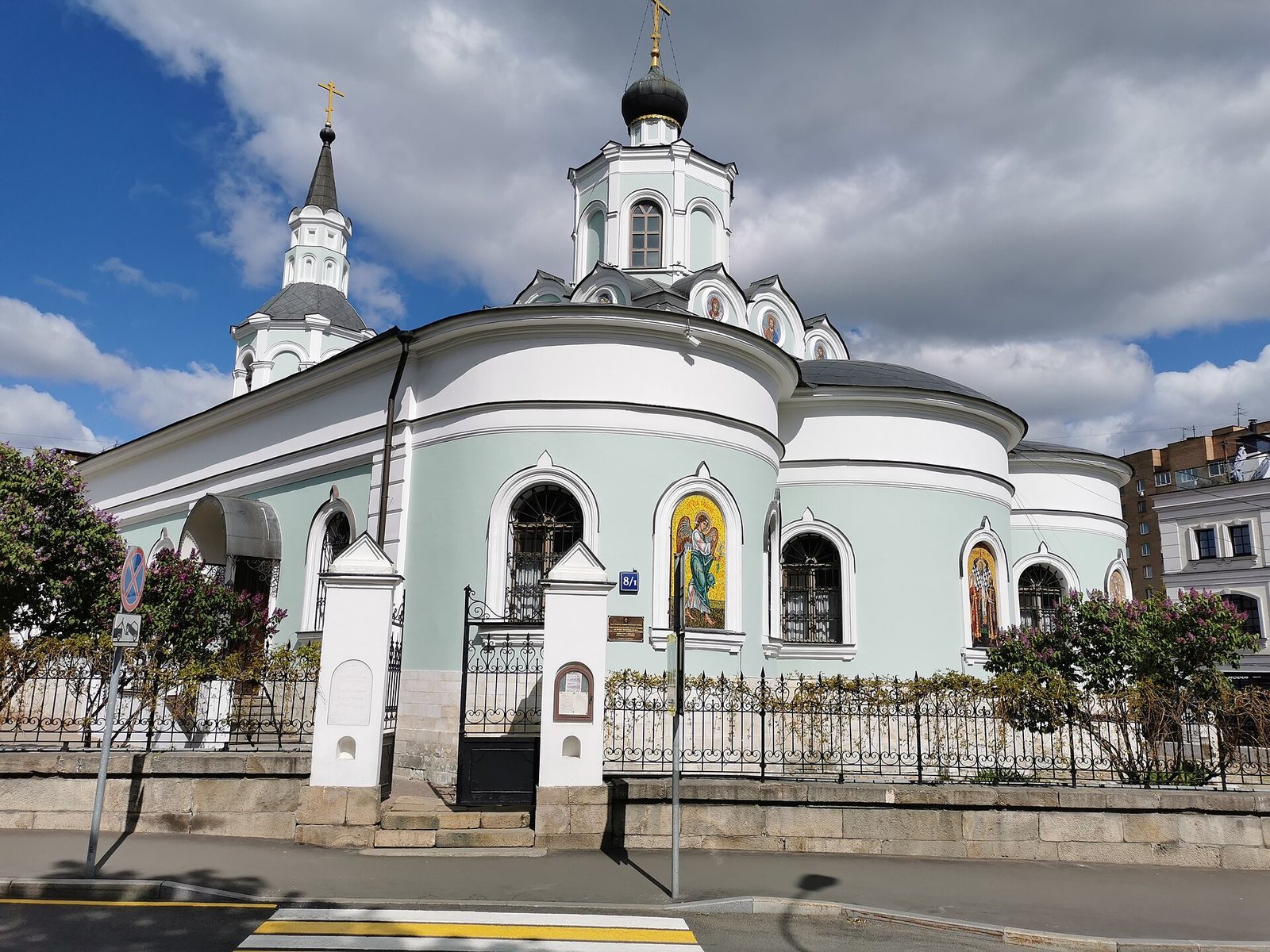
The complex consists of connected church buildings and a bell tower beside them. Its architectural character is described as Byzantine-Russian. The surviving features reflect successive alterations, including changes made when the building was converted to non-religious use during the Soviet period.
Church buildings and interior
The connected churches
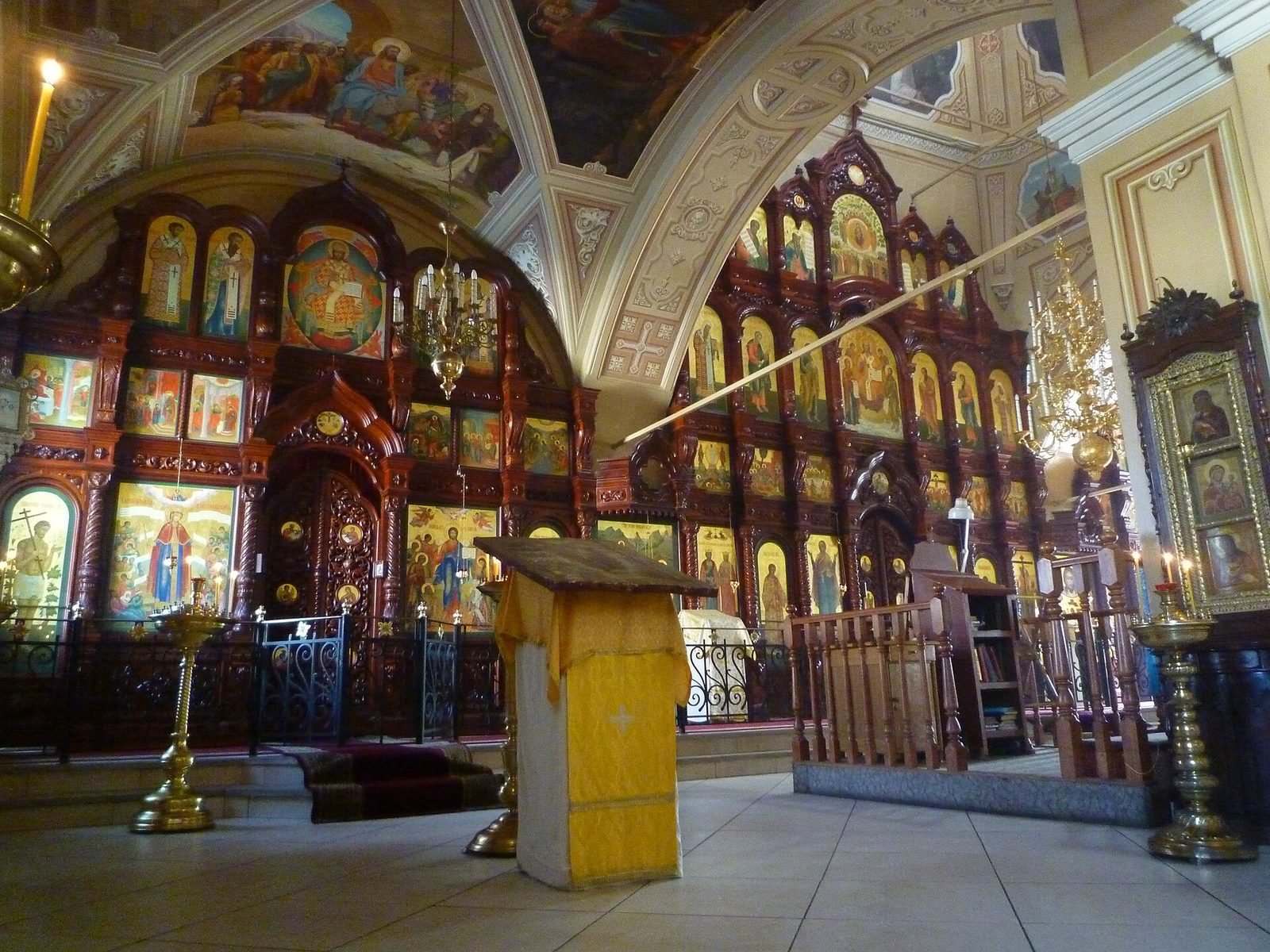
The original stone church had a single main worship space, a semicircular projection at the altar end, and an entrance area. After enlargement, the complex comprised two connected churches, each with an onion-shaped dome. The complex has three altars, dedicated to the Exaltation of the Holy Cross, the Icon of the Mother of God “Joy of All Who Sorrow,” and the Archangel Gabriel. It also has two iconostases, icon-bearing screens that separate the sanctuary from the main worship space.
The bell tower
The bell tower was built beside the church and originally rose to a spire. During the Soviet-era conversion, it was reduced to its first tier.
Interior paintings
The church’s interior frescoes were covered with whitewash during the Soviet period. About 70 percent of them survived.