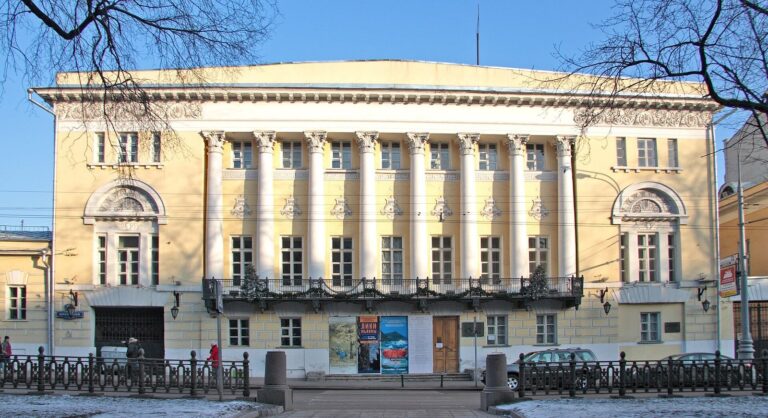
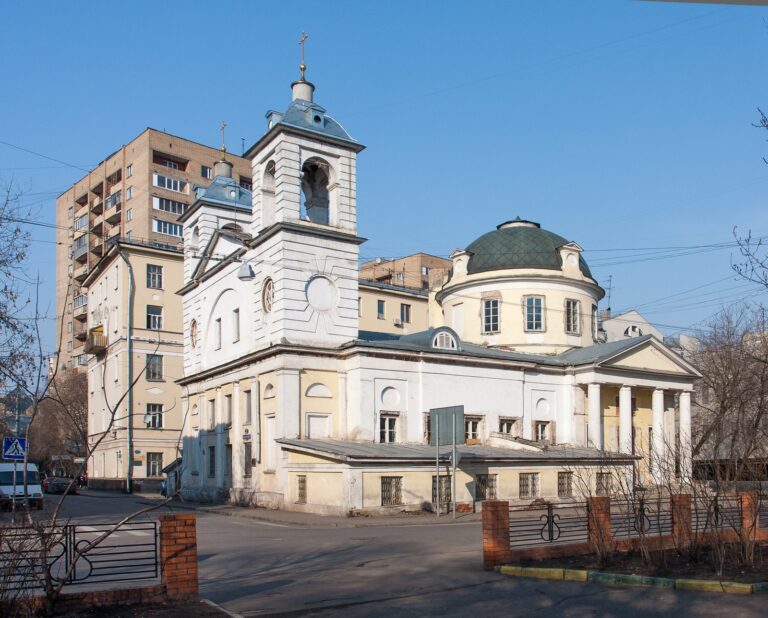
Church of Saints Nine Martyrs of Cyzicus: A Russian Orthodox Parish Church
Site at a Glance
- Popularity
- High
- Country
- Russia
- Primary era
- Early Modern
- Eras represented
- Early Modern, Modern
- Civilizations
- Russian
- Site type
- Religious
- Remains
- Church
On this page10 sections
History
The Church of Saints Nine Martyrs of Cyzicus is a Russian Orthodox parish church in Russia, first built of wood in 1698 and rebuilt in brick in the Classical style in 1732–1735. It is dedicated to nine early Christian martyrs said to have been killed in the third century at Cyzicus, in Asia Minor. Adrian, then metropolitan of Kazan, believed their intercession had ended a plague in Kazan in 1685. After becoming seriously ill with paralysis in 1696, he vowed to build a church in their honor if he recovered. His health improved, and he fulfilled the vow with relics of the martyrs that had recently arrived from the East.
Foundation and parish
Patriarchal servants built the first church near Novinsky Monastery, which has since disappeared, under an order from Peter I, also known as Peter the Great. After Adrian died, members of the patriarchal choir continued to serve there. Peter later transferred them to St Petersburg, and the church then became a parish.
Stone church and parish life
The wooden building burned during the reign of Empress Anna Ioannovna, who ruled from 1730 to 1740. Priest Mikhail Timofeyev sought a replacement because the church had fallen into poor condition. Merchant Andrei Semenov financed the stone building erected on the same site in 1732–1735.
In the nineteenth century, poet and diplomat Alexander Griboyedov was among the parishioners. His mother bought a house near the church in 1801, and its registers help trace his life before 1812. Composer Alexander Alyabyev also belonged to the parish. From the 1840s, he lived under police supervision in his wife’s house on Novinsky Boulevard until his death in 1851.
The church maintained a parish school in a purpose-built building. It had 36 pupils in 1903, when Vladimir von Meck served as its trustee. Alexander Zaozersky was the church’s priest in 1908–1909. In 2000, he was canonized throughout the Russian Orthodox Church as a hieromartyr, a clergyman venerated as a martyr and saint.
Closure and return to worship
On 5 April 1922, authorities seized gold and silver objects weighing nine poods, 25 funts, and 48 zolotniks, traditional Russian units of weight. The church closed in 1929. Officials assigned it first to a neighboring women’s prison and later to the OGPU, the Soviet state security and political-police agency, which used the building for executions by shooting. It became popularly known as the “Execution Church.”
In the 1970s, the Giprobytprom enterprise took over the building for secular use. Its interior was extensively rebuilt, and by 1990 it served as a warehouse. Exterior restoration took place in 1976–1979. The Russian Orthodox Church recovered the building in 1992. It was damaged in 1993, and bullet marks remain on its walls. Worship resumed with a liturgy, an Orthodox worship service, on 24 April 1994. The church remains an active parish in the Central Deanery, a grouping of parishes, of the Moscow City Eparchy, an Orthodox territorial diocese, under the Moscow Patriarchate. It is a cultural heritage property of federal significance in Russia.
Remains
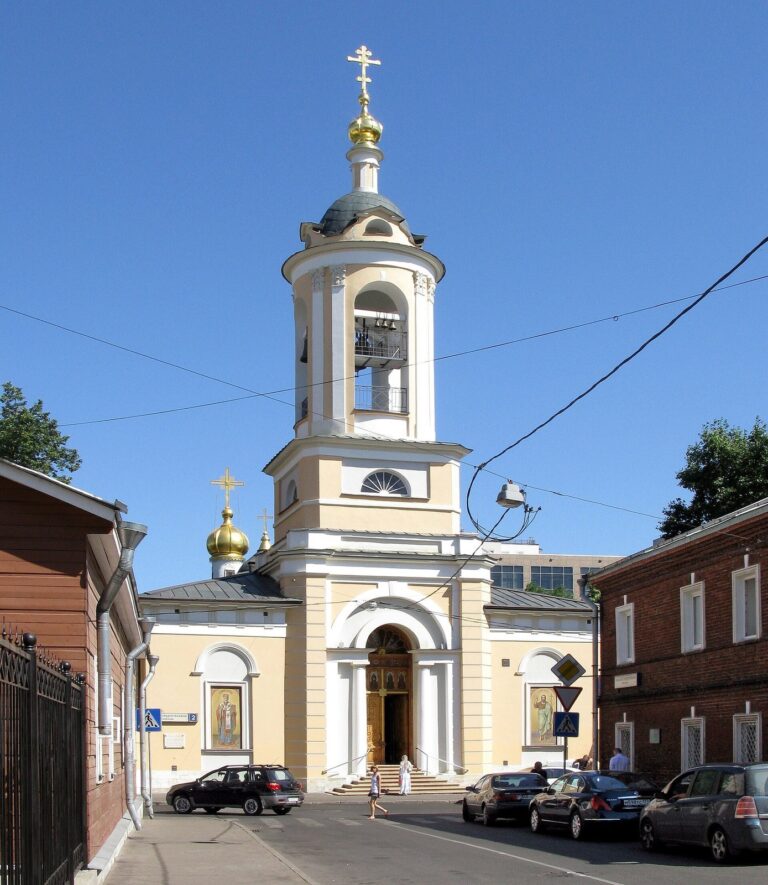
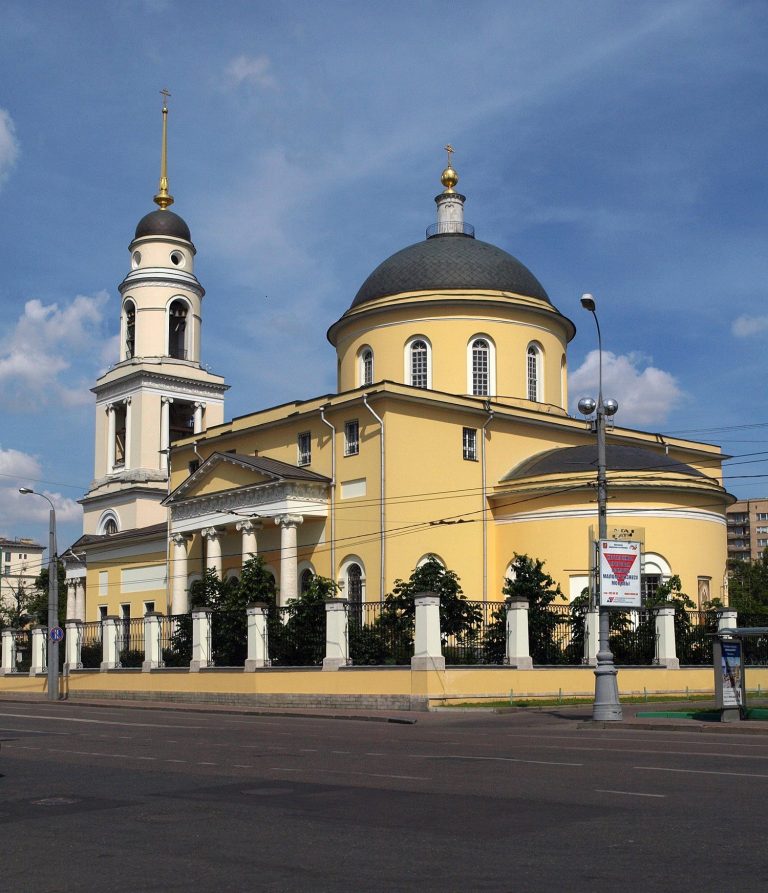
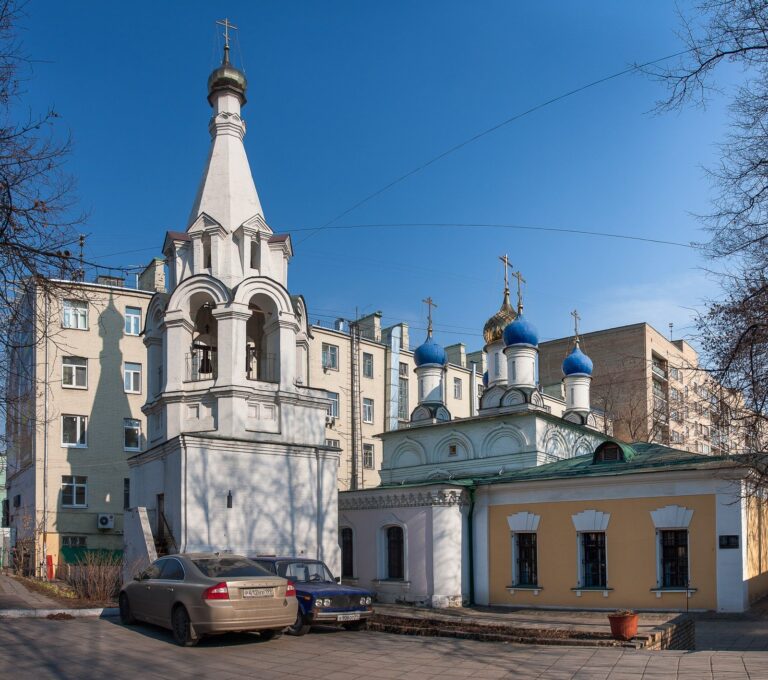
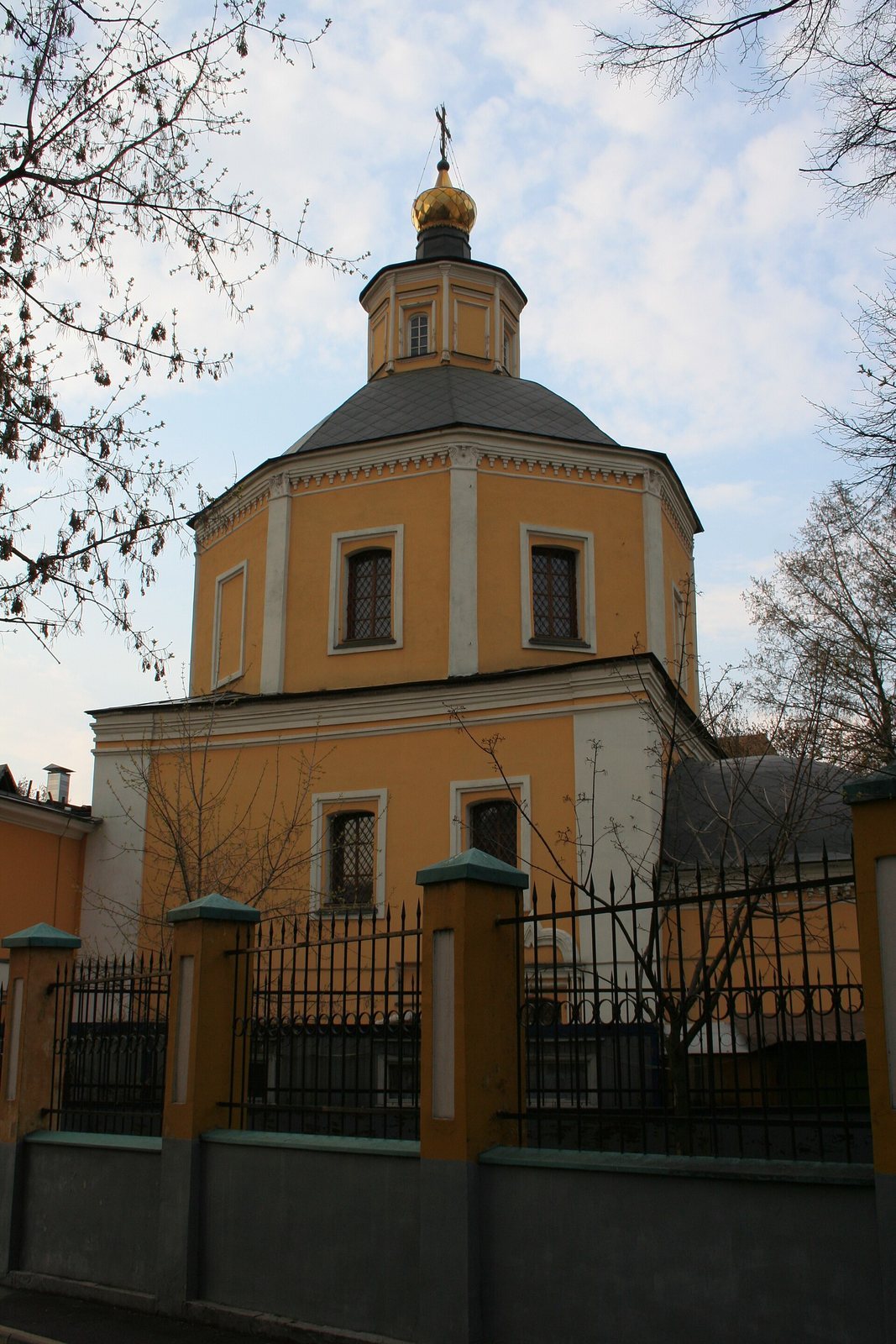
The brick church stands on Bolshoi Devyatinsky Lane, whose name derives from the church. Its Classical-style plan has one main worship space, a single dome, a bell tower, and three altars. A cross was restored to the dome during the exterior work of 1976–1979.
Bell tower and porch
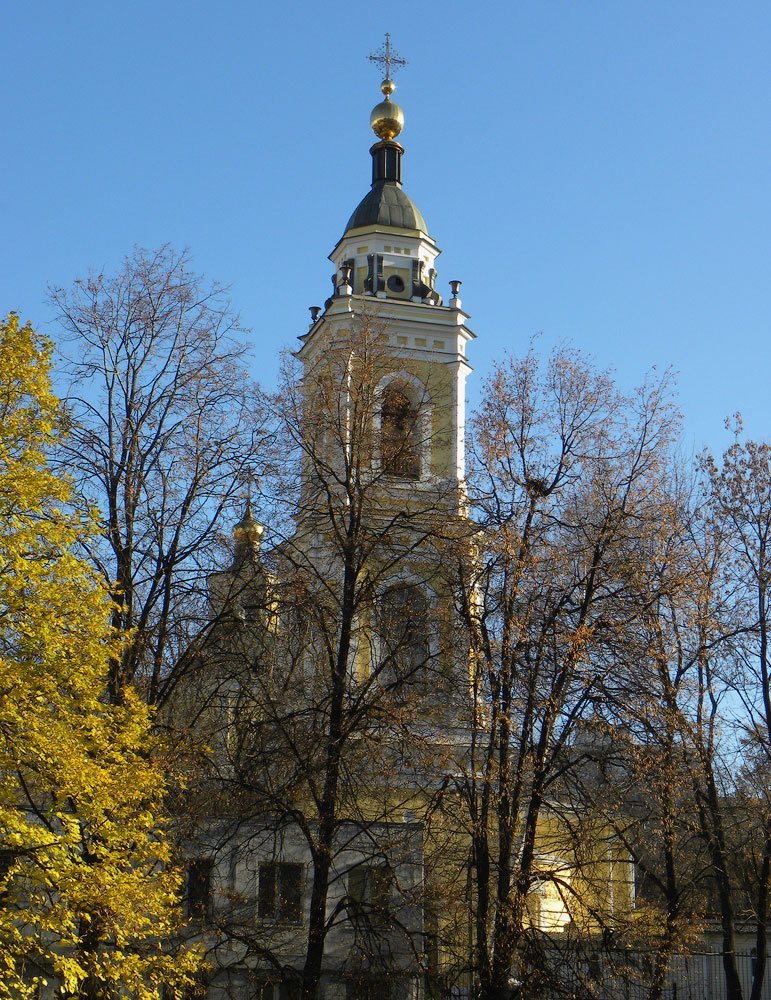
A three-tier bell tower was added in 1844, and it held eight bells by the end of the nineteenth century. The porch was rebuilt in 1889.
Altars and adjoining hall
The main altar is dedicated to the Nine Martyrs of Cyzicus, while side altars honor the Archangel Michael and Great Martyr Barbara. The Michael altar was consecrated in 1736, followed by the main altar in 1738. An adjoining refectory, a hall for gatherings and worship, was built in 1738 with a chapel dedicated to Barbara. Varvara Chelishcheva and Varvara Nerskaya provided the funds for this addition.
Interior and devotional furnishings
Iconostasis and wall paintings
A four-row iconostasis, an icon-bearing screen separating the altar area from the main worship space, was installed in 1860. Wall paintings followed between 1860 and 1864, with more added around the turn of the twentieth century. Fragments of the mid-nineteenth-century paintings survived. After the church returned to the Russian Orthodox Church, these fragments were uncovered and renewed, and new paintings were added.
Icons and furnishings
The church held 150 icons, and its oldest images came from the original wooden building. A patron icon dedicated to the Nine Martyrs, dated 1693, was among Adrian’s gifts to the church. Worshippers moved it to the Church of the Nativity of John the Baptist in the Presnensky district before the church closed; it returned in 2004. When the church closed in 1929, other valuables were removed, including seventeenth-century icons of St Paisius and St Alexius, a copy of the Vladimir Icon of the Mother of God, an eighteenth-century Tikhvin Icon, nineteenth-century images from Palekh, a Russian icon-painting center, and nineteenth-century liturgical vestments.