Holy Trinity Church in Shabolovka: An Orthodox Parish Church in Russia
Site at a Glance
- Popularity
- High
- Country
- Russia
- Primary era
- Modern
- Eras represented
- Modern
- Civilizations
- Russian
- Site type
- Religious
- Remains
- Church
On this page8 sections
History
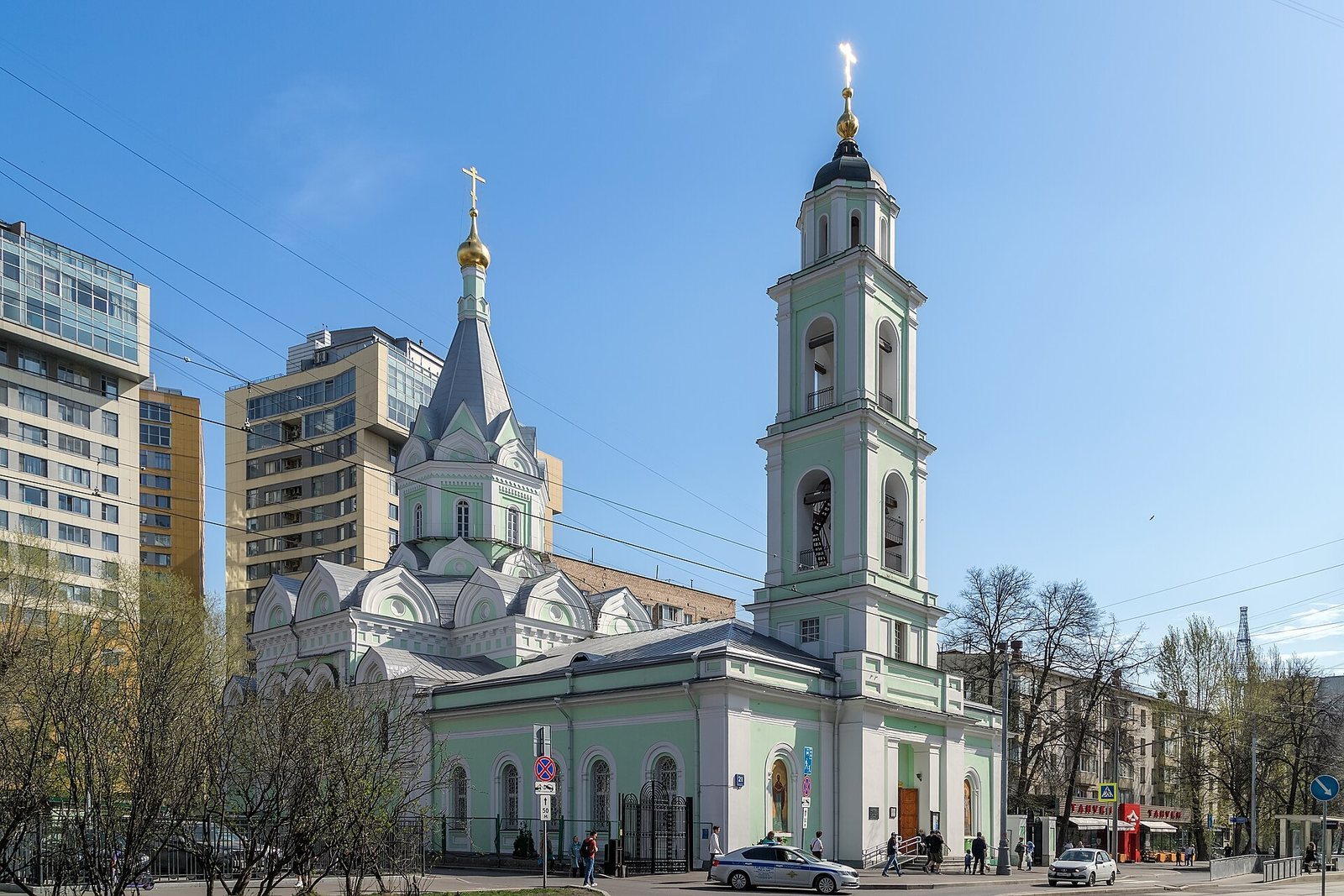
Holy Trinity Church in Shabolovka is an active Orthodox parish in Russia, established as a wooden church in 1698. Its present brick building follows the Russo-Byzantine style, combining Russian architectural forms with Byzantine influences.
The first churches
With the blessing of Patriarch Adrian, head of the Russian Orthodox Church in the late seventeenth century, a wooden church dedicated to the Holy Trinity was established in the settlement of Shabolovo. A record from the Patriarchal Treasury Office gives 28 April 1699 as its completion date. The church stood on land belonging to Danilov Monastery, an Orthodox monastery in Moscow; its abbot granted 1,200 square sazhens, a traditional Russian measure of area, for the church and cemetery. Anastasia, wife of the seventeenth-century Russian archpriest Avvakum, was buried there around 1700–1702.
As the parish grew, a side altar dedicated to the Protection of the Mother of God, an Orthodox feast honoring the Virgin Mary’s protective intercession, was added in 1722. The wooden building had become badly deteriorated by 1744. With permission from Archbishop Joseph of Moscow and Vladimir, it was dismantled and replaced on the same site by a larger stone church, built between 1745 and 1747. The new church was consecrated in 1747 and could accommodate 300 people.
Nineteenth-century enlargement and rebuilding
The church was looted during Moscow’s 1812 fire but not destroyed. Fundraising for a major enlargement began in 1827, and a plan for the work was prepared in 1837. Construction started in autumn 1840. The enlarged church was consecrated on 7 November 1843 by Metropolitan Philaret, a senior Russian Orthodox bishop. In 1866, artists Gribkov and Golovanov painted frescoes, paintings made on plaster, inside the church.
In 1884, the parish decided to demolish the older building and erect a new church on its site. Construction began on 19 May 1885, and Metropolitan Sergius consecrated the completed building on 21 September 1896.
Closure and return to worship
Soviet authorities closed the church in 1930. The building became a club, and a cinema hall was installed in its nave. The Russian Orthodox Church recovered the badly damaged structure in 1992 and reconsecrated it, although other organizations continued to occupy part of the building for several years. Restoration in the 2000s returned features to the church’s late nineteenth-century design. The church is now an active parish in the Moscow Diocese, a territory administered by a bishop, and the Moskvoretsky Deanery, a grouping of parishes within a diocese.
Remains
The present church
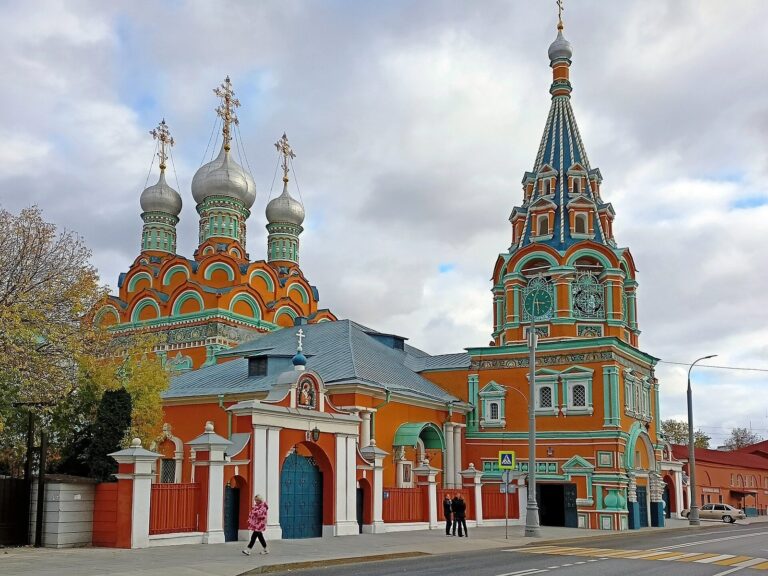
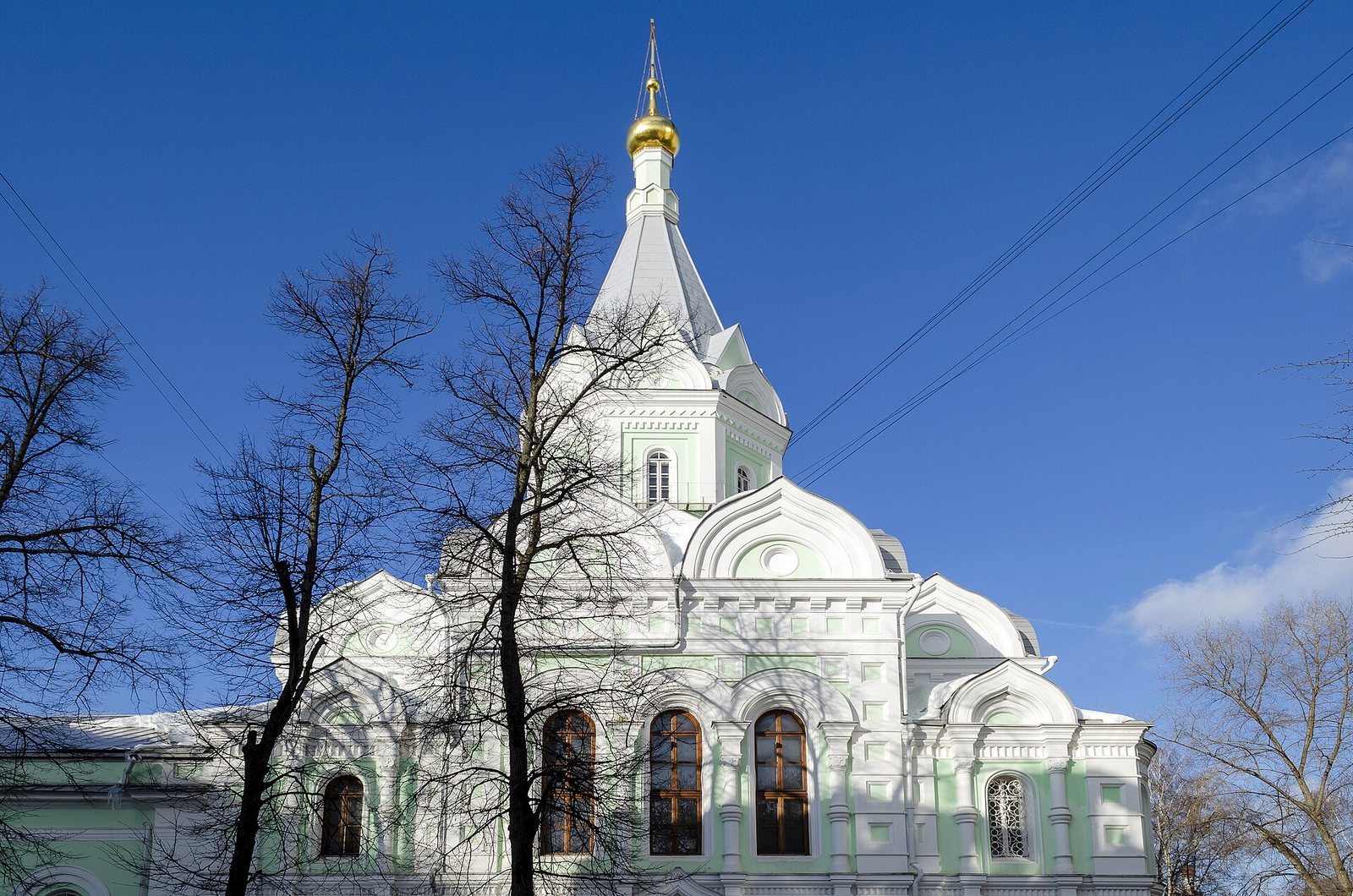
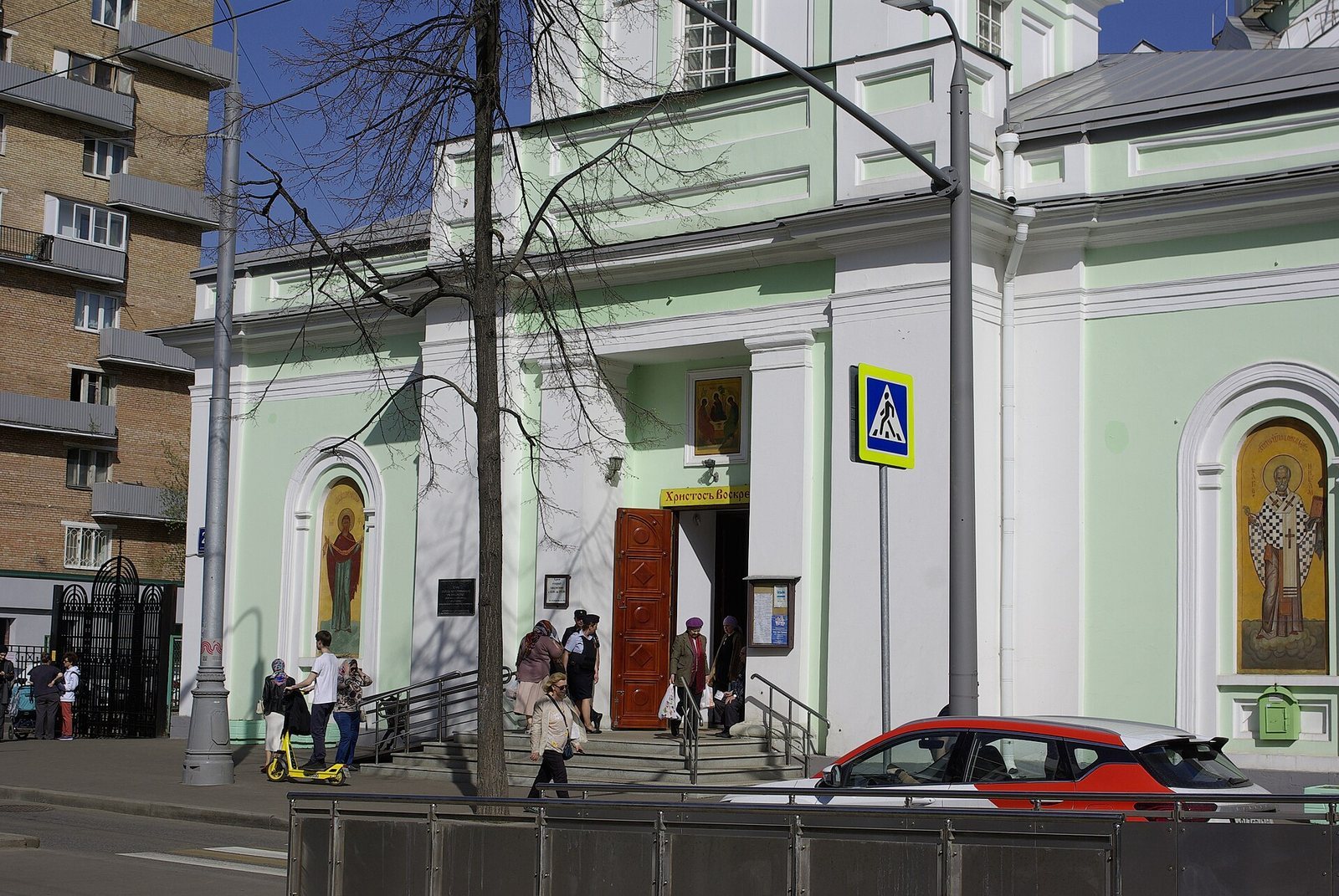
The present church is built of brick in the Russian style, more specifically the Russo-Byzantine style. Its single tower incorporates a bell tower, and the building was designed to accommodate 1,000 worshippers. Restoration reconstructed lost elements to the building’s 1896 form, rebuilt the bell tower and fitted it with new bells. The interior decoration was reconstructed, and a new icon screen was installed between the sanctuary and the main worship space.
Earlier architectural phases
The stone church that preceded the present building was enlarged with side chapels, secondary worship spaces with their own altars, a bell tower, and a refectory, a communal hall. The bell tower and refectory were built in 1840–1841 in a classicist style drawing on ancient Greek and Roman forms. After the enlargement, the church had three altars: the main altar was dedicated to the Holy Trinity, the left side altar to the Protection of the Mother of God, and the right side altar to Saint Nicholas. In the earlier stone church, the interior was completed by 1786 and its icon screen by 1787. A bell weighing 100 poods, about 1,640 kilograms, was installed in 1790.
Cross and venerated objects
When the earlier church was dismantled in 1885, a wooden cross was found beneath its altar. Its inscription gives the consecration date as 15 February 1747 and names Empress Elizabeth, who ruled Russia from 1741 to 1762. The Gospel was the only furnishing left after the 1812 looting. In 1823, Peter Belyaev donated an eighteenth-century copy of the Feodorovskaya Icon of the Mother of God, which became especially venerated at the church as miraculous. Other venerated images include icons of Saints Boniface and Panteleimon, an icon of Saint Daniel of Moscow containing a fragment of relics, and a copy of the Kazan Icon of the Mother of God.