Ballyloughan Castle: A Medieval Defensive Stronghold in Ireland
Site at a Glance
- Popularity
- Medium
- Country
- Ireland
- Primary era
- Medieval
- Eras represented
- Medieval
- Civilizations
- Norman
- Site type
- Military
- Remains
- Castle
On this page10 sections
History
Ballyloughan Castle is a medieval defensive stronghold near Bagenalstown, Ireland. An Anglo-Norman lord, from the Norman community that established rule in parts of Ireland, built it around 1300, possibly in the late thirteenth century, to protect his lands from the Kavanaghs’ attempts to reclaim their ancestral territory. The Kavanaghs were a Gaelic Irish clan based in southeastern Ireland.
Anglo-Norman foundation and Kavanagh rule
In the fourteenth century, the Kavanaghs recovered their lands and took control of the castle. Their clan and its chiefs held it for an extended period. In the sixteenth century, it belonged to Donough, chief of the clan’s strongest branch, before passing later in that century to the Bagenal family of Bagenalstown Castle.
Bagenal and Beauchamp ownership
During the Irish rebellion that began in 1641, the Bagenals supported the uprising and raised the flag of the Irish Confederation, a political alliance formed during the rebellion, over the castle. Oliver Cromwell’s forces stormed it. Cromwell was an English military and political leader who led parliamentary forces in the English Civil Wars and the subsequent campaign in Ireland. After the rebellion was suppressed, he confiscated the castle and granted it to the Beauchamp family. The Beauchamps built a new residence elsewhere during the seventeenth century; the castle was abandoned, and much of its stone was reused in other buildings.
Local legend associates the castle with the civil wars in Britain and Ireland from 1641 to 1660. It tells of a Protestant priest fleeing Catholic royalists who sought shelter from the castle’s Catholic royalist owners. They initially hid him, then handed him to his pursuers, who hanged him nearby. The priest’s ghost is said to appear at the castle and groan.
In 1725, Eleanor Beauchamp partly restored the castle and made it her home. Her marriage to Walter Bagenal of Dunleckney brought together two families that had owned the castle at different times.
Later ownership and investigation
The Bruen family owned the castle and its lands in the nineteenth century. Excavations in 1955 recovered medieval artifacts and revealed traces of former castle features. Ballyloughan Castle is designated a National Monument of Ireland.
Remains
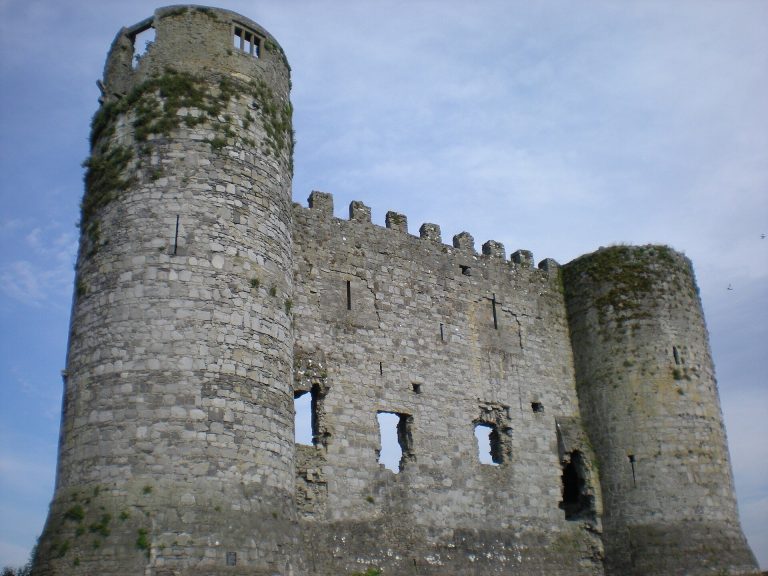
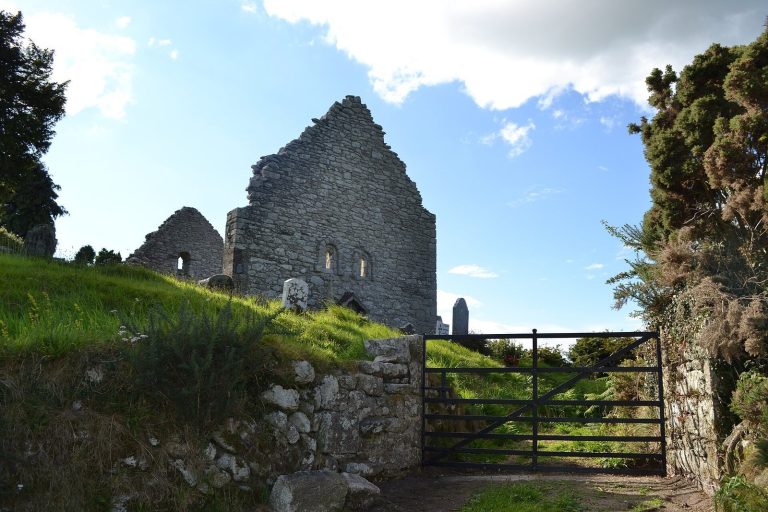
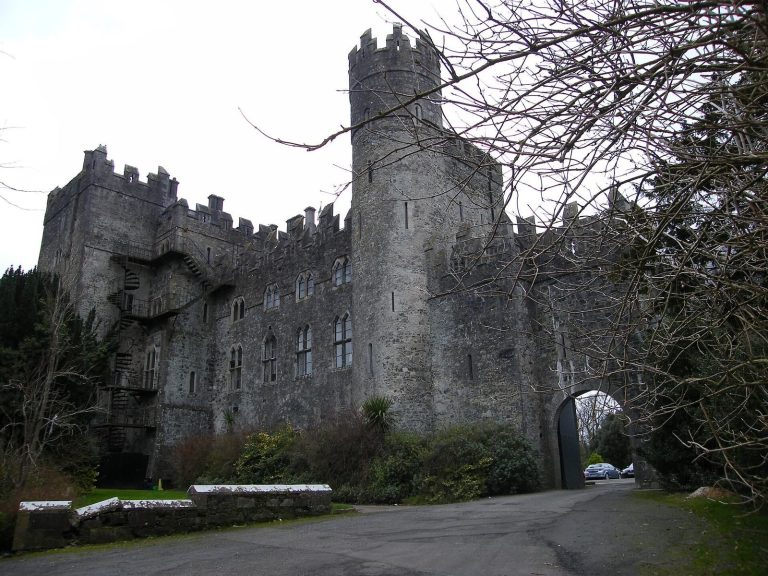
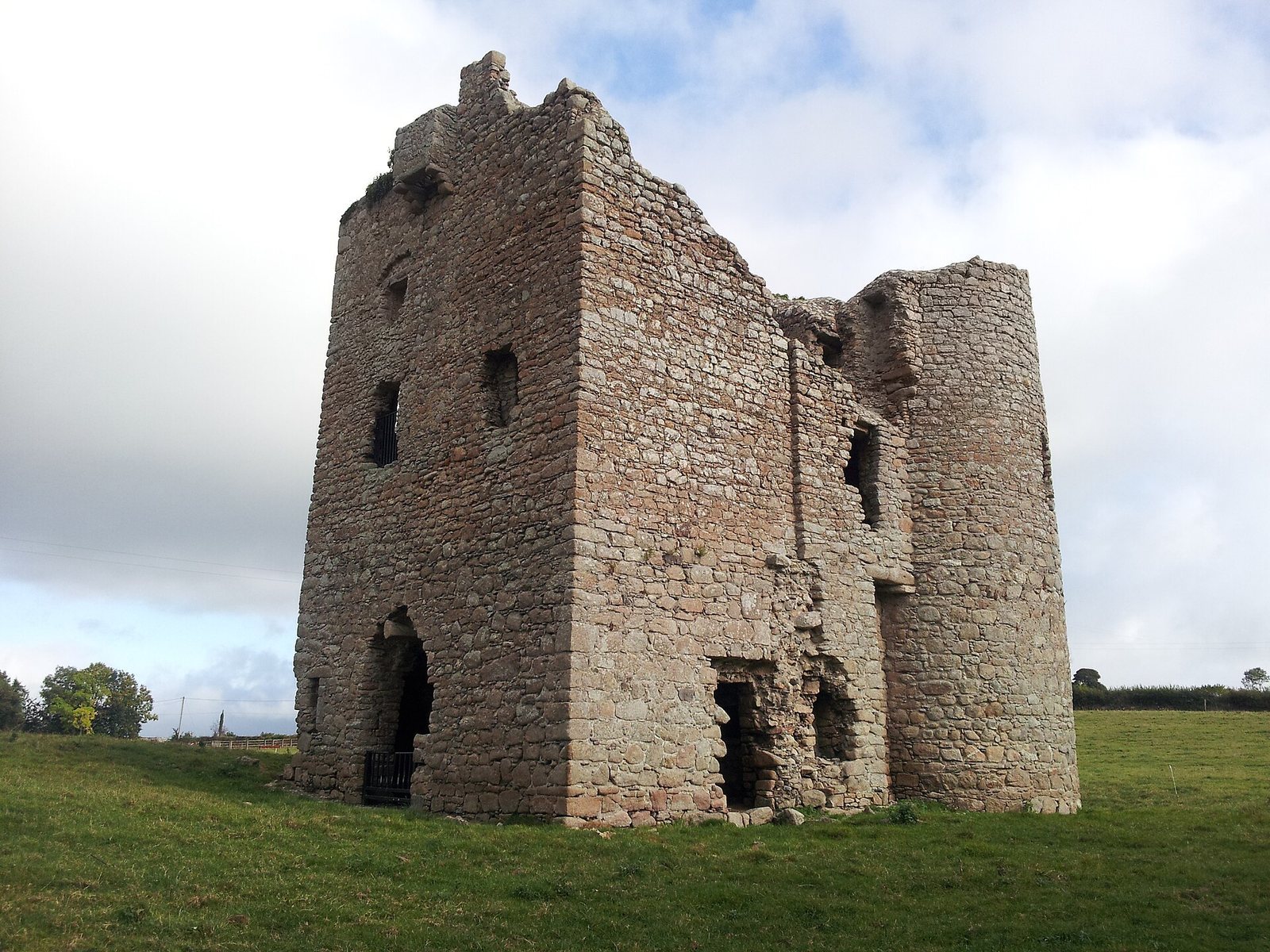
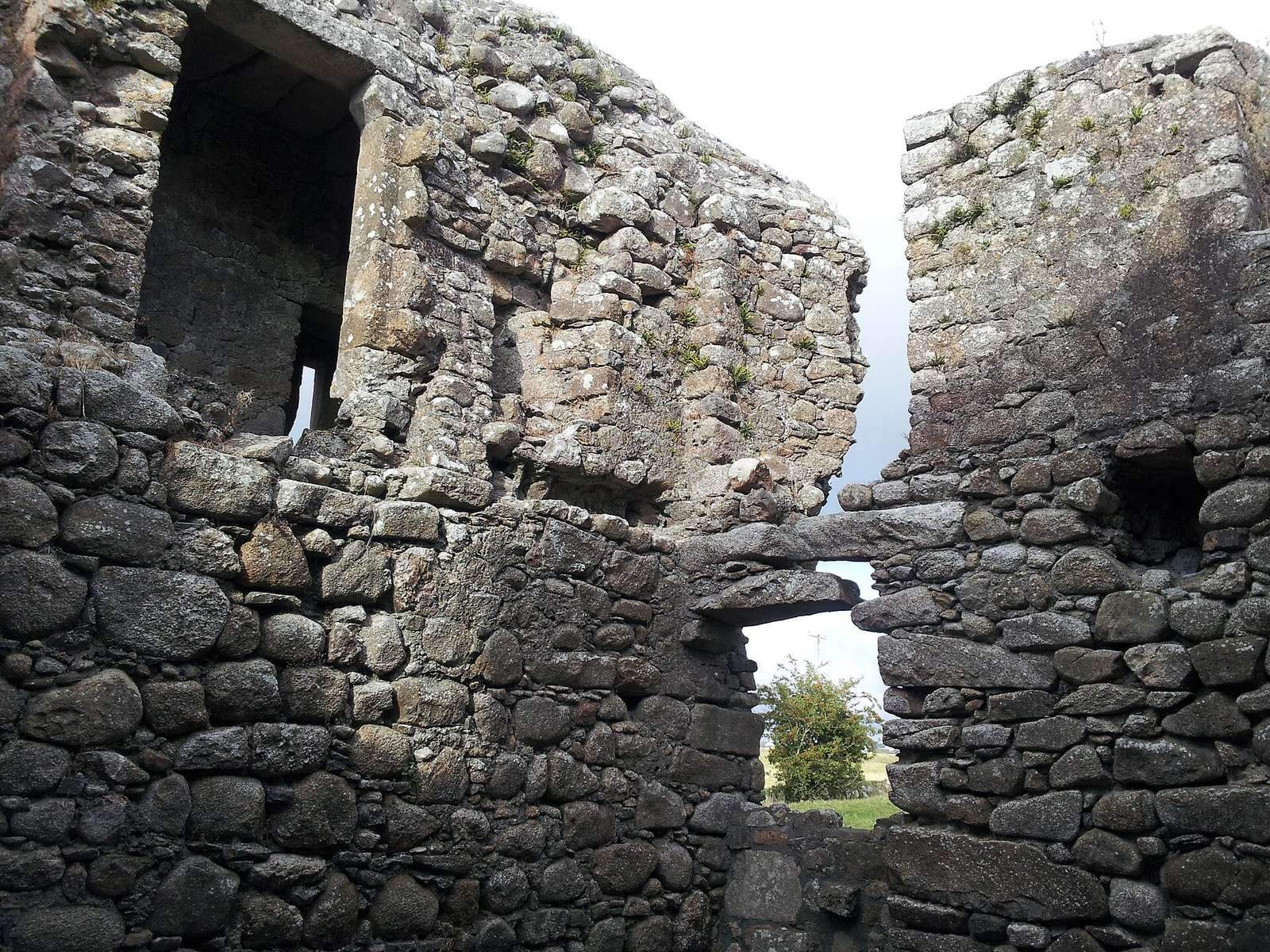
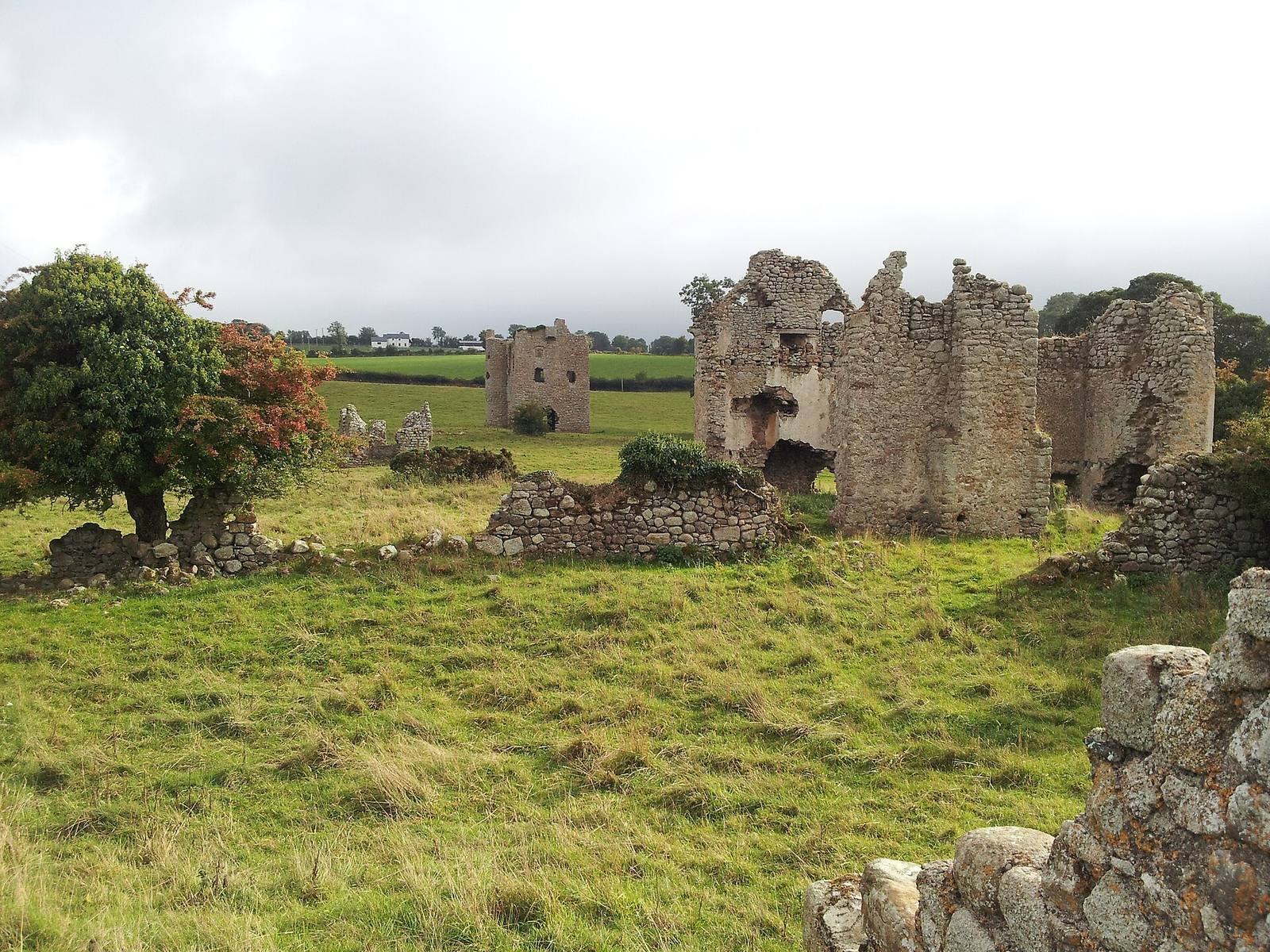
The ruined castle stands at the western end of a glacial ridge, a raised landform shaped by glaciers, near Mount Leinster. Its roughly square plan and locally sourced stone are still apparent. The walls reach up to 50 feet (15 metres) high in places and are about 5 feet (1.5 metres) thick.
Castle and nearby remains
Walls and gatehouse
A twin-towered gatehouse, a fortified entrance building, survives joined to sections of wall and later additions. Foundations mark one corner tower. Most of the castle’s surviving features are characteristic of thirteenth-century construction.
Moat and enclosing wall
A deep moat, or defensive ditch, and a further wall once enclosed the castle. A bridge crossed the moat, which received water from a lake to the west. Marsh vegetation indicates where the former lake lay. The Irish name Baile an Loch Án, meaning “settlement beside Lake An,” refers to this lake.
Hall and staircases
The hall occupied the ground floor and contained a large fireplace. Remains of spiral staircases also survive within the castle.
Nearby house and historical depiction
A ruined seventeenth-century house stands near the castle. Both buildings were constructed from locally sourced stone. An eighteenth-century drawing by Gross depicts the castle in ruins with three chimneys; one chimney survives today.