Church of the Dormition of the Theotokos in Gonchary: An Orthodox Church in Moscow
Site at a Glance
- Popularity
- High
- Country
- Russia
- Primary era
- Early Modern
- Eras represented
- Early Modern, Modern
- Civilizations
- Russian
- Site type
- Religious
- Remains
- Church
On this page13 sections
History
The Church of the Dormition of the Theotokos in Gonchary is an Orthodox church in Moscow, Russia. Local potters built its brick church in 1654 in Russian ornamental architecture, a richly decorated style associated with seventeenth-century Russian buildings. Its dedication is to the Dormition, the Eastern Christian commemoration of the Virgin Mary’s death.
Settlement and foundation
Gonchary lies behind the Yauza River near Tagansky Hill, in one of Moscow’s older districts. The area filled with craft settlements from the late fifteenth to early sixteenth century, partly as artisans were moved from elsewhere in the city to work in fire-prone trades such as pottery and metalworking. These closely grouped communities often had their own churches. Saint Nicholas Church, almost opposite the Dormition church, is first mentioned in 1632.
A wooden church serving the potters was in place by the early seventeenth century, with its foundation dated no later than the century’s first quarter. Local potters replaced it with a stone church in 1654, establishing the building that developed through later additions and rebuilding.
Eighteenth- and nineteenth-century changes
In 1702, builders reconstructed the Dormition side chapel and replaced a demolished porch with a refectory and a chapel dedicated to Tikhon of Amathus, a Christian bishop and saint. Stepan Polubes, a tile maker who lived and worked nearby in the late seventeenth century, contributed to the church’s decoration. A three-tier bell tower was added between 1764 and 1774, and the side chapels were rebuilt in 1898.
During the 1812 invasion of Russia, French emperor Napoleon Bonaparte’s troops looted the church and burned parish courtyards. Restoration and partial rebuilding were completed by 1836.
Shrine and continuing use
The church’s principal shrine is a copy of the icon of the Mother of God known as the Three-Handed. A copy was sent from Hilandar, a Serbian Orthodox monastery on Greece’s Mount Athos, in 1661 as a gift to Patriarch Nikon, then head of the Russian Orthodox Church. It was placed at Resurrection Monastery at New Jerusalem in 1663. Another copy was made in 1716 and has been kept at the Gonchary church since. Local belief credits the icon with helping the church remain open during difficult times and preserving its bells.
The church remained open throughout the Soviet period and has continued in use since its first opening. In 1948, an agreement between the Russian and Bulgarian Orthodox Churches, with the blessing of Patriarch Alexy I, made it the Bulgarian Orthodox Church’s official representation at the Moscow Patriarchate. Saint Nicholas on Bolvanovka was later assigned to that representation, and restoration work took place at the Dormition church in 1949.
The church belongs to the Russian Orthodox Church’s Moscow Diocese and Pokrovsky deanery, an administrative grouping of parishes, and serves as a metochion of the Bulgarian Orthodox Church. A metochion is an Orthodox church or representative center belonging to another church. The building is a federal-level cultural heritage site in Russia.
Remains
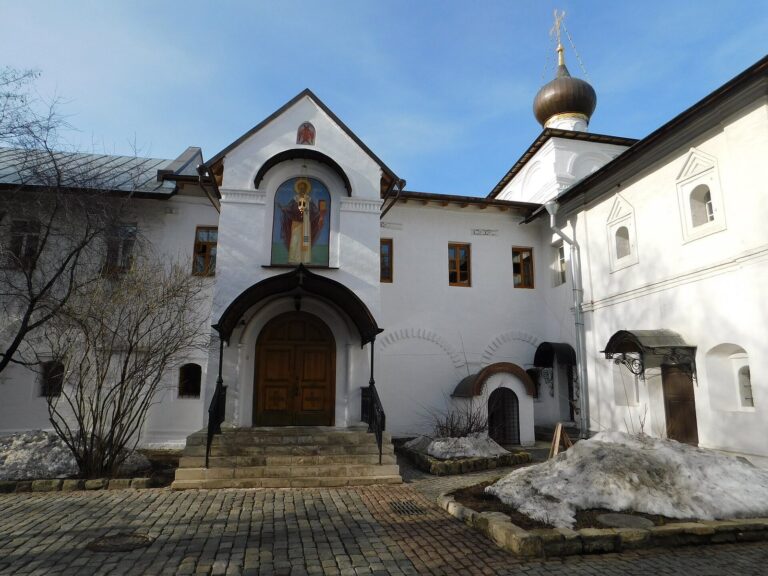
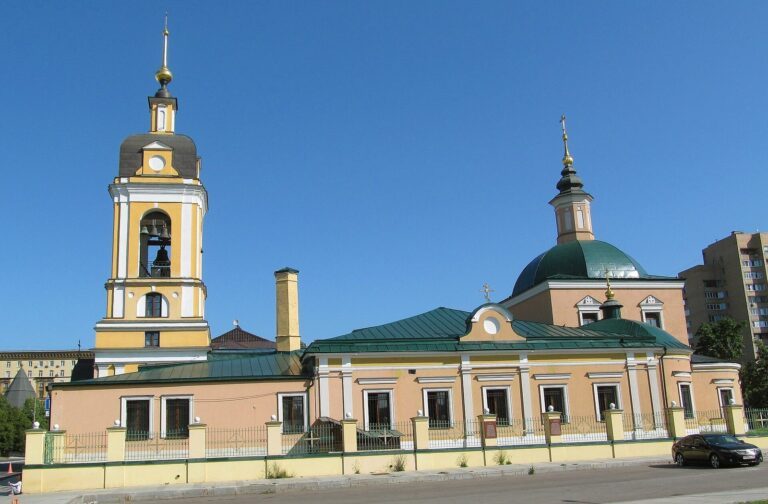
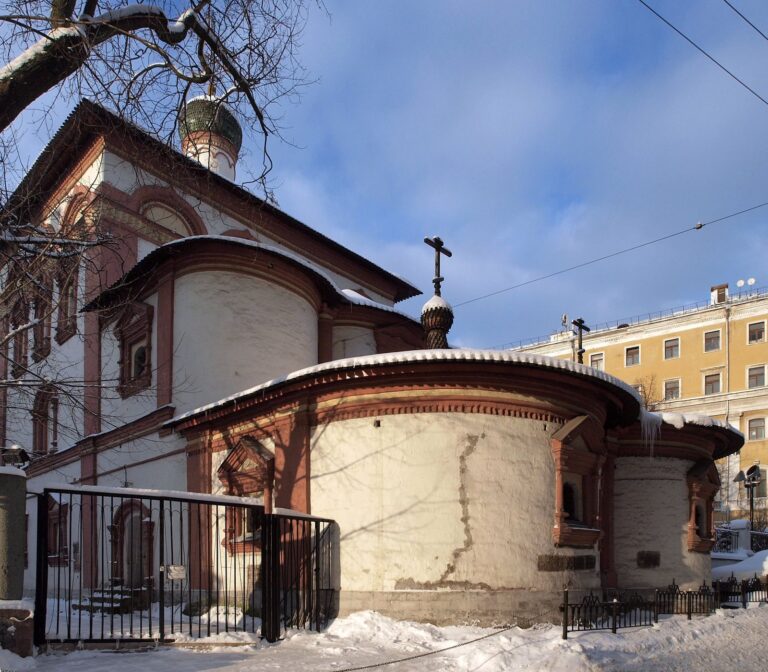
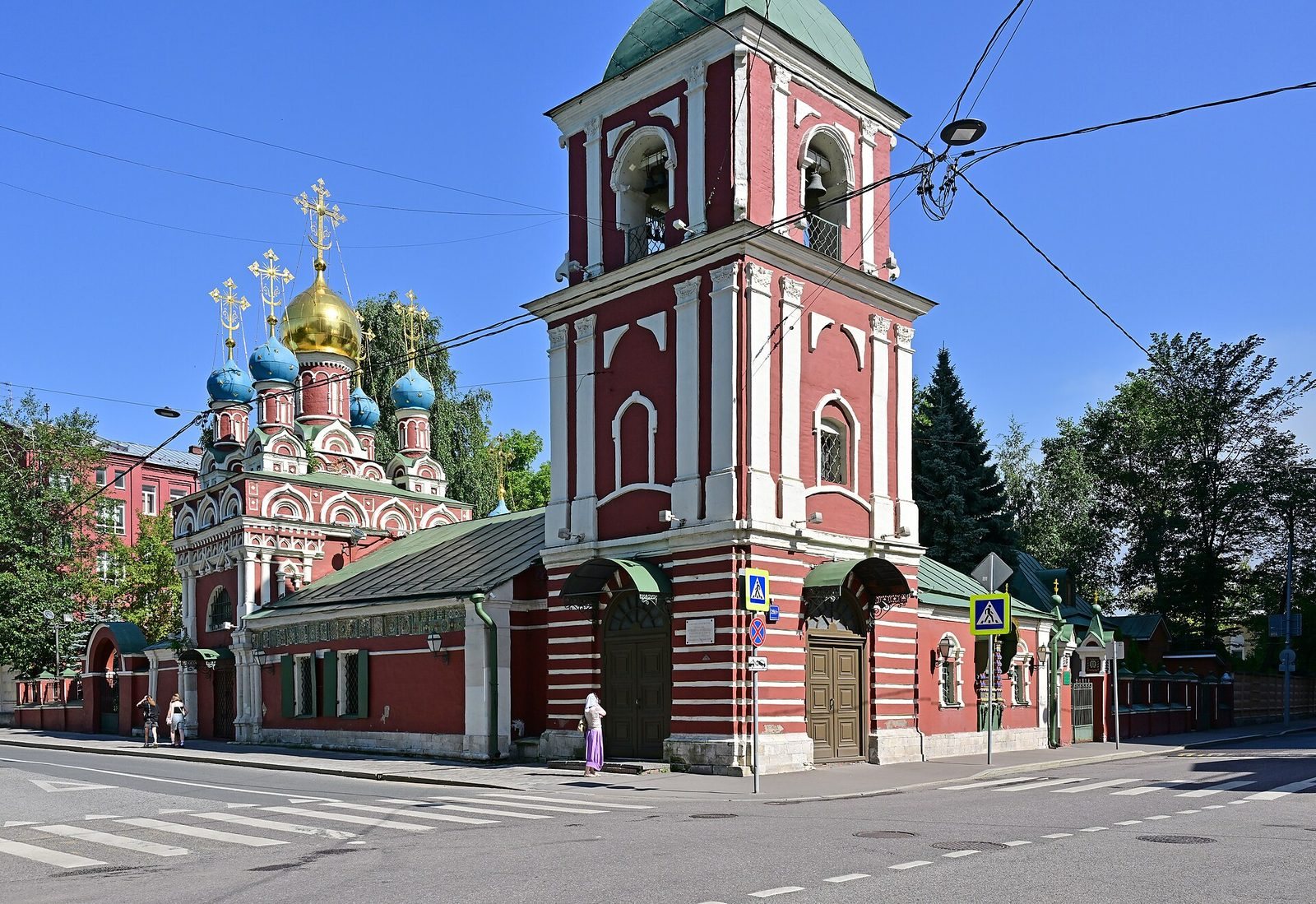
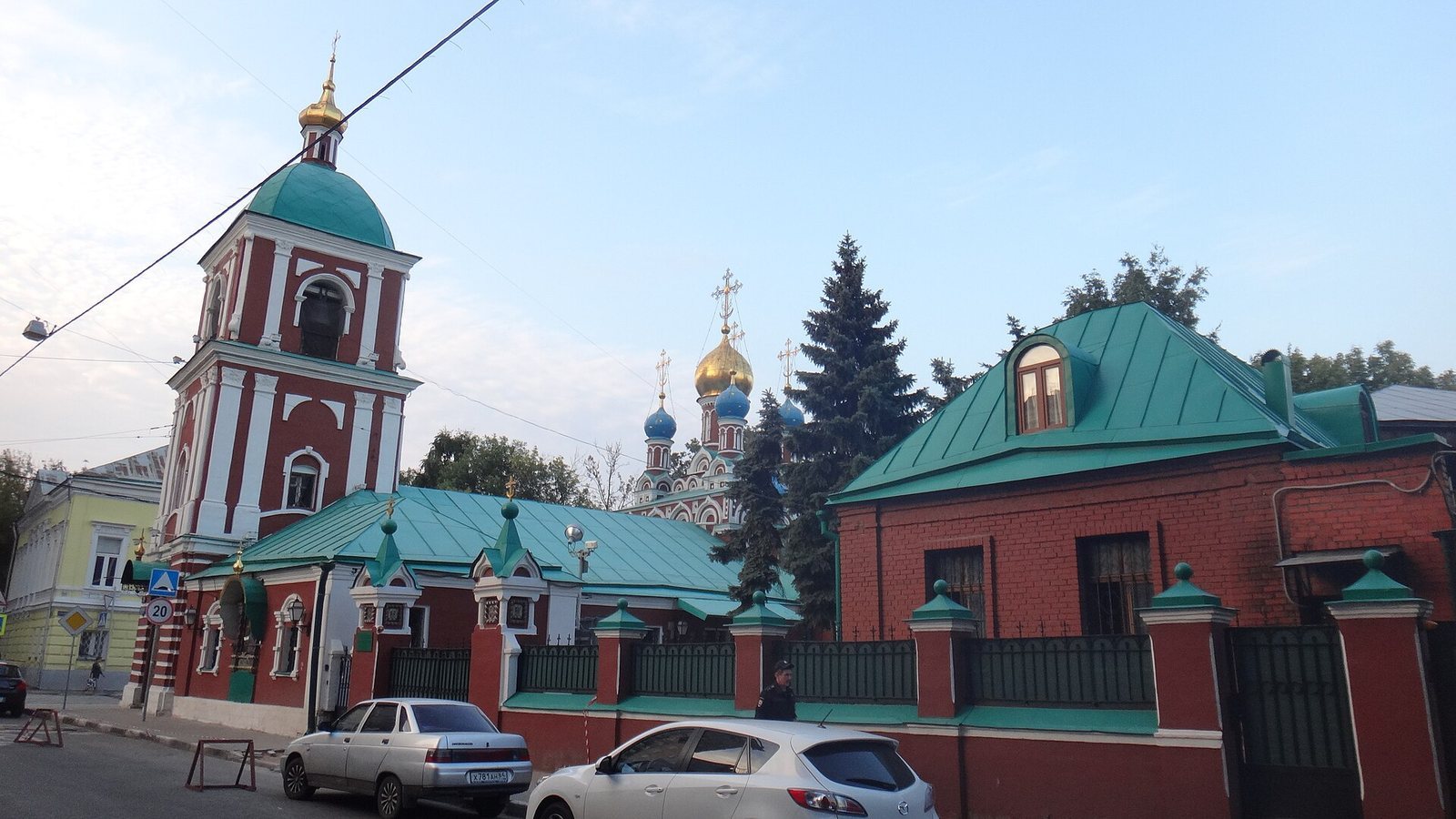
The surviving brick complex brings together a square-plan main body, a refectory, a side chapel, and an attached bell tower. The church’s main spaces were joined into a single interior volume during its rebuilding, while its exterior retains features from several periods.
Building and exterior
Main church and rebuilding
The main body has a square plan. Work completed by 1836 added a semicircular window on the north facade, new domes and crosses, and a south portal to the bell tower. The rebuilding also joined the main body, refectory, and side-chapel space into one interior volume.
Bell tower
The tower attached to the church has three tiers and follows the post-Petrine Baroque style, a form of Russian Baroque that developed after Peter the Great’s reign.
Tiles and enclosure
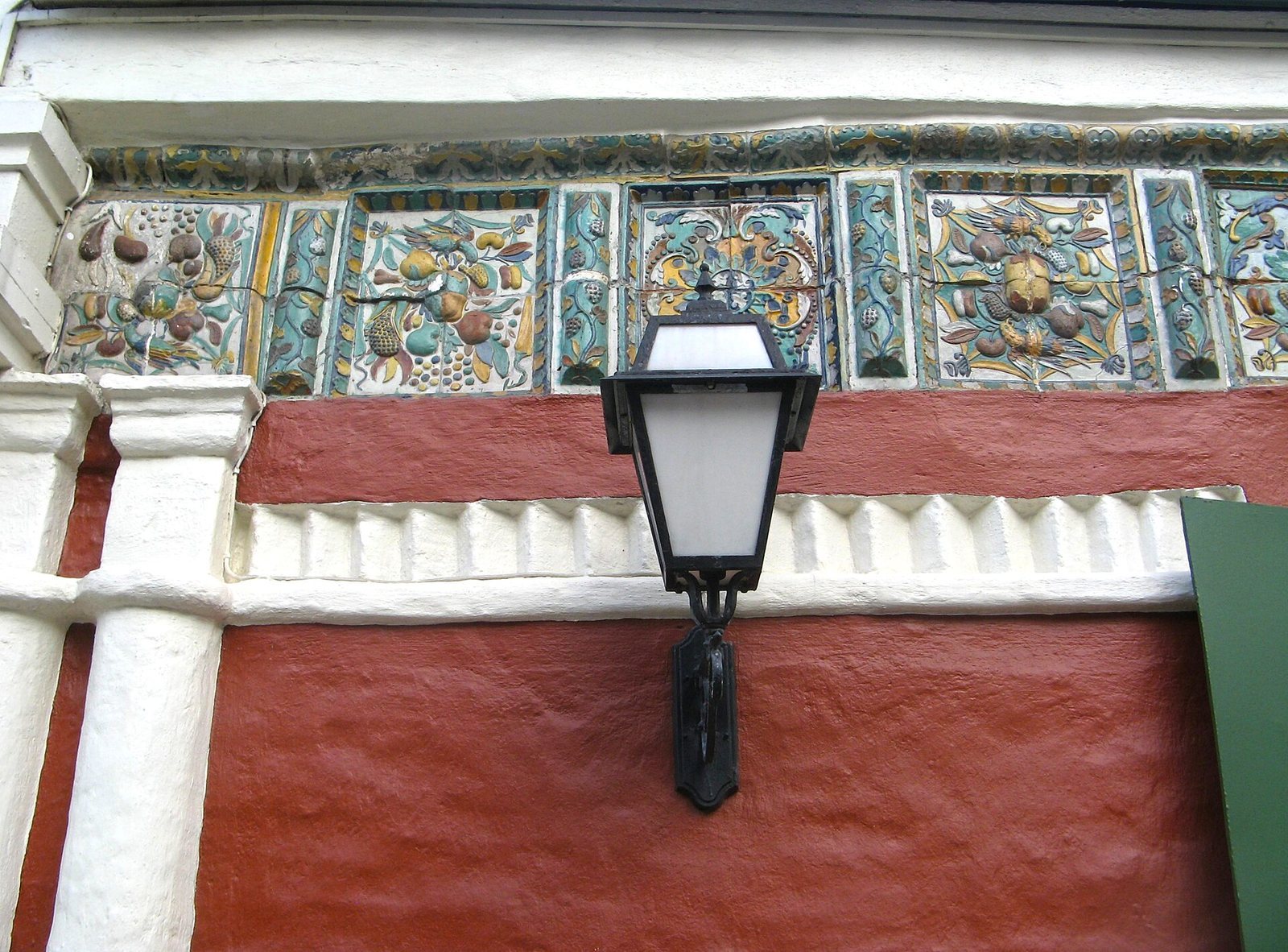
Multicoloured tiles by Stepan Polubes decorate the refectory and side chapel. On the north facade they form a broad band, while the south facade has separate tile panels. The chapel dome carries a design of the four Evangelists. The surviving enclosure dates to the early nineteenth century, and stars were added to the domes around the turn of the twentieth century.
Interior and sacred features
Interior decoration and iconostasis
Most of the interior decoration dates from the second half of the nineteenth century. The iconostasis, an icon screen separating the sanctuary from the main worship space, is designed in a seventeenth-century style and retains icons from the seventeenth and eighteenth centuries.
Three-Handed icon
A further copy of the Three-Handed icon is set in a tiled case on the church’s exterior west wall, where it was placed to make the image more accessible. The icon’s name recalls the tradition that the Virgin Mary healed the severed hand of Saint John of Damascus, an early Christian monk and theologian.
Venerated relics
Relics venerated at the church include relics of the Holy Cross, a stone from the Holy Sepulchre, and relics of Saint Moses the Hungarian, an eleventh-century monk revered in the Eastern Orthodox Church.