Forte Foens: An Italian Fort Built to Control the Bardonecchia Basin
Site at a Glance
- Popularity
- Low
- Country
- Italy
- Primary era
- Modern
- Eras represented
- Modern
- Civilizations
- Italian
- Site type
- Military
- Remains
- Fort
On this page8 sections
History
Construction and military purpose
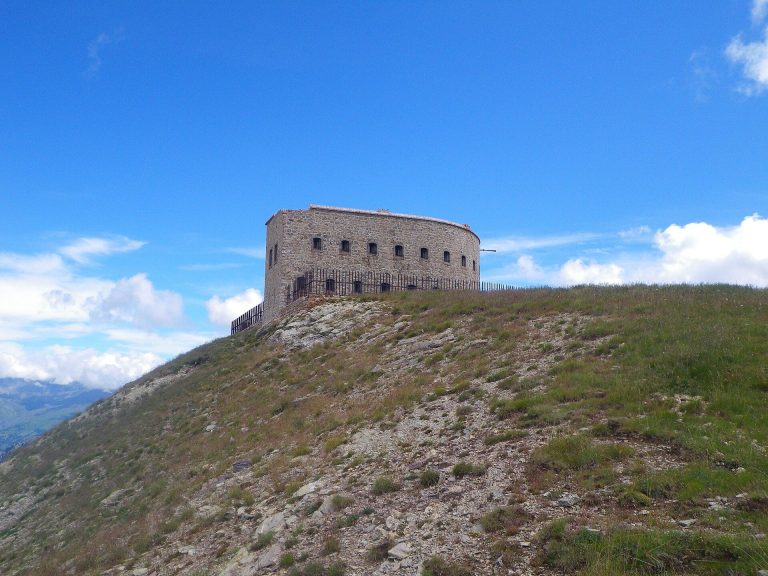
Forte Foens is a fort above the hamlet of Föens in present-day Oulx, Italy. Built in 1897–1898, it was intended to control the Bardonecchia basin and routes across Grand’Hoche and Colle della Mullattiera. Its name came from the hamlet. At the time of construction, the fort was in the municipality of Savoulx, which remained autonomous until 1928.
The fort was also planned as a place to assemble troops who could support other forts in the area. Its ordinary accommodation was for 300 soldiers and 14 officers, while its quarters, stores, kitchens, and other services were designed to meet the needs of a substantially larger force.
First World War and rearmament
During the First World War, the fort’s guns were removed for use on the Eastern Front. After the war, it received 149/35 Mod. 1901 guns on standard mounts. The Mod. 1901 designation identifies the 1901 model.
Final wartime years and disposal
Forte Foens saw little use during the brief fighting with France in June 1940. Its strategic role ended on 25 June 1945. After Italy’s defeat in the Second World War, the fort was disarmed and sold to private owners.
Remains
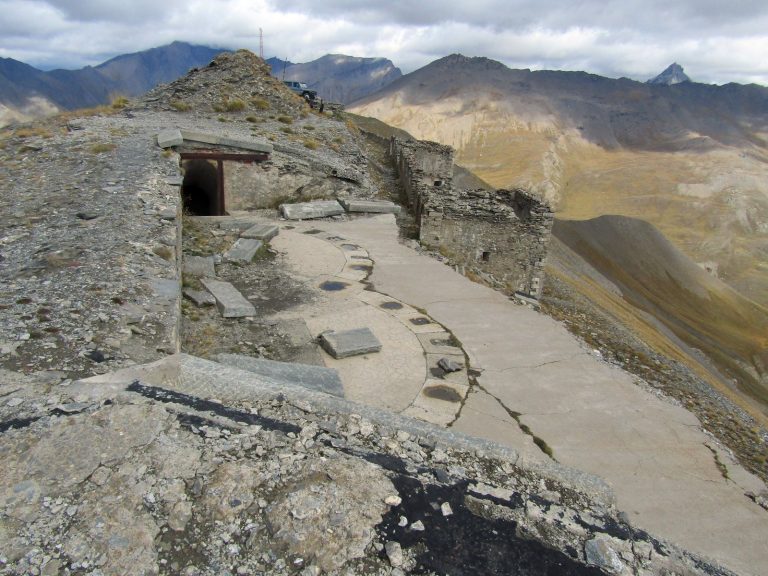
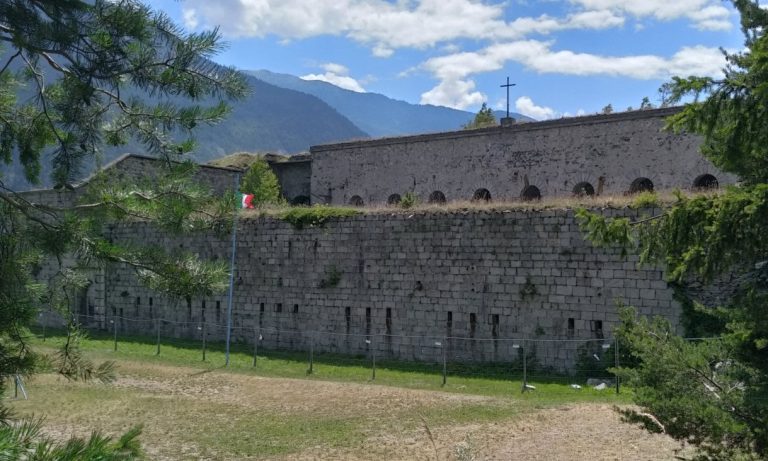
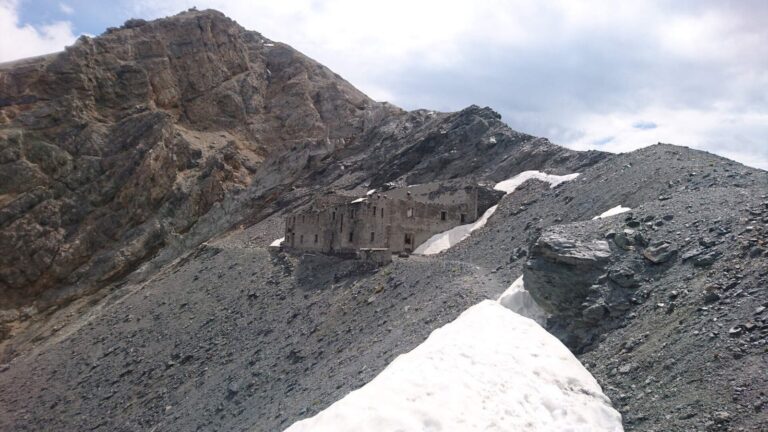
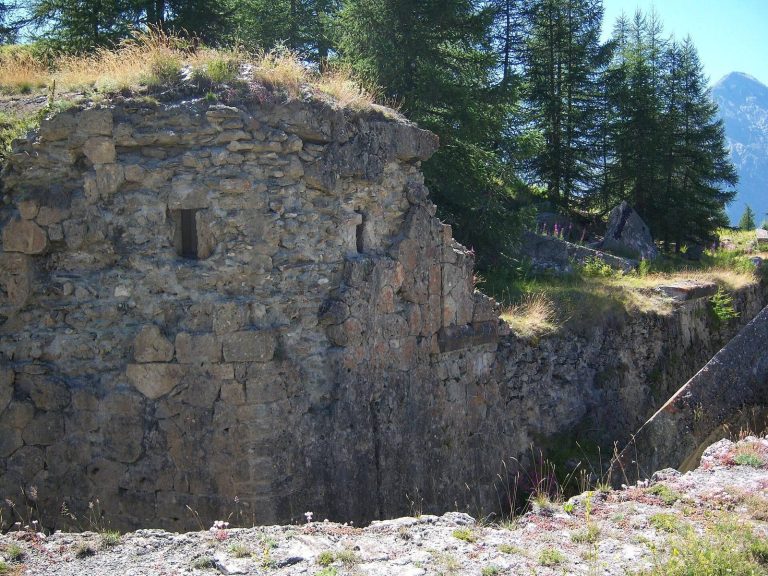
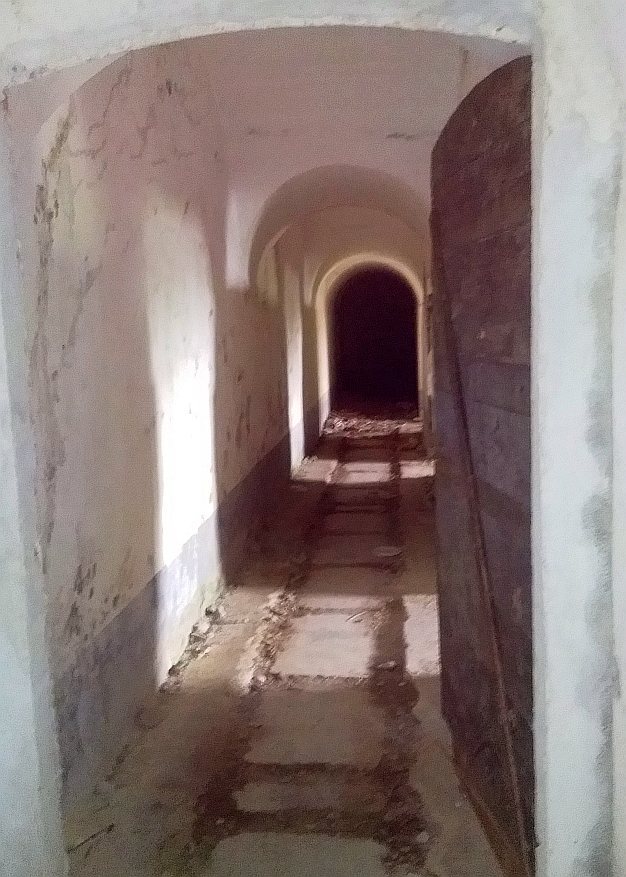
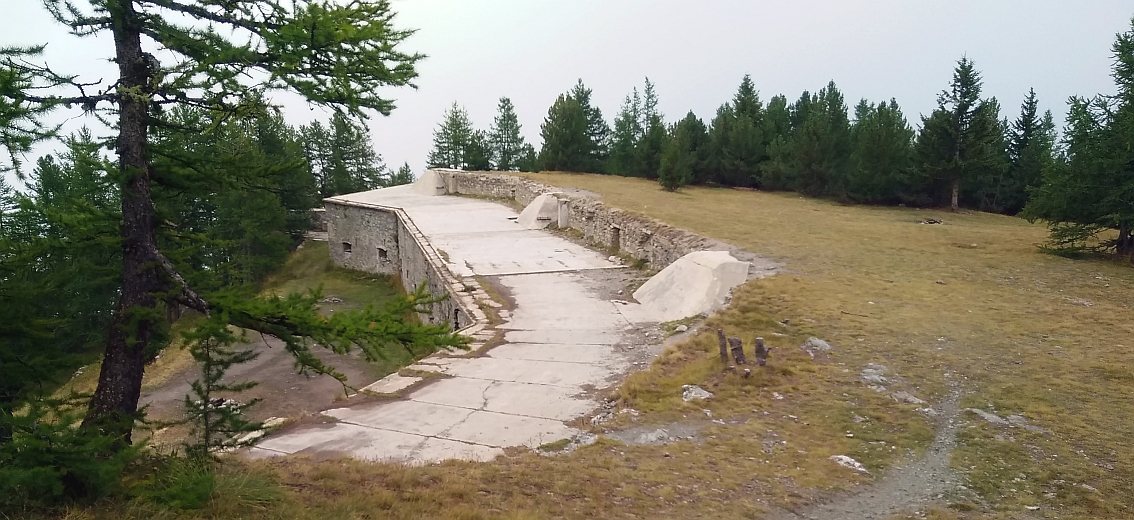
The fort stands on a plateau at an elevation of 2,186 metres above Föens. Its main building is a single-storey concrete structure with a rectangular plan and rooms with arched, vaulted ceilings. A defensive wall encloses the fort, with artillery positions on the roof and a lower terrace to the south.
Defensive wall and entrance
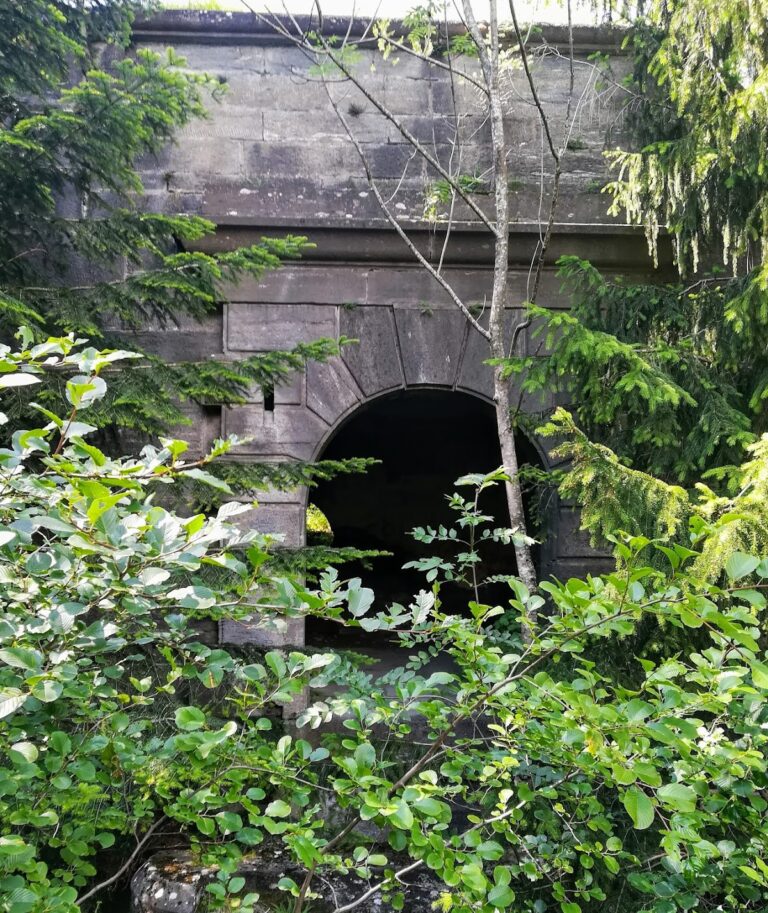
The surrounding wall has rifle-firing benches and horizontal loopholes, narrow openings through which rifles could be fired. Positions projecting from its corners were also fitted with loopholes to cover areas that would otherwise be difficult to defend. The wall is in good condition, although the entrance gateway has been partly demolished. The approach came from the Fenil–Pramand–Föens–Jafferau military road and was screened by an earthwork. A ramp beside the main entrance and an external stair at the far end of the building provided access to the roof.
Artillery positions
Four 15 ARC/Ret mortars were placed in pairs on the roof, in barbette positions where guns fired over protective earthworks. The positions faced the Bardonecchia basin. Two 15 ARC guns occupied the lower southern terrace, directed toward Grand’Hoche and the area near Oulx where the Dora di Bardonecchia joins the Dora Riparia. The gun-aiming angles remain visible on the roof and terraces.
Interior and associated structures
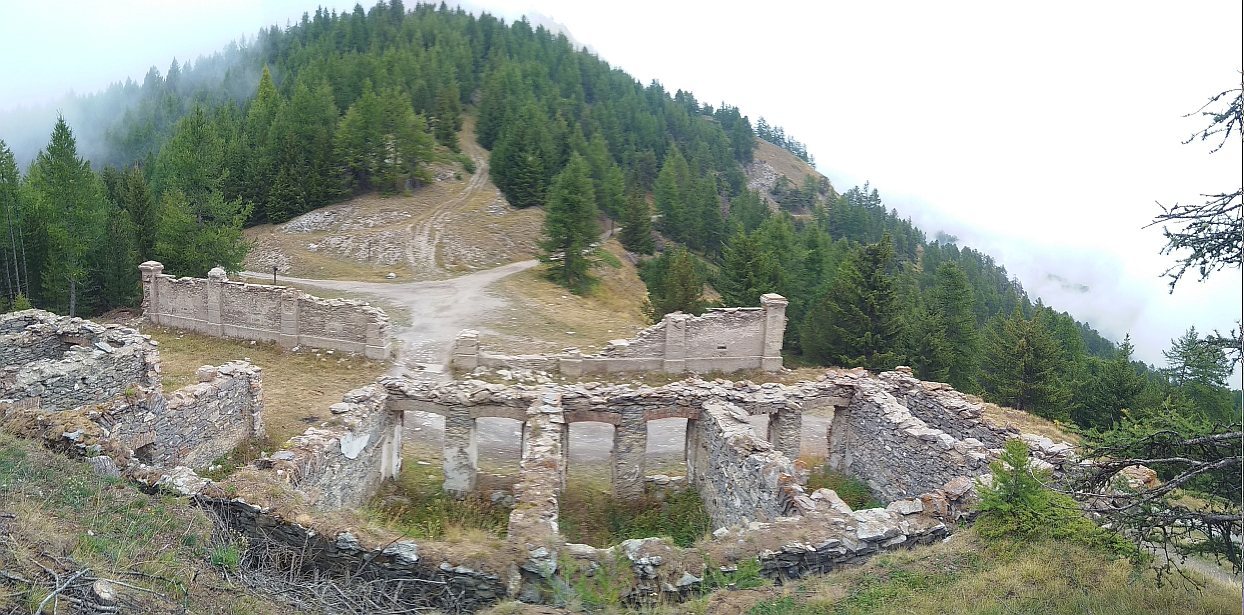
The main building contained troop quarters, kitchens, stores, and service rooms, whose remains are still visible. A powder magazine, a room for storing gunpowder, is fairly well preserved. Its entrance is partly bricked up; the wooden floor has rotted, but its supporting beams remain. The building as a whole is in fair condition. Near the fort entrance, the intermediate station of the Constans–Föens–Jafferau military cableway survives as V-shaped perimeter walls. Nearby barracks for reserve troops are in very poor condition.