San Lorenzo: A Neoclassical Parish Church in Campora, Italy
Site at a Glance
- Popularity
- Very Low
- Country
- Italy
- Primary era
- Early Modern
- Eras represented
- Early Modern, Modern
- Civilizations
- Duchy of Parma and Piacenza, French, Italian, Papal States
- Site type
- Religious
- Remains
- Church
On this page12 sections
History
San Lorenzo is a Roman Catholic parish church in Campora, Italy. Its present building, begun in 1607, is Neoclassical, drawing on forms associated with ancient Greek and Roman architecture.
Medieval chapel and parish
The medieval predecessor at Croce di Mussatico is identified in a 1230 record as the Chapel of St Lawrence at Campora, dedicated to Saint Lawrence, an early Christian deacon and martyr. It was then a dependent chapel of the parish church of Sasso. The church also appears in a document from 1299, a diocesan assessment dated 1354, and a register from 1493. It became an independent parish in 1564.
Destruction and rebuilding
In the early seventeenth century, a landslide destroyed Croce di Mussatico and its medieval church. Residents moved to Casone and began building a replacement. The main structure and left chapel were completed in 1680. A floor was added in 1722, the bell tower was built between 1774 and 1779, and the presbytery was completed in 1802.
Later alterations and restoration
A chapel on the right and a sacristy were added during the nineteenth century. In 1884, the painter Taracchini decorated the interior with frescoes. Twentieth-century changes included a forecourt built in 1933-34, the raising of the bell tower in 1949, and alterations to the left chapel in 1963. An earthquake on 23 December 2008 damaged the church; structural reinforcement and restoration inside and out followed between 2009 and 2011.
San Lorenzo belongs to the Diocese of Parma and the Montagna pastoral zone, a grouping of parishes within a diocese for pastoral coordination.
Remains
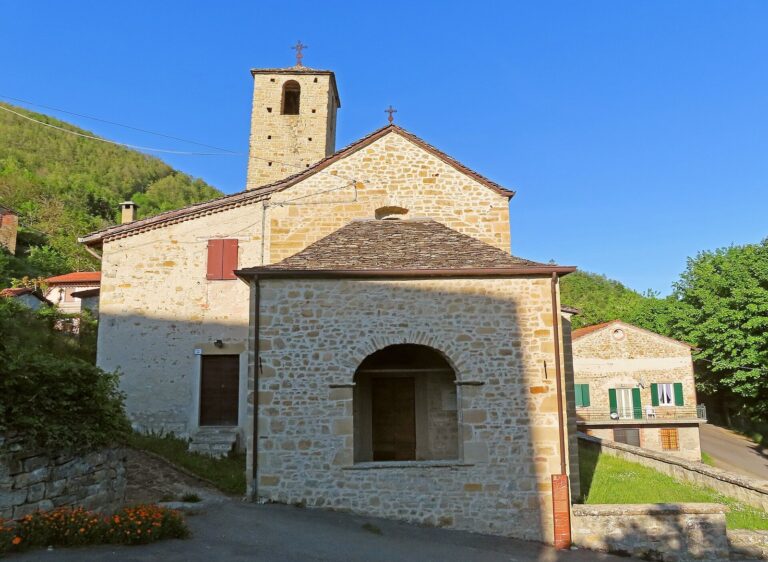
The church has a single nave (the main body of a church), with a chapel on either side, an entrance at the west end, and a presbytery (the area around the main altar) to the east. Its plastered exterior and classical forms reflect its Neoclassical design.
Exterior
Façade
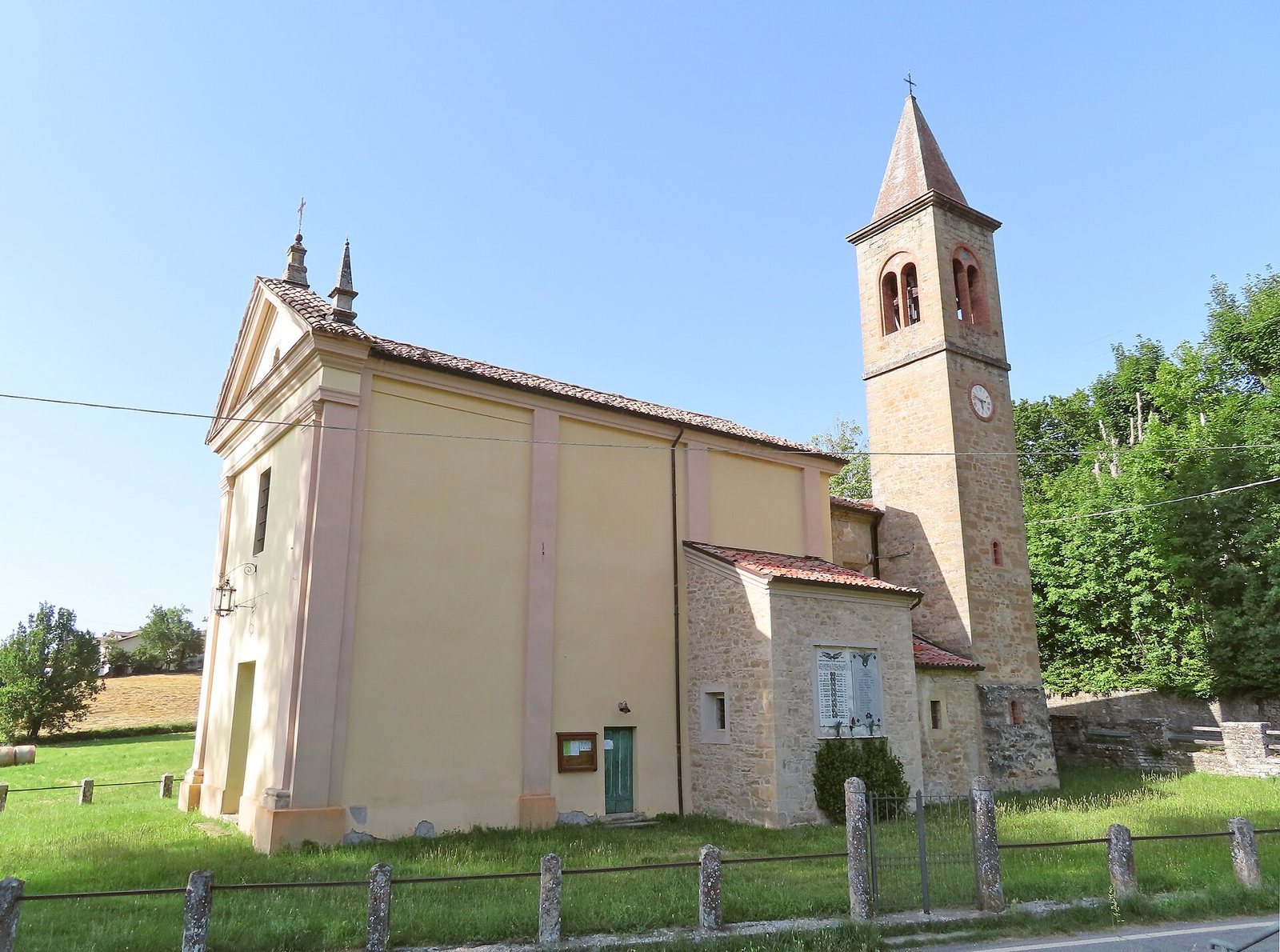
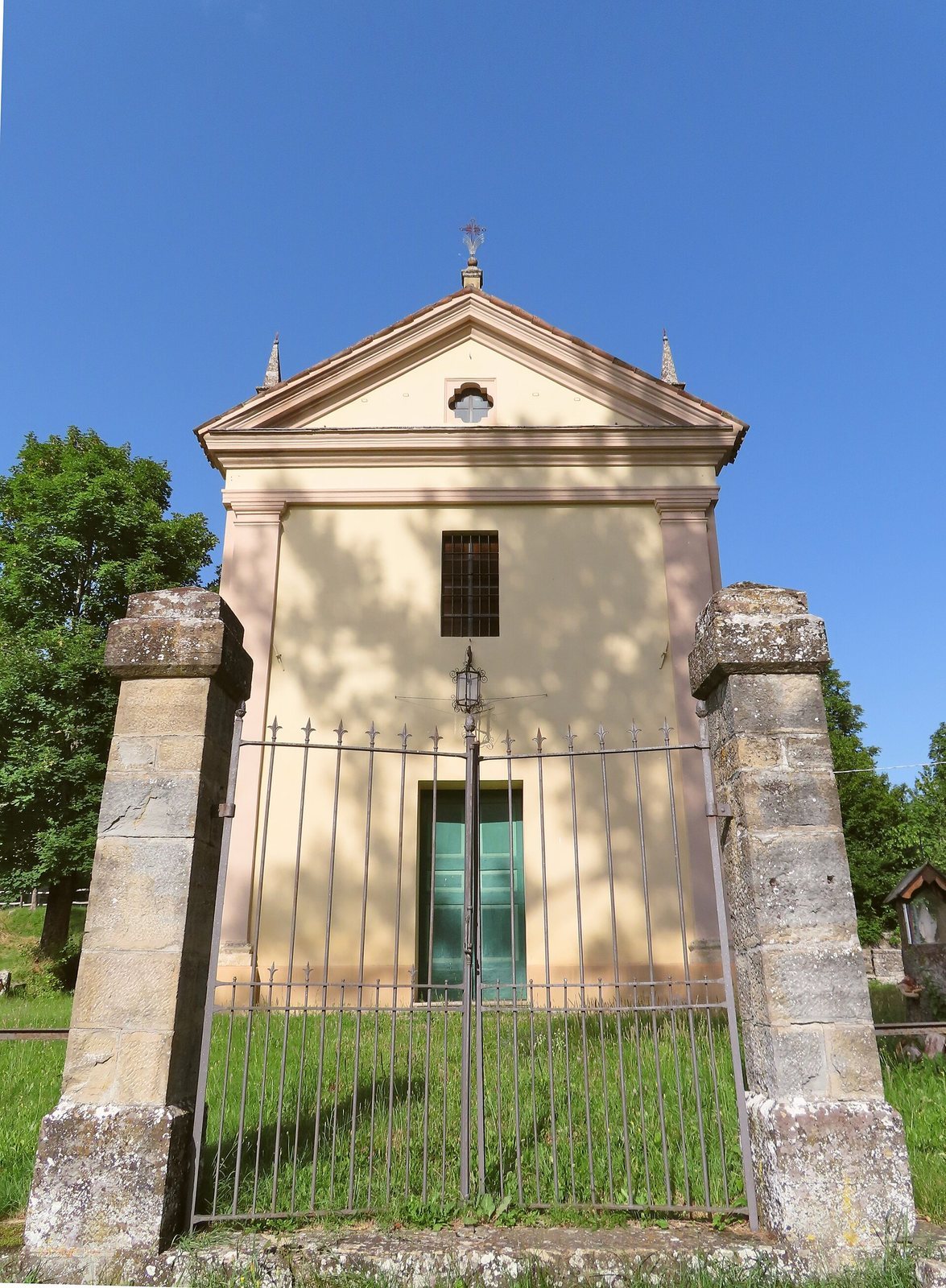
The symmetrical, plastered façade has a gabled outline and two shallow Doric pilasters, wall features shaped like classical columns. A central doorway is topped by a rectangular window, beneath a broad triangular pediment, the upper triangular section of a façade. A multilobed oculus, or round opening, sits within the pediment. A cross crowns its center, with sandstone pyramidal pinnacles at each end.
Side walls and bell tower
Pilasters divide the plastered side walls, from which low stone chapels project. At the rear of the right side stands a bell tower built from sandstone blocks. Its bell chamber has large paired arches with rounded tops on each of its four sides, divided by columns, and a central pyramidal spire above.
Interior
Nave and chapels
Round-headed arches connect the nave with the side chapels. The nave has a barrel vault, a continuous arched ceiling, with lunettes, curved sections formed where openings meet the vault. Frescoes decorate the vault, while the chapels have painted barrel-vaulted ceilings.
Presbytery
A triumphal arch, marking the transition from the nave to the presbytery, leads to the slightly raised sanctuary area. Its ceiling is a frescoed barrel vault with lunettes. The presbytery contains a wooden table altar added around 1980. At the east end, three round-headed niches made in 1923 hold statues of saints above an older altar dated 1780, which has a round tabernacle, a receptacle for the reserved Eucharist.
Paintings and furnishings
The church preserves a seventeenth-century painting of Saint Lucy, an early Christian martyr. It was long mistakenly attributed to Luigi Vigotti, who instead painted a separate oil painting commissioned by Maria Luigia, Duchess of Parma; that work later disappeared. Other preserved objects include a carved eighteenth-century door on the baptismal font, an eighteenth-century small stand for a monstrance, the vessel used to display the consecrated host, and a sandstone basin for holy water dated 1686.