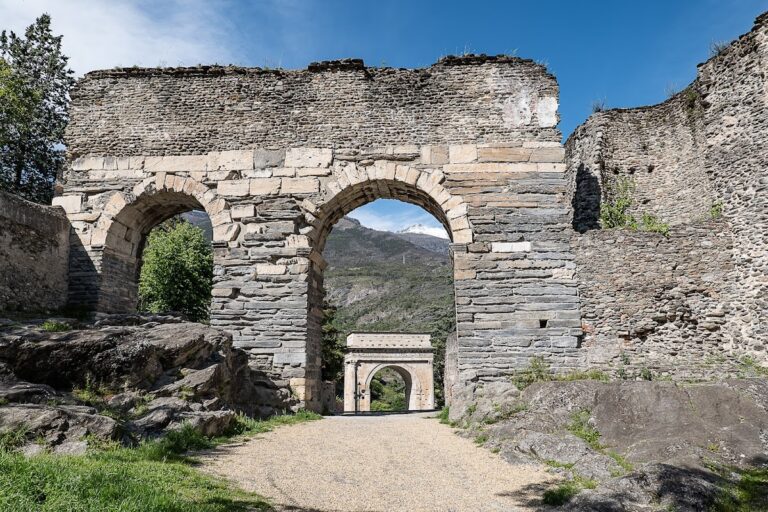
Forte Fenil: An Italian Support Fort in Val di Susa


Site at a Glance
- Rating
- 4
- Popularity
- Very Low
- Country
- Italy
- Primary era
- Modern
- Eras represented
- Modern
- Civilizations
- Italian
- Site type
- Military
- Remains
- Fort
On this page8 sections
History
Forte Fenil is an Italian support fort in Italy, located near Salbertrand in Val di Susa, Piedmont. Built from 1891 during the late nineteenth-century development of Italy’s alpine defenses, it was designed to support Forte Exilles, the principal fortified position in the Susa Valley. Its guns faced routes through the Dora di Cesana valley and the Bardonecchia basin, helping defend approaches toward the Oulx plain and the surrounding mountain passes.
Construction and defensive role
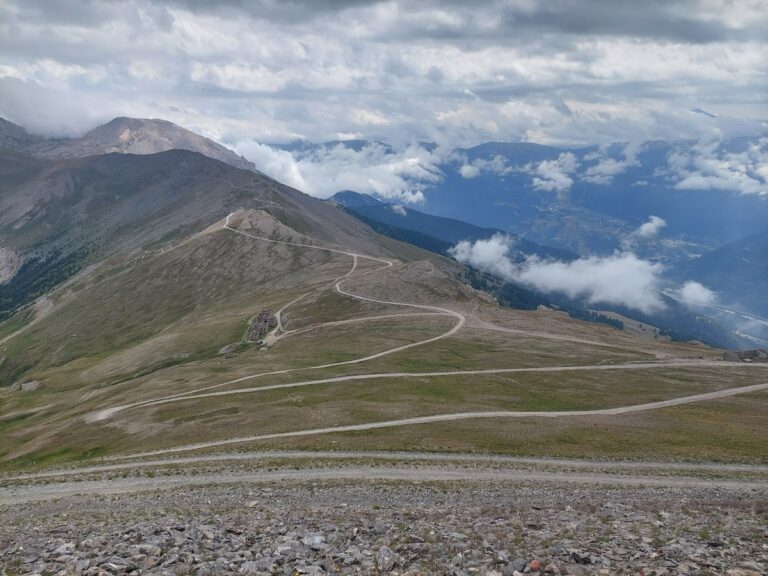
Forte Fenil belonged to a group of four fortifications intended to reinforce Forte Exilles against an invading army. The group also included Fortino di Serre la Garde and Forte Sapé. The Italian Ministry of War initially controlled the fort. Its position near the Fenil hamlet and at the beginning of the Fenil–Pramand–Föens–Jafferau military road connected it with the wider defensive infrastructure of the valley.
Wartime use and later transformation
During the First World War, the fort’s guns were removed for use on the Eastern Front. Forte Fenil was not rearmed after the war, but during the Second World War it served as an ammunition depot for temporary positions in the surrounding area. Its strategic function ended on 25 June 1945. After Italy’s defeat in the Second World War, the fort was disarmed and sold to the Daughters of Mary Help of Christians, a Catholic congregation known as the Salesian Sisters. They converted it into a summer-colony facility, and it is now used as a summer rural house.
The Battery of Case Garde, built in 1898 above Grange Hubert in Salbertrand, depended on Forte Fenil for ammunition. It was disarmed during the First World War, never rearmed, and was later abandoned.
Remains
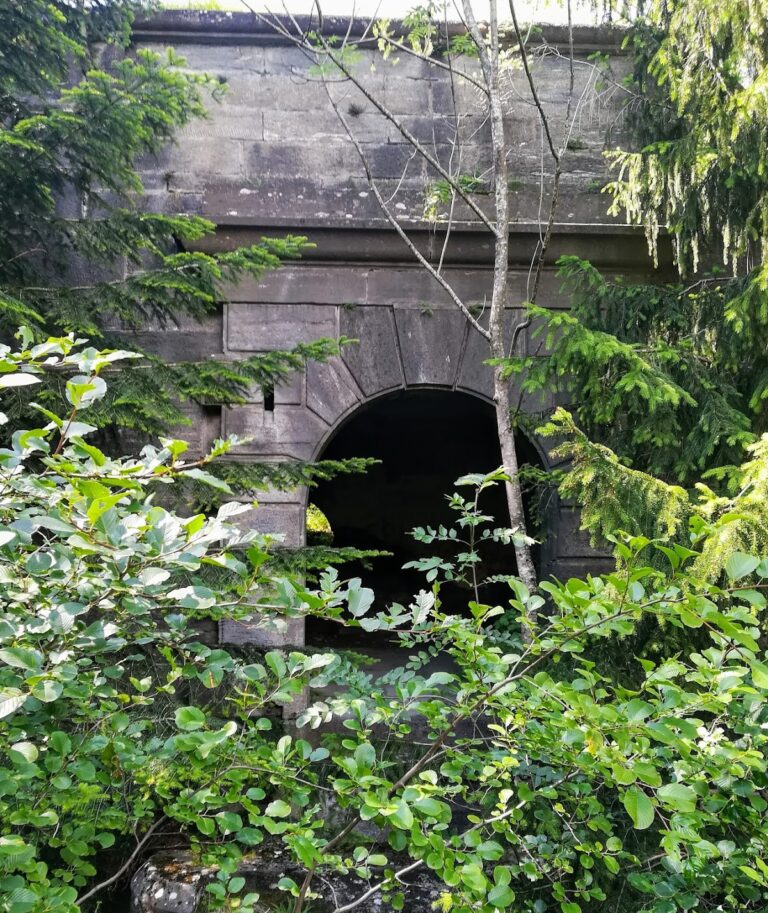
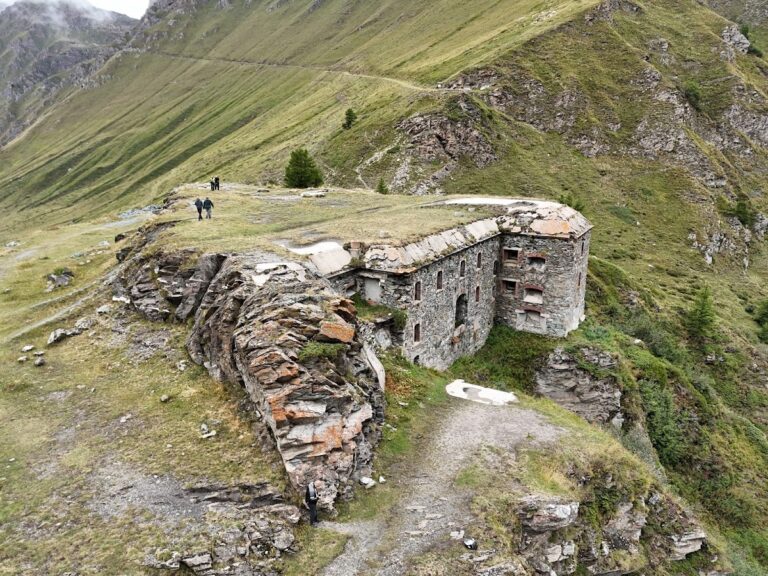
Forte Fenil stands at approximately 1,173 metres above sea level on a rocky terrace near the Fenil hamlet. The roughly square fort measured about 75 metres on each side. A ditch protected three sides, with caponiers, covered defensive structures protecting the ditch, at the corners. Entry was across a bridge made partly permanent and partly movable. Earthen bastions concealed the upper artillery position and sloped gradually into the surrounding ground.
Main fort
Layout and defenses
The three-storey building was constructed from concrete and cast-iron plates. Its defensive design included a 22-centimetre-thick cast-iron covering over the upper casemate, a protected enclosed artillery position. Concrete and earth covered the armour, while the lower portion formed a small protective glacis. The former long armoured casemate on the third floor was removed when the fort was disarmed. The ditch was subsequently filled, and the semi-drawbridge was removed.
Artillery and internal spaces
The upper storey contained a single linear casemate armed with eight 12 ARC/Ret guns directed toward the Oulx plain and the Pont Ventoux defile near Salbertrand. Behind it, a service gallery had eight large windows to ventilate smoke and air from the gun positions. Two smaller casemates in the south-eastern corner held 87B guns aimed south toward Forte Sapé, with an optical-telegraph station beside them. An optical telegraph was a visual signalling system for transmitting messages between military positions.
The lower floors held quarters for troops and officers, kitchens, technical rooms, and spaces for loading projectiles. Manual hoists linked the loading areas with the roof casemate. From the former military road, the surviving exterior includes the large windows of the third-floor service gallery and the two casemates associated with the 87B guns.
Battery of Case Garde
Case Garde consisted of four barbette emplacements, open raised platforms for guns, arranged on elevated earthworks. Each platform held a 149 G gun directed toward the opposite side of the Susa Valley, with a field of fire between Forte Pramand and Serre du Crin. Small buildings beside the platforms stored materials and charges. The battery had no artillery magazine because it was intended to keep only one day’s ammunition, with further supplies expected from Forte Fenil.
Nearby sites