Karlův Hrádek: a Gothic Castle Ruin in Czechia


Site at a Glance
- Rating
- 4.6
- Popularity
- Low
- Country
- Czechia
- Primary era
- Medieval
- External website
- Open
- Eras represented
- Medieval
- Civilizations
- Holy Roman Empire, Kingdom of Bohemia
- Site type
- Military
- Remains
- Castle
On this page9 sections
History
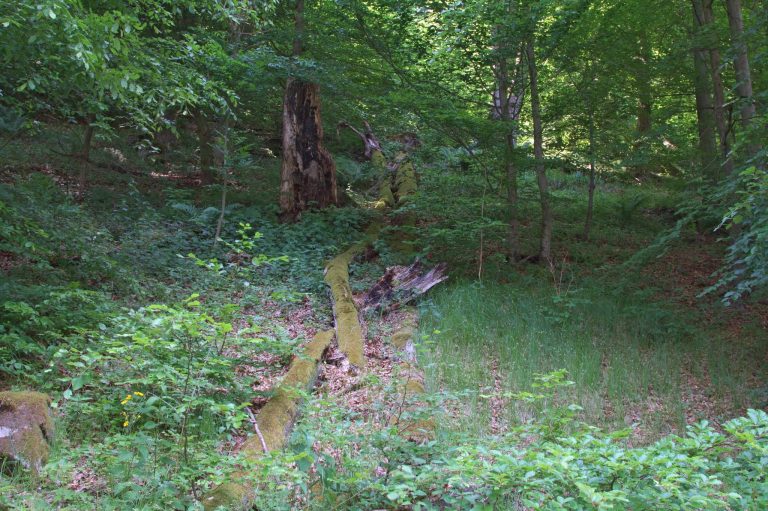
Karlův Hrádek is a Gothic castle ruin in Czechia, above the left bank of the Vltava near Purkarec, founded in the second half of the thirteenth century, probably during the reign of Přemysl Otakar II. The Gothic tradition used pointed arches, ribbed or cross vaults, and large window openings. The castle is also known as Hrádek u Purkarce and Karlshaus.
Origins and royal plans
Karlův Hrádek was traditionally attributed to Charles IV, a fourteenth-century king of Bohemia and Holy Roman Emperor, who was thought to have established it shortly before its first written mention in 1357. Archaeological investigations in 2019 and 2021 instead indicated that the castle had already been founded in the second half of the thirteenth century, probably under Přemysl Otakar II, whose reign preceded that of Charles IV.
The 1357 record concerns a dispute between Charles IV and the Rožmberks, a powerful noble family in medieval Bohemia. The castle was intended to form the center of a new domain separated from nearby Hluboká. A town with a parish was established beside it, and some scholars identify this settlement with present-day Purkarec. Charles IV may have used the castle as a personal retreat, with its planned recreational role perhaps influenced by the comfortable courts of French kings.
Decline and abandonment
The only recorded castellan, the official responsible for administering and defending a castle for its ruler or lord, was Petr of Nasavrk, named in 1364. Charles IV soon lost interest in Karlův Hrádek, and the castle gradually deteriorated. Its limited defensive capacity probably contributed to its early abandonment during the troubled reign of Wenceslaus IV, the late-fourteenth-century king of Bohemia and Holy Roman Emperor who succeeded Charles IV.
No written record mentions the castle after 1370, and it was probably abandoned around that time. The settlement beside it also disappeared. Archaeological investigation in September 2019 revealed remains of much older habitation beneath the castle area, probably reaching back to prehistoric times. Karlův Hrádek has been protected as a cultural monument since 1963.
Remains
Setting and defensive works
The ruin stands on a spur approximately 400 metres above sea level, above the Vltava. In front of the castle, an extensive area enclosed by an earthwork rampart, a raised defensive bank made from soil, probably accommodated the planned town. The castle itself formed a single-part complex surrounded on every side by a substantial rampart and ditch. An outer defensive strip extended along its northern and eastern sides.
Castle core
Gate and access
Entry was provided from the north through a gate. Its passage included sedilia, built-in seating niches, which formed part of the access structure.
Chapel
The most distinguished space was a large chapel in the eastern corner of the castle. It contained two bays covered by cross vaulting and received light through large pointed windows. These surviving architectural features place the chapel within the Gothic character of the complex.
Palace buildings
The polygonal castle core was enclosed by ranges of palace buildings. Imprints of timber-framed chambers survive on the palace floors, preserving evidence of the construction and internal arrangement of these rooms.