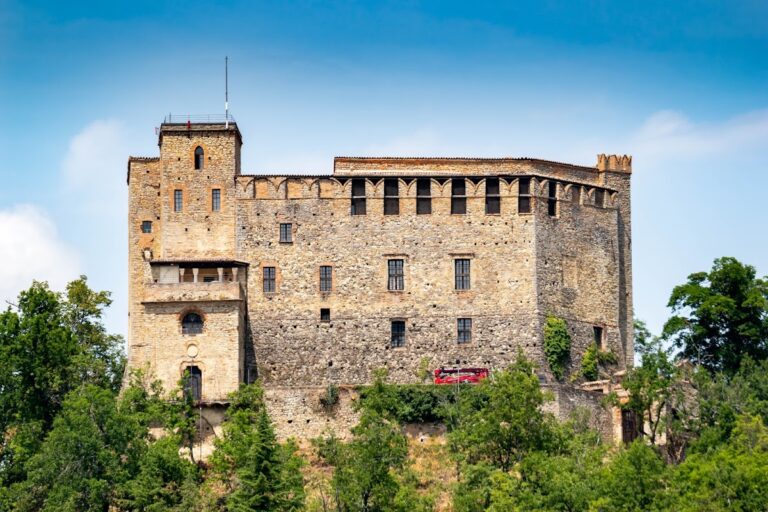
Castello Malaspina: A Late-Medieval Fortress in Bobbio, Italy


Site at a Glance
- Rating
- 4.1
- Popularity
- Low
- Country
- Italy
- Primary era
- Medieval
- External website
- Open
- Eras represented
- Medieval, Early Modern
- Civilizations
- Holy Roman Empire
- Site type
- Military
- Remains
- Castle
On this page10 sections
History
Castello Malaspina is a late-medieval fortress in Bobbio, Italy, built by the Malaspina family in the upper part of the settlement above the castle park. Its construction is dated to 1304–1545, and Corradino Malaspina, a member of the local noble family, commissioned the present fortress in the first years of the fourteenth century. The castle developed within a fortified settlement whose town walls had begun in the thirteenth century, when a document of 1219 mentioned a place called “Braida de Castello.”
The church and the episcopal seat
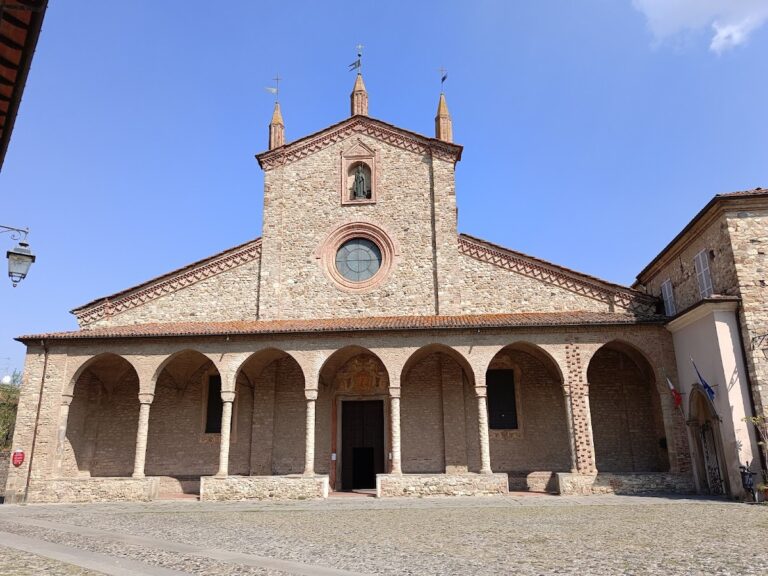
The fortress was built beside the ancient Santa Maria church, also known as the Bishop’s Church. The church had been used since the Lombard period for celebrations open to women. It temporarily served as the seat of the count-bishop and the Diocese of Bobbio from 1017 to 1075. A count-bishop was a bishop who also exercised secular territorial authority. The church later surrendered its name and title to the new Cathedral of Santa Maria Assunta.
Bobbio became a city and an episcopal seat on 14 February 1014. Pietroaldo, formerly abbot of the monastery, initially held both offices as abbot-bishop, meaning that he combined the leadership of the monastery and the diocese. In 1017, the offices were separated: Bosone became abbot and Attone became bishop. Attone temporarily transferred the diocesan seat to the ancient Santa Maria church beside the castle.
Earlier interpretations identified this church as a possible predecessor of the Basilica of San Pietro, supposedly established by an unknown missionary before the arrival of Columbanus of Luxeuil. Columbanus was an Irish missionary and monastic founder active in the sixth and seventh centuries. Later geological and archaeological investigations placed the ancient basilica at the site of the present abbey basilica instead.
Medieval and early modern power
During the conflicts between the Guelphs and Ghibellines, rival political factions in medieval Italy, Castello Malaspina served as a Ghibelline stronghold. Ghibelline forces generally supported the imperial tradition, while the Guelphs commonly supported the papacy, although local alliances varied. Nobles fleeing attacks by the Guelph commune of Piacenza on castles in the Trebbia Valley sought refuge at Bobbio.
The castle entered the possession of the Visconti of Milan in 1342. The Visconti were the ruling family of Milan. In 1413, the Anguissola family of Travo captured the fortress for one year, after which it returned to the Visconti. In 1436, the Visconti granted the castle, together with the titles of count of Bobbio, Voghera, and Val Tidone, to the Dal Verme family, another prominent Italian noble family.
The Dal Verme retained the castle through changing military circumstances until Napoleon abolished feudalism in 1805. Its military history also includes the Battle of the Trebbia in 1799. After the end of its feudal period, the neglected structure began to fall into ruin. It was sold to Paolo dalla Cella in 1814, and his heirs transferred it to the state in 1956.
Restoration and present status
From December 2014, the Ministry of Cultural Heritage and Activities managed the castle through the Polo Museale dell’Emilia-Romagna. That institution became the Direzione regionale Musei in December 2019. Management passed to the Municipality of Bobbio on 11 January 2020, while the castle remained state property. The restored fortress is recognized as Italian national heritage and forms part of the Association of the Castles of the Duchy of Parma, Piacenza and Pontremoli circuit.
Remains
Fortress layout and construction
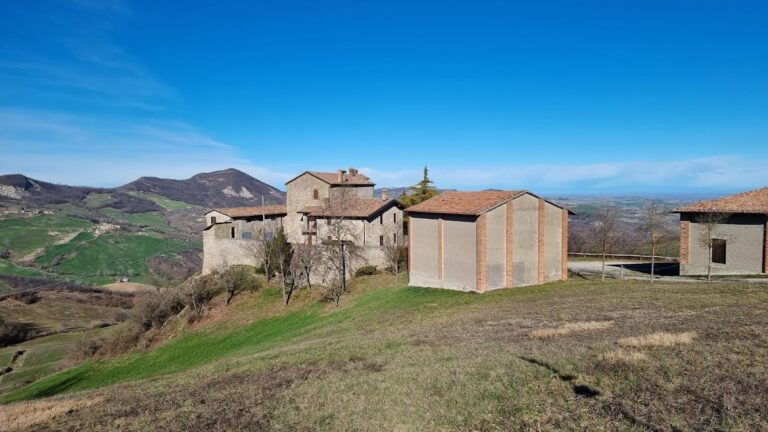
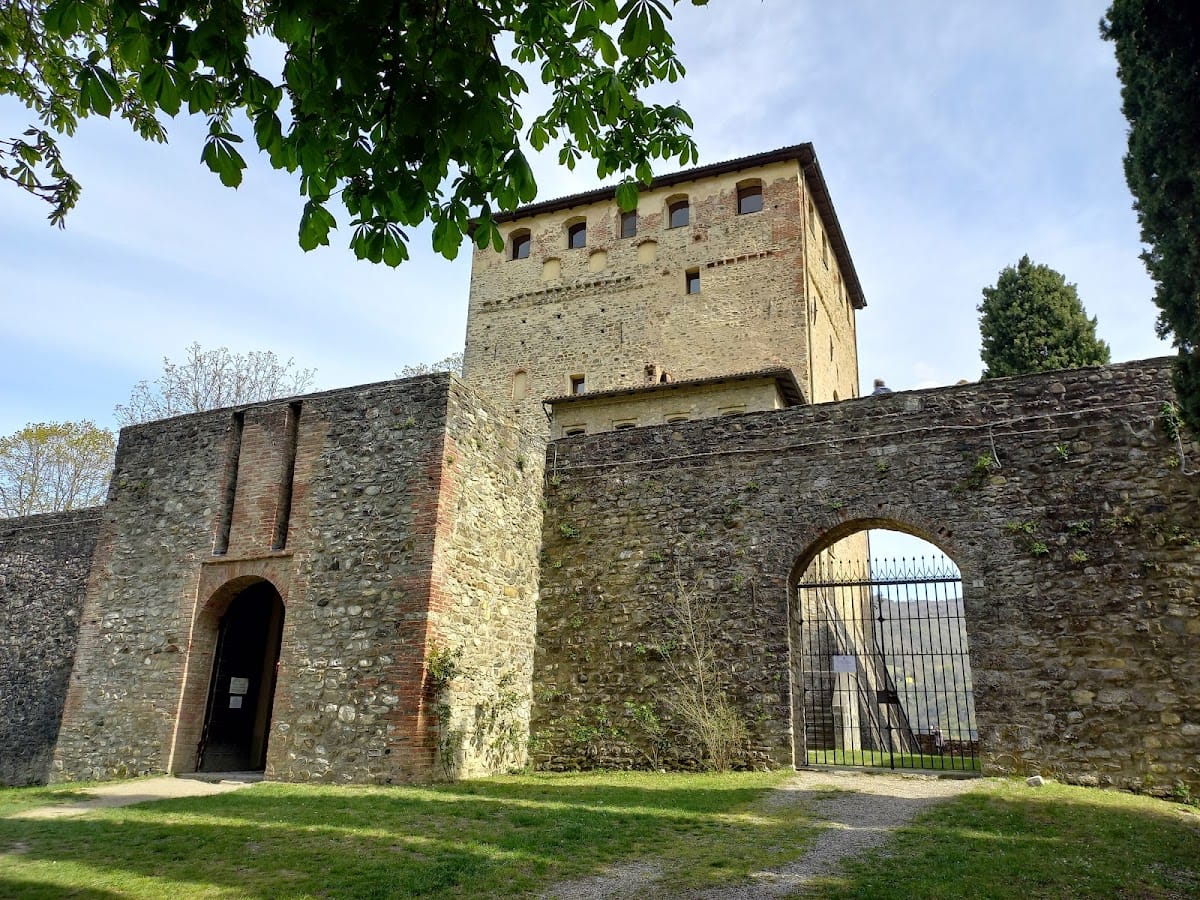
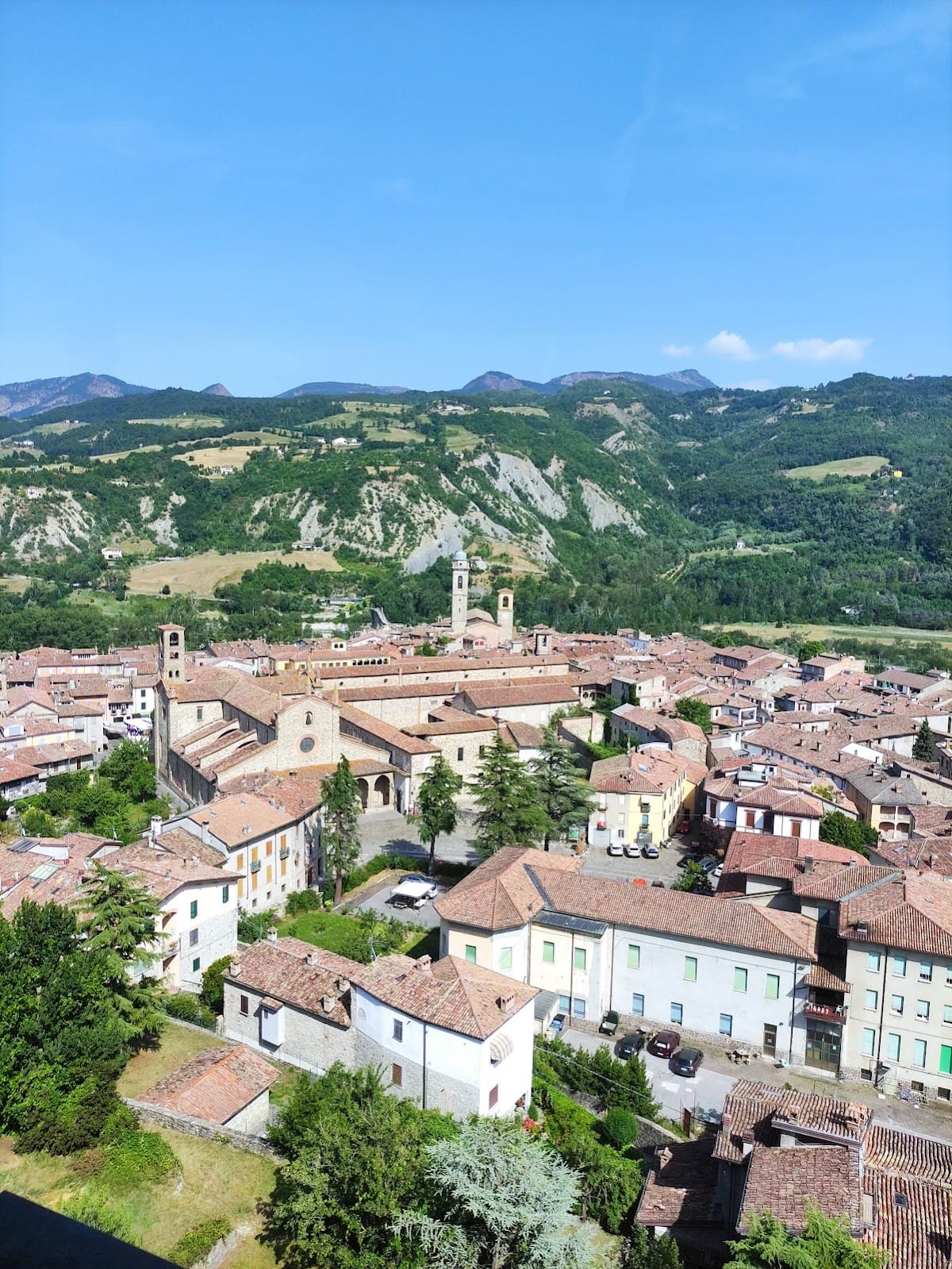
Castello Malaspina occupies an elevated position in Bobbio above the castle park. It is a massive quadrangular fortress built mainly of stone with brick inserts. The buildings have small windows and tiled roofs. The main complex includes a rectangular keep, a small round tower, a square tower, several smaller buildings, accommodation for guards, and a later structure substantially lower than the keep.
The Bishop’s Tower
The oldest surviving component is the Bishop’s Tower, built after 1017 beside the ancient Santa Maria church. It was probably first erected as a bell tower and was later adapted for defense. Troops were housed there before the main castle was constructed, and the tower was reduced in height at an uncertain date. Remains of the ancient church survive beside the entrance to the tower.
The keep and towers
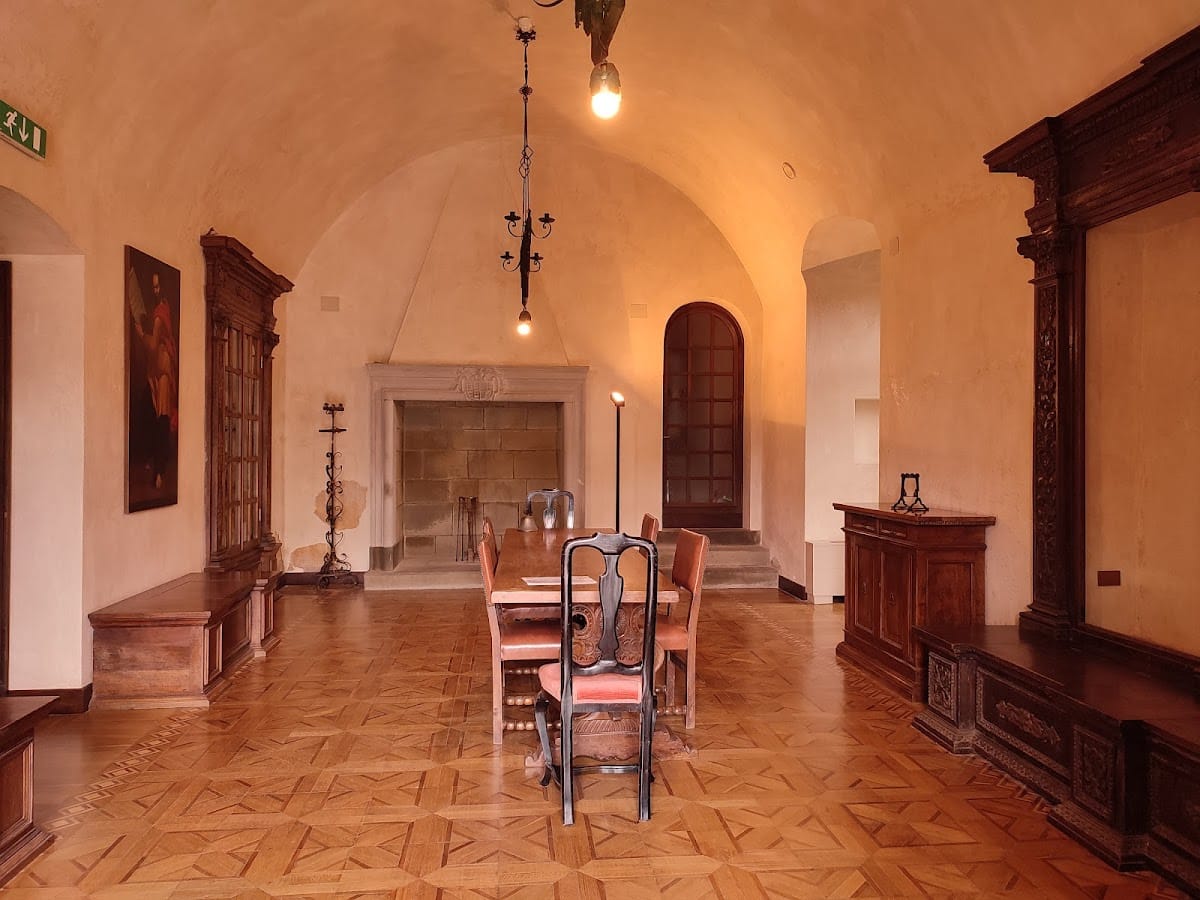
The principal keep has five levels. Its rooms contain barrel-vaulted ceilings, which are continuous tunnel-like vaults, and inlaid wooden floors. The first three floors were used for residence, the fourth housed troops, and the fifth served defensive purposes. The upper defensive level is an attic supported by four pillars. It is now lit by 18 recently opened windows, while its original lighting came from splayed loopholes, narrow openings used for defense.
The keep is connected to a small round tower and a square tower. Traces of two entrances equipped with drawbridges remain. In the earlier arrangement, only the northwestern entrance provided access to the keep.
Defensive circuits
The castle had two concentric wall circuits. The inner circuit closely surrounded the keep, followed a quadrangular plan, and stood on an earth embankment that created the fortress’s elevated position. The outer circuit was demolished in 1858. Eighteenth-century plans show that it connected the castle with an external defensive enclosure containing fortified gates and two additional towers, known as the small tower and the Torre di Primatello.
The southeastern tower legend
A local legend places a “well of knives” in the basement of the southeastern round tower. The well is filled and closed. The story describes a shaft lined with numerous sharp blades projecting horizontally and connected to a subterranean prison without an exit. The alleged victims are variously described as enemies of the lord, unwelcome visitors, or abducted young women. Other tales associate the castle with ghosts seen on its walls.