Hever Castle: A Medieval Fortress and Tudor Historic House in England



Site at a Glance
- Rating
- 4.8
- Popularity
- High
- Country
- United Kingdom
- Primary era
- Medieval
- External website
- Open
- Eras represented
- Medieval, Modern
- Civilizations
- English
- Site type
- Domestic
- Remains
- Castle
On this page13 sections
History
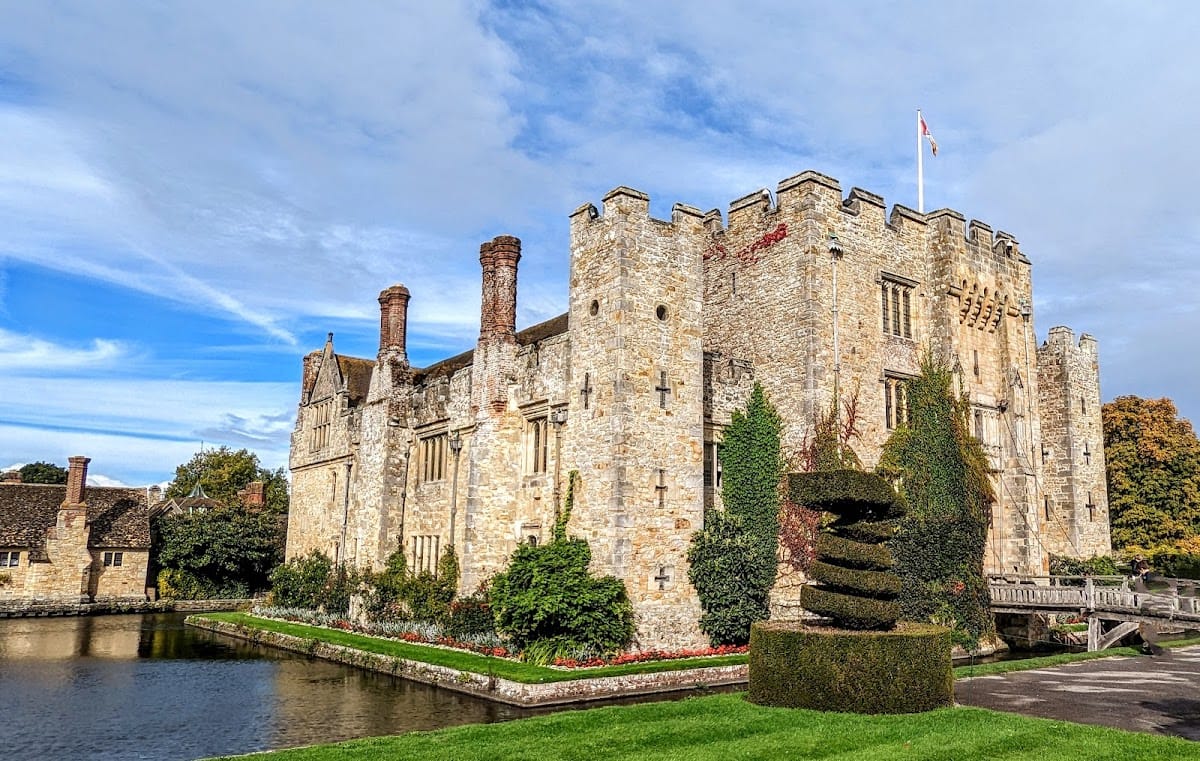
Hever Castle is a historic castle in the United Kingdom, whose earliest fortified phase dates to around 1270. It began as a thirteenth-century country house before acquiring a gatehouse and walled bailey, an enclosed courtyard within a castle’s outer defences. The site is especially associated with the Boleyn family, Anne Boleyn, and the Tudor period, the English ruling era of the Tudor dynasty from 1485 to 1603.
Medieval origins
The oldest castle phase included the gatehouse and walled bailey. Permissions to fortify Hever are recorded for 1271 and 1383, with William de Hever tentatively identified as the patron. The castle was also associated with James Fiennes, 1st Baron Saye and Sele, during its early history.
The Boleyn residence
In 1462, Geoffrey Boleyn converted the castle, which required repair, into a manor by inserting a Tudor dwelling within the existing walls. Hever remained the seat of the Boleyn family from 1462 to 1539. Geoffrey’s grandson, Thomas Boleyn, inherited the castle in 1505 and lived there with Lady Elizabeth Howard and their children, George, Mary, and Anne Boleyn.
Anne Boleyn spent her early youth at Hever before being sent to the Habsburg Netherlands in 1513 for education at the court of Archduchess Margaret. Anne later became the second queen consort of Henry VIII, and her marriage to the king and execution made her one of the most consequential figures of Tudor England. Her exact birth year remains uncertain.
Royal ownership and later families
Henry VIII, king of England from 1509 to 1547, used nearby Bolebroke Castle during his courtship of Anne Boleyn. After Thomas Boleyn died in 1539, Hever Castle came into Henry’s possession. In 1540, following the annulment of his marriage to Anne of Cleves, Henry granted the castle to Anne of Cleves as part of the settlement.
Hever then passed through several ownership periods. The Waldegrave family held it from 1557 to 1715, followed by the Humfreys family until 1749 and the Meade-Waldo family from 1749 to 1903. During the Meade-Waldo period, the castle deteriorated and was leased to various private tenants.
Restoration and public use
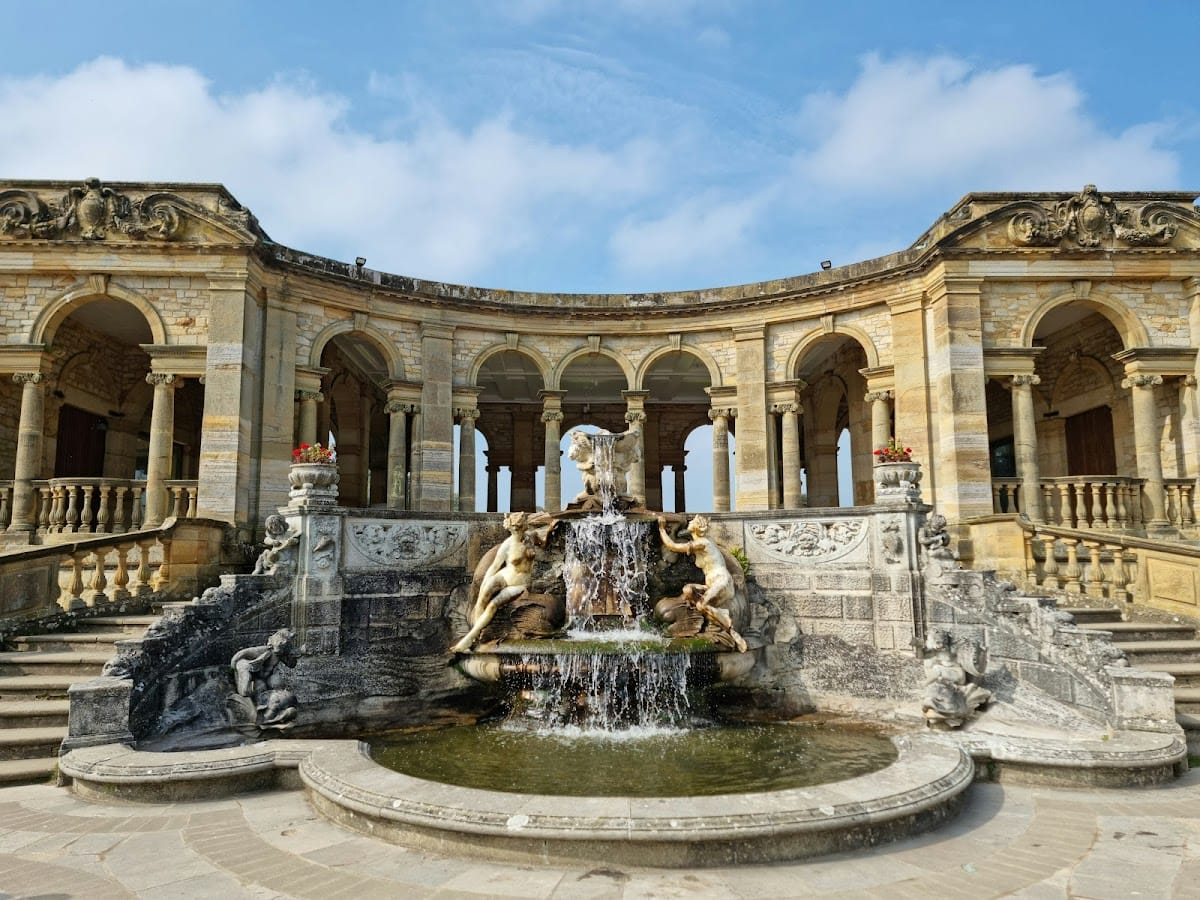
William Waldorf Astor acquired Hever Castle in 1903, restoring and renovating it for use as a family residence. He added the Tudor village, also known as the Astor Wing, and created the Italian Garden to display his collection of statues and ornaments. The castle has been Grade I listed since 10 September 1954. Grade I is the highest category of statutory heritage protection for buildings and structures in England.
The Astor family sold Hever Castle in 1983 to John Guthrie, chairman of Broadland Properties Limited. Broadland Properties, associated with the Guthrie family, remains the owner. The castle is open to the public as a historic house museum and tourist attraction, drawing particularly on its associations with Anne Boleyn and Henry VIII.
Remains
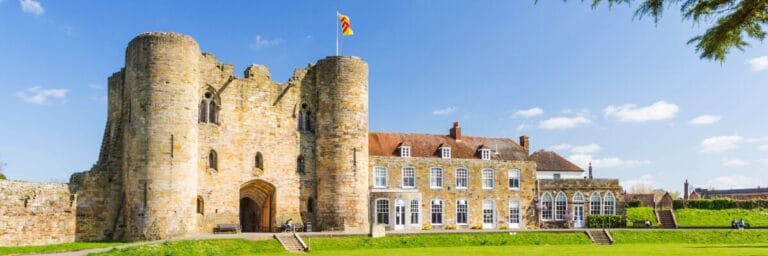
Hever Castle survives as an intact complex formed by three principal stages: the thirteenth-century gatehouse and walled bailey, the Tudor dwelling inserted within those walls in 1462, and the extensive restoration and additions made after 1903. The grounds extend the complex with the Tudor village or Astor Wing, formal gardens, and later maze features.
Medieval and Tudor fabric
Gatehouse and fortified enclosure
The gatehouse is described as the only original part of the castle and contains England’s oldest working original portcullis, a heavy gate that moves vertically within grooves in a fortified entrance. The walled bailey forms the enclosed defensive area around the medieval core. The timber construction of the original country house remains visible within the later stone fortification walls.
Tudor dwelling
The Tudor dwelling was added inside the existing medieval walls in 1462, when Geoffrey Boleyn transformed the castle into a manor. It forms the principal domestic phase associated with the Boleyn family. The castle contains three floors furnished with antique furniture, Anne Boleyn’s prayer books, instruments of torture, and a large collection of Tudor paintings.
Astor additions and grounds
Tudor village and Italian Garden
The Tudor village, also called the Astor Wing, was added during William Waldorf Astor’s restoration after 1903. By 1954 it was described as a picturesque cluster of guest cottages. The Italian Garden was created to display Astor’s collection of statues and ornaments, and the grounds also include a Fernery, a garden devoted to growing and displaying ferns, together with rose gardens, a herb garden, and clipped ornamental plants known as topiary.
Maze features
A yew hedge maze was planted in 1904. A water maze opened in 1999 and is arranged around a folly at its centre, which visitors attempt to reach without getting wet. A tower maze in the children’s adventure playground was undergoing reconstruction.
Collections and military museum
The castle’s interiors preserve the three-floor domestic presentation, including antique furniture, Anne Boleyn’s prayer books, instruments of torture, and Tudor paintings. The grounds also contain a museum of the Kent and Sharpshooters Yeomanry, extending the site’s displays beyond the medieval and Tudor castle itself.