Palazzo Cusani, Parma: A Renaissance Palace and Home of Casa della Musica
Site at a Glance
- Rating
- 5
- Popularity
- Very Low
- Country
- Italy
- Primary era
- Medieval
- Eras represented
- Medieval, Early Modern, Modern
- Civilizations
- Duchy of Milan, Duchy of Parma and Piacenza, Italian
- Site type
- Domestic
- Remains
- Elite Residence
On this page8 sections
History
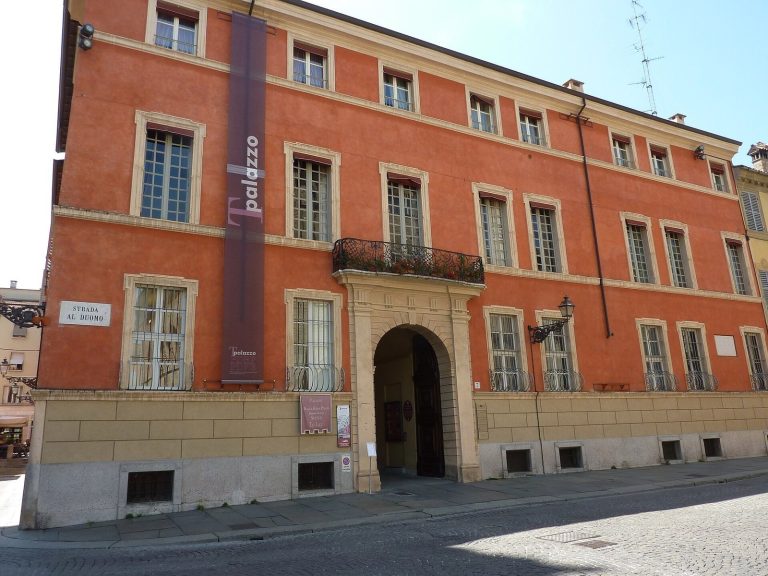
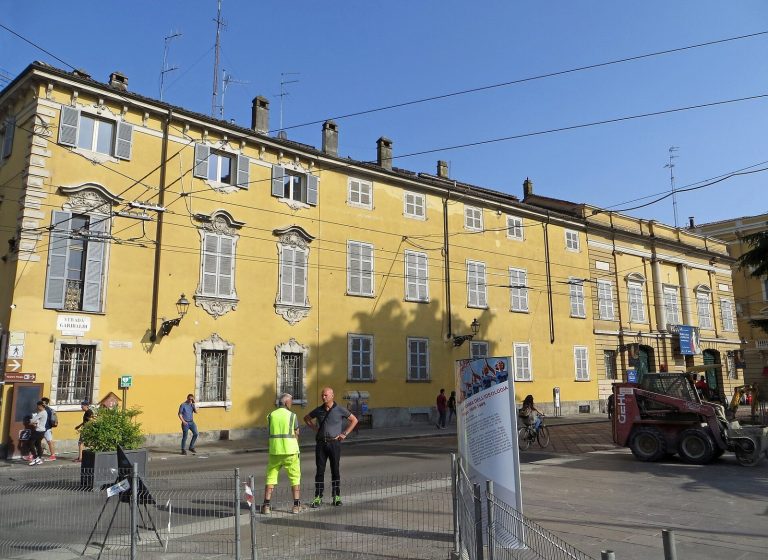
Palazzo Cusani is a palace with Renaissance facades in Parma, Italy, built in the second half of the fifteenth century by a branch of the Cusani, a noble family from Milan.
Origins and university
In the seventeenth century, Marquis Galeazzo Cusani, a noble rank-holder, gave the palace to the City of Parma. The city assigned it to the University of Parma, renovated the building, and repaired and repositioned the marble columns in its central courtyard. The university’s faculties of Medicine and Law remained there until 1768.
Mint and courthouse
In 1778, Duke Ferdinand I of Bourbon, Duke of Parma, designated the palace as a state mint. Laws issued under Napoleon’s rule in 1805 and 1810 turned the adjoining San Francesco del Prato monastery into a city prison. In 1820, Duchess Maria Luigia of Austria, a Habsburg archduchess and Duchess of Parma, assigned Palazzo Cusani to a court of justice and had it connected directly to the prison.
School and cultural center
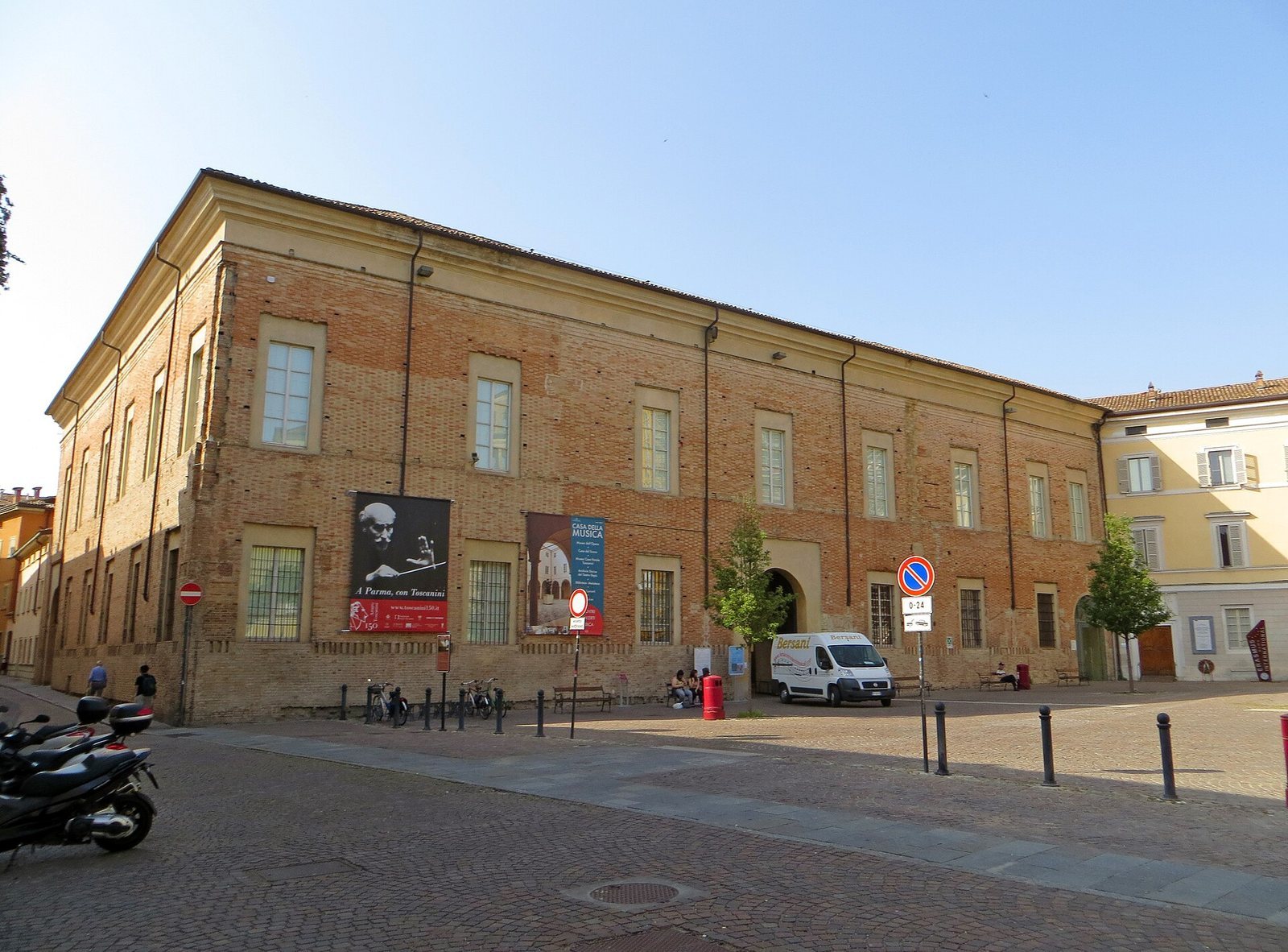
The court moved elsewhere in 1924, and the palace became a lower secondary school. Its interior halls were divided into smaller rooms. During the Second World War, an air-raid shelter was built inside, substantially changing the building’s appearance. An earthquake on 9 November 1983 damaged the palace and led to its closure. After extensive restoration, it reopened in 2002 as Casa della Musica (House of Music), an institution devoted to music and musical culture.
Remains
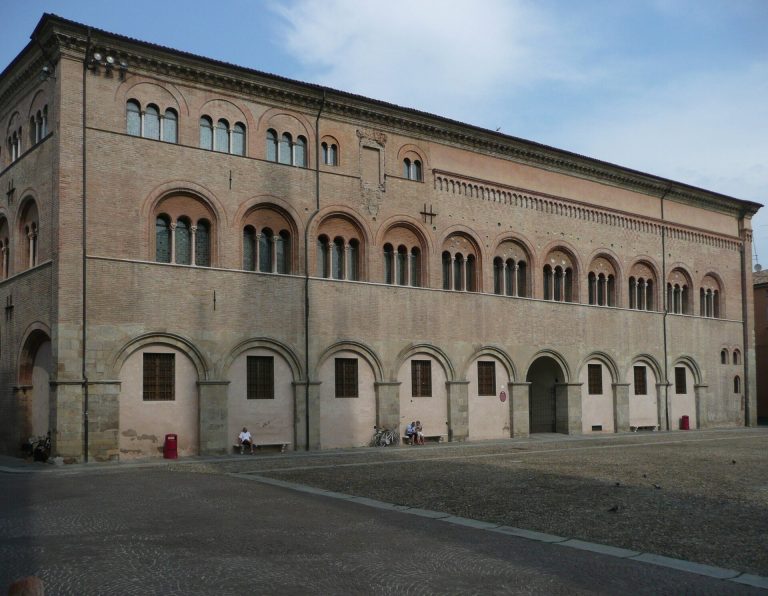
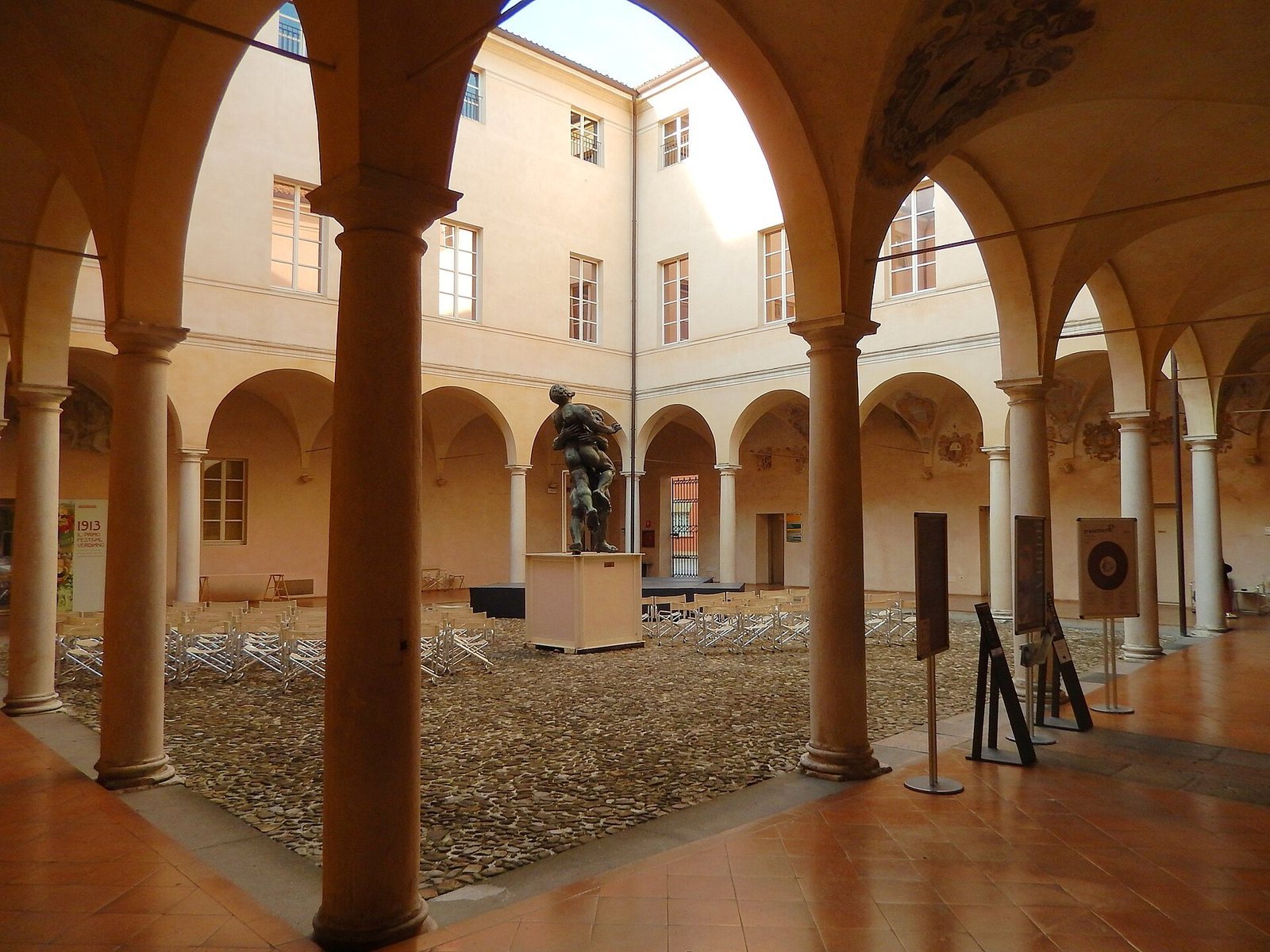
The palace covers 4,500 square metres and has a square plan arranged around an arcaded central courtyard. It rises over three storeys. Its two Renaissance exterior facades are clad in brick, with large, tall windows framed in plaster. Some of the facade decoration remains unfinished, and each facade ends in a high plastered cornice.
Courtyard and painted decoration
The portico surrounding the central courtyard and the palace interiors retain traces of seventeenth-century painted decoration. These include allegorical scenes, heraldic coats of arms, and inscriptions connected with university lecturers.
Hercules and Antaeus
The palace houses a sculpture of Hercules defeating the giant Antaeus in a wrestling contest. Flemish artist Teodoro Vandersturck made it between 1684 and 1687 for Palazzo del Giardino. In 1778 it was placed at the center of Palazzo Cusani’s arcaded courtyard. It was later moved to an islet in the Ducal Park pond, then transferred in 1829 to a niche in Parma Town Hall facing the church of San Vitale. After Palazzo Cusani was restored, the sculpture returned there; a copy remains on one side of the town hall. The sculpture is locally known as I du brasè.
Music and teaching spaces
The floor above ground level contains a 158-seat concert hall, an auditorium, teaching rooms, and a library-media center. These spaces support the palace’s use for concerts, advanced music courses, and exhibitions.