Jinjue Mosque: A Ming-Era Mosque in Nanjing, China
Site at a Glance
- Rating
- 4.6
- Popularity
- Medium
- Country
- China
- Primary era
- Modern
- Eras represented
- Early Modern, Modern
- Civilizations
- Ming, Qing
- Site type
- Religious
- Remains
- Mosque
On this page9 sections
History
Ming foundation and rebuilding
Jinjue Mosque is an operating place of worship associated with Sunni Islam, one of Islam’s two principal branches, in Nanjing, China. The Hongwu Emperor, founder of the Ming dynasty (1368 to 1644), ordered its construction in 1388, and the mosque was completed in 1392.
A fire destroyed the mosque during the reign of the later Ming ruler Xuande. Zheng He, a Ming admiral and maritime envoy, appealed for its renovation, and major repairs were completed in 1430.
Later repairs and changes to the grounds
Repairs took place in 1492, followed by further expansion and renovation ordered by the Jiajing Emperor in the mid-sixteenth century. Additional repair work was carried out in 1877 and 1879. The present structure was built during the late Qing dynasty, which ruled China from 1644 to 1912.
By the late nineteenth century, the mosque’s grounds had contracted from 107 hectares to 1,650 square metres. This reduction followed the Taiping Rebellion, a major civil conflict in nineteenth-century China, and was also intended to lower the taxes owed by the mosque.
Modern repairs and expansion
Further repairs were carried out in 1957, 1982, 1984, and 2002. Nanjing’s municipal government supported renovation work in 2007. In 2014, the government added an adjoining primary school to the mosque grounds, doubling their area.
Remains
Architectural layout
Overall plan
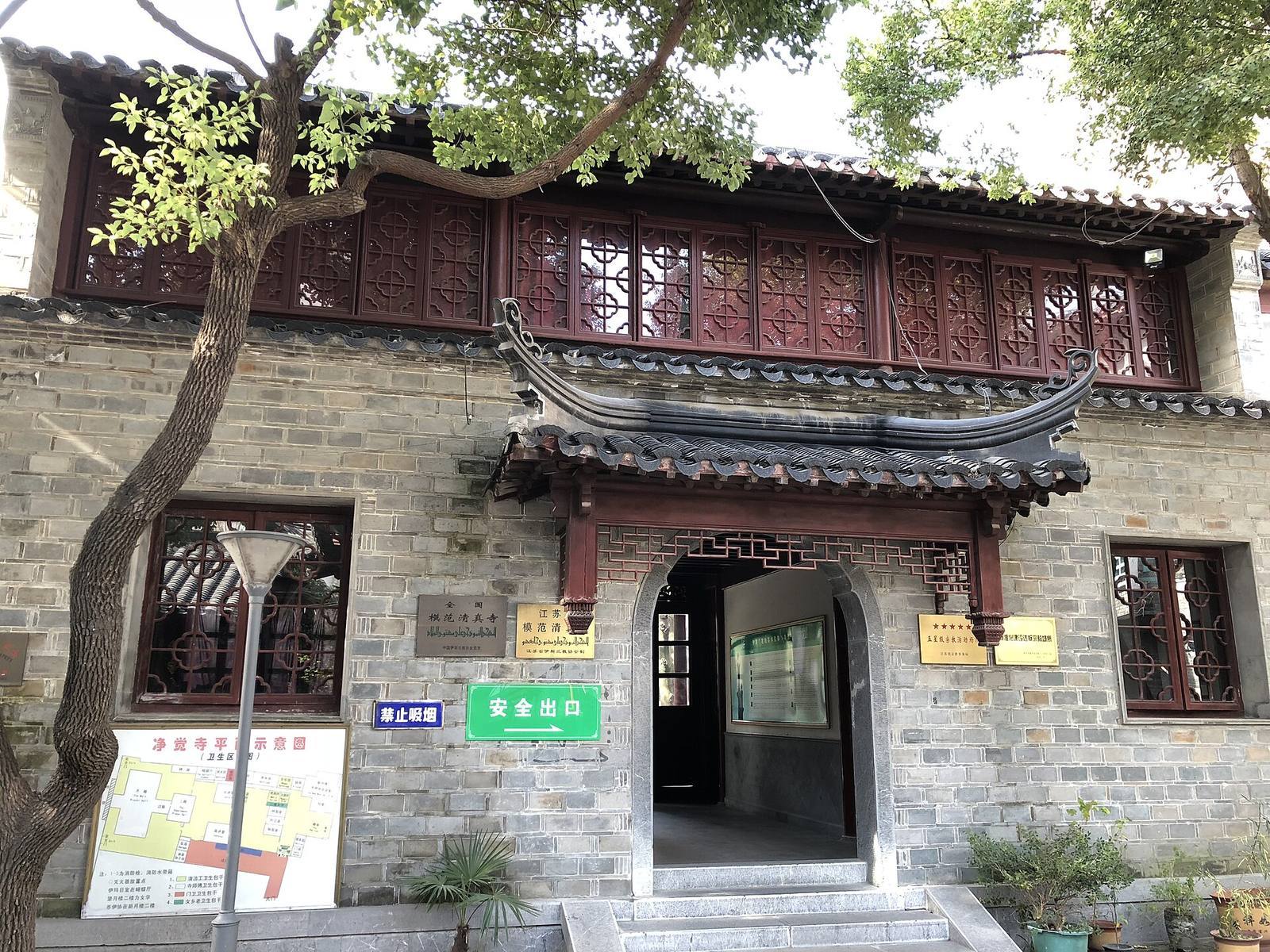
The site covers 4,000 square metres, and its buildings combine Chinese and Islamic architectural styles. Several courtyards form part of the complex, which also includes a reception room, a washing area, an antechamber, guest quarters, a prayer hall, and a kitchen.
Entrance gate
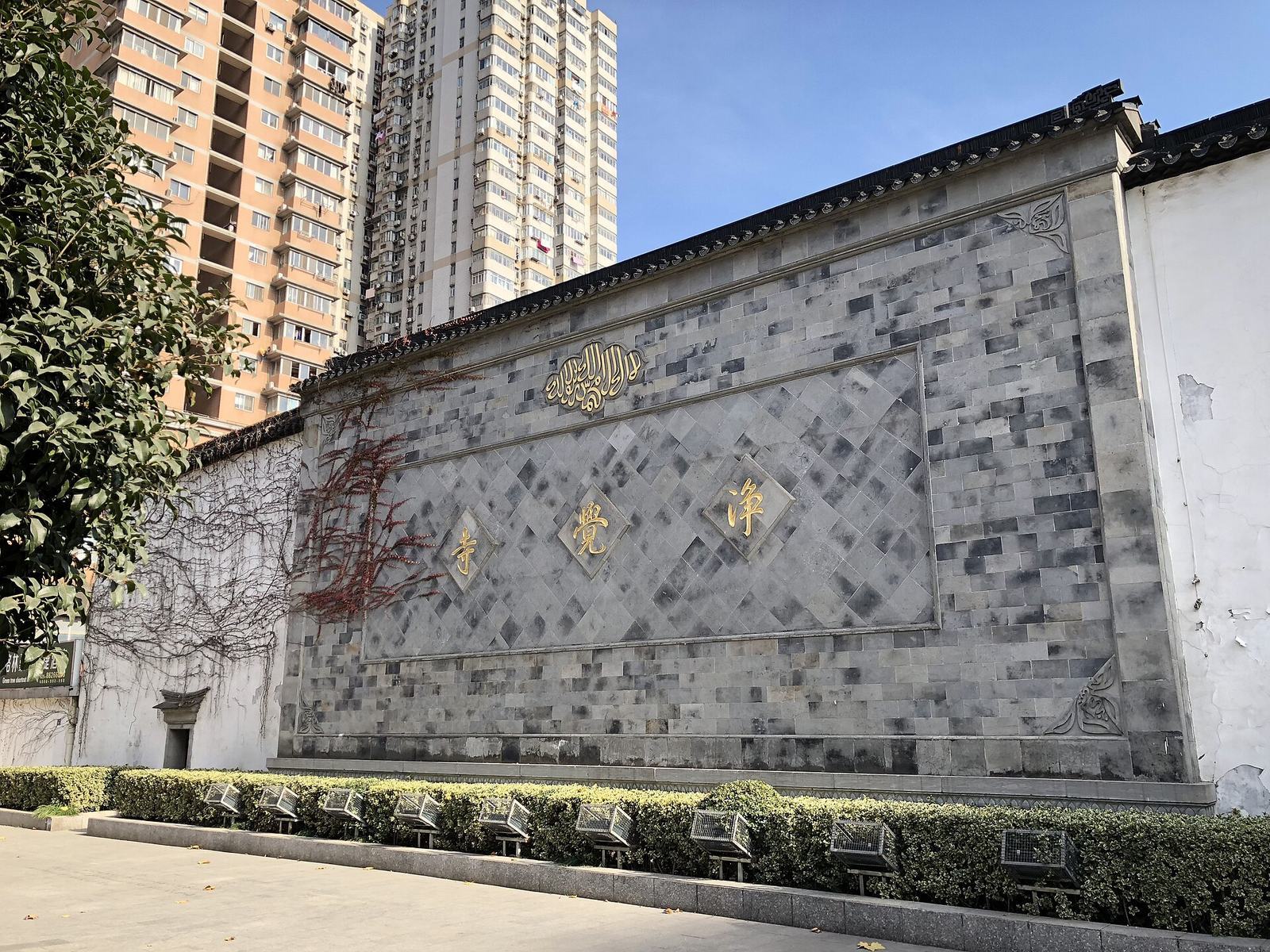
The gate has three entrances, with an imitation imperial plaque set above them at the centre. Its inscription reads “Bestowed by Imperial Order,” with Jingjuesi beneath.
Prayer hall
A mihrab, a niche indicating the direction of prayer, stands at the western end of the prayer hall.