Steinegg Castle: A Medieval Seat and Former Health Resort in Switzerland
Site at a Glance
- Rating
- 5
- Popularity
- Very Low
- Country
- Switzerland
- Primary era
- Medieval
- Eras represented
- Medieval, Early Modern, Modern
- Civilizations
- Holy Roman Empire, Swiss
- Site type
- Domestic
- Remains
- Castle
On this page9 sections
History
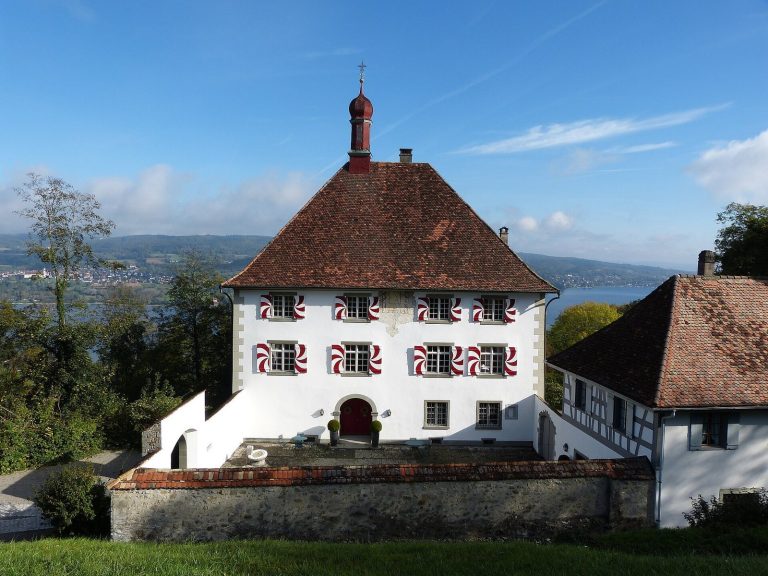
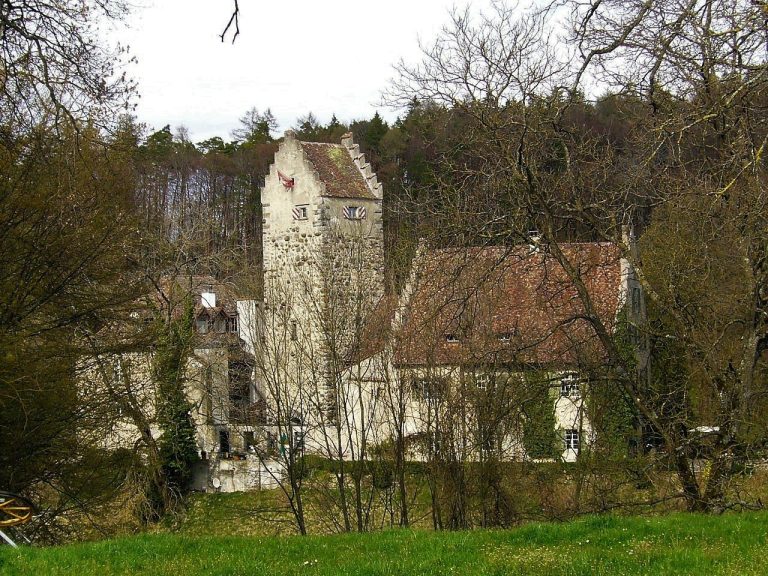
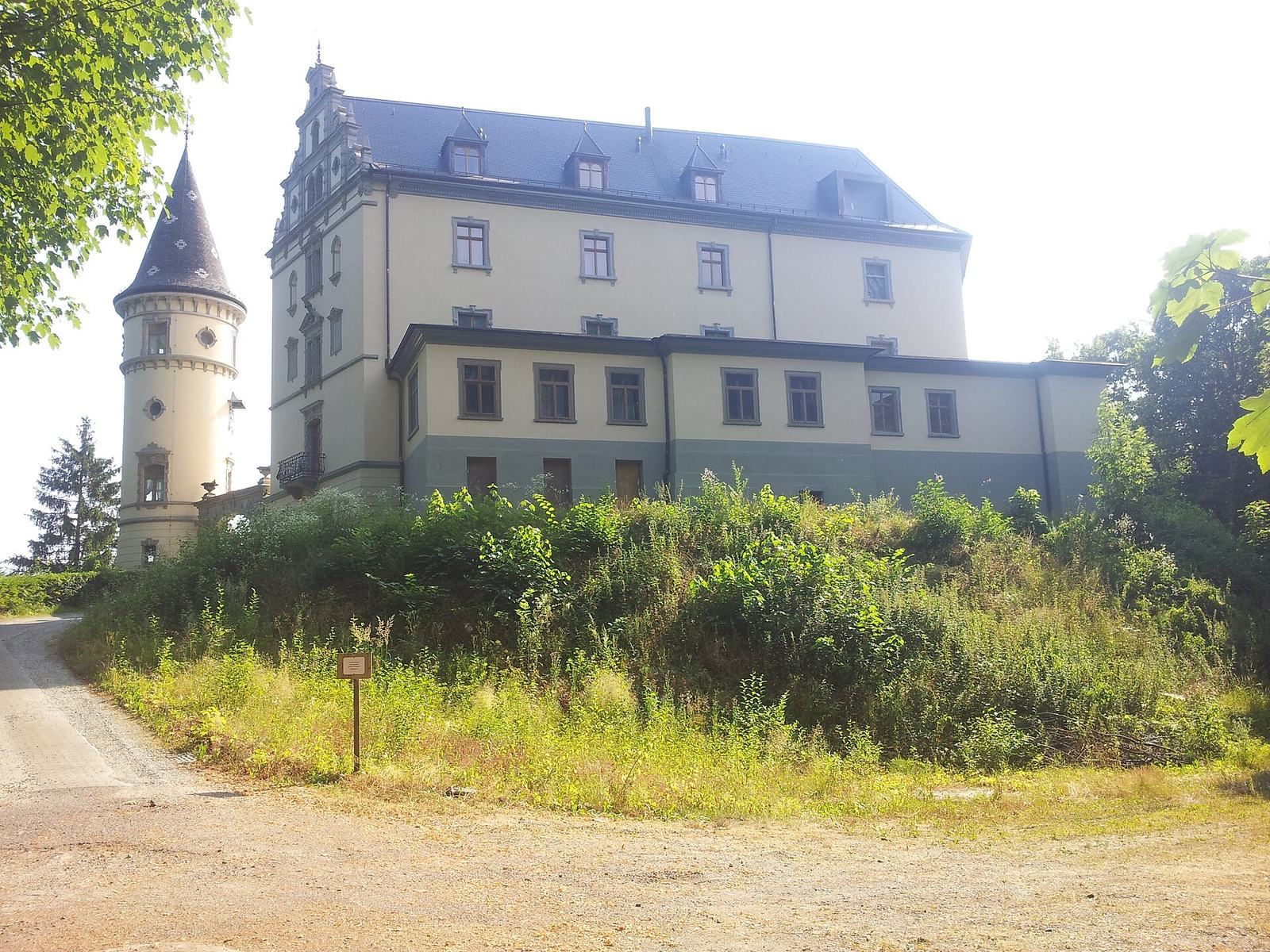
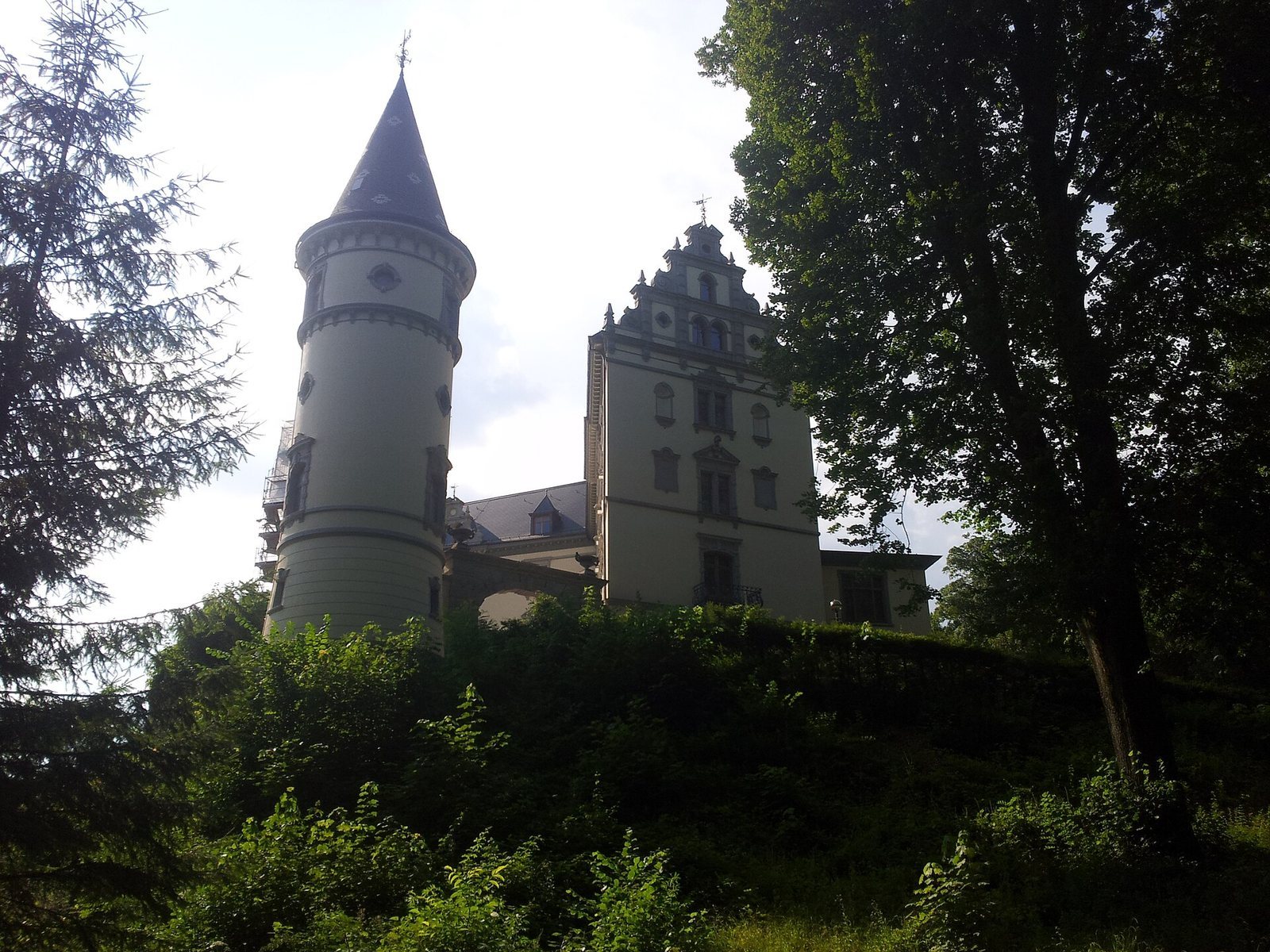
Steinegg Castle, in Hüttwilen, Switzerland, originated in the 13th century and later served as the administrative seat of Zurich’s chief bailiffs for Steinegg-Stammheim. An 1886–87 remodelling gave the castle a Neo-Renaissance appearance, a 19th-century revival of Renaissance forms. In the 20th century, it became a natural-medicine and fasting clinic.
Medieval origins and changing lords
The castle probably began as the ancestral seat of the Barons of Steinegg. The name Steinegg means “stony height” and was common in eastern Switzerland and southern Germany, making references to particular places and noble families difficult to distinguish when records gave no further details.
Until 1387, Steinegg belonged to ministerials, officials or retainers serving a lord or institution, of the Bishopric of Constance, including the Barons of Ramstein. Walter von Münchwil owned the property in 1423. In 1472 it passed to Bernhard von Payer, also spelled Peyer, who became known as Bernhard Payer of Steinegg. His son Heinrich is recorded with that name in 1517.
The castle probably burned around 1520. By 1527 it was described as a castle and stronghold. Ownership in the mid-16th century is uncertain: the Peyer family is associated with Steinegg until 1567, while an alternative sequence places the von Roggwil family there from 1542 and the von Beroldingen family from 1567. A handwritten note beneath a drawing of the castle pairs 1225 with Dieth. v. Stainegge, 1494 with Payer, 1580 with Landenberg, and 1583 with Zurich.
Zurich administration and private ownership
Steinegg passed to the Benedictine monastery of St. Georgen at Stein am Rhein in 1574 and to the city of Zurich in 1583. Zurich acquired the lordship chiefly for confessional reasons. From 1584 until 1798, the castle housed Zurich’s chief bailiffs, officials who administered the local district of Steinegg-Stammheim.
When the bailiwick was dissolved in 1798, Ober- and Unterstammheim became part of the Canton of Zurich, while Nussbaumen and Steinegg became part of the Canton of Thurgau. The castle entered private ownership in 1806. Bernhard Zeerleder bought the estate in 1814 and made it his residence; it was sold on 6 August 1863.
Clinic, hotel, and residential use
In 1886–87, Alfred Ziegler commissioned a major remodelling and ran an agricultural estate from the castle. The estate was separated from the castle in 1901 and taken over by Victor Fehr. That year, physician Johann Paul Maag established a natural-medicine and fasting clinic in the building. The clinic treated conditions including nervous weakness, neuralgia, heart and vascular disorders, asthma, and chronic digestive-tract inflammation. Its main building could accommodate up to 35 guests, and the clinic aimed to keep treatment affordable.
In 1923, the Swiss Association for the Promotion of Public Health took over the clinic and continued it as a cooperative. By about 1955 it was operating as the Schloss Steinegg spa. Schloss Steinegg AG was registered in 1956 to run the property as a spa hotel, particularly offering fasting treatments. The company went bankrupt in 2003, and attempts to resume hotel operations in 2005 and 2006 failed. In October 2006, James Rennie and Yvonne Thom, an English couple then living in Singapore, bought the estate as a private home. A comprehensive renovation involving heritage and archaeological specialists began in the following years.
Steinegg is listed in the Canton of Thurgau’s cultural-property inventory as a category B object, a classification for regional importance.
Remains
The castle complex stands on a wooded height about 585 metres above sea level. It includes the main building, a southeast wing, and a separate tower to the southeast. The ground falls steeply north and west into the Staanegger ravine. Lake Hüttwiler lies about 1.4 kilometres southwest, at an elevation of roughly 435 metres; national maps called it Steineggersee until about 1960.
Castle buildings and estate
Main building
The main castle occupied 668 square metres in the estate’s 2003 property breakdown. The 1886–87 remodelling established its Neo-Renaissance appearance. In 2009, renovation work removed a northern hotel extension built in 1986, along with a southeast kitchen extension and winter garden dating to the 19th century. The roof framework was dismantled during the work. A heraldic panel bearing Ziegler’s arms, made in 1887, was transferred from the castle to the Historical Museum of Thurgau in Frauenfeld in 2017.
Southeast wing and tower
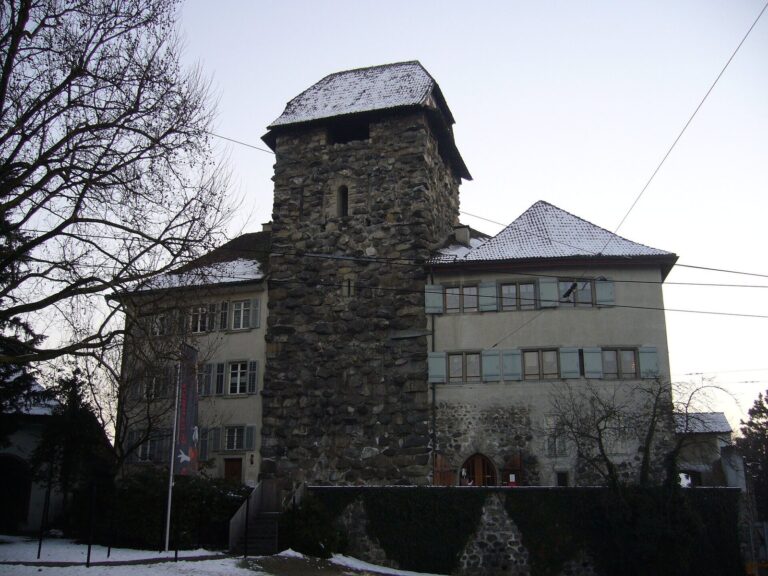
A southeast wing and a freestanding tower, known as a rondel, a tower form associated with fortifications, were built in 1624–26. Their appearance is represented in historical drawings and prints. One copper engraving followed a drawing by the Swiss artist and cartographer Johann Melchior Füssli, based on a castle view in Zurich’s revised map of 1685. Hermann Stähelin later made a watercolor-and-ink drawing after an engraving by David Herrliberger.
Grounds and outbuildings
At the time of the 2003 bankruptcy, the Tobelwald property covered 75,621 square metres. Its listed components included 51,661 square metres of forest, 16,389 square metres of field, and 5,461 square metres of courtyard and garage area. The property breakdown also included a tower, gardener’s shed, pump house, road, and stream.