Palazzo Santacroce a Sant’Angelo: A Renaissance Palace in Rome
Site at a Glance
- Rating
- 5
- Popularity
- Very Low
- Country
- Italy
- Primary era
- Early Modern
- Eras represented
- Early Modern
- Civilizations
- Papal States
- Site type
- Domestic
- Remains
- Elite Residence
On this page9 sections
History
Family origins and conflict
The Santacroce family had lived in Rome since the eleventh century and settled in the Sant’Angelo district in the following century. Its members became involved in Rome’s baronial wars, conflicts among powerful aristocratic families, particularly in opposition to the Margani family.
Expulsion and return
Pope Sixtus IV, whose papacy lasted from 1471 to 1484, expelled the Santacroce and ordered their houses demolished. The family returned after the election of Pope Innocent VIII. By the end of the fifteenth century, it had acquired the fief of Vejano, a landholding held under a lord’s authority, typically in return for service.
In 1501, Antonio Santacroce ordered a palace built on the ruins of the family’s demolished residences. Palazzo Santacroce a Sant’Angelo is a Renaissance palace in Rome’s Sant’Angelo district, Italy.
Renewed standing
The family later regained standing in Roman society. Its members were elected as senators and as conservators, civic magistrates associated with the city government at the Capitol. Four became cardinals, senior clerics in the Catholic Church. The first, Prospero Santacroce, was credited, and sometimes blamed, for introducing tobacco to Rome; it became known as the “Santacroce herb.” Many members of the family were buried in the nearby church of Santa Maria in Publicolis.
Remains
The palace exterior
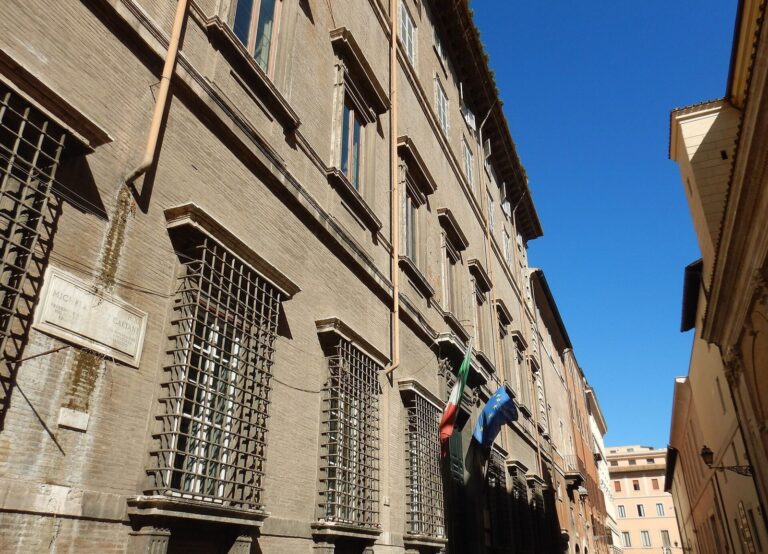
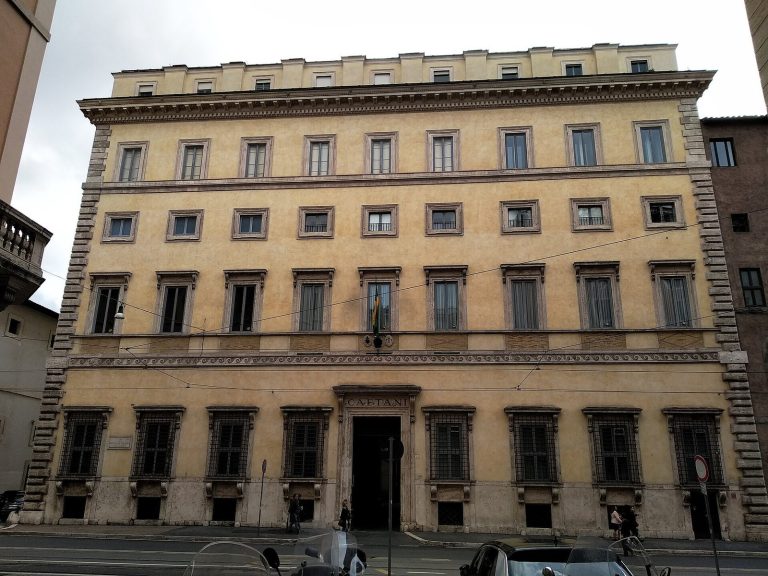
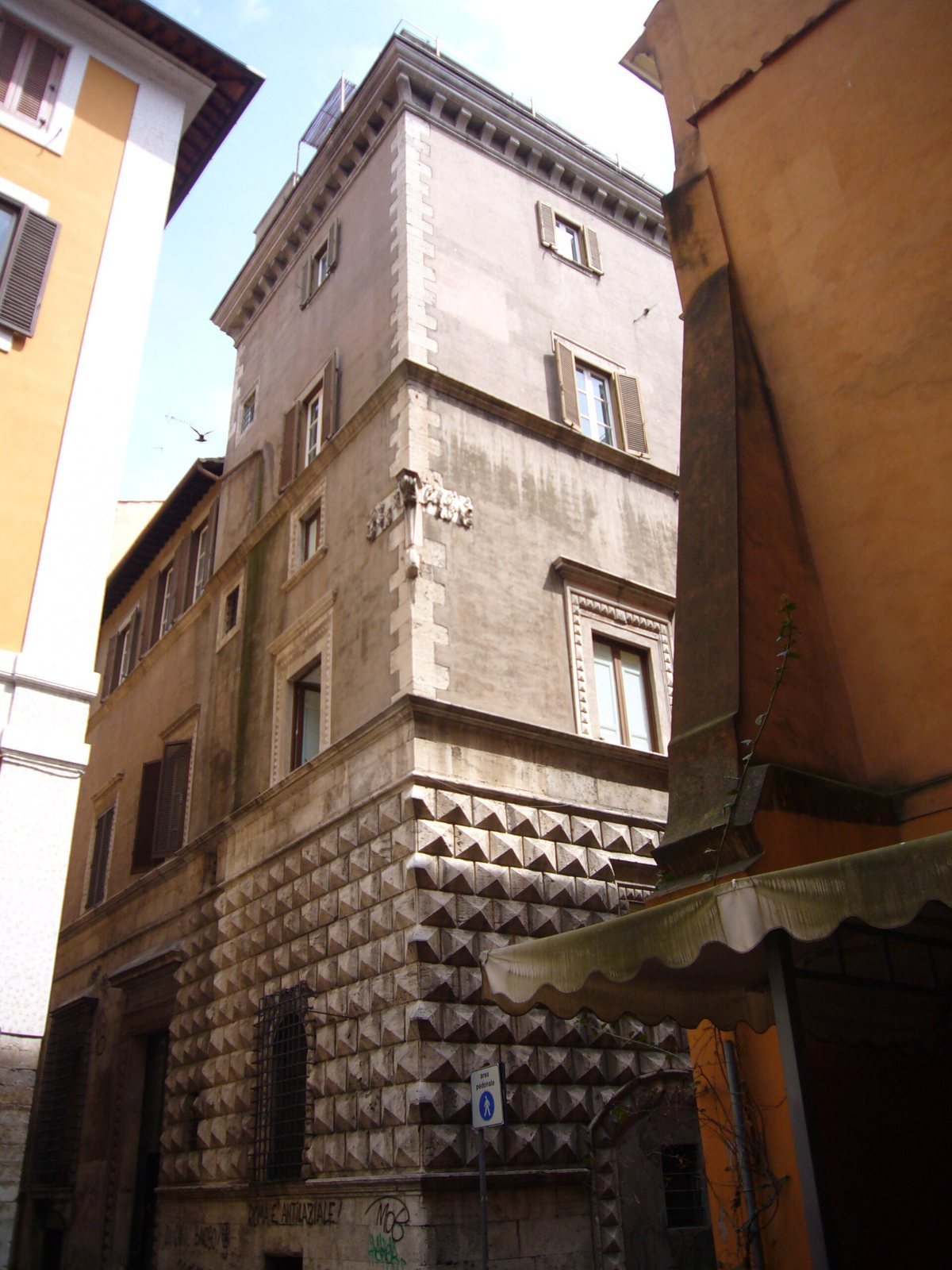
The Renaissance palace is distinguished from Palazzo Santacroce alla Regola by its location in the Sant’Angelo district. Its exterior combines a corner tower with walls faced in travertine, and inscriptions on the portal and windows commemorate the house’s refounder.
Corner tower
A stark tower rises at the palace corner. Its ground floor features diamond-point rustication (masonry carved into projecting, faceted forms), a treatment unique in Rome. A seventeenth-century upper elevation reduced the tower’s dominance in relation to the rest of the building.
Travertine walls
Plain travertine slabs face the rest of the building, contrasting with the faceted stonework at the tower’s base.
Portal and windows
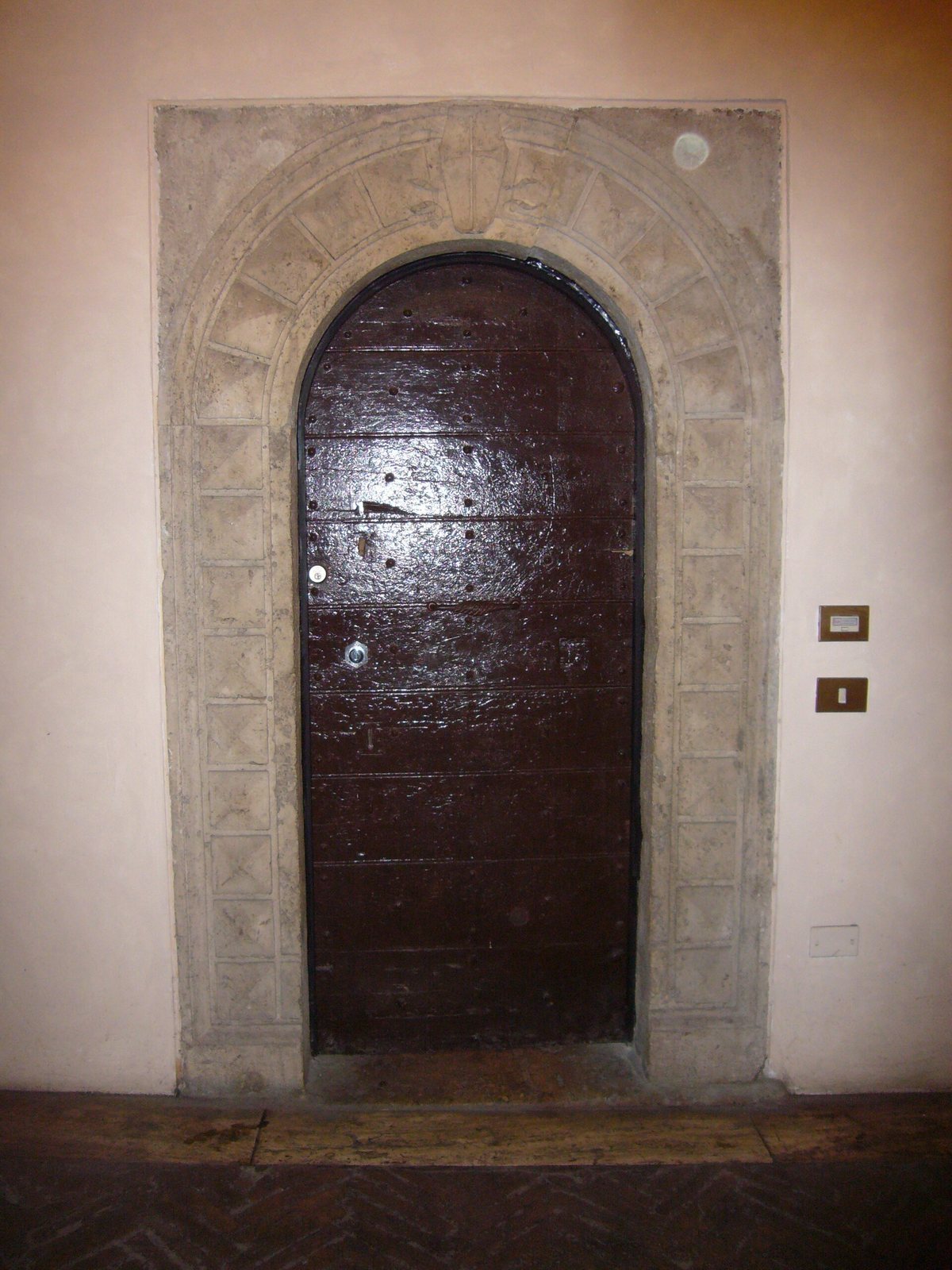
Inscriptions on the main portal and windows commemorate Antonio Santacroce. They include the Latin wording ANTONIUS DE SANCTACRUCE [FECIT], meaning “Antonio of Santacroce [made this].”