Hapcheon Okjeon Tumuli: A Gaya Burial Complex in South Korea
Site at a Glance
- Rating
- 4.6
- Popularity
- Low
- Country
- South Korea
- Primary era
- Classical
- External website
- Open
- Eras represented
- Classical, Medieval
- Civilizations
- Unclassified
- Site type
- Burial
- Remains
- Necropolis
On this page13 sections
History
Dara-guk and the cemetery
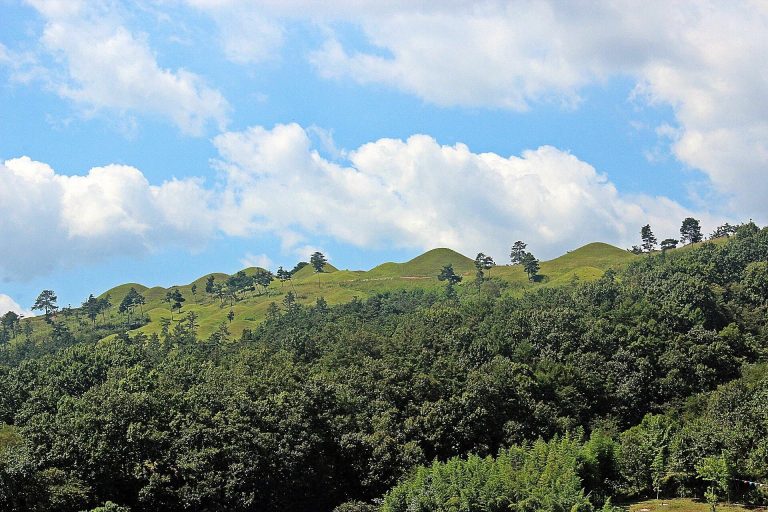
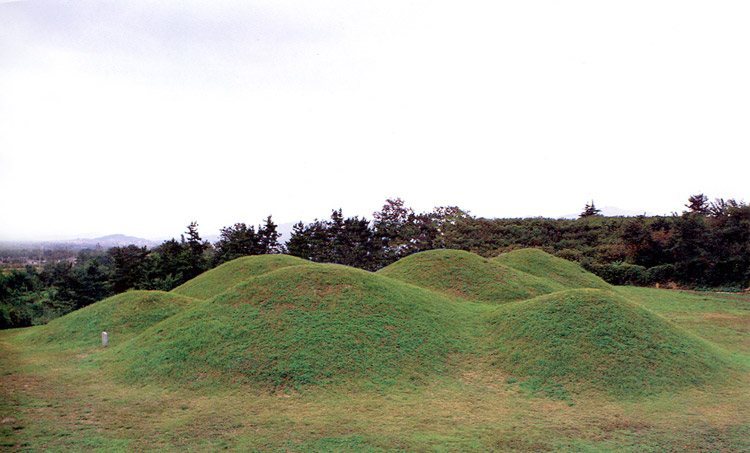
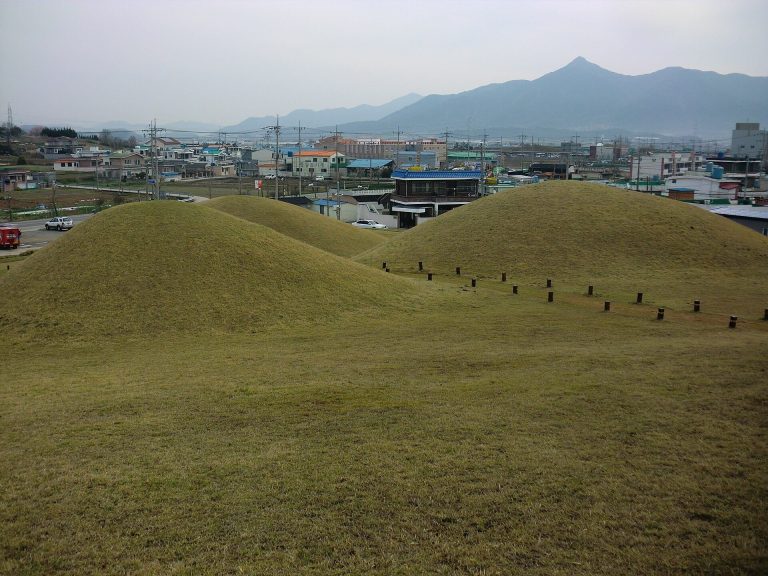
The Hapcheon Okjeon Tumuli are a Gaya burial complex in South Korea, dating from the fourth century to the first half of the sixth. Gaya was a group of small polities in the southern Korean Peninsula, rather than a unified kingdom. The graves are thought to have held members of Dara-guk’s ruling elite.
Changes in tomb scale
The tombs grew abruptly in size during the middle of the fifth century, a change also seen at other Gaya burial grounds. One interpretation links Okjeon to the final phase of the Daeseong-dong tumuli, a cemetery associated with Geumgwan Gaya. Another proposes that members of Geumgwan Gaya’s ruling elite moved to Hapcheon after the mid-fourth century and established a new political centre.
Investigation and heritage recognition
Plans for a flood-control dam on the upper Hwang River brought the cemetery to attention in 1984, when the area was identified as likely to be submerged. Full-scale excavation began the following year. Many tombs had already been looted, but important finds were recovered. The site became a Korean Historic Site in 1988 and took its current name in 2011. It was included in the Gaya Tumuli, inscribed on the UNESCO World Heritage List in 2023. The M3 ring-pommel swords and gold earrings from tombs 28, M4, and M6 received South Korean Treasure designations, a national cultural-heritage category.
Remains
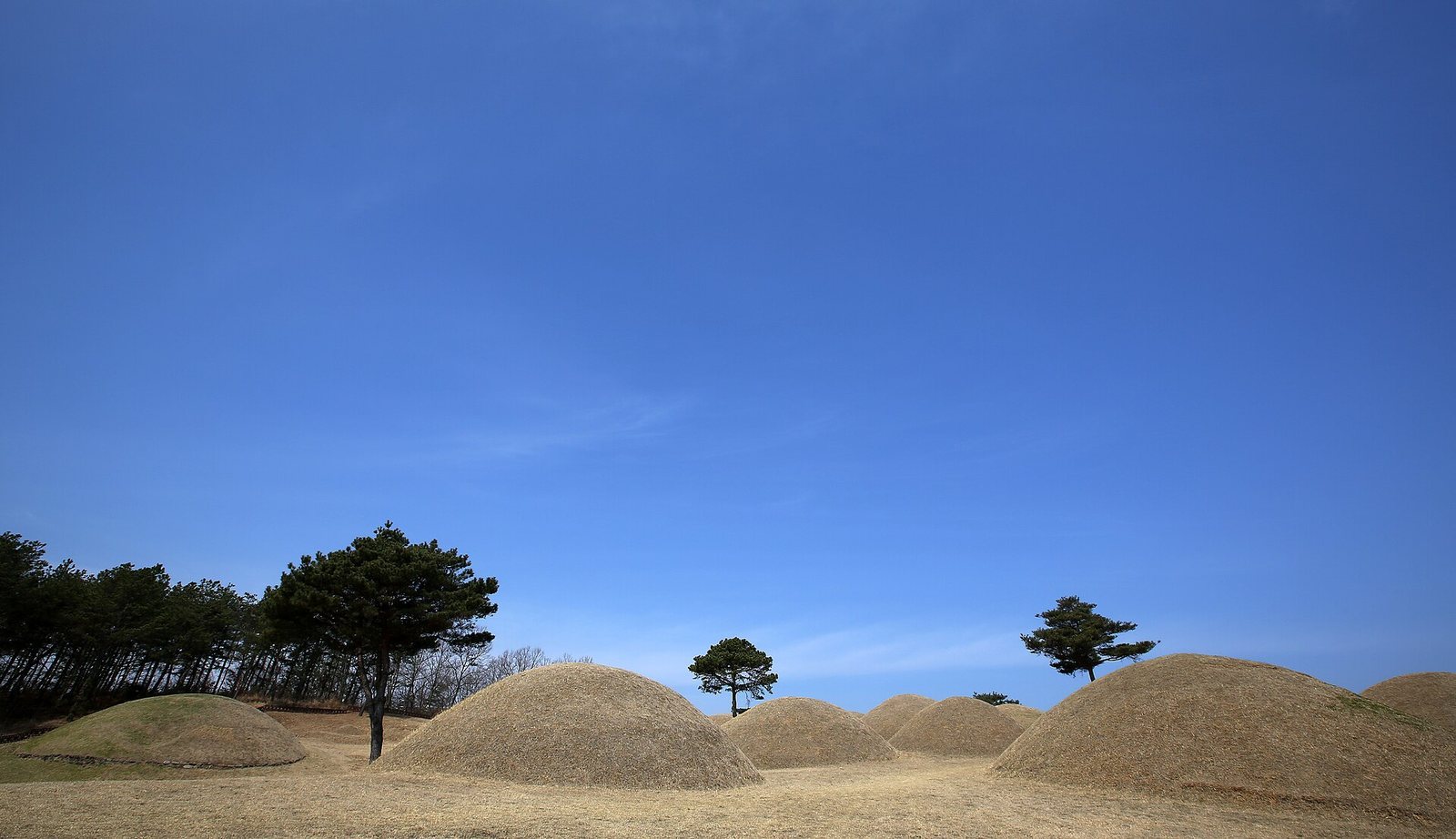
The cemetery covers 131,064 square metres on a hillside beside the Hwang River, a tributary of the Nakdong River. About 1,000 tombs are estimated to lie within the site. One cluster contains eighteen tombs, each 20 to 30 metres in diameter.
Burial structures
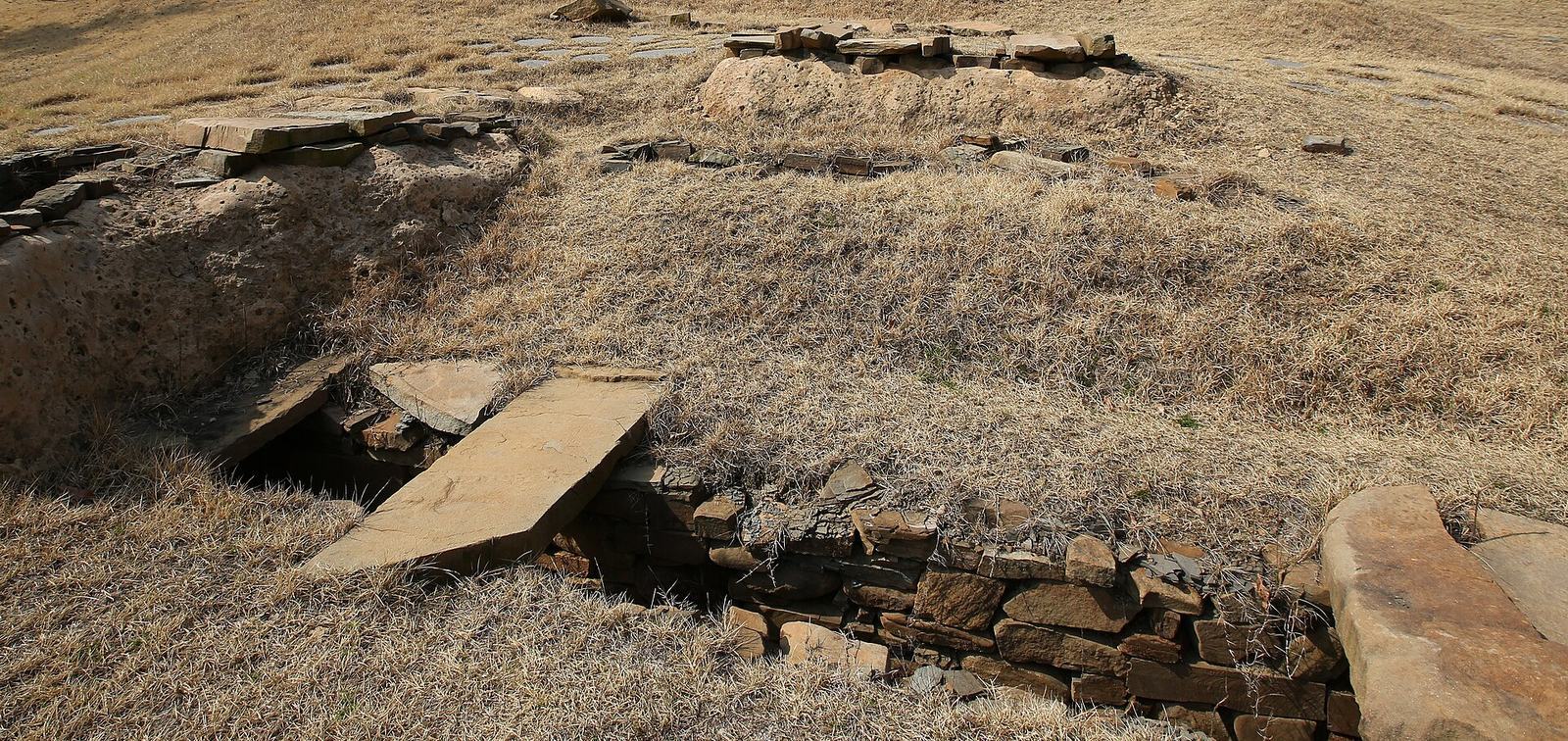
Excavations identified several kinds of burial construction: chambers built of timber, stone-lined grave pits, stone chambers entered horizontally from pits, and stone chambers reached through tunnels. Together, these forms show the range of tomb designs used at the cemetery.
Ornaments and craftwork
Finds include pottery, ornaments, and gold earrings and necklaces with elaborate decoration. More than 2,000 beads and a stone tool were recovered from tomb M2, indicating that beads were made at the site. A headdress from tomb 23 has a gold-coated bronze rod at its top. Its form is rare, with no known parallel in Korea.
Weapons and equipment
Ring-pommel swords
A ring-pommel sword has a ring-shaped fitting at the end of its hilt. Four such swords came from tomb M3, bearing dragon-and-phoenix, phoenix, or dragon designs. This is an unusually large group from a single tomb. Tomb 35 yielded an inlaid sword in an archaic style, providing evidence for the origins of ring-pommel swords.
Helmets and armor
Thirteen helmets and five suits of armor were recovered. The helmet from tomb A is made entirely of bronze covered in gold and has been compared with a helmet from a Goguryeo fortress in North Pyongan Province. Goguryeo was an ancient Korean kingdom. The iron-plate armor from tomb 68 is a rare type also known from the Bokcheon-dong tumuli. Alongside armor from fifth-century Japan, it is important for the study of ancient armor.
Horse helmets
Five helmets for horses were excavated at Okjeon. Elsewhere in East Asia, one example is known from the Bokcheon-dong tumuli and two from Japan.
Deposits beneath the coffins
Two fittings associated with a standard or flag, together with about 130 cast-iron axes, lay beneath the coffin in tomb M3. A sword was placed beneath the coffin in tomb 28. These deposits are interpreted as expressions of the tomb owners’ wealth and authority.
Evidence of external connections
Fragments of a glass cup made from Roman glass, meaning glass produced in the Roman world, were found at the cemetery. Similar objects have been excavated in Silla, an ancient Korean kingdom, and in Japan. The cup is regarded as evidence of Gaya’s connections beyond the peninsula and of its political influence.