Haeinsa: A Buddhist Temple and Guardian of the Tripitaka Koreana
Site at a Glance
- Rating
- 4.6
- Popularity
- Medium
- Country
- South Korea
- Primary era
- Early Modern
- External website
- Open
- Eras represented
- Medieval, Early Modern
- Civilizations
- Joseon
- Site type
- Religious
- Remains
- Monastery
On this page13 sections
History
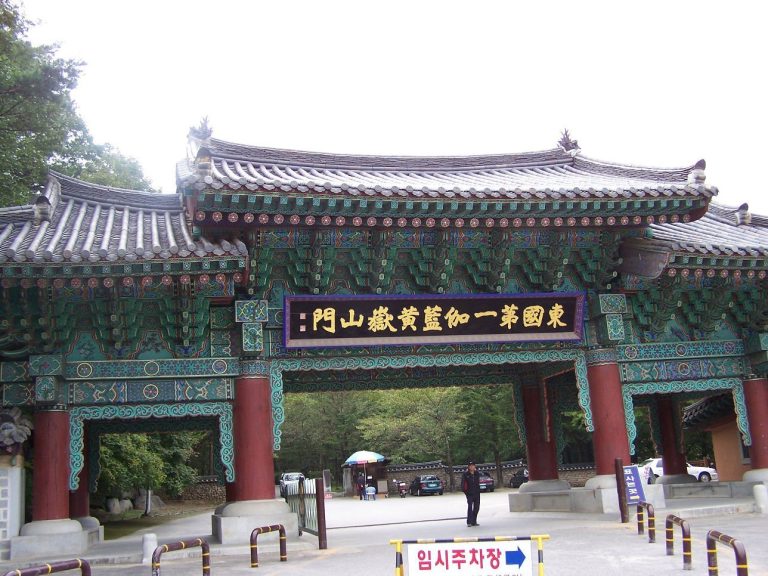
Haeinsa is a Buddhist temple on the flank of Gayasan Mountain in Hapcheon, South Korea, founded in 802 during the Unified Silla period, when Silla ruled most of the Korean Peninsula. It belongs to the Jogye Order of Korean Seon Buddhism, the Korean meditation tradition, and serves as the head temple of the order’s twelfth regional district. Haeinsa is also one of Korea’s Three Jewels Temples, representing the Dharma, or the Buddha’s teachings, because it preserves the Tripitaka Koreana.
Foundation and Silla heritage
Haeinsa’s precise foundation story is uncertain. Tradition credits the monks Suneung and Ijeong with establishing the temple after curing the illness of King Aejang’s queen. Another account says that a queen dowager who had converted to Buddhism provided financial support. Both traditions connect the foundation with the Silla court, but they preserve different explanations for how the temple began.
During the reign of Queen Jinseong, her uncle Wihong was honored after death as King Hyesong. Haeinsa was then renamed Hyesong-daewang-wondang, and a memorial shrine was created there. The queen later moved her residence near the temple and died there. In 935, Prince Kim Deokji, the youngest son of King Gyeongsun, entered Buddhist life under the name Beomgong. After Silla fell, he commissioned a portrait of King Gyeongsun for Haeinsa and died at the temple.
Goryeo patronage and the Tripitaka Koreana
Haeinsa gained new royal support during the reign of Taejo of Goryeo, the dynasty that ruled Korea from 918 to 1392. The abbot Huirang assisted Taejo during his conflict with Later Baekje forces near the temple, sending warrior monks who helped secure the king’s victory. Taejo enlarged Haeinsa, granted it land, made it a state temple, and used it to store important state documents.
The temple’s later history became closely tied to the Tripitaka Koreana, a complete Buddhist canon carved into wooden printing blocks. An initial version was produced around 1087, but Mongol forces destroyed it in 1232. The surviving collection was recarved between 1236 and 1251 over sixteen years. The woodblocks had been housed at Haeinsa by 1398, where they remain.
Rebuilding and preservation
More than five major fires led to repeated rebuilding and enlargement. A substantial reconstruction took place in 1393, when the Jeongjung Pagoda was rebuilt and the temple expanded. Another rebuilding campaign began in 1481 and continued for eight years. Most of the halls now visible at Haeinsa date from the late Joseon period, the dynasty that followed Goryeo and ruled from 1392 to 1910. Further renovations took place in 1622 and 1644.
The 1964 renovation revealed a robe associated with King Gwanghaegun and an inscription on a ridge beam. Gwanghaegun had sponsored the 1622 work. Haeinsa was almost entirely destroyed by a major fire in 1817 and rebuilt in 1818, while the Janggyeong Panjeon storage complex survived that disaster and earlier fires, including those connected with the Japanese invasions of Korea from 1592 to 1598.
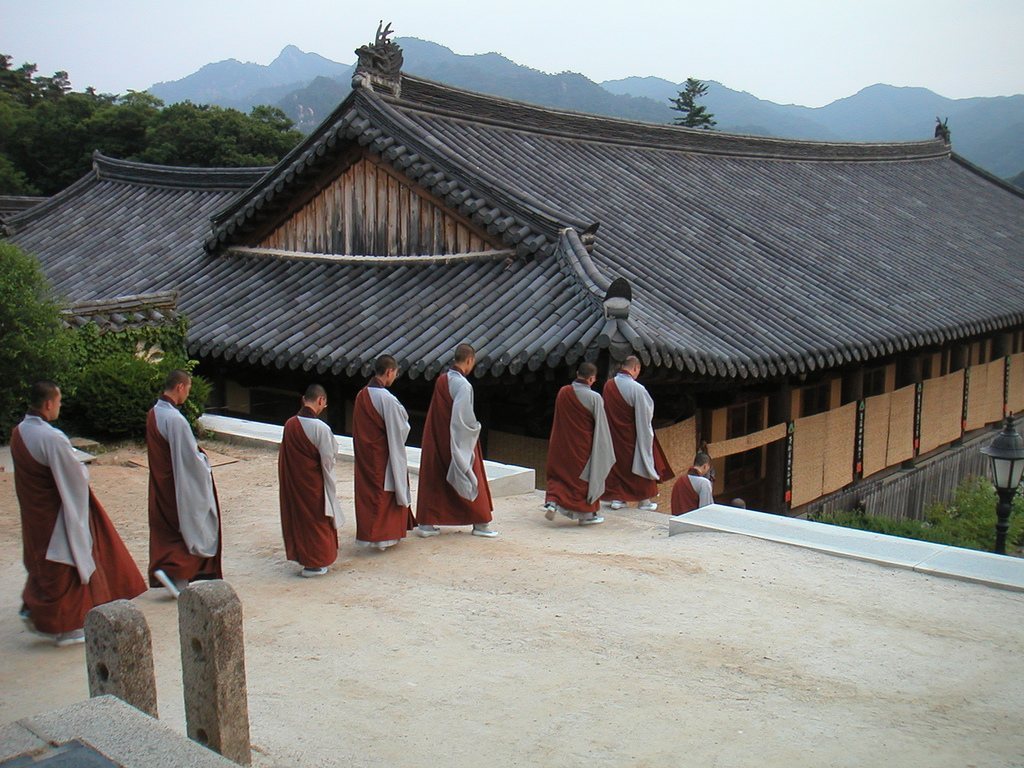
Haeinsa remains an active Seon practice center. The Seon master Seongcheol became the first abbot of Haein Chongnim in 1967, later served as the tenth supreme patriarch of the Jogye Order, and died at Haeinsa in 1993. During the Korean War, more than 1,000 North Korean troops carried out guerrilla operations around the temple after the September 1951 Incheon landing. United Nations forces ordered an air attack, but Air Force Colonel Kim Young-hwan refused to bomb Haeinsa even though enemy troops were sheltering there. His decision saved the temple and the Tripitaka Koreana from destruction. A monument to him was erected near Samseonam in 2002.
In 2005, writing from the Unified Silla period was found inside the Vairocana image from Beopbojeon. Scientific examination identified the sculpture as a Unified Silla work rather than a Joseon-period creation, and the paired Vairocana images were subsequently enshrined together in Daebirojeon. The Janggyeong Panjeon and its woodblocks were inscribed on the UNESCO World Heritage List in 1995 under criteria IV and VI. The Tripitaka Koreana woodblocks entered the UNESCO Memory of the World Register in 2007, and Haeinsa became Historic Site of South Korea No. 504 in 2009.
Remains
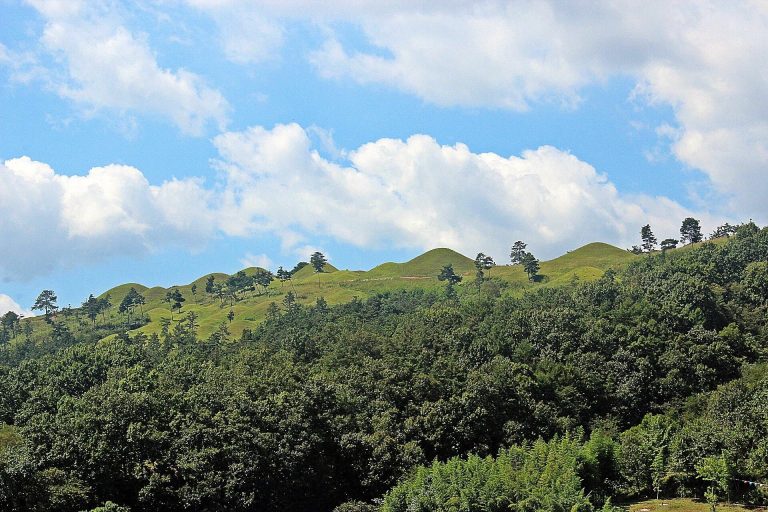
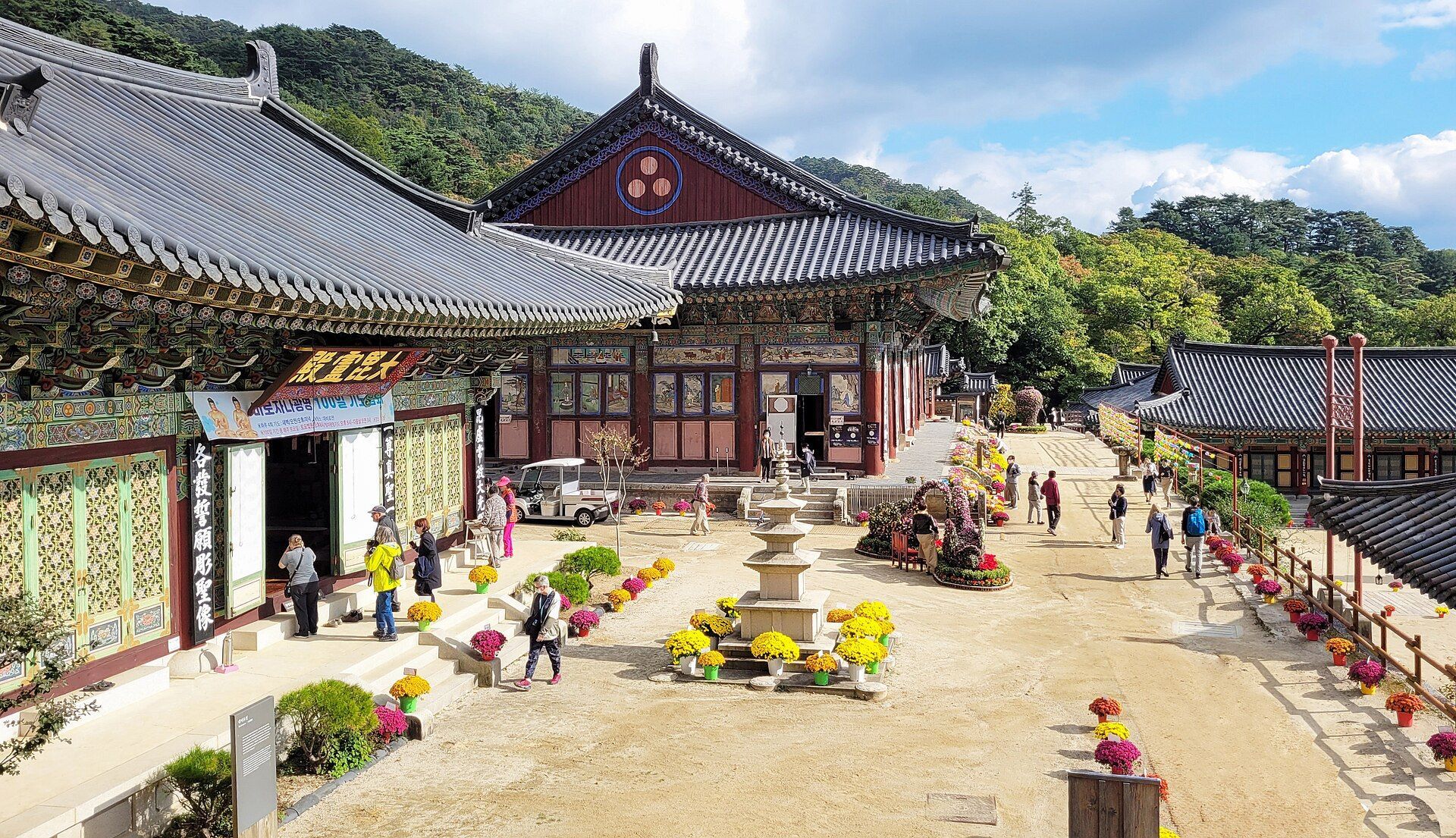
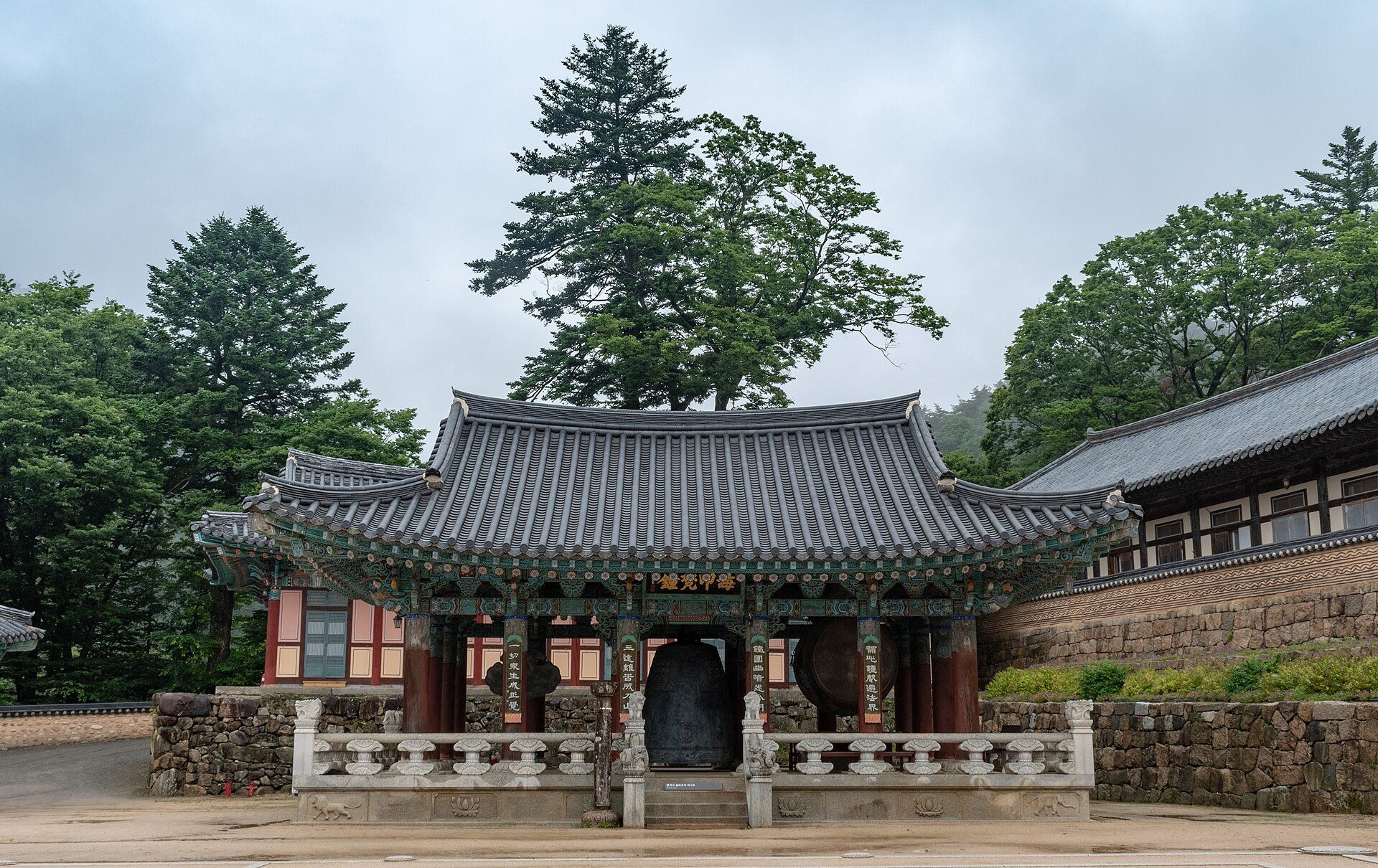
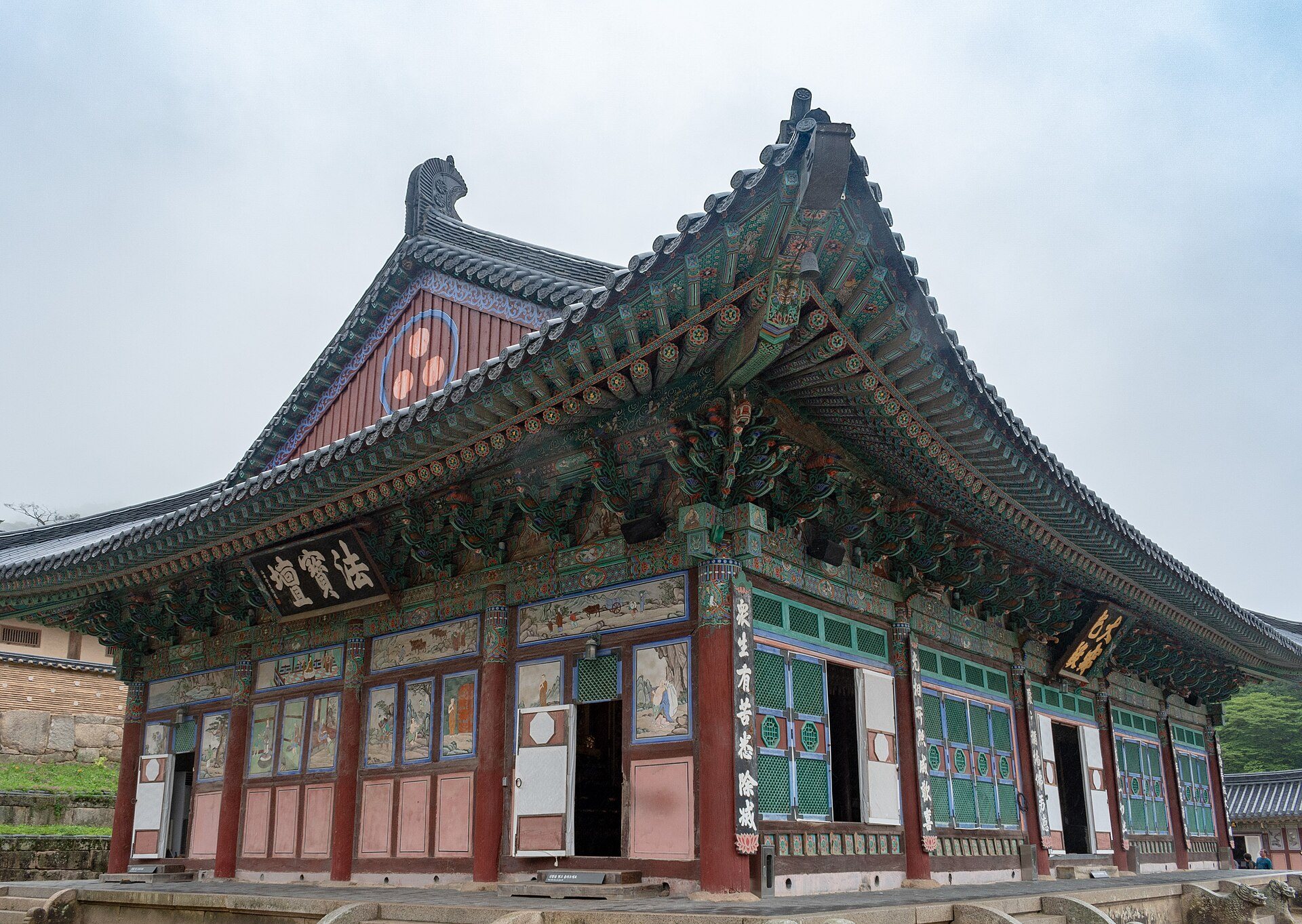
Haeinsa occupies a mountain setting within Gayasan National Park. Its principal hall is Daejeokkwangjeon, the Hall of Great Silence and Light, which enshrines Vairocana, a transcendent Buddha associated with the universal body of Buddhahood, rather than Gautama, the historical Buddha. Other principal features include Daebirojeon, Guksadan, Gugwangnu, the Haein Bell, and the Janggyeong Panjeon. Guksadan houses mountain and territorial deities. Stone pagodas and lanterns, wooden carvings of monks, Buddhist paintings, and other temple art survive across the grounds.
Vairocana halls and temple art
Daebirojeon
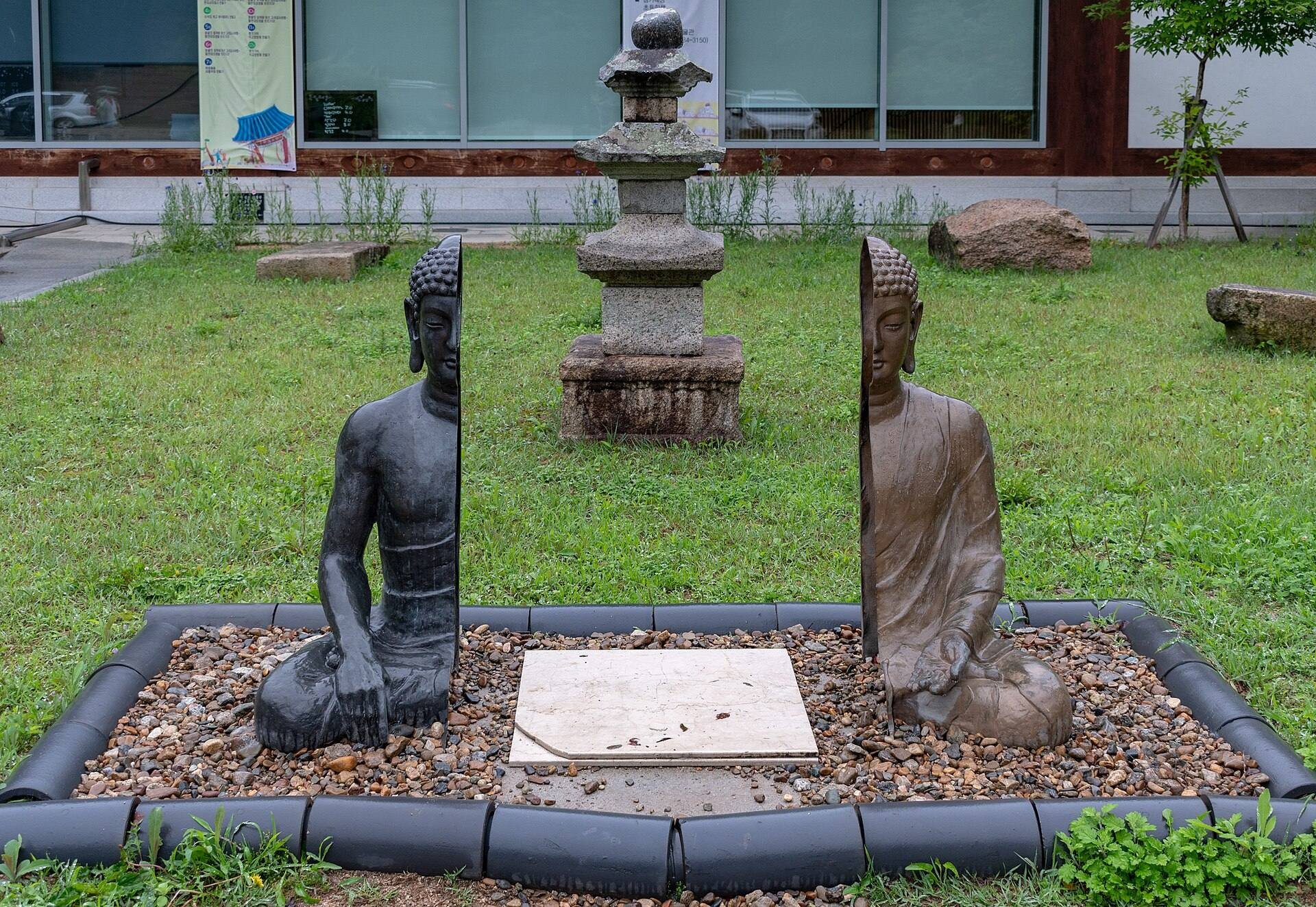
Daebirojeon contains twin Vairocana images. The image formerly kept in Beopbojeon bears Unified Silla-period writing that says two life-sized images were made for a high official and his wife. The official is identified as Wihong, while the woman is traditionally understood to have been Queen Jinseong. Their placement together in Daebirojeon reflects the sculptures’ shared identity and early date.
Other surviving works
The temple’s surviving artistic and historical material includes a Joseon-period portrait traditionally identified as King Sejo, portraits of three monks, and a wooden seated Buddha at Baekryeonam. Woodblocks belonging to the Fenggye Collection are also associated with Haeinsa. The grounds contain additional wooden carvings, Buddhist paintings, stone pagodas, and stone lanterns.
Janggyeong Panjeon and the woodblocks
Storage complex
Janggyeong Panjeon is a rectangular four-building complex and the oldest surviving part of Haeinsa. Its exact construction date is uncertain, although tradition holds that King Sejo expanded and renovated it in 1457. Two long halls run north to south, with two shorter buildings joining their end walls. Beopbojeon, the northern hall, stores philosophical prose texts, while Sudarajang, the southern hall, stores Buddhist doctrinal and sutra texts. The smaller eastern and western buildings provide two additional small libraries and storage for artworks.
Beopbojeon and Sudarajang each measure 60.44 meters in length, 8.73 meters in width, and 7.8 meters in height. Each is divided into fifteen sections, with every section containing one large room and two adjoining smaller rooms. The complex stands at the highest point of the temple, more than 655 meters above sea level. Its southwest-facing position avoids damp southeasterly winds from the valley, while surrounding peaks shield it from cold northerly winds.
Preservation system
The storage halls use differently sized windows on their north and south sides to control cross-ventilation, temperature, and airflow. Their clay floors contain charcoal, salt, lime, and sand, materials that absorb excess moisture in wet conditions and help maintain humidity during the dry winter. Clay roofs, timber rafters, and bracket systems moderate sudden temperature changes, while the arrangement of the buildings limits direct sunlight in the storage areas. Animals, insects, and birds generally avoid the complex for reasons that remain unknown. The combined effects of ventilation, humidity control, orientation, roofing, and restricted sunlight are credited with preserving the woodblocks in exceptional condition.
Tripitaka Koreana
The Tripitaka Koreana comprises 81,258 wooden printing blocks and represents one of the most extensive collections of Buddhist scriptures. Most blocks were carved from durable cherry and pear wood. The timber was boiled in salt water and slowly dried to reduce cracking before the blocks were stored in Janggyeong Panjeon. No carving errors or later corrections have been identified on them.
The storage halls are National Treasure No. 52, while the Tripitaka Koreana woodblocks are National Treasure No. 32. A modern storage complex built in 1970 used contemporary preservation methods, but test blocks developed mold. The planned transfer was therefore abandoned, and the historic collection remained in Janggyeong Panjeon.
Landscape and associated features
The natural monument Haksadae fir stands within the Haeinsa area, and the wider Gayasan Haeinsa district is designated as a scenic site. Together with the temple buildings, religious images, stone works, paintings, and woodblocks, these features form the physical setting in which Haeinsa’s Buddhist and archival functions have continued.