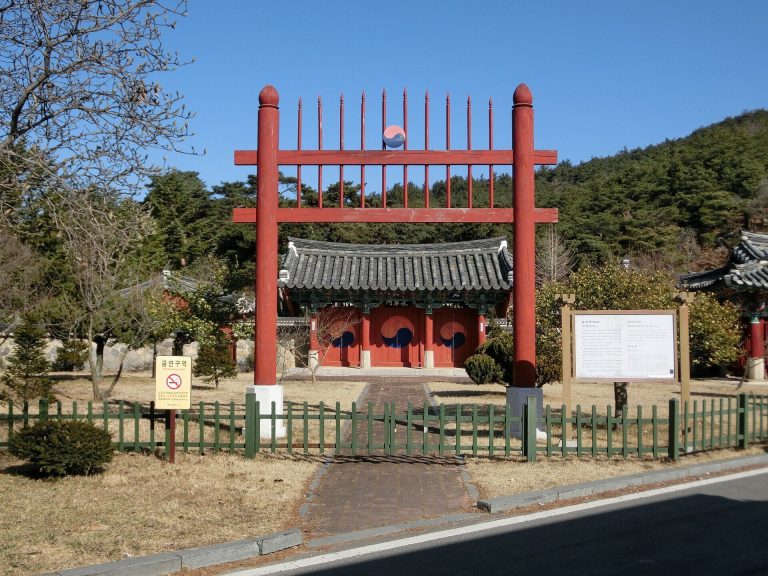
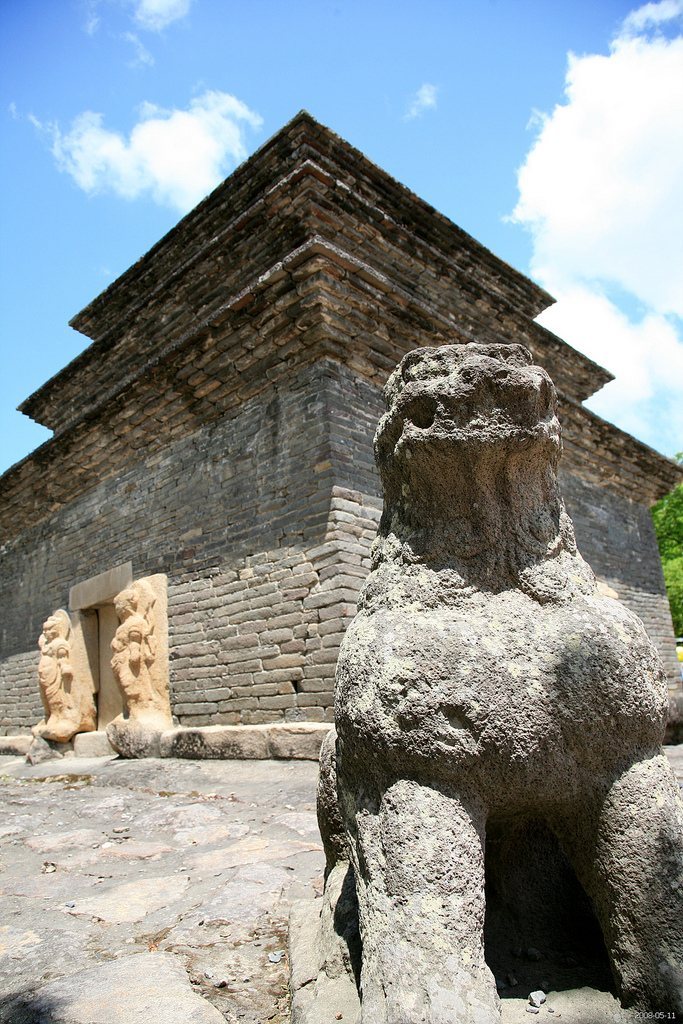
Gyeongsan Imdang-dong and Joyeong-dong Ancient Tombs: Burial Grounds of Aptdokguk
Site at a Glance
- Rating
- 4.3
- Popularity
- Very Low
- Country
- South Korea
- Primary era
- Classical
- Eras represented
- Classical, Medieval
- Civilizations
- Silla
- Site type
- Burial
- Remains
- Necropolis
On this page10 sections
History
Gyeongsan Imdang-dong and Joyeong-dong Ancient Tombs are an ancient burial-mound complex in Gyeongsan, Gyeongsangbuk-do, South Korea, associated with the regional polity of Aptdokguk during the early Three Kingdoms period. The area is believed to have served as a cemetery for Aptdokguk rulers. Its tombs help explain relations among small polities before and during the expansion of Silla, one of the major states of the Korean Three Kingdoms period.
Aptdokguk and Silla
The medieval Korean chronicle Samguk Sagi, or History of the Three Kingdoms, records that the king of Aptdokguk surrendered to Silla in the 23rd year of King Pasa. Aptdokguk is generally placed near present-day Amnyang-myeon. Burial forms and grave goods at Imdang-dong resemble those of early Silla tombs at Gyeongju, while also sharing features with Gaya culture, another major political tradition of the period. These similarities point to cultural exchange among the regional states.
Later excavation, including work documented by October 30, 2024, produced evidence for indirect Silla control. The Daedong tomb group is regarded as a cemetery for the highest-ranking rulers of Aptdokguk, while the Bujeok-ri group is considered another burial ground for the polity’s elite. Evidence from Bujeok-ri also indicates close relations between Aptdok and Silla after the region was incorporated into Silla.
Excavation and protected status
Before excavation, more than ten damaged tombs could be identified along a west-facing ridge. In February 1982, Imdang-dong Tomb No. 2 was robbed. Authorities recovered gold earrings, other ornaments, a silver belt, curved-jade ornaments, and a ring-pommel sword, a sword with a loop-shaped fitting at the end of its hilt, before the objects could be taken abroad. The incident drew wider attention to the importance of the tombs.
Tomb No. 2 was excavated from July to December 1982 and became the first tomb investigated in the complex. Tombs Nos. 5, 6, and 7 were later excavated for comparison, revealing fifteen burials in total, including a jar burial in Tomb No. 5 and another in Tomb No. 7. Investigation of the northern ridge by the Yeongnam Institute of Buried Cultural Heritage also identified numerous tombs dating from the Proto-Three Kingdoms period.
The Imdang-dong tombs were designated Historic Site No. 300 in 1983. On July 28, 2011, they were combined with the adjacent Joyeong-dong Ancient Tombs and redesignated Historic Site No. 516, Gyeongsan Imdang-dong and Joyeong-dong Ancient Tombs. The Daedong tomb group was added to the protected complex on June 1, 2016, after excavation begun that year examined Imdang Tomb No. 1, its structure and character, and its conservation and restoration. The Bujeok-ri tomb group was added on May 28, 2018. The additions cover three parcels at Daedong, totaling 528 square metres, and twenty-eight parcels at Bujeok-ri, totaling 36,784 square metres.
Remains
Imdang-dong Tombs
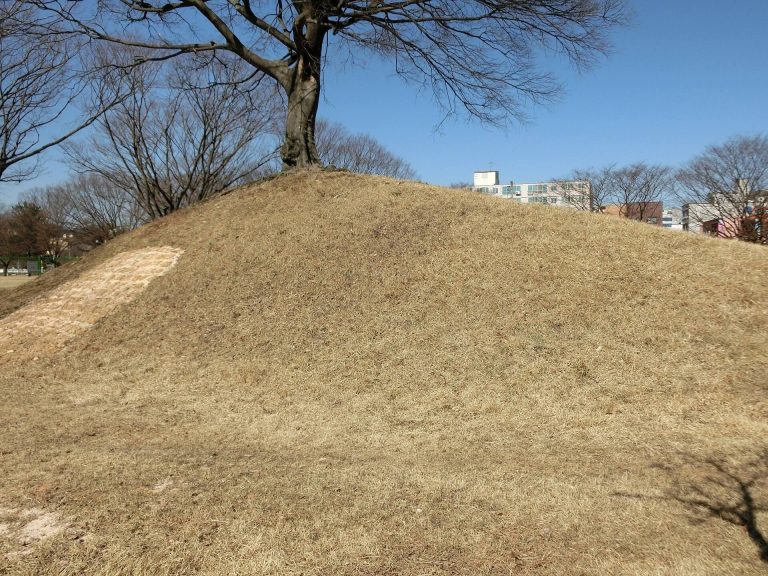
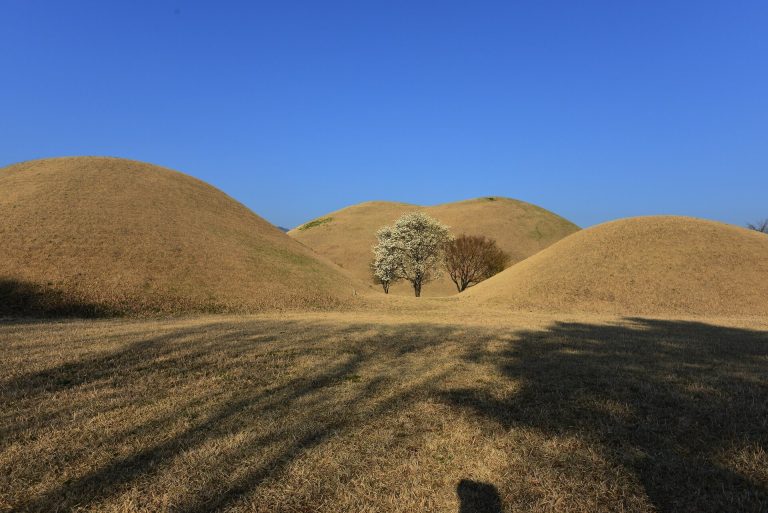
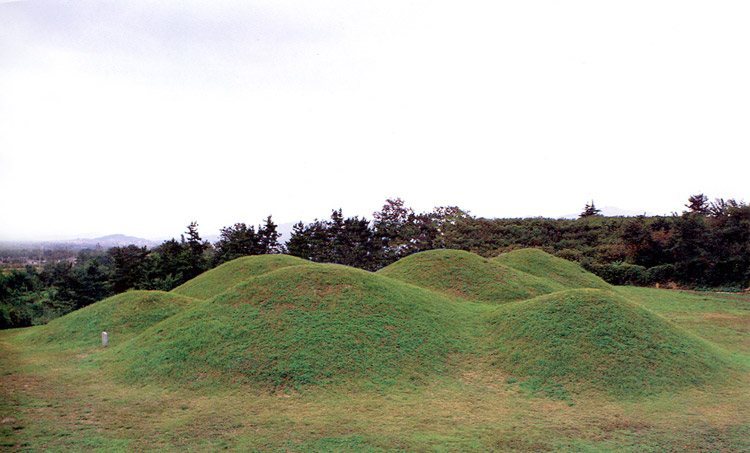
The Imdang-dong tombs occupy a hill and include several burial forms from the early Three Kingdoms period. These comprise wooden-coffin tombs, jar burials, stone-mound wooden-chamber tombs, in which a wooden burial chamber is protected by a mound of stones and earth, and corridor-style stone-chamber tombs with an entrance passage leading to the burial chamber. Gold and silver ornaments, ring-pommel swords, other iron objects, and pottery indicate that the burials belonged to local rulers.
Tomb No. 2
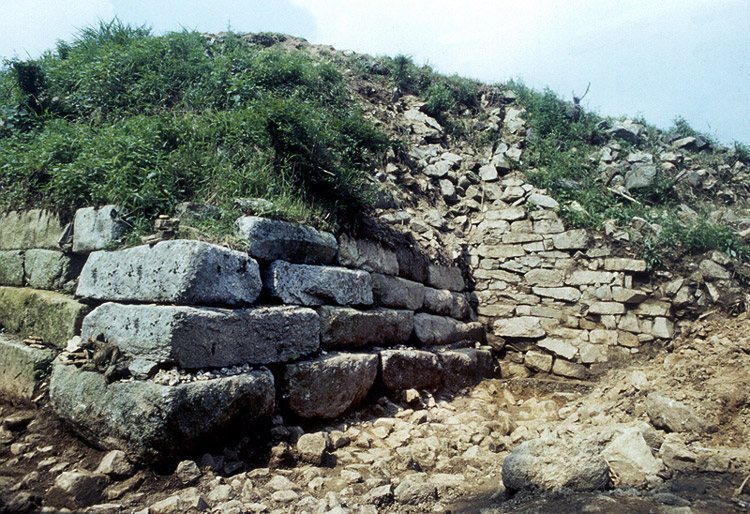
When excavation began, about one-third of Tomb No. 2’s mound had already been destroyed. The surviving mound was built by placing thin blue-green stone slabs in successive circular courses. Parts of its base had been compacted with earth and retained traces of lime. The structure formed two attached mound sections aligned north to south. The southern burial was built first, followed by the northern one. Each had a principal chamber, the main burial space, and an annex chamber for additional burials, grave goods, or ritual deposits. Large flat granite slabs covered the principal chambers, while wooden covers were used over the annex chambers.
Tombs Nos. 5, 6, and 7
Tombs Nos. 5, 6, and 7 used the same method of building up the mound with thin stone slabs. They were multiple-coffin tombs with two or three connected mound sections, and circular or semicircular stone rings marked their surroundings. Their excavation revealed fifteen burials across the three tombs, including the jar burials in Tombs Nos. 5 and 7.
Joyeong-dong Tombs
Approximately ten tombs are distributed across low, relatively level hills in Joyeong-dong. Most of their covering earth has disappeared, leaving surviving circular mounds. The group includes jar burials, pit-style stone-lined burials, and corridor-style stone-chamber tombs. The pit-style stone-lined form is most common. Some examples have only a coffin, while more complex examples contain an outer coffin around the burial coffin and a separate coffin for grave goods.
Objects recovered from the Joyeong-dong tombs include varied pottery, gilt-bronze crowns, belts, earrings and other ornaments, weapons, horse equipment, and clay objects. Their internal structures and grave goods place the tombs broadly between approximately the third and fifth centuries, although their exact construction dates remain uncertain.
Daedong Tomb No. 1A
Daedong Tomb No. 1A survived without looting, preserving its burial arrangement. Inside its oval mound, the principal and annex chambers formed two stacked rectangular sections resembling the character chang, a layout considered typical of large tombs in the Imdang area. The principal chamber held the buried individual, whose head faced east, together with a silver belt, fine-loop pure-gold earrings, a gilt-bronze crown cap and crown ornaments, and a ring-pommel sword. At the feet lay the skeleton of a child wearing gold earrings.
The annex chamber was densely packed with large jars, short-necked jars, long-necked jars, mounted-foot dishes, and other pottery. A gilt-bronze saddle and iron stirrups were also placed there. Along its western edge, ritual vessels had been deposited separately beside the skeleton of an adult wearing gilt-bronze earrings.
Bujeok-ri Tombs
Five large tombs are distributed at Bujeok-ri. They measure approximately 20 to 30 metres in diameter and about 6.5 metres in height. One tomb excavated in 2016 and 2017 was a stone-mound wooden-chamber tomb, the same broad form used by Silla royalty during the period. Its structure, construction methods, and grave goods had the same character as the nearby Imdang-dong and Joyeong-dong tombs. Surveys and partial excavations indicate that Three Kingdoms-period tombs were probably densely distributed along the ridge extending toward the Joyeong-dong group.