Neuhörnitz Castle: A Saxon Manor House and Brewery
Site at a Glance
- Rating
- 5
- Popularity
- Very Low
- Country
- Germany
- Primary era
- Early Modern
- Eras represented
- Early Modern, Modern
- Civilizations
- Electorate of Saxony, German, Holy Roman Empire
- Site type
- Domestic
- Remains
- Castle
On this page10 sections
History
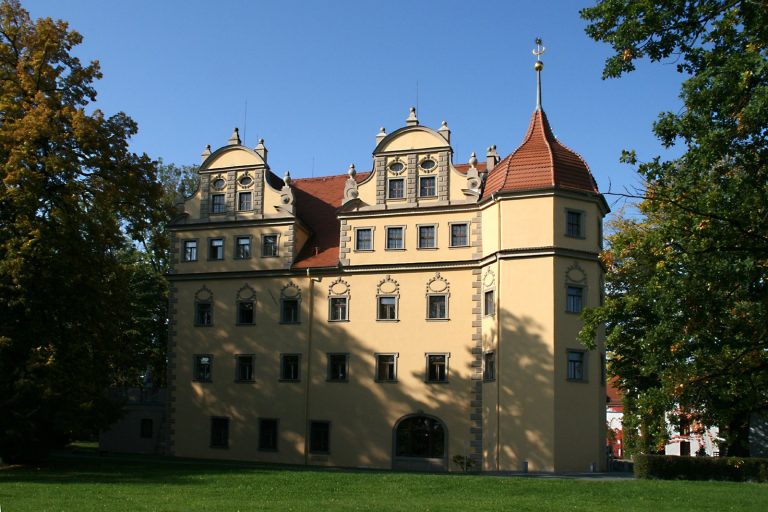
Neuhörnitz Castle, now generally known as the Hörnitz Brewery, is a former manor house in Hörnitz, within the municipality of Bertsdorf-Hörnitz, Germany. Merchant Gottfried Hering had the small Baroque castle built before 1751 on an estate whose history reaches back to 1540. The estate’s development helped establish the village of Neuhörnitz, and its later conversion made the castle a brewery and inn.
Estate and village formation
In 1540, Baltzer, George, and Christoph von Debschitz divided the Hörnitz manor near Eichberg. Baltzer and George joined their portions to form Althörnitz manor. Christoph’s share was an outlying farm that became a separate, privileged estate held as a fief. In 1543, Hans von Uechtritz sold that estate, along with four smallholders, to the Zittau council for 800 thalers. The council sold it the next year, this time without the smallholders, to Hans Engelmann, a royal judge in Zittau, for 1,700 Zittau marks. Engelmann transferred it on 18 September 1549 to Matthäus Hauschild, a mint master from Görlitz.
On 15 April 1551, King Ferdinand I, a Habsburg ruler of Central European lands who later became Holy Roman Emperor, granted Hauschild a royal charter. It permitted him to establish smallholders and cottagers on his land to compensate for the removal of the four smallholders. It also allowed him to restore the former Uechtritz courts, with a judge and five elders. Hauschild divided most of the fields into smaller holdings and founded the village of Neuhörnitz.
After disputes with the Zittau council, Hauschild sold the estate and village in 1553 to Augustin von Kohlo. Von Kohlo conveyed it on 22 July 1576 to Wenzel Lankisch, a municipal legal officer in Zittau and stepson of the city’s mayor, Nikolaus von Dornspach. Lankisch did not seek formal feudal investiture.
The Lankisch family and the castle
In 1582, Emperor Rudolf II, a Habsburg ruler of the Holy Roman Empire from 1576 to 1612, declared Neuhörnitz a free noble estate and ennobled Lankisch and his descendants. The estate remained in the family for more than 160 years. Gottfried Heinrich von Lankisch faced financial difficulties in the mid-eighteenth century. After an unsuccessful attempt to sell the estate to the lord of Althörnitz, he sold it in 1745 to Gottfried Hering, a merchant from Zittau. Hering had the Baroque castle built before 1751.
Hering died in 1752, and his son Christian August succeeded him. Christian August was a member of the Zittau council and served as a lay judge. His widow, Johanne Eleonore, née Krodel, held Neuhörnitz until her death in 1819.
From manor house to brewery
In 1820, the Zittau council bought the estate from Krodel and Wittich, both from Zittau. It sold the former manor house, its associated property, and some fields to the brothers Christlieb Benjamin and Johann Christoph Hänsel as a separate garden estate with privileged legal status. The council kept the remaining estate lands, including the village. The brothers and their successors had to keep the bell clock in the servants’ house running. Sounding it at noon, in the evening, or as a fire alarm was optional.
The Hörnitz Brewery was founded in 1866, and by 1867 the former castle had been converted into a brewery with an inn. The business operated under successive names, including Bierbrauerei Neuhörnitz in 1870, Brauerei Lebrecht Byhain in 1880, Schloßbrauerei E. A. Halang in 1897, Schloßbrauerei Neuhörnitz Fr. August Boethig in 1907, and Schloßbrauerei Neuhörnitz Paul Gerhard Boethig in 1919.
The Gerhard Böthig firm produced beer and lemonade until the 1950s. After the family was expropriated during the German Democratic Republic period, brewing stopped; lemonade production ended later, and the property fell into decay. Since 2005, the Zittau psychosocial contact and counseling center Albatros has worked to preserve the former castle brewery and restore its overgrown park.
Remains
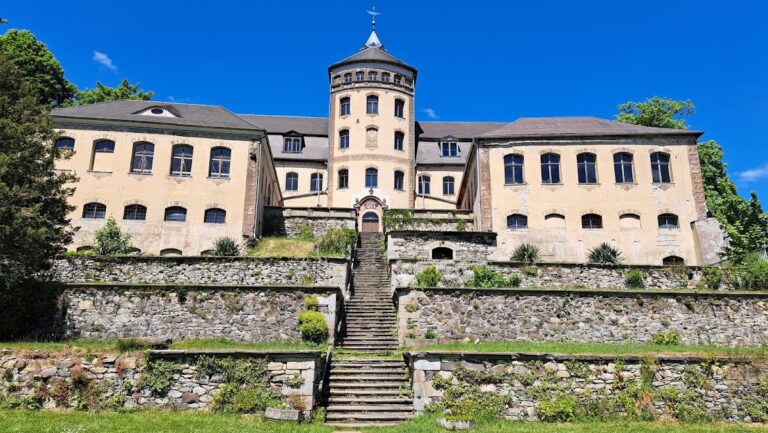
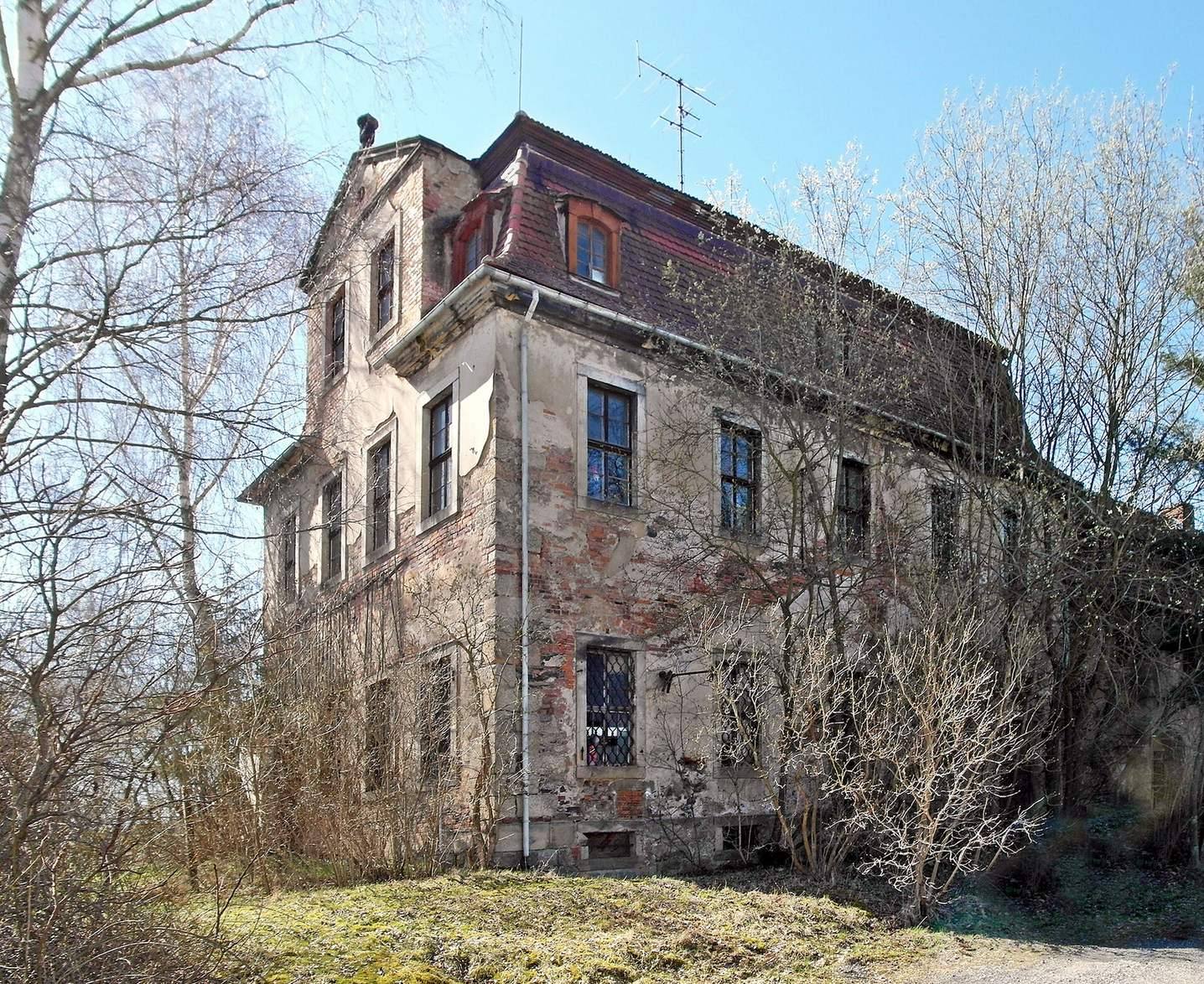
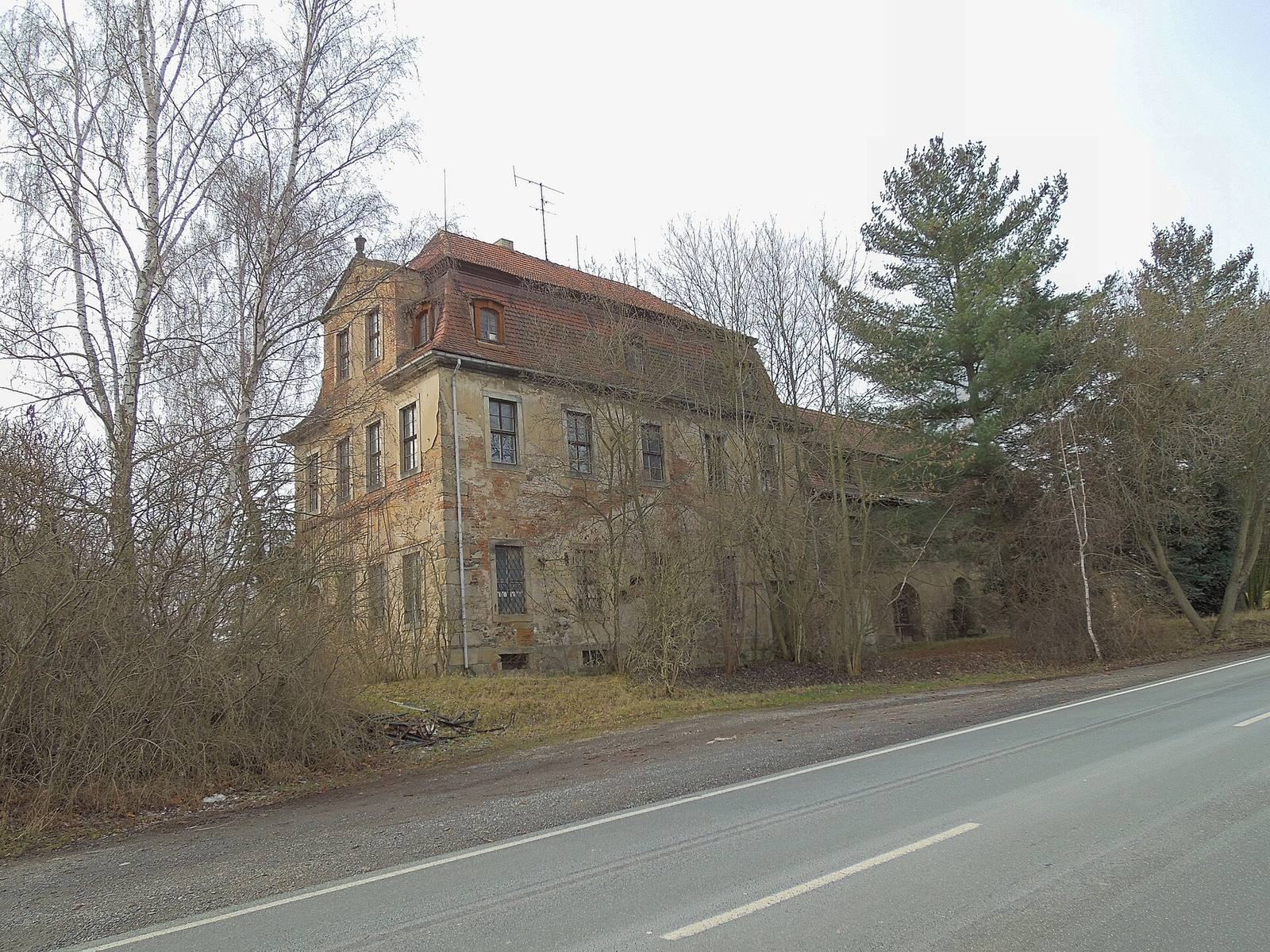
The small Baroque complex stands on the eastern foot of the Koitsche, an elevation of 375 metres above sea level, beside Zittauer Straße. Parkland surrounds the buildings, and the Hörnitz cemetery adjoins the grounds to the southeast. The castle stood beside the local cattle road and comprised a narrow main building, associated outbuildings, and a large garden.
Castle buildings and grounds
Main building
The two-storey main building has a mansard roof, with steep lower slopes and shallower upper slopes. A central projection rises above the eaves and extends into the roof. Conversion for brewery use altered the interior, and the building complex is now dilapidated.
Servants’ house
A small tower on the servants’ house held the estate’s bell clock. The arrangement formed part of the estate’s later obligations to the Hänsel family and its successors.
Park
The large garden associated with the castle survives as parkland, which had become overgrown.
Earlier manor remains
The location of the earlier manor is uncertain. It may have stood on the castle site, or above the Althörnitz estate on the rampart in the Lower Garden, where masonry remains have been found.