Saint Nicholas Cathedral: The Principal Orthodox Church of Zaraysk, Russia
Site at a Glance
- Popularity
- Medium
- Country
- Russia
- Primary era
- Early Modern
- Eras represented
- Early Modern, Modern
- Civilizations
- Russian
- Site type
- Religious
- Remains
- Church
On this page8 sections
History
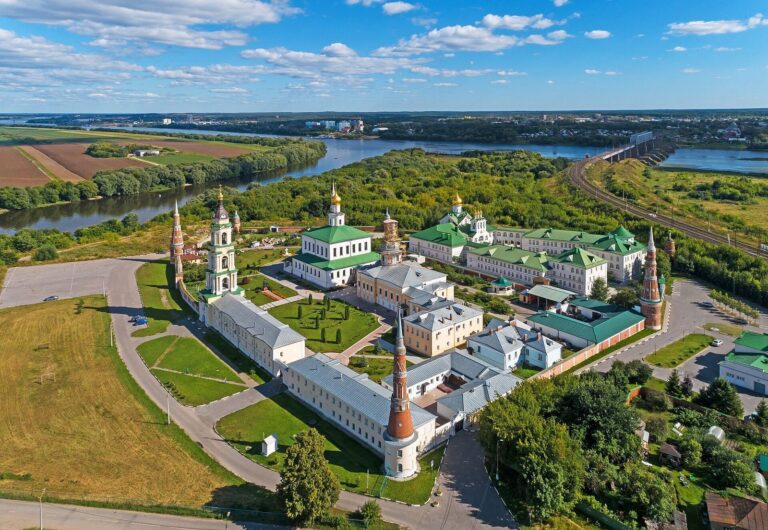
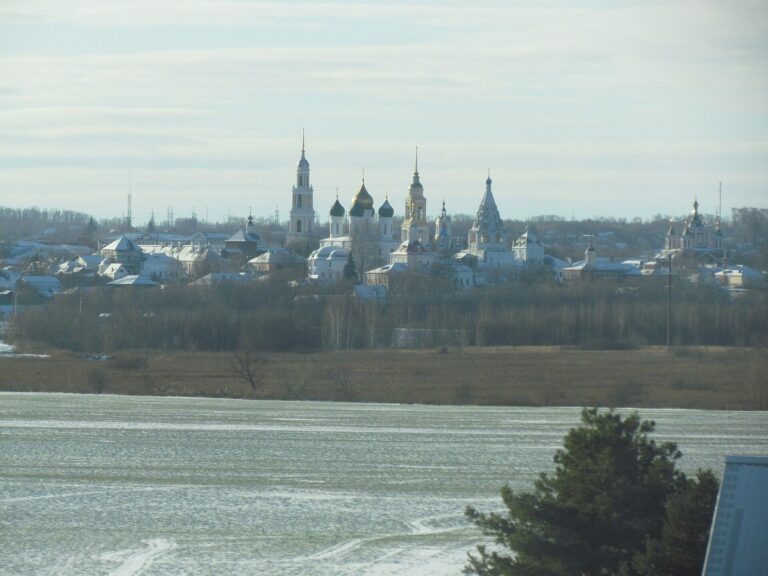
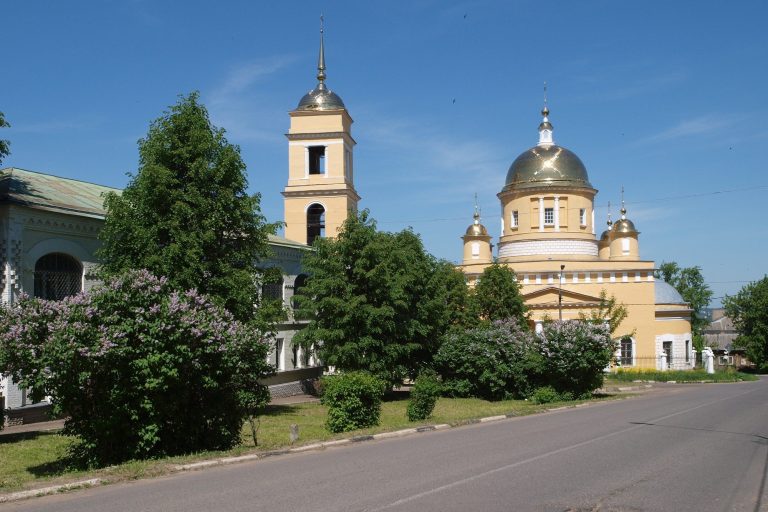
Saint Nicholas Cathedral is an Orthodox church in Zaraysk, Moscow Oblast, Russia, and the principal church of the Zaraysk Deanery, a district of parishes within the Kolomna Diocese. Its origins are traditionally placed in the early thirteenth century, while the present building dates to 1681. Saint Nicholas, an early Christian bishop of Myra, is revered in Eastern Orthodoxy as a saint and wonderworker.
Origins and construction
A church at Zaraysk is recorded by no later than the thirteenth century, and tradition places its foundation in that century’s first quarter. The story connects its beginnings with the arrival in 1224 of a miracle-working icon of Saint Nicholas, brought from Korsun, the medieval name for Chersonesus on the Crimean coast, by the priest Eustathius. According to the foundation tradition, Grand Prince Yuri Ingvarevich, a senior ruler of a Rus’ principality, came to the town, then called Krasny, with Bishop Euphrosinus after hearing of the icon’s arrival. Yuri ordered a church built, and Euphrosinus consecrated it before the icon was placed inside.
The icon portrayed Nicholas standing in bishop’s vestments, blessing with his right hand and holding a Gospel in his left. Small round panels showed Christ blessing Nicholas and giving him the Gospel, and the Virgin Mary presenting a bishop’s shoulder vestment. Seventeen scenes of Nicholas’s miracles surrounded the central image. The church’s first building was wooden; the date when it was replaced by a stone structure is unknown. A record from 1625 describes the cathedral as stone. Officials sent from Moscow to inventory its icons, books, and property in 1622 may have had some connection to the stone building, but that link is uncertain. The church and its property were described as belonging to the sovereign from earlier times.
The present cathedral was erected in 1681 under a charter issued by Tsar Feodor Alekseevich through the Office of the Great Palace, the Muscovite agency responsible for the tsar’s palaces and their administration. The icon remained central to the church’s history. In 1608, Tsar Vasily Ivanovich Shuisky had a gold cover made for its central image. A later silver-gilt cover protected the surrounding miracle scenes and included gold plaques made for Shuisky. The elaborate covers contained about 2.5 kilograms of pure gold, 133 colored stones, three prized pearls then called Burmi pearls, and 1,600 larger and smaller pearls. They were repaired in 1793 and 1881.
Furnishings and church life
The cathedral held sacred objects gathered over several centuries. Among them were a fifteenth-century shroud, a liturgical cloth used in Orthodox Holy Week services, embroidered in gold on blue silk and depicting Christ laid in the tomb. A Gospel printed in 1606 was donated by Shuisky. Another Gospel, printed in 1689, had a heavy silver-gilt casing decorated with scenes including Christ’s Descent into Hell, the Crucifixion, and the Entombment. An inscription records that the priest Trofim Vasilievich gave it in 1724 in memory of his parents.
Other recorded gifts included a silver holy-water vessel donated by Dmitry Ivanovich Godunov in 1604, a silver-gilt lamp made in 1671, and silver dishes given by Princes Ivan Mikhailovich Khvorostinin and Fyodor Ivanovich Mstislavsky. One altar cross was refurbished in 1617; another was made in 1624 by Anthony, Archbishop of Ryazan. An inscribed seventeenth-century silver ladle was associated with Varlaam, Bishop of Kolomna and Kashira. A late-fifteenth-century gold medal, probably donated by Mstislavsky, bore a cross and a motto meaning ‘In this sign, conquer’ on one side, and Portuguese arms and inscriptions naming King Manuel on the other.
In 1848, an unstable icon screen was dismantled and put back in place, its gilding cleaned and its icons repaired. The cathedral’s 1873 staffing establishment provided for a senior priest, an assistant priest, a deacon, and two readers of liturgical texts.
Revolution, Soviet rule, and renewed worship
The 1917 Revolution brought Communist rule, and religious life in Zaraysk was severely restricted. Churches were closed apart from the Annunciation Church, and more than half were destroyed. Despite the restrictions, the cathedral’s rector, senior priest Ioann Smirnov, carried the Nicholas icon to nearby villages and held prayer services. He and parishioners also tried to prevent the closure of the cathedral and other Orthodox churches. The cathedral was taken from its congregation in 1922.
During the Soviet looting of the Zaraysk Kremlin churches, hundreds of Russian pounds of gold and poods of silver were removed. These traditional measures were about 0.41 kilograms and 16.4 kilograms respectively. The looters took the cathedral’s ornate icon cover, old church books, gifts from Prince Dmitry Pozharsky, a commander associated with resistance to Polish-Lithuanian forces during Russia’s early-seventeenth-century Time of Troubles, and other antiquities. The Nicholas icon was also taken away from Zaraysk during the Soviet period.
In 1937, Smirnov was arrested on a charge of counterrevolutionary activity, sentenced to death after a brief investigation, and executed at the Butovo firing range near Moscow. In 2000, the Russian Orthodox Church canonized him among the New Martyrs and Confessors of Russia, an honorific for people persecuted for their faith, especially under Soviet rule. During the Soviet period, the cathedral housed a museum display and later served as an archive and service warehouse. Its exterior forms were restored between 1959 and 1961. It received state protection as an architectural monument in the 1970s and is designated a federal-level cultural heritage site.
Orthodox services resumed in January 1992, and the cathedral is active. Zaraysk holds an annual August 11 observance commemorating the icon’s arrival. Parishioners have also improved the White Well, associated with the icon’s appearance; a chapel dedicated to Nicholas and a bathing facility there were consecrated.
Remains
The cathedral building
Exterior
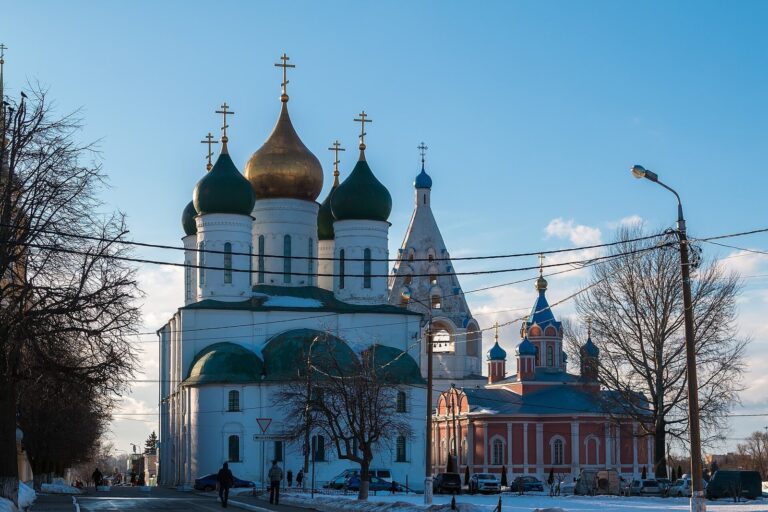
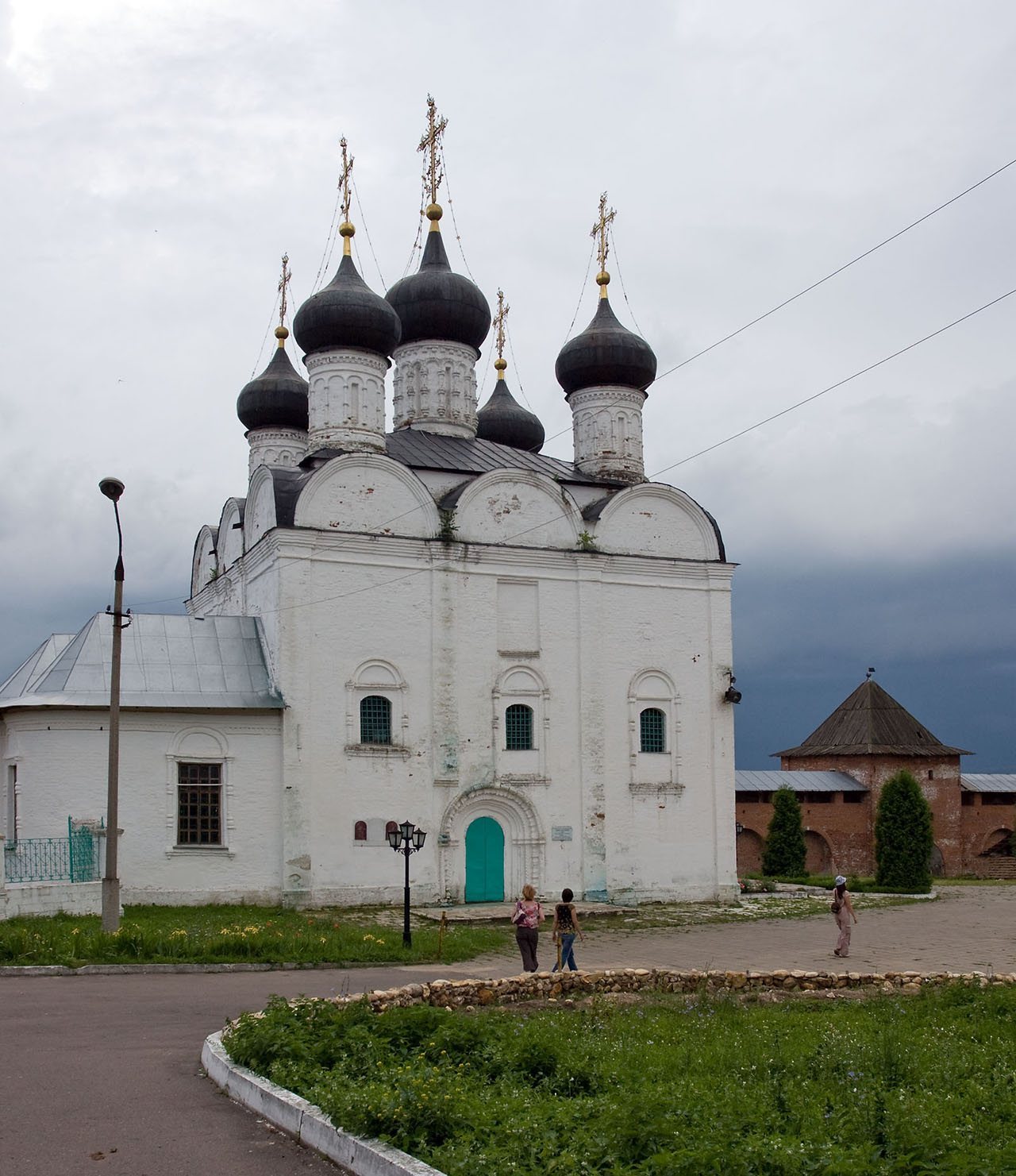
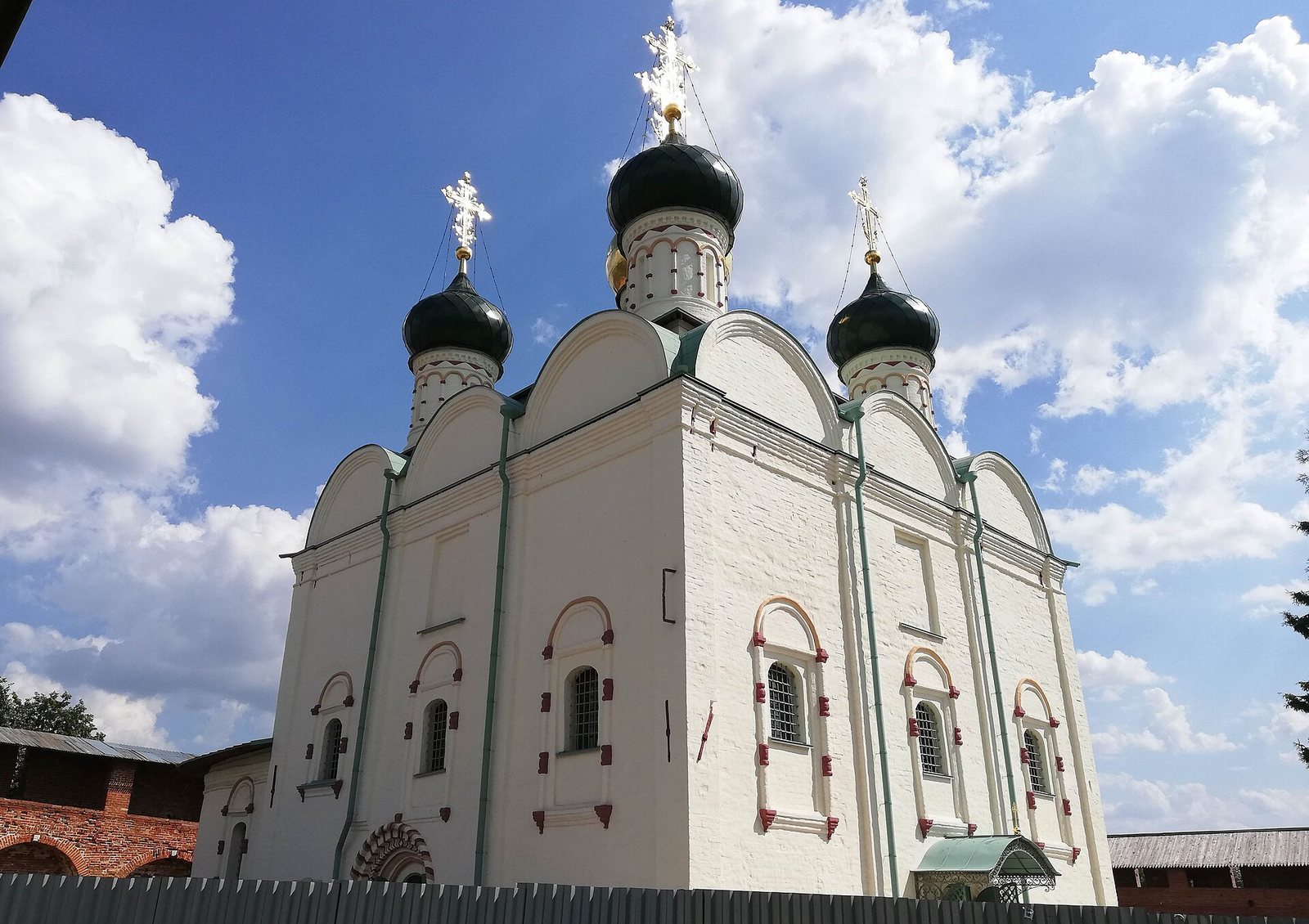
The cathedral has an elongated rectangular plan, measuring about 24 metres long, 14 metres wide, and 17 metres high. Five domes rise above the building, each topped by an openwork eight-pointed cross, with a crown above it and a crescent below. The western porch, less altered than the rest of the exterior, has a tent-shaped roof supported by 14 round stone columns with capitals and bases. Its windows were enlarged from their original narrow form, changing the building’s exterior appearance.
Interior
Inside is a three-tier iconostasis, an icon screen separating the sanctuary from the main worship space. Its date is uncertain, though it may belong to the late eighteenth or early nineteenth century. Many of its icons retain an old style, but repainting by local artists makes their age difficult to judge. An inscription above the western doors records the renewal of the wall paintings in 1760 and the repainting of the walls in 1849.