Tomb of Egidio Foscherari: A Medieval University Scholar’s Monument in Bologna
Site at a Glance
- Popularity
- Very Low
- Country
- Italy
- Primary era
- Medieval
- Eras represented
- Medieval
- Civilizations
- Papal States
- Site type
- Burial
- Remains
- Tomb
On this page5 sections
History
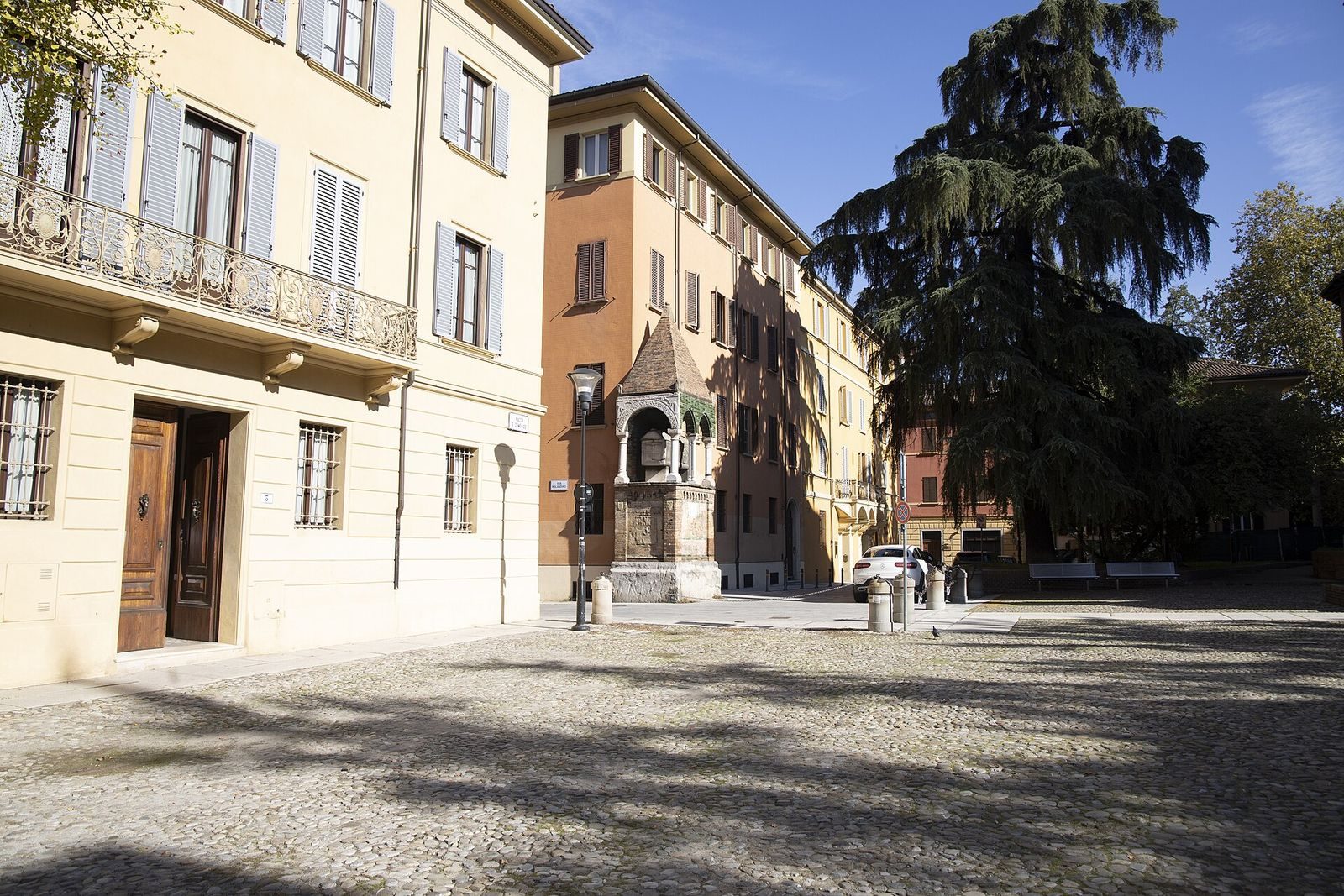
The Tomb of Egidio Foscherari stands in Bologna, Italy, and was probably completed by 1291. It commemorates a doctor of canon law, a specialist in church law, and belongs to a group of monuments honoring some of the earliest and most prominent professors at Bologna’s medieval university, which was especially known for legal study.
Professors of canon law chose prominent urban burial places. Foscherari’s monument may also have been designed to set a scholar of church law apart from the more classically inspired tombs associated with civil-law scholars.
The five surviving mausoleums in this group underwent alterations, destruction, rebuilding, and partial reconstruction. Their original cemetery setting cannot now be established precisely, and their present isolated appearance differs from their earlier context.
Remains
Mausoleum structure and features
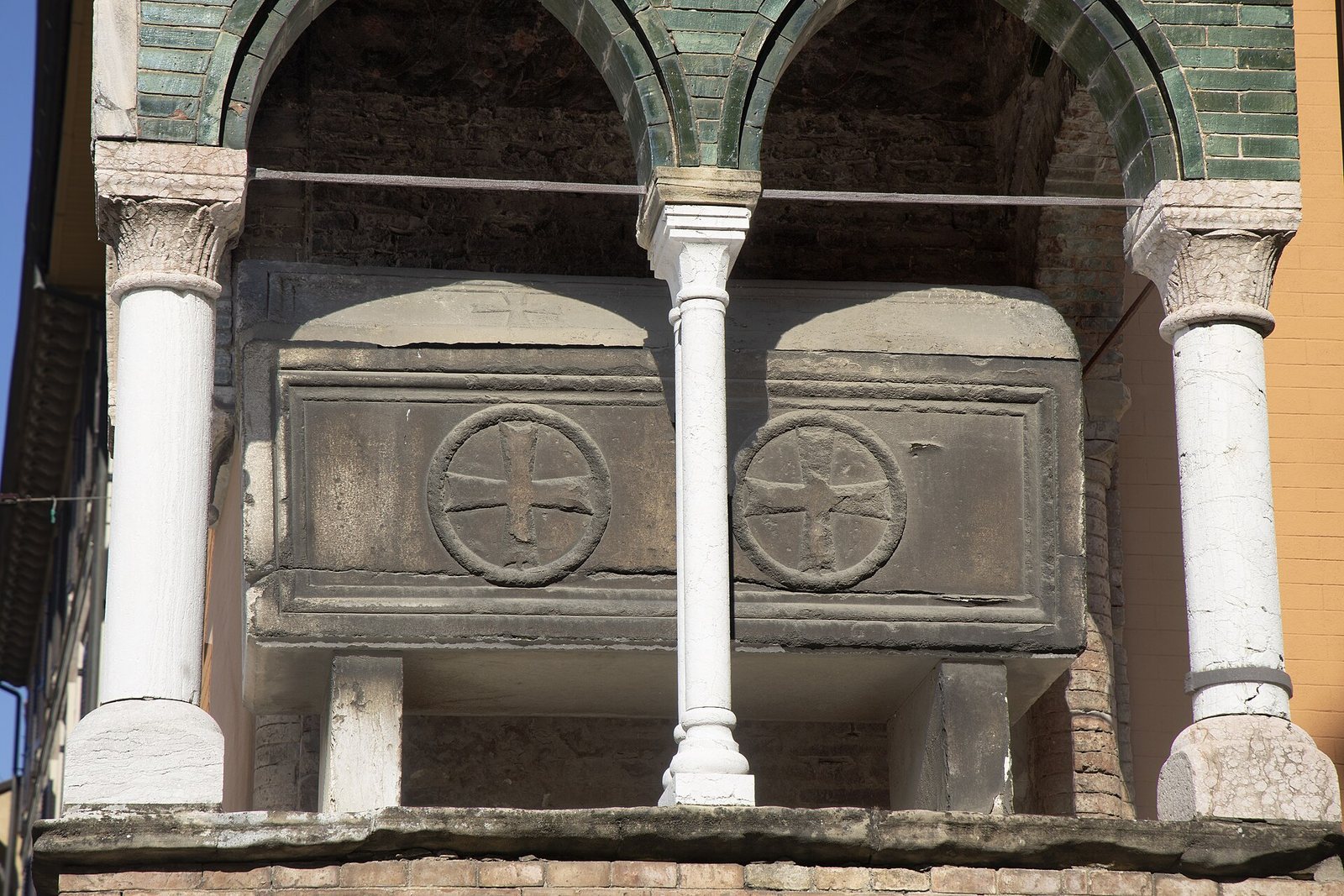
The five surviving Bologna mausoleums, most dating to the second half of the thirteenth century, generally have a canopy-like shrine crowned by a pyramid. Marble columns rise from a pedestal or a lower tier of small pillars, while a marble tomb chest stands on low supports inside. Foscherari’s tomb is simpler and less conspicuous than the others, with forms shaped by Venetian-Byzantine traditions, meaning Venetian art influenced by Byzantine styles. Its distinctive design may have distinguished a canon-law scholar’s burial from the classically inspired monuments of civil-law scholars.
Painted pyramid
The inside of the pyramid was painted to represent a starry sky, with stars shown as haloed figures.
Reused marble arch
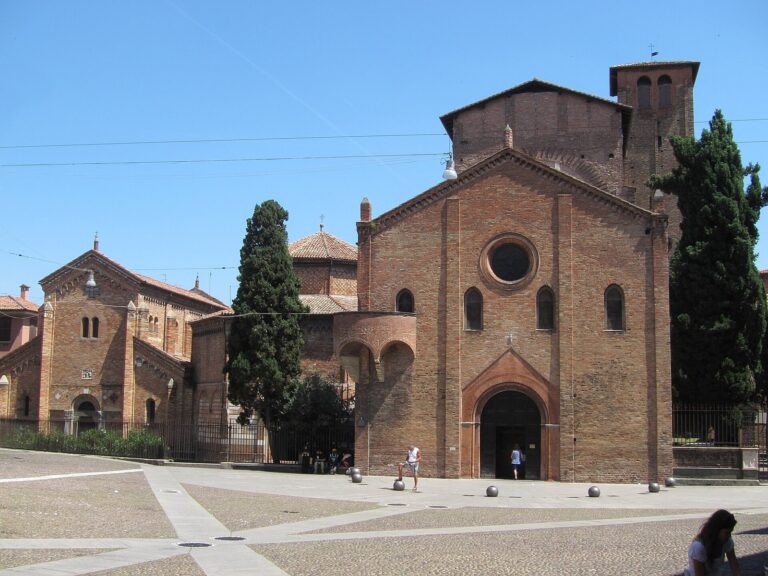
An arch on the tomb’s west side comes from a Carolingian-period ciborium, an architectural canopy often placed over an altar. The Carolingian period takes its name from the Frankish ruling dynasty prominent in the eighth and ninth centuries. Carved from Greek marble, the arch bears rough reliefs of peacocks and roses, symbols associated with early Christianity. It probably came from the church of Saints Vitalis and Agricola in the Santo Stefano complex, whose façade holds a very similar fragment near its top. The reuse has been interpreted as a symbolic transfer in keeping with Venetian taste, linking the monument to a movement that evoked renewal of the Christian empire and continuity with the age of the apostles. Its artistic models looked to early Christian forms rather than to a revival of the pagan Roman Empire.