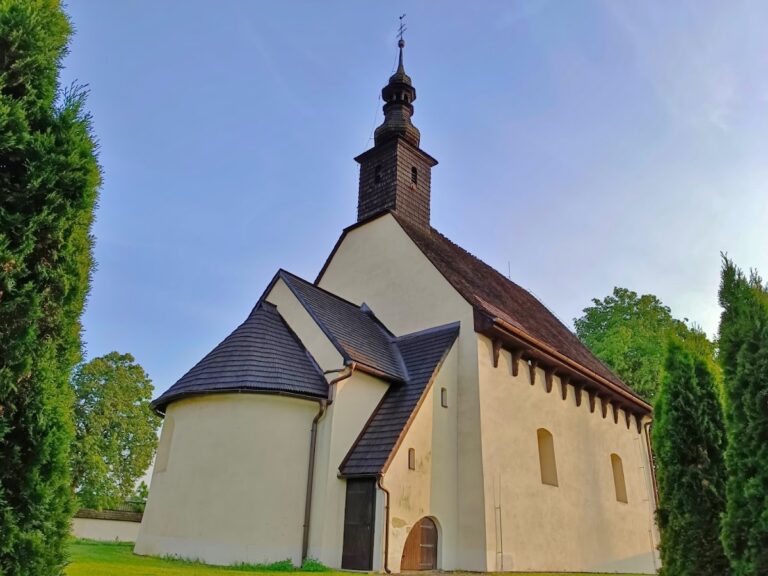
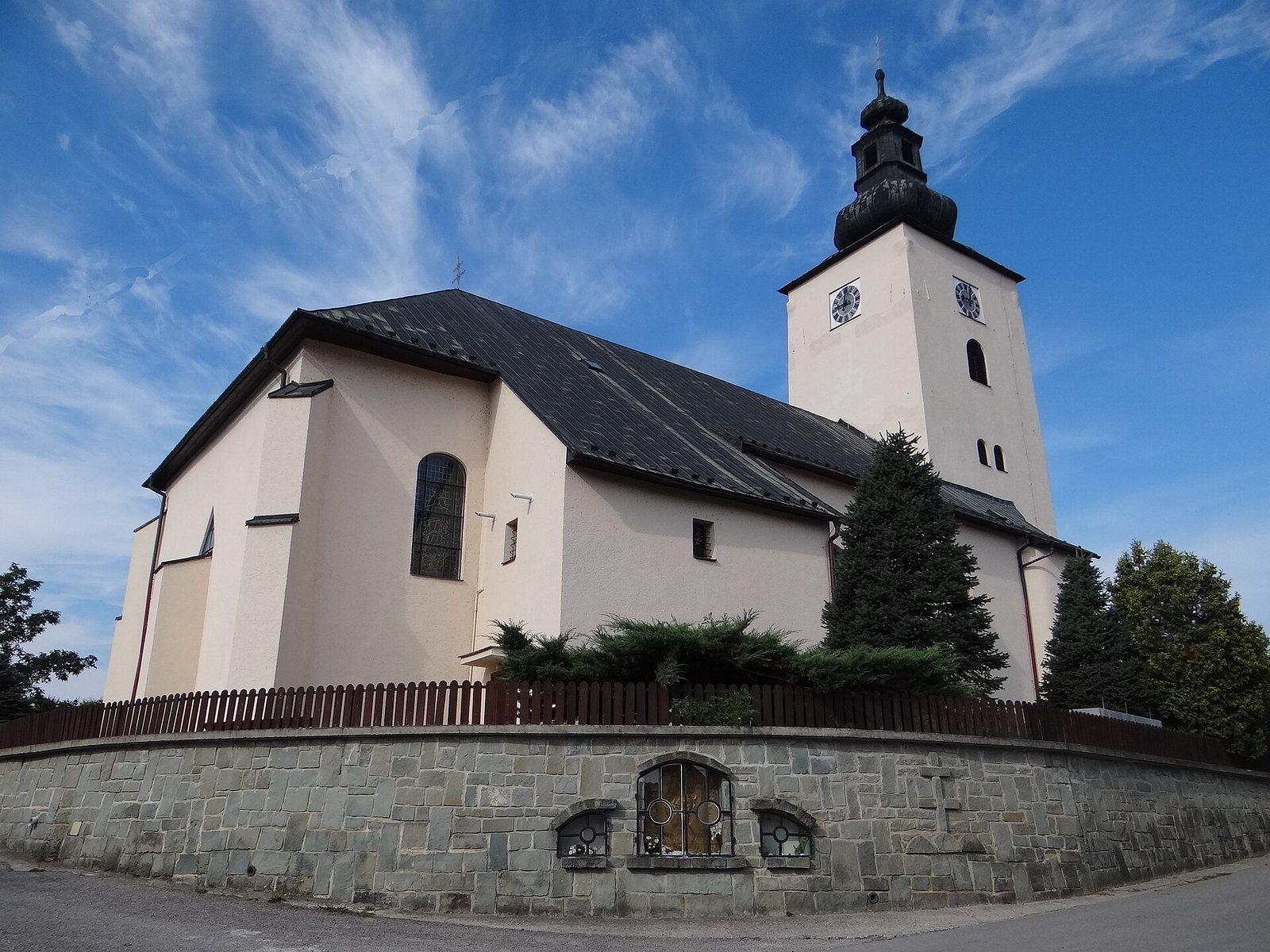
Church of the Holy Trinity, Varín: A Gothic Roman Catholic Parish Church
Site at a Glance
- Popularity
- Very Low
- Country
- Slovakia
- Primary era
- Medieval
- Eras represented
- Medieval, Early Modern
- Civilizations
- Habsburg, Hungarian
- Site type
- Religious
- Remains
- Church
On this page12 sections
History
The Church of the Holy Trinity is a Roman Catholic parish church in Varín, Slovakia, built of stone in the Gothic style and completed in the thirteenth century. The site’s earlier ecclesiastical history includes a rectory and a chapel dedicated to the Holy Cross, built at Varín in 1200.
Medieval origins
A church dedicated to the Virgin Mary is mentioned in an ecclesiastical document from 1233. The municipal coat of arms dated 1416, which depicts the Virgin and Child, also points to this dedication.
Reformation and Catholic restoration
The Reformation, a sixteenth-century movement that led to the formation of Protestant churches and divided Western Christianity, reached the Varín parish in the second half of the sixteenth century. After the local Pongrácz landholding family adopted Protestantism, people living under the local landlords were compelled to follow their religion.
In the seventeenth century, Protestants rebuilt the church. After the death of Palatine Turzo, a senior royal official in the Kingdom of Hungary, local landlords began returning to Catholicism. The church was Catholic again from 1673.
Until the seventeenth century, the Varín parish included Terchová, Belá, Lysica, Lutiše, Vadičov, Riečnica, Stráža, Dolná Tižina, Gbeľany, Nededza, Krasňany, Nezbudská Lúčka, Kotrčiná Lúčka, Teplička nad Váhom, and Zástranie.
Parish and heritage status
The parish belongs to the Diocese of Žilina, within the Western ecclesiastical province, and to the Varín Deanery. A deanery is a district grouping several parishes within a diocese, a church jurisdiction overseen by a bishop. The Varín Deanery is one of ten in the diocese and includes the parishes of Varín, Terchová, Belá, Lutiše, Dolná Tižina, Teplička nad Váhom, Strečno, Brodno, and Divina. The deanery’s seat in Varín is largely symbolic, reflecting the many communities that historically formed part of the Varín parish. The church was registered as a National Cultural Monument of the Slovak Republic on 5 November 1963.
Remains
Church fabric
The stone church retains its Gothic character. Its seventeenth-century rebuilding introduced vaulted ceilings and galleries, elevated platforms inside the church associated with evangelical church design.
Chapel and altar
Chapel mausoleum
The church’s Classicist chapel, built in 1727 with financial support from Anton Pongrác, contains a mausoleum, a burial chamber. It is a single-nave space, meaning it has one main hall, with a straight end and groin vaults, ceilings formed where two barrel vaults intersect. Above the entrance portal, an oval panel bears the Pongrác family coat of arms. Its sculpted design shows a triangular shield with an embattled, or battlement-edged, pattern.
Late Baroque altar
Dated 1769, the altar is fixed directly to the wall. Its polychrome woodcarving, decorated in several colors, includes high reliefs of the Holy Trinity, the Christian belief in God as Father, Son, and Holy Spirit, and the Assumption of the Virgin Mary, the belief that she was taken body and soul into heaven.
Other interior features
Baptismal font
The baptismal font is among the church’s oldest objects. Its lower part dates to the thirteenth century, while the stone upper part was made in 1580 and bears an engraved German inscription.
Marble sculpture
A marble sculpture of the body of Christ was made by Slovak sculptor Alexander Trizuljak in the late 1940s, when he was a student at the Academy of Fine Arts in Prague. He worked from a clay model. The sculpture’s white coating diminishes its artistic quality.