Church of Saint Stephen the King: A Romanesque Parish Church in Žilina


Site at a Glance
- Rating
- 4.7
- Popularity
- Low
- Country
- Slovakia
- Primary era
- Medieval
- External website
- Open
- Eras represented
- Medieval, Early Modern
- Civilizations
- Habsburg, Hungarian
- Site type
- Religious
- Remains
- Church
On this page7 sections
History
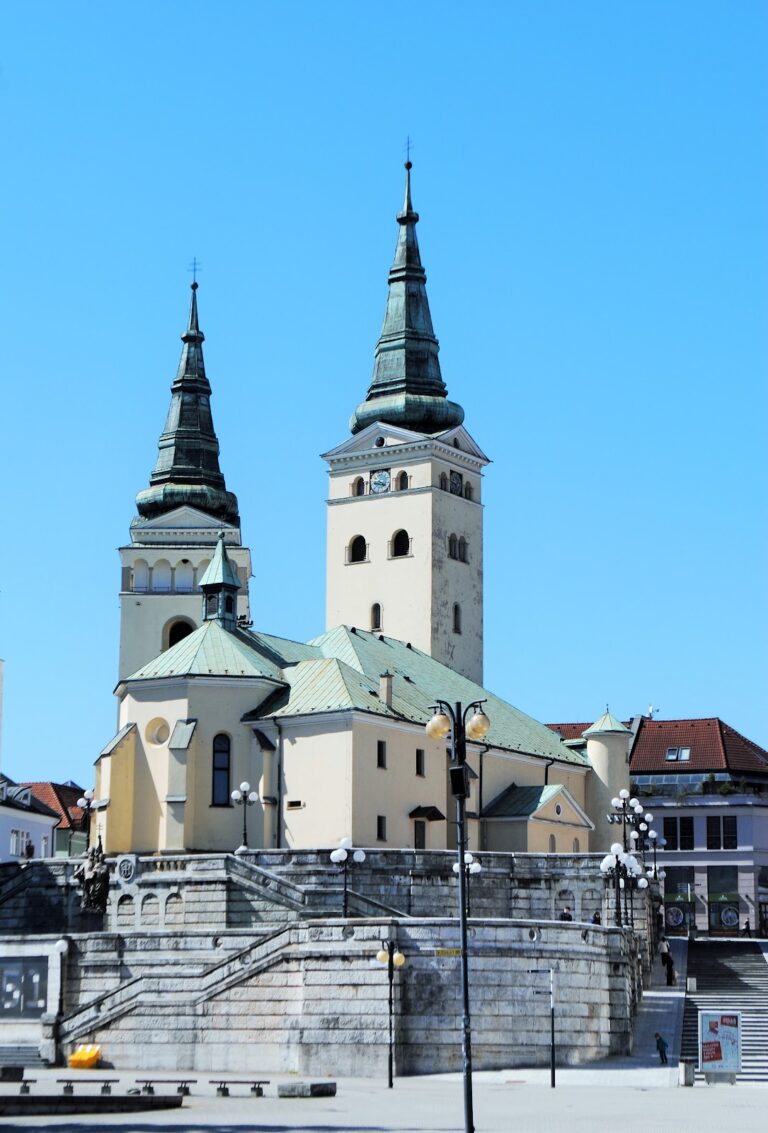
The Church of Saint Stephen the King is a Roman Catholic parish church in Žilina, Slovakia. Built in the late Romanesque period at the beginning of the thirteenth century, it is regarded as the oldest architectural monument within the city and as one of the oldest structures in northwestern Slovakia.
Foundation and medieval use
A foundation legend attributes the church to Stephen I, the first king of Hungary and founder of the medieval Hungarian Christian monarchy. According to the tradition, he ordered its construction to commemorate a battle against the forces of Bolesław the Brave, a Polish ruler who became Poland’s first king. The traditional dates for the battle are 1018 or 1025, but archaeological research carried out in 1995 and 2000 places the building’s construction at the beginning of the thirteenth century.
The church originally served six or seven nearby medieval settlements dating from the tenth to the thirteenth century. Together, these communities were known as terra de Selinan, meaning the land or territory of Selinan. The church is first mentioned in 1429 in the Žilina Book.
Baroque rebuilding and later use
A major reconstruction in 1762 gave the church much of its later character. The entrance was moved from the south wall to the west wall, the wooden ceiling was replaced with vaults, and the small Romanesque windows were blocked and replaced by larger Baroque openings. The rebuilding involved the Jesuits, a Catholic religious order formally known as the Society of Jesus.
In the early nineteenth century and again in 1848, the church served as a military storehouse. It was restored in 1849 and remains associated with the Žilina-Závodie parish within the Žilina Diocese of the Roman Catholic Church’s Western ecclesiastical Province.
The church and its surrounding complex are in relatively good condition. They form a Slovak National Cultural Monument, registered under number 511-1428/1 on 5 November 1963.
Remains
Church building and churchyard
The church is a late Romanesque masonry building with a single nave. A high, shingle-covered gabled roof covers the structure, and a slender wooden bell turret rises from the roof ridge. The complex stands in Dolné Rudiny, in the southwestern part of Žilina, near the present Žilina-Záriečie railway stop on the line to Rajec.
A stone wall encloses the churchyard. Its entrance gate is accompanied by a circular bastion, a fortified projection that strengthened the enclosure, dating from the mid-sixteenth century.
Medieval wall paintings
Medieval paintings survive in the apse, the rounded or polygonal end of the church sanctuary. Dating broadly from around 1260 to 1300, they depict apostles and saints. Later paintings show Hungarian kings and saints, including Saint Ladislaus, Saint Emeric, Saint Stephen, and Saint Elizabeth. Ladislaus was an eleventh-century Hungarian king later venerated as a Christian saint. Emeric was Stephen I’s son and designated heir, while Elizabeth was a thirteenth-century Hungarian princess known for charitable work and later revered as a saint.
Corpus Christi Chapel
The Chapel of Corpus Christi forms part of the complex. Built in the late fourteenth or early fifteenth century, it served as an ossuary, a structure for storing human bones recovered from burials. Up to 80 burials dating from the twelfth century to the end of the nineteenth century were found in and around the chapel. The youngest associated coin dates to 1899.
The burial finds included several coins, two iron sickles, the head of a reeve’s staff, and a bronze ring bearing the inscription “IOACIVE.” The ring dates approximately to the twelfth or thirteenth century. The inscription may abbreviate the Latin phrase Ioannes cives, meaning “citizen John.” A reeve was a local administrative official, and the staff represented that office.