Church of the Conversion of Saint Paul in Žilina: A Baroque Roman Catholic Church
Site at a Glance
- Popularity
- Medium
- Country
- Slovakia
- Primary era
- Early Modern
- Eras represented
- Medieval, Early Modern, Modern
- Civilizations
- Austria-Hungary, Habsburg, Hungarian
- Site type
- Religious
- Remains
- Church
On this page8 sections
History
Jesuit construction
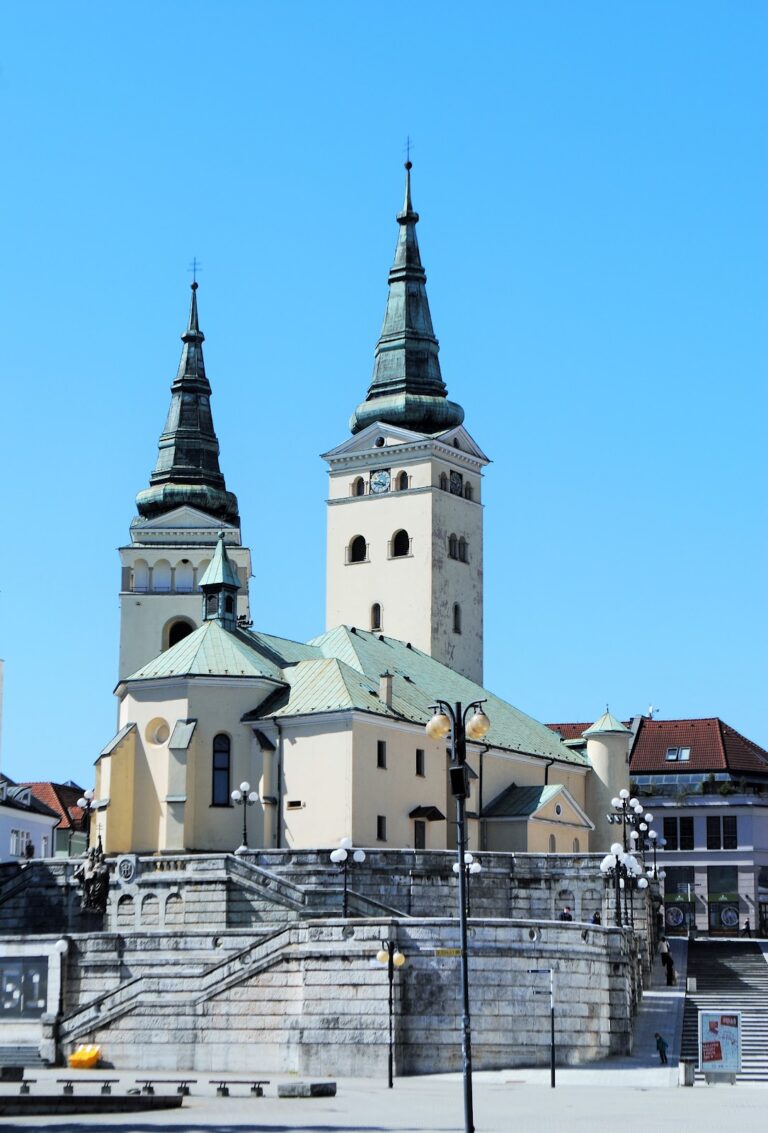
The Church of the Conversion of Saint Paul in Žilina is a Roman Catholic church in Slovakia, built by Jesuit missionaries in the Baroque style between 1743 and 1754. The Jesuits, members of the Catholic Society of Jesus, had arrived in Žilina around 1654. The church replaced several town houses from the Gothic-Renaissance period, a transition in which Gothic and Renaissance forms overlapped. Its dedication refers to the conversion of Paul of Tarsus, an early Christian apostle and the subject of a major event in Christian tradition.
After the Jesuits
Following the suppression of the Society of Jesus in 1773, the church passed into the city’s care. It later served as an orphanage, giving rise to its popular name, the Orphanage Church.
Church today
In 1995, the Diocese of Žilina placed the church under Capuchin administration for 25 years. Capuchins are a branch of the Franciscan religious family. The church is an active Roman Catholic place of worship in the Žilina-Mesto parish, within the Žilina deanery, a grouping of parishes, and the Western ecclesiastical province, a grouping of dioceses. It is designated a Slovak National Cultural Monument, a national heritage status.
Remains
The church is a stone building with a single nave, the main space for the congregation, and two towers. Its exterior and interior retain features from its eighteenth-century Baroque construction, alongside later changes.
Façade and towers
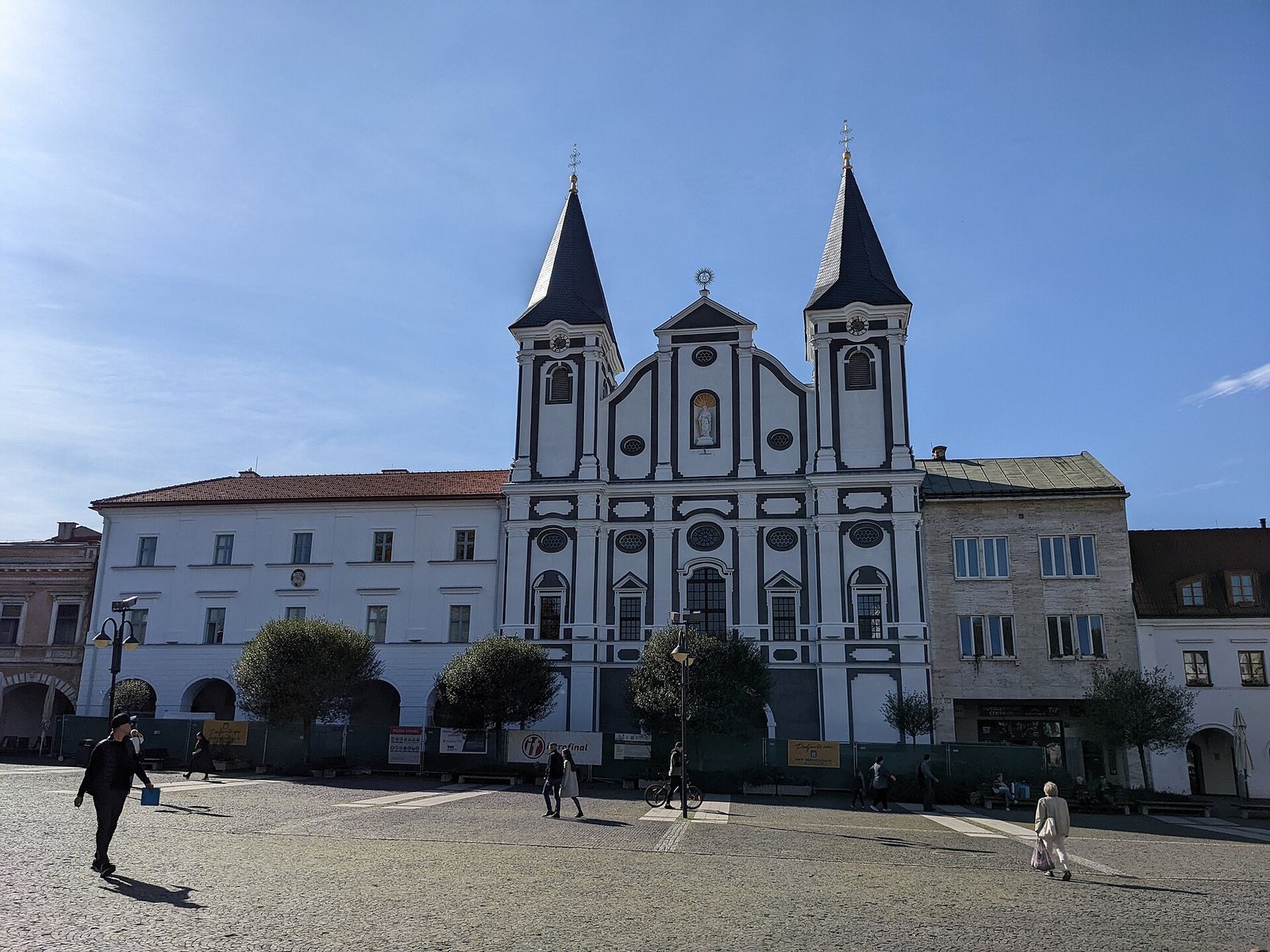
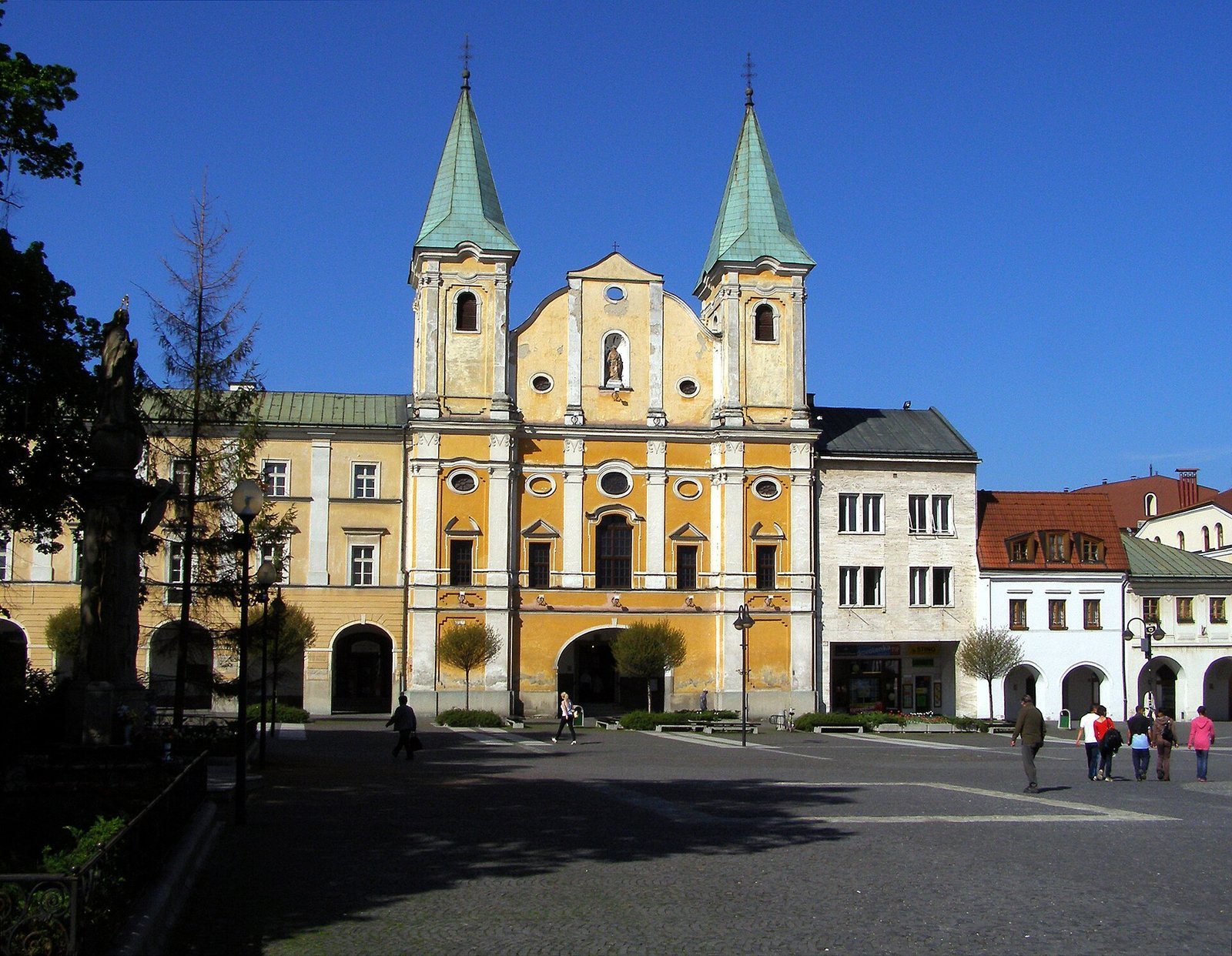
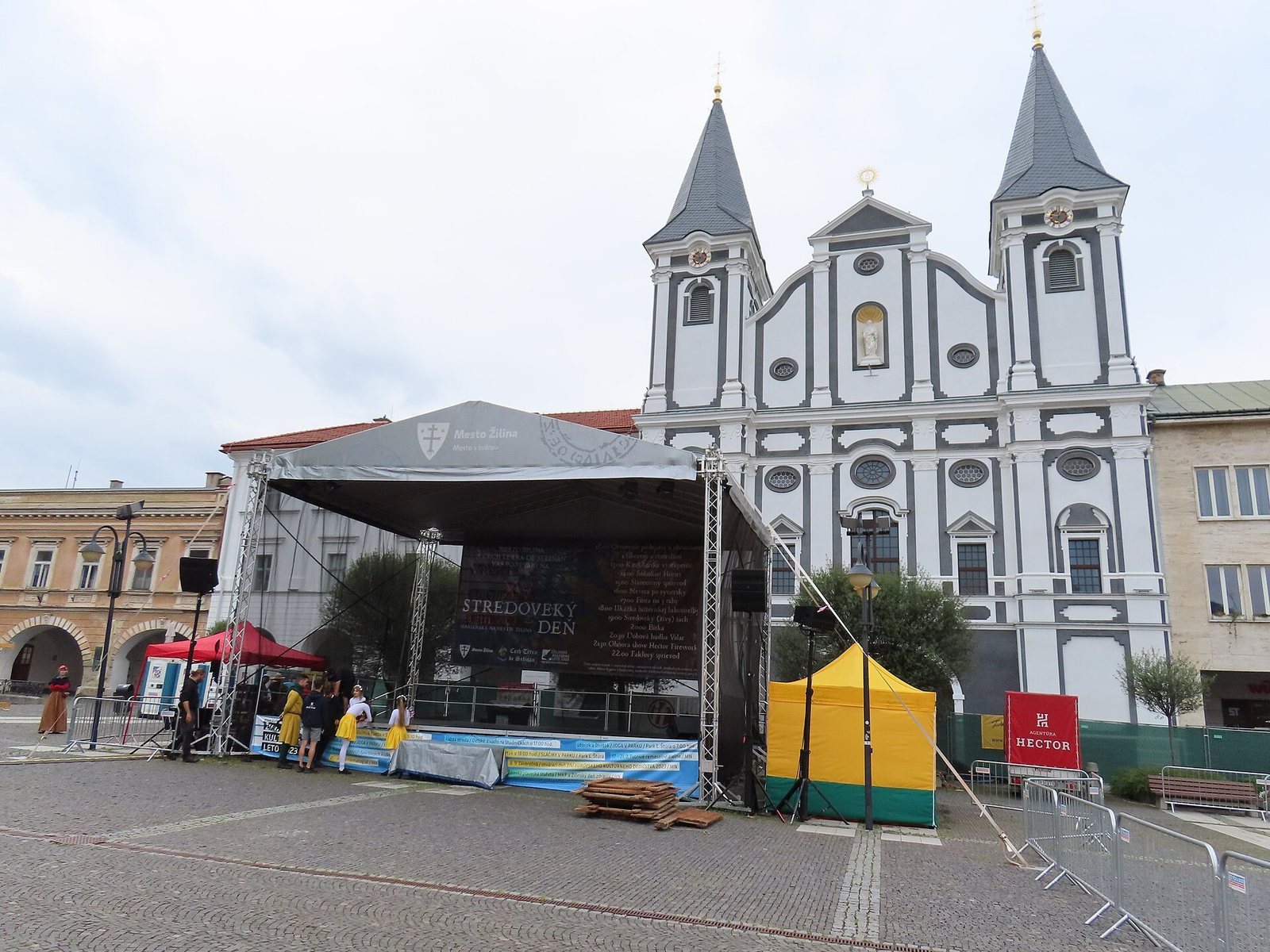
The façade is arranged in five vertical divisions and has projecting eaves. Its two towers each rise 32 metres. They originally had onion-shaped Baroque tops, replaced in 1887 with the pyramidal spire caps seen today. A niche in the pediment, the upper section of the façade, holds a neoclassical statue of Saint Paul installed in 1988. The south tower contains two bells: a steel bell weighing 230 kilograms and a 95-kilogram bell named for Saint Vincent de Paul, a seventeenth-century French Catholic priest known for organizing charitable work. The latter was cast in 1887. In 2022, restoration returned the façade to a historical dark-gray color with white elements, and architectural lighting was installed.
Interior
The interior retains Baroque decoration from the eighteenth century. Its high altar is dedicated to Saint Paul and includes a painting by Jozef Božetech Klemens, a nineteenth-century Slovak painter.
Cellars
Cellars belonging to the earlier town houses survive beneath the church.